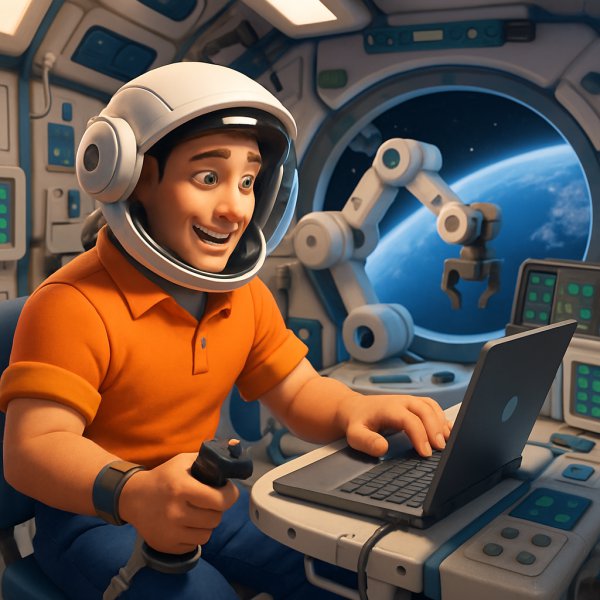
Imagine your office was orbiting Earth at 17,500 miles per hour — what would your job look like?
Picture waking up to a sunrise every 90 minutes, floating to work instead of commuting, and doing science that could change life on Earth while also changing how your own body functions. Astronauts on the International Space Station, or ISS, live and work in a uniquely strange environment that blends rigorous science, delicate engineering, and everyday human life. The station is not a tourist attraction, it is a laboratory, a test bed, a home, and a maintenance site all rolled into one. The tasks are varied, the stakes are high, and the routines are surprisingly ordinary in their structure even while the setting is extraordinary.
In the paragraphs that follow you will learn what astronauts actually do on the ISS, why their tasks matter, how they prepare, and how the work done in orbit connects to life on Earth. You will find real stories, little challenges to make you think, and practical ways to relate to this adventurous job even from the ground.
A day like no other - the rhythm of life on the station
Astronaut life follows structure. Each crew member usually starts with a wake-up call, follows a schedule planned months in advance, and ends with a sleep period synchronized to maintain body rhythms. The schedule balances scientific experiments, station maintenance, physical exercise, communications with Earth, and personal time. That balance is essential because microgravity affects nearly every system in the body, and experiments often require precise timing or continuous monitoring.
Work periods are focused and task-oriented. Some days are heavy on experiments, with crew members running dozens of investigations across biology, material science, fluid physics, and Earth observation. Other days require complex maintenance - replacing a pump, testing a new sensor, or coordinating a supply unpacking. Even when activities seem routine, every action requires special procedures, checklists, and often a second set of eyes from mission control - a reminder that teamwork extends across continents and time zones.
Why astronauts are scientists, engineers, and caregivers all at once
The ISS is fundamentally a laboratory in orbit. Astronauts run experiments that cannot be replicated on Earth because microgravity changes how fluids flow, how flames burn, how cells grow, and how materials form. For example, protein crystals can form more purely in microgravity, helping researchers understand molecular structures for better drugs. Fluid physics experiments reveal how liquids behave without gravity-driven convection, which helps design better fuel systems for spacecraft and improves models for industrial processes on Earth.
At the same time, astronauts are engineers and technicians who keep the station alive. They monitor life-support systems, perform hardware swaps, install new instruments, and patch insulation or micrometeoroid impacts when necessary. The station is like a remote ocean research vessel, needing constant upkeep and quick fixes. Finally, crew members are caregivers in the sense that they watch over each other’s health, manage medical kits, and follow mental-health protocols. Living in such a confined space requires social skills as much as technical competence.
Experiments that matter - from human biology to cosmic rays
The science on the ISS ranges from very small scales, like DNA and cells, to very large scales, like cosmic radiation and Earth observation. One headline example is the NASA Twins Study, where astronaut Scott Kelly spent nearly a year on the ISS while his identical twin, Mark Kelly, stayed on Earth. That study provided deep insights into how long-duration spaceflight affects gene expression, cognition, and the immune system. Research like this directly informs plans for longer missions, including journeys to Mars.
Other continuous investigations include the Alpha Magnetic Spectrometer, a particle physics experiment mounted on the station to study cosmic rays and search for signs of dark matter, and numerous plant-growth projects that explore how to grow food in partial or no gravity. Materials science experiments investigate alloy formation and combustion studies examine how fire behaves without gravity-driven convection. Results from these investigations feed back into medical, industrial, and environmental applications on Earth.
"The ISS is a place where questions that can’t be answered on Earth get answered in space." - paraphrase of many NASA scientists
Exercise, health, and the daily battle with microgravity
Microgravity is wonderful for floating, but it plays havoc with muscles, bones, and the cardiovascular system. Without regular weight-bearing activity, astronauts can lose muscle mass and bone density quickly. For this reason, exercise is a non-negotiable part of every astronaut’s day. The station contains specialized equipment - a treadmill with restraints, a cycle ergometer, and a device that provides resistive exercise to mimic weightlifting. Astronauts typically spend about two hours doing a mix of cardiovascular and strength workouts every day to slow physiological decline.
Medical monitoring is routine and detailed. Crew members take regular blood draws, cognitive tests, and use ultrasound to check bones and muscles. They practice emergency medicine skills and have telemedicine links to specialists on the ground. Mental health receives attention too - long missions can cause isolation, disrupted sleep, and mood shifts, so structured communication with family, leisure time, and psychological support are part of the plan. The Instagram-friendly portraits of astronauts smiling do not show the steady, disciplined attention to health behind the scenes.
Spacewalks and robotic choreography - going outside and moving parts
Some of the most dramatic work on the ISS happens during extravehicular activities, or EVAs - commonly called spacewalks. Astronauts wearing pressurized suits step out into vacuum to install new modules, replace batteries, or repair critical systems. A single EVA may last six to seven hours and requires months of training. The tasks performed outside the station combine dexterity, physical stamina, and careful choreography with colleagues inside and robotic arms managed from various control centers.
Robotics play a huge role even when crew members are inside. The Canadarm2 and robotic dexterous hands are used to capture arriving cargo vehicles, manipulate large components, and assist with external repairs. Astronauts coordinate with ground teams to run these robotic systems, blending manual skill with remote control and automation. The teamwork between humans and robots on the ISS is a microcosm of how future exploration will rely on such hybrid systems.
Living well up there - food, sleep, and small comforts
Life on the ISS is not all lab coats and wrenches. Crew members eat packaged meals, rehydrated soups, and treats from their home countries, and they take pride in the small luxuries that make long durations bearable - a favorite snack, a song played over the station intercom, a video call with family. They sleep in small private cabins or sleep sacks tethered to a wall, and they carefully plan lighting and schedules to maintain circadian rhythms despite the frequent sunrises.
Hygiene is different too. There is no shower with a runoff drain, so astronauts use rinseless wipes and no-rinse shampoos, and they manage laundry by reusing clothing until it is replaced via cargo shipments. These adjustments show how humans adapt; designers learn from these adaptations to improve habitats for future deep-space missions and even for small, isolated environments on Earth like Antarctic stations.
Training behind the scenes - months of rehearsal for every hour in orbit
Astronauts spend years training before they ever fly, and training continues during missions. Preparation includes technical systems training, geology and biological science education, robotics and EVA practice, language study for international crews, and simulated emergencies in neutral-buoyancy pools that mimic weightlessness. Simulations are run with mission control to rehearse nominal operations and contingency plans.
On-orbit training continues because the station receives new instruments, updated procedures, and unplanned repairs. Crew members frequently perform "just-in-time" training, where they review procedures with the help of ground instructors before a complex task. That flexibility is crucial - the ISS is both a planned laboratory and a dynamic, evolving platform.
Common myths and surprising truths about astronaut work
There are several misconceptions that get repeated in popular culture. One is that astronauts spend most of their time floating and staring at Earth. In truth, while astronauts enjoy wonderful views and some moments of reflection, most of their time is scheduled and task-focused. Another myth is that space is perfectly safe if you follow the rules. Reality is that even with training and redundancy, spaceflight involves risk, and astronauts practice emergency procedures repeatedly.
A surprising truth is how international and collaborative every task is. The ISS is a partnership among NASA, Roscosmos, ESA, JAXA, and CSA, and many experiments come from universities and companies around the world. A single repair might involve engineers and astronauts from multiple agencies coordinating across languages and time zones. That international cooperation is one of the station’s most powerful outcomes.
Stories that stick - real missions, real people
Consider Canadian astronaut Chris Hadfield, who became a social-media phenomenon by sharing daily life, music, and science from the ISS. His videos made complex ideas tangible and inspired millions. Another example is Peggy Whitson, who holds records for total time spent in space by a U.S. astronaut and demonstrated leadership and resilience through multiple long-duration missions. The NASA Twins Study mentioned earlier, with Scott Kelly, provided medical data that reshaped how agencies view long-term human exposure to space.
These stories help us remember that being on the ISS is not only a technical achievement, it is human experience - laughter, problem solving, boredom, wonder, and the same basic need for companionship and purpose that you or I feel.
How this matters to you - real-world payoffs and ways to get involved
The science on the ISS informs technologies and medicines on Earth. Advances in medical monitoring, water recycling, and even improved fire safety and materials science have roots in space research. Protein crystallization studies and microfluidics research inform drug design and diagnostic tools. The water-recycling technologies developed for space habitats are used to improve water access in remote or disaster-affected regions on Earth.
If you want to connect to the ISS story, you can start by following mission updates from space agencies, watching live streams during launches and spacewalks, and trying simple experiments at home that highlight scientific principles. Students and hobbyists can participate in competitions or propose small experiments through educational programs offered by space agencies and universities. Curiosity and informed questions are the best tools anyone can carry.
Small challenges, big thinking - questions and activities to try
Reflective questions: What systems on Earth could benefit from the closed-loop thinking used to support life on the ISS? How would your daily habits change if you had to conserve every drop of water and every piece of energy? What would you want to investigate in microgravity if you had a chance?
At-home activities: Grow a small plant in a windowbox and observe root patterns, comparing them to photos of space-grown plants to understand how gravity guides roots. Try a simple fluid experiment by placing a small spherical object in a bowl of water and noticing how surface tension shapes the interaction - then relate that to how capillary action is more visible in microgravity.
These small activities sharpen observation skills and connect you to the core questions scientists ask under far more difficult conditions in orbit.
Quick-reference table - who does what on the station
| Role or Task |
Example Activities |
Why it matters |
| Science operator |
Run biology assays, monitor experiments, collect samples |
Produces data for Earth-based applications |
| Flight engineer |
Monitor power, life support, and avionics |
Keeps the station habitable and functional |
| Robotics operator |
Use Canadarm2 to capture cargo, move experiments |
Enables large-scale assembly and repairs |
| EVA specialist |
Perform spacewalks to replace hardware |
Conducts repairs and upgrades not possible from inside |
| Health officer |
Exercise, medical monitoring, mental health checks |
Maintains crew health for current and future missions |
| Earth observer |
Take high-resolution images of weather, disasters |
Provides direct benefits for environmental monitoring |
Final thought - why the ISS still inspires
The ISS is a symbol of what humans can do when curiosity, engineering, and cooperation meet. Astronauts on the station do far more than float and wave at cameras - they are scientists conducting critical research, engineers maintaining a fragile home in orbit, and people living full lives in an alien environment. Their work translates into advances in medicine, materials, Earth science, and the human know-how to travel farther than we have before.
If you walked away with one idea, let it be this: the ISS is an experiment in living, learning, and teamwork. The tasks astronauts perform are practical and precise, mundane and heroic in equal measure, and they deepen our knowledge while preparing us for the next big steps in exploration. What question would you put to an astronaut if you had ten minutes with them on the station? Keep that question, and let it guide the small experiments and curiosity you bring into your own life.