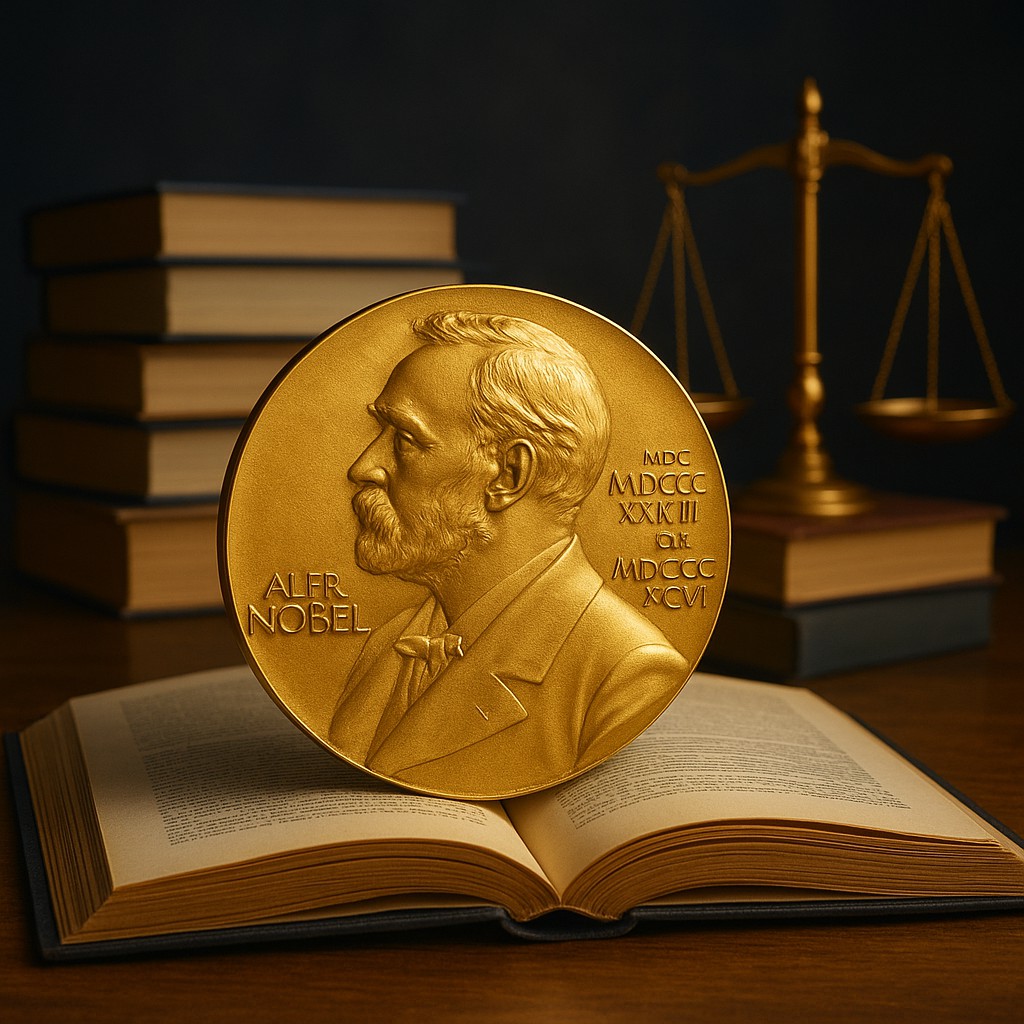
Why the Nobel Prize still makes us stop and pay attention
You know that feeling when someone says, "They won a Nobel"? The phrase carries weight - not only because of the hefty gold medal and the cash award, but because it signals a work or action that, in the eyes of a very particular group, changed how we understand the world or made it markedly better. The Nobel Prize crops up in headlines, schoolbooks, and cocktail conversations as shorthand for ultimate recognition. But beyond the glamour, the Prize is also a living story about ideas, power, politics, and our changing values.
The Prize matters because it does something rare: it formally recognizes intellectual achievement or moral courage as valuable to humanity. That recognition can amplify a discovery, protect a persecuted voice, or spark debate about what we value. At the same time, the Prize is human-made, which means it bears human strengths and flaws - it can be visionary, and it can be controversial. Learning how it began, how winners are chosen, and what the Prize does and does not mean helps you appreciate its role without mistaking it for an infallible truth meter.
This Learning Nib will take you from the 19th-century workshop of an inventor with conflicting legacies, through the committees that keep the Prize running, to the surprise winners and notorious controversies that keep newspapers busy each October. Expect useful comparisons, a clear explanation of the selection machinery, and memorable facts that turn trivia into context you can use.
If you have ever wondered who decides what matters to humanity, how secrecy and ceremony combine, or why one of the prizes is awarded in Oslo rather than Stockholm, by the end you will not only know the answers, you will recognize the Prize as a social institution with real consequences - for winners, for disciplines, and for public debate.
How a single will turned a private fortune into global prizes
The story begins with Alfred Nobel, a Swedish inventor, engineer, and industrialist born in 1833. Nobel made a fortune from explosives and armaments manufacturing; his most famous invention was dynamite, which made blasting and construction dramatically safer and more controllable compared with nitroglycerin alone. His wealth came from both scientific innovation and widespread industrial application, and with that wealth came a complex legacy.
In 1888 a French newspaper mistakenly published his obituary while he was still alive, calling him "the merchant of death" because his inventions had been used in warfare. Supposedly shaken, Nobel is said to have reflected on how he would be remembered, and in 1895 he wrote a will that allocated most of his fortune to create prizes for those who confer the "greatest benefit on mankind." The will named categories we now recognize - physics, chemistry, physiology or medicine, literature, and peace. Nobel died in 1896, and the will was contested, so it took several years and the establishment of the Nobel Foundation in 1900 to administer the prizes.
That origin contains contradictions worth noting - a man who profited from explosive technologies wanted his estate to honor contributions to peace and knowledge. Whether motivated by remorse, vanity, or a genuine wish to celebrate human progress, Nobel’s bequest created an institution that would shape scientific and cultural hierarchies for centuries to come.
Who runs the Prize and how the money keeps rolling
The Nobel Foundation is the organization that administers the prizes. It was created to manage Alfred Nobel’s fortune and coordinate the delivery of prizes. The foundation oversees the endowment, invests it, and distributes funds to the prize-awarding institutions, but it does not itself choose winners. Instead, specific bodies are designated to select laureates:
- The Royal Swedish Academy of Sciences awards the prizes in Physics and Chemistry, and since 1969 it also awards the Sveriges Riksbank Prize in Economic Sciences in Memory of Alfred Nobel.
- The Nobel Assembly at the Karolinska Institute awards the Prize in Physiology or Medicine.
- The Swedish Academy awards the Prize in Literature.
- The Norwegian Nobel Committee, appointed by the Norwegian Parliament, awards the Peace Prize.
The endowment finances prize money and administration. Prize sums fluctuate with investment returns, but each laureate receives the same monetary award within a year. The prizes are presented at formal ceremonies - the Stockholm ceremony on December 10, Nobel’s death anniversary, and the Peace Prize ceremony in Oslo on the same date.
The five original categories, plus one later addition
Nobel’s will specified five fields, and a sixth commonly associated with the Nobel name was created later by Sweden’s central bank. It helps to see these at a glance.
| Prize Category |
Year Established |
Who Selects Winners |
Where Awarded |
Core Focus |
| Physics |
1901 |
Royal Swedish Academy of Sciences |
Stockholm |
Discoveries in physical sciences that expand fundamental understanding |
| Chemistry |
1901 |
Royal Swedish Academy of Sciences |
Stockholm |
Breakthroughs in chemical sciences, including practical applications |
| Physiology or Medicine |
1901 |
Nobel Assembly, Karolinska Institute |
Stockholm |
Advances in biology and medicine that improve health and knowledge |
| Literature |
1901 |
Swedish Academy |
Stockholm |
Outstanding literary work, typically with a body of work rather than a single book |
| Peace |
1901 |
Norwegian Nobel Committee |
Oslo |
Efforts that promote peace, resolve conflicts, or advance human rights |
| Economic Sciences |
1969 (awarded 1969 onward) |
Royal Swedish Academy of Sciences |
Stockholm |
Contributions to economic science, formally the Sveriges Riksbank Prize in Economic Sciences in Memory of Alfred Nobel |
This table highlights a key nuance: the Economics Prize was not in Nobel’s will; it was established by Sweden’s central bank in 1968, nearly seven decades after Nobel’s death. Yet it sits alongside the original prizes in public perception, which can cause confusion.
How a winner is actually picked - the slow choreography of selection
The selection process is deliberately methodical and secretive. It begins with nominations. The committees send out invitations to thousands of qualified nominators - university professors, previous laureates, selected members of academies, and other experts - asking for names. Nominations must arrive by January 31 for that year’s prize. Importantly, the identity of nominators and nominees is kept confidential for 50 years.
After nominations close, the committees prepare longlists and consult outside experts. For scientific prizes, the committees solicit referees who are specialists in relevant subfields; these referees provide reports assessing the importance and originality of candidate work. The committees then deliberate, compare contributions, and vote. A majority or qualified majority is required depending on the prize rules. The process can take months, and committees sometimes delay awards or split recognition among multiple laureates when credit is shared across collaborators.
Some practical rules matter: no more than three individuals can share a single prize in the sciences and economics, and awards usually recognize concrete discoveries or sustained achievements, rather than speculative ideas. The peace prize sometimes recognizes organizations rather than individuals, and the Swedish Academy focuses on an author’s overall corpus and contribution to literature.
Why the Peace Prize is awarded in Oslo, not Stockholm
One of the oddities that sparks curiosity is why the Peace Prize ceremony is held in Oslo while the others are in Stockholm. The simplest explanation lies in Nobel’s will, which specified that the Peace Prize should be awarded by a committee chosen by the Norwegian Parliament. At the time, Sweden and Norway were united under a single monarch but had separate institutions, and Nobel may have thought Norway’s parliament would be sympathetic to peace-oriented deliberations. Whether that judgment was wise is debatable, but the practice stuck.
Norway’s role has fueled controversy because the Peace Prize often involves geopolitics. Decisions in this category are interpreted as political statements, and awards to figures or organizations engaged in ongoing conflicts can provoke strong international reactions. That makes the Peace Prize the most visibly contested category, even as the committees defend their choices as consistent with Nobel’s instruction to honor contributions to peace.
Common myths and the realities behind them
There are several persistent misconceptions about the Nobel Prizes. Clearing them up helps you interpret announcements and claims more accurately.
- Myth: “The Nobel Prize is always right, it proves a discovery is correct.” Reality: The Prize is a recognition by specific committees at a particular time. Sometimes later work refines, competes with, or even contradicts awarded findings. The Prize honors impact and perceived importance, not absolute immutability.
- Myth: “You can’t win a Nobel posthumously.” Reality: The Prize is not awarded posthumously, except in cases where a laureate dies between announcement and award. If a nominee dies before the announcement and the committee was unaware, the prize is not given posthumously.
- Myth: “Any work can win at any time.” Reality: There is often a long lag in the sciences between discovery and the Prize, because committees prefer to see the lasting impact and reproducibility of results. That lag can be decades.
- Myth: “Economics was in Nobel’s will.” Reality: The Economics Prize was established later by Sweden’s central bank and is formally distinct, even though it is commonly called a Nobel Prize.
- Myth: “The Prize can be shared by unlimited people.” Reality: For the sciences and economics only up to three individuals may share a single prize in recognition of a single achievement.
Correcting these myths helps you understand what the Prize signals - and what it does not.
Notable controversies, surprises, and human drama
No institution that picks "the best" is without doubters. The Nobel Prize has its share of surprising selections, painful omissions, and choices that divided opinion. Some laureates declined the award - Jean-Paul Sartre famously rejected the Literature Prize in 1964 because he refused to accept official honors, which he felt would compromise his independence. Others caused international uproar - Henry Kissinger’s 1973 Peace Prize, shared with Le Duc Tho, was controversial because the Vietnam conflict continued; Le Duc Tho declined the award.
There are also stories of corrective evolution. Rosalind Franklin’s critical role in discovering DNA’s structure did not earn her a share of the 1962 Prize awarded to Watson, Crick, and Wilkins, partly because she had died and partly because recognition in team science can be complicated. Marie Curie received two Nobels in different fields, a rare feat, illustrating how exceptional contributions can cross disciplinary boundaries.
Controversies also spotlight structural biases. Nobel committees historically under-awarded women and non-Western contributors, reflecting broader social inequalities in access to scientific infrastructure, publishing, and visibility. Those omissions are increasingly being scrutinized as part of broader debates about equity in science and the humanities.
Small but delightful facts you can drop at dinner
Some trivia makes the Nobel story stick in memory. The first Nobel Prizes were awarded in 1901, five years after Nobel’s death. The Nobel medals are gold-plated green gold, and the designs differ by category - the Peace Prize medal bears a distinct design. The youngest laureate in modern times was Malala Yousafzai, who received the Peace Prize at age 17. The oldest was John B. Goodenough, who won the 2019 Chemistry Prize at age 97. Only four people have won two unshared Nobel Prizes - Marie Curie (Physics and Chemistry), Linus Pauling (Chemistry and Peace, with Peace unshared), John Bardeen (twice in Physics), and Frederick Sanger (twice in Chemistry).
These facts humanize the Prize, showing it spans ages, nations, and fields in unexpected ways.
What the Nobel Prize does for the winner and for the world
Winning a Nobel Prize can dramatically change a laureate’s life. The prize money, while significant, often pales next to the broader impact: increased visibility, invitations to public platforms, and more influence on policy or funding. For scientists, the Prize can accelerate research programs and collaborations. For literary laureates, it can expand readership across languages. For peace laureates, the Prize can offer protection or legitimacy, though it can also attract criticism.
At a societal level, the Prize shapes what stories we tell about progress and value. By elevating particular discoveries or voices, the Nobel Prize helps set agendas in research and culture. That influence is why debates about its fairness, transparency, and scope matter.
How to follow Nobel news like a pro
If you want to make sense of Nobel announcements, here are practical tips. Read the official press release and the committee’s motivation - these explain precisely what the committee wanted to honor. Watch the laureate lectures - many winners give Nobel lectures that distill their work into accessible narratives. Follow primary literature referenced by the committee to see the scientific basis behind a prize. Remember to distinguish between the prize as recognition and the broader body of subsequent work that validates, extends, or challenges the laureate’s contribution.
Also keep context in mind - especially for the Peace Prize - because awards are often as much statements about contemporary politics and values as they are technical endorsements.
Final thoughts - why the Nobel Prize invites both admiration and scrutiny
The Nobel Prize is one of the world’s most visible systems for recognizing achievement. It grew from the will of one man into an institution that celebrates breakthroughs, shines a light on moral courage, and occasionally makes headlines for the wrong reasons. Learning how the Prize works - from Alfred Nobel’s complicated legacy, to the roles of Swedish and Norwegian committees, to the careful but imperfect selection process - lets you appreciate both its symbolic power and its institutional limits.
As you watch next October’s announcements, remember that each Prize tells two stories: the story of the winner’s work, and the story of what a group of experts chose to honor at a specific historical moment. Both stories matter. Let that awareness make you a smarter, more curious consumer of news, and perhaps encourage you to read a Nobel lecture or two. You might find ideas that surprise you, arguments that unsettle you, and inspiration that nudges your own curiosity toward the next big question humanity will want to answer.