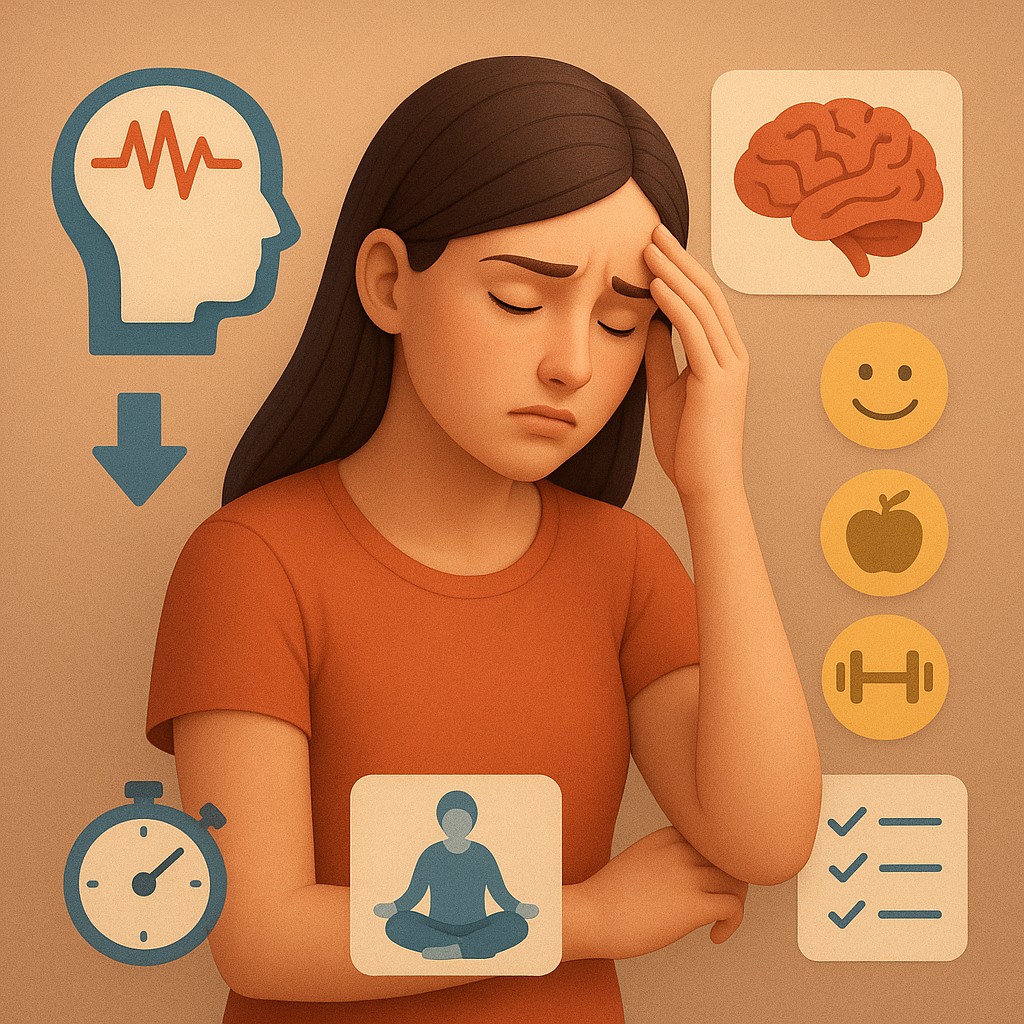
Why stress is not just "in your head" - and why you should care now
Imagine your body as an ancient warning system - a medieval town bell built to ring when wolves approach. That bell is brilliant for short alarms: a sudden car honk, a tight deadline, a last-minute presentation. It summons adrenaline, clears your mind, and helps you act fast. The trouble comes when the bell never stops ringing. Instead of a few urgent rings, you get a continuous clang-clang-clang that frays nerves, weakens the walls, and leaves everyone exhausted.
This text matters because stress is the number one thing most people mismanage. It is not a personality flaw, lack of grit, or something you can simply "tough out" forever. Stress changes your hormones, your immune system, your sleep, your relationships, and your thinking - often in ways you do not notice until it becomes a health problem. Learning what stress stores in the body, how to spot it early, and what to do about it gives you back agency - like learning how to silence that bell when the wolves are gone.
I will walk you from the basics of how stress physically affects you, to how you can detect it in everyday life, to a practical toolkit of evidence-based actions - quick fixes for right now, midterm habits for stabilizing your life, and deeper changes for long-term resilience. Expect clear science explained in plain English, a few myths busted, and a friendly nudge to build a plan you can actually use.
If you stay with me, you will finish with concrete ways to feel calmer and clearer within minutes, improved health over weeks, and a strategy to keep stress from stacking up over years. Let us start by understanding what stress actually stores in the body.
What stress stores in the body - the biology you can feel
Stress starts in the brain, but its effects are distributed across the entire body. When you perceive a threat - real or imagined - two fast systems activate. The sympathetic nervous system triggers a cascade that releases adrenaline and norepinephrine, sharpening attention, increasing heart rate, and diverting blood to large muscle groups. Parallel to that, the hypothalamic-pituitary-adrenal axis, abbreviated HPA axis, releases cortisol - a slower, longer-lasting hormone that helps mobilize energy and modulate inflammation.
Those chemicals are useful in the short term, but when they remain elevated you begin to accumulate wear and tear. Chronically high cortisol interferes with sleep, suppresses digestion, raises blood sugar, and weakens immune responses. Adrenaline spikes repeatedly elevate blood pressure, increasing strain on your heart and blood vessels. Over time, this biological burden contributes to conditions such as hypertension, type 2 diabetes, depression, cardiovascular disease, chronic pain, and immune dysregulation.
Stress also rewires the brain. The amygdala - the brain’s threat detector - can become more reactive, while the prefrontal cortex - the executive switchboard - can weaken, making it harder to plan, regulate emotions, and exert self-control. The hippocampus, crucial for memory and mood regulation, can shrink under prolonged stress. In short, chronic stress embeds itself physically, chemically, and structurally in your system - which is why "just relaxing" is not always easy until you change the biology and the habits that feed it.
How to detect stress early: signals your body, mind, and behavior give you
Stress rarely appears as a single dramatic event. More often it creeps in through a pattern of small signals and changes in daily functioning. Detecting stress early is like catching a leak before the ceiling falls in - you save time, energy, and health. There are five main domains where stress shows up: physical, emotional, cognitive, behavioral, and physiological measures.
Physically, look for persistent headaches, muscle tension (especially neck and jaw), digestive issues, frequent colds, disrupted sleep, or changes in appetite and weight. Emotionally, notice heightened irritability, low mood, anxiety, or feeling overwhelmed by small tasks. Cognitively, stress often brings brain fog, poor concentration, forgetfulness, and negative mental loops. Behaviorally, you might see increased substance use, social withdrawal, procrastination, or working longer hours with diminishing returns. Physiologically, check heart rate variability if you track it, resting heart rate, or simple signs like persistent sweatiness and shallow breathing.
A small self-check helps. On a scale of 0 to 10, how would you rate your baseline worry, energy, and sleep over the past two weeks? Combine this with a body scan - spend five minutes noticing tension from head to toe - and a brief activity log for one week. These simple measures, plus attention to patterns, will reveal whether stress is acute and situational, or chronic and systemic.
Acute vs chronic stress - how the timelines change what the body stores
Acute stress is short-lived and often helpful. It produces quick bursts of energy and focus, and your body returns to baseline after the event. Chronic stress is when those adaptive responses remain activated - sometimes subtly - for months or years. The effects accumulate and become more difficult to reverse.
Acute stress tends to show immediate physical signs - racing heart, sweaty palms, tremors - and resolves with rest. Chronic stress leads to sleep disruption, constant fatigue, increased infections, poor digestion, weight changes, persistent headaches, and mood disorders. Over years, chronic stress accelerates aging processes at the cellular level, including inflammation and possible shortening of telomeres - the protective caps on chromosomes associated with cellular aging.
Understanding whether your stress is acute or chronic helps decide what interventions will help first. Acute stress benefits from quick regulation tools, while chronic stress often requires sustained behavioral changes and sometimes professional support.
Practical first-aid: quick techniques that reduce stress right now
When you feel the bell ringing, there are four science-backed, portable techniques that calm the nervous system fast. They are simple, and they work because they engage the parasympathetic system - the rest-and-repair pathway.
- Box breathing: Breathe in for four counts, hold for four, exhale for four, hold for four. Repeat 4-8 times. This pattern slows heart rate and signals safety to the brain.
- Grounding 5-4-3-2-1: Identify 5 things you can see, 4 things you can touch, 3 things you can hear, 2 things you can smell, and 1 thing you can taste. This redirects attention away from the threat loop.
- Progressive muscle relaxation: Tense a muscle group for 5 seconds, then release and notice the difference. Move from feet to head or vice versa. This reduces systemic tension in minutes.
- Breath pacing with longer exhales: Inhale for 4, exhale for 6 to 8. Longer exhales increase vagal tone and calm the heart rate.
Do one or two of these for five minutes and you will often feel measurable relief. They are not long-term fixes by themselves, but they buy you clarity to make better choices in the moment.
Building mid-term resilience - habits that reduce stress day to day
Short resets are helpful, but resilience is built in the daily habits that change baseline physiology. The good news is that small, consistent changes add up faster than you think. Focus on sleep, movement, nutrition, social connection, and boundaries.
Aim for sleep hygiene: regular sleep and wake times, screen-light reduction before bed, and a cool, dark bedroom. Exercise regularly - 30 minutes of moderate activity most days improves mood, reduces cortisol, and supports sleep. Nutrition matters - prioritize protein, vegetables, healthy fats, and minimize prolonged high-sugar or highly processed food patterns that spike cortisol and insulin. Social connection is a powerful buffer - prioritize time with people who restore you, rather than drain you. Finally, practice boundary-setting - learn to say no to tasks that exceed your capacity, and break large projects into smaller, manageable steps.
Track one habit at a time for 30 days. Small wins compound and change how your body responds to stressors. Over weeks, you will likely notice improved sleep, better mood, and greater stamina.
Long-term approaches - therapy, lifestyle design, and medical interventions
If stress feels pervasive and plateaus despite good habits, consider deeper interventions. Psychological therapies are among the most effective long-term strategies. Cognitive-behavioral therapy, or CBT, helps you identify distorted thoughts and replace them with realistic, manageable ones. Acceptance and Commitment Therapy, or ACT, teaches values-driven action and acceptance of uncomfortable feelings. Mindfulness-based stress reduction trains sustained attention and non-reactivity to thoughts and sensations. These therapies rewire how your brain responds to stress over months.
Lifestyle design is equally important - examine workload, relationships, and daily rhythms. This might mean negotiating job responsibilities, delegating tasks, or adjusting expectations at home. Organizational strategies such as time-blocking, prioritizing high-energy tasks earlier, and scheduling recovery time are practical ways to reduce chronic load.
In some cases, medical evaluation is necessary. Persistent anxiety, sleep disorders, or biological markers like dangerously high blood pressure or metabolic issues require a clinician’s input. Medication can be a valuable tool for symptom reduction while you build skills and habits. Think of medication as scaffolding - it supports you while you strengthen the underlying systems.
Common myths about stress - what is true and what is not
There are a few pervasive myths about stress that create guilt or confusion. First, stress is not always bad. Short-term stress sharpens performance and learning - it is part of growth. Second, stress is not a sign of weakness or poor character. Brain biology and environment shape stress responses - it is not a moral failing. Third, thinking positively alone does not erase stress. Cognitive shifts help, but so do behavioral and physiological changes. Finally, stress management is not a luxury only for calm, wealthy people - many effective strategies are low-cost and accessible, such as sleep hygiene, community support, and simple breathing techniques.
Understanding these myths saves you the trap of self-blame and helps you choose evidence-based actions rather than feel guilty for being human.
A simple blueprint you can use tonight - a personalized stress plan
Create a compact plan with three parts: immediate toolkit, weekly habits, and monthly review. Here is a model you can adapt.
Immediate toolkit (5 minutes): Choose two quick techniques you can do anywhere - box breathing and grounding. Practice them until they feel automatic.
Weekly habits (30 minutes, 5-7 times a week): Thirty minutes of movement, 7-8 hours of sleep with regular timing, one meal focused on balanced protein and veggies, and one social connection that energizes you.
Monthly review (30-60 minutes): Look back at your sleep, mood, and energy logs. Identify one stressor you can reduce - say delegating a task or negotiating a deadline. Pick one new skill to learn, such as progressive muscle relaxation or a short CBT worksheet for worry.
Stick to this plan for 30 days, then reassess. The goal is incremental improvement, not perfection. When the bell rings, your toolkit quiets it. When months pass, your habits lower the bell’s baseline volume.
Quick table to compare stress types, effects, and best first actions
| Type of stress |
Typical effects on body and mind |
Best first actions (0-7 days) |
Best medium-term actions (weeks-months) |
| Acute stress - short term |
Racing heart, sweaty palms, focused energy, temporary sleep disruption |
Use box breathing, grounding, remove yourself if possible, short walk |
Reflect on triggers, build quick-regulation toolkit, sleep recovery |
| Episodic stress - frequent spikes |
Headaches, irritability, poor concentration, disrupted routines |
Schedule breaks, prioritize sleep, practice progressive muscle relaxation |
CBT skills for planning, time-management, regular exercise |
| Chronic stress - long term |
Chronic fatigue, immune changes, anxiety/depression risk, metabolic strain |
See a clinician if severe, start sleep hygiene and short breathing practices |
Therapy (CBT, MBSR), lifestyle redesign, possible medical management |
How to make stress reduction stick - practical behavior-change tips
Behavior change is mostly about designing your environment so the healthy choice is the easy choice. Use habits, cues, and accountability. Place a small slip of paper with your breathing pattern on your bathroom mirror as a cue. Put your phone out of arm’s reach at night to reduce late scrolling. Team up with a friend for workouts or a weekly check-in. Use calendar blocks for focused work and separate blocks for rest. Track progress with a simple checklist rather than waiting for motivation to strike.
Start small and stay consistent. Pick one tiny change that takes less than five minutes and do it daily for a week. Then add a second habit. Celebrate small wins and treat setbacks as data, not failure. Over time, these small changes alter your baseline physiology and mindset.
Final encouragement - progress is cumulative and kind to those who persist
Stress is not a moral indictment, it is a signal - a bodyguard that sometimes shouts too loudly. By learning what stress stores in your body, spotting its early signs, and applying practical tools for immediate relief and long-term resilience, you reclaim choice over your biology and your life. You do not need to become perfect at relaxation, you just need to be consistent with small actions that accumulate into real change.
Start tonight with five minutes of breathing, plan a realistic sleep window for the week, and choose one social connection to nourish. These steps will not only reduce your immediate discomfort, they will slowly rebuild your body’s ability to handle future stress with grace. You will feel smarter, calmer, and more capable because you have a plan you can use. Keep being curious, keep experimenting, and remember - the bell is useful, but you decide when to ring it.