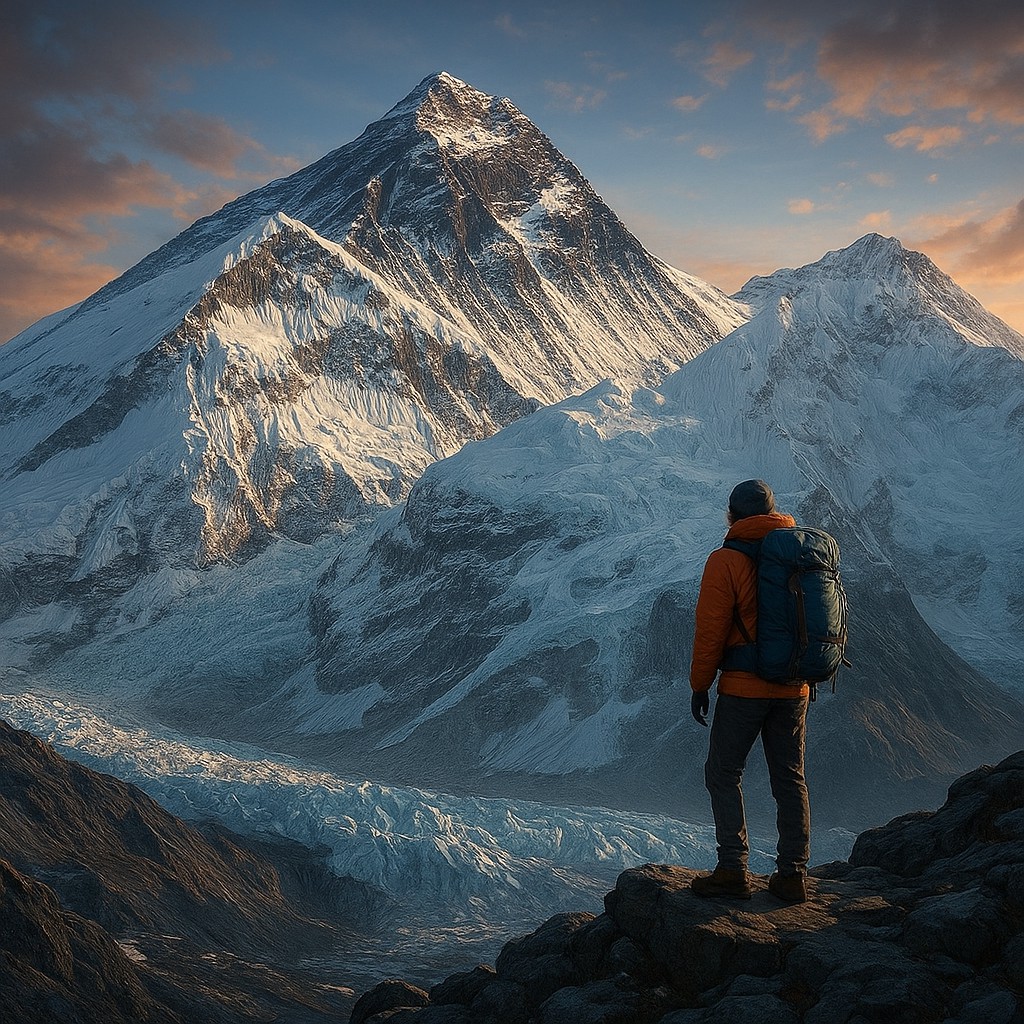
Why Everest still stops you in your tracks
Mount Everest is more than a pile of rocks; it is a story compressed into ice, wind, and human obsession. Standing at the roof of the world, Everest draws explorers, scientists, storytellers, and tourists because it is both a physical limit and a symbol of what we are willing to risk to reach a summit. Whether you think of it as a geological wonder, a spiritual place named Chomolungma or Sagarmatha, or a community of climbers and Sherpas, Everest matters because it brings together big questions about nature, culture, endurance, and responsibility.
The mountain’s pull is a mix of awe and practical challenge. People are fascinated by extremes - highest, coldest, hardest - and Everest represents a most of them. But fascination is not the same as understanding, and the mountain’s facts are richer and stranger than many headlines suggest. Learning Everest is learning geology, meteorology, physiology, history, economics, and ethics all at once.
This guide will take you up from the basics - where Everest is, how tall it really is, and how it was formed - to the human stories and logistical realities of climbing it. Expect a blend of science, practical detail, myth-busting, and a few vivid stories that make facts stick. You will finish not only smarter about the mountain, but better equipped to appreciate why people keep coming back to it.
Finally, remember that Everest is not only about summits. It is about risk, adaptation, culture, and consequences. When you understand those layers, Everest becomes a living classroom where the natural world and human choices meet in dramatic fashion.
Where Everest sits and how it was built over millions of years
Everest sits on the border between Nepal and the Tibet Autonomous Region of China, forming part of the Himalayan range. Geographically it is the highest point above sea level on Earth, but that status is the outcome of a long, dynamic process rather than a single event. The Himalaya, including Everest, formed as the Indian tectonic plate slammed into the Eurasian plate, forcing centuries of rock to crumple, fold, and rise.
This collision began about 50 million years ago and continues today, so Everest is still rising by a few millimeters per year. The “roof of the world” is made of ancient marine sedimentary rocks that once lay on the seafloor before being uplifted, which is why you can find fossilized sea lilies near the summit. Those fossils are a humbling reminder that even the highest mountain was once underwater.
Understanding Everest’s geology helps explain the mountain’s shape and hazards. Glaciers carve the sides, creating icefalls, seracs, and hidden crevasses that make climbing hazardous. The mountain’s steep ridges and precipitous faces are the result of uplift plus relentless weathering, which creates the dramatic profiles that have captivated climbers and mapmakers for generations.
How tall is Everest, and why the number changes
You have probably seen the number 8,848 meters quoted for Everest, and you may also have seen 8,848.86 meters as a more recent figure. Both are close, but height measurement is complicated. The summit is a point on a moving, snow-covered summit cap, and tectonic uplift, earthquakes, and seasonal snow changes all affect the precise number.
In 2020, Nepal and China announced a joint recalculation of Everest’s elevation as 8,848.86 meters. That result blended modern GPS surveying with local geological considerations, and it reflects both rock height and the summit’s snow cap in the final number. Scientific debate continues about whether to report a rock height separate from the snow height, but for most purposes the 2020 figure is the best single value to use.
Beyond the measurement, there is a useful distinction to keep in mind: Everest is the highest point above sea level, but not the tallest mountain from base to peak. If you measure from base to summit, Mauna Kea in Hawaii rises farther from the ocean floor to its peak. Facts like these cut through the popular shorthand and reveal how measurement choices shape meaning.
Weather, seasons, and the lethal beauty of the summit
Weather on Everest is extreme and erratic. Temperatures at the summit can drop below -40 Celsius, and fierce winds from the jet stream can exceed 100 miles per hour. The combination of thin air, cold, and wind makes the summit environment uniquely inhospitable - even small mistakes become life-threatening.
Everest has distinct climbing seasons because the weather is more forgiving at certain times of year. The spring window, in late May, is the most popular because the jet stream shifts north, reducing wind speeds and increasing the chance for a calm stretch to attempt the summit. Autumn is quieter but colder and less predictable. Winter is brutal and mostly reserved for professionals seeking serious alpine-style ascents.
Local microclimates on the mountain create additional hazards. The Khumbu Icefall on the Nepal side, for example, is constantly shifting; seracs collapse without warning. High camp locations are exposed to avalanches and sudden storms. Understanding the mountain’s weather dynamics is essential for both planning expeditions and interpreting the risks that climbers accept.
Typical climbing seasons and the all-important weather window
Climbers concentrate on two main seasons, spring and autumn, because those windows offer the best chance of tolerable conditions. Spring tends to be favored for summits because Himalayan wind patterns shift and the monsoon has not yet saturated the region. However, late spring also brings more traffic, which raises logistical and safety concerns.
Successful summit attempts usually target a short weather window of a few days when winds drop and temperatures rise a little. Expedition leaders watch weather models closely and often call a summit push only when multiple forecasts align. Waiting for that narrow window can take days or weeks at high camps, testing patience and supplies.
Because of the unpredictability, flexibility is as important as fitness. Teams must be ready to delay or abort summit tries, sometimes after months of acclimatization, and that decision-making is a major part of expedition leadership.
A short history of human conquest, controversy, and tragedy
The human story of Everest moved from myth to map in the 19th century when British surveyors first identified it as the world’s highest peak. Early 20th-century expeditions attempted the summit with mixed results; the fate of George Mallory and Andrew Irvine in 1924 remains one of mountaineering’s enduring mysteries. Mallory may have reached the summit before he died, but no conclusive evidence has ever settled the question.
On May 29, 1953, Edmund Hillary and Tenzing Norgay reached the summit via the South Col route, marking the first widely accepted ascent. Their achievement resonated globally because it combined meticulous planning, local expertise, and daring. Since then, thousands have stood on the summit, while hundreds have died trying.
Tragedy is a recurrent theme because, despite modern gear and logistics, the mountain retains lethal elements. Avalanches, exposure, altitude sickness, falls, and sudden storms have claimed lives. High-profile disasters have focused attention on overcrowding, decision-making under stress, and the limits of rescue above certain altitudes.
The main routes up Everest and how they differ
Climbing Everest is not a single adventure but many possible ones, depending on the route. The two classic approaches are the South Col route from Nepal and the North Ridge route from Tibet. The South Col is famous for the Khumbu Icefall, Western Cwm, and the South Col itself - a high saddle used for final acclimatization. The North Ridge route is windier and colder, with long exposed ridges and technical sections like the Second Step.
Below is a compact comparison to help you see the differences at a glance.
| Feature |
South Col (Nepal) |
North Ridge (Tibet) |
| Typical start point |
Lukla - Everest Base Camp (Nepal side) |
Lhasa or Shigatse - North Base Camp (Tibet side) |
| Key hazards |
Khumbu Icefall, avalanches, crevasses |
High winds, exposed ridgelines, icy pitches |
| Technical difficulty |
Icefall navigation, steep summit pyramid |
Long, exposed ridges and fixed ladders on rock steps |
| Crowding tendency |
Higher - popular with commercial expeditions |
Less crowded historically, but growing |
| Permit and politics |
Nepal permits, more commercial infrastructure |
Chinese permits, stricter political controls |
| Oxygen use |
Common among summit teams |
Also common; colder conditions often increase use |
Both routes require route-finding skill, acclimatization, and respect for objective danger. Seasonal and political considerations shape which side climbers choose, and many climbers, guides, and Sherpas debate the merits of one route over the other in forums and base camp conversations.
Sherpas, logistics, and the economics of a summit
You cannot talk about Everest without talking about Sherpas and local support. Sherpas are ethnic Tibetans who have lived in the high Himalaya for generations, and their mountaineering expertise is central to most successful ascents. They fix ropes, lead through icefalls, ferry gear between camps, and often take the most dangerous work. The story of Everest is as much about their skill and sacrifice as about Western mountaineering traditions.
Climbing Everest is expensive and logistically complex. Permits, guide services, oxygen, equipment, and travel add up to tens of thousands of dollars per climber on organized expeditions. Base camps are temporary villages with kitchens, medical tents, communications gear, and satellite phones. Organizers also have to manage food, fuel, garbage, and human waste - operations that create both jobs and environmental strain.
Politics also plays a role. Nepal and China regulate access differently, set permit prices, and control which companies may operate on their side of the mountain. Political changes or infrastructure improvements - like road access to Tibet - can alter routes, costs, and the flow of climbers. The mountain therefore sits at the intersection of local livelihoods, national policy, and international adventure markets.
Typical expedition timeline and the logistics you will hear about
A typical commercial Everest expedition lasts about six to nine weeks from arrival in Nepal or Tibet to departure. The core elements include:
- Initial travel, permits, and gear checks.
- Trek to base camp with staged acclimatization.
- Multiple rotations up to higher camps and back to base camp to acclimatize.
- Waiting for a summit weather window, then a final summit push.
- Descent and recovery.
This stretched timeline is necessary for physiological adaptation and safe route setup, and it explains why costs and commitment are so large.
Risks, prevention, and how the body fights the thin air
High altitude changes everything. As you ascend, air pressure drops and the available oxygen per breath decreases, which puts stress on every organ. Acute mountain sickness, high-altitude pulmonary edema (HAPE), and high-altitude cerebral edema (HACE) are the main medical threats at altitude, and they can progress from mild to fatal quickly if untreated.
Acclimatization is the key defense. Climbers ascend slowly, use staged climbs and rest days, and sometimes take medications like acetazolamide to aid the process. Supplemental oxygen reduces the physiological load and is used on most commercial expeditions during the summit push. Physical fitness helps, but it cannot substitute for time spent acclimatizing.
Practical prevention steps are straightforward but hard to execute under stress. Monitor symptoms carefully, maintain calorie and fluid intake, descend immediately with concerning signs, and rely on experienced partners for decision-making. Above roughly 8,000 meters, the so-called death zone, the body deteriorates irreversibly with prolonged exposure, so timing and conservative choices become lifesaving.
Key prevention tips:
- Ascend slowly and plan rotations for acclimatization.
- Stay hydrated and well-fed, even when appetite is low.
- Use pulse oximeters and professional medical protocols.
- Be ready to descend at the first sign of severe altitude illness.
Common myths, and the surprising truths that replace them
Myth: Everest is only for elite athletes. Truth: While elite fitness helps, many summits are achieved by people who trained smartly, used guides, and respected acclimatization. Experience and decision-making matter as much as raw physical power. Myth: Using supplemental oxygen is cheating. Truth: Oxygen is a tool for safety and performance, and most climbers use it to improve odds; debates about purity are more about ego than survival.
Another popular myth is that the summit is littered with bodies you can easily see from above. The truth is more complex: there are human remains on the mountain, particularly above 8,000 meters, but visibility varies and removal is extremely difficult and dangerous. Cleaning efforts continue, and many bodies remain respectfully in place where retrieval would be too risky.
Finally, people sometimes think Everest is static. It is not. The mountain grows due to tectonic uplift and can be reshaped by earthquakes and climate-driven glacial change. Understanding these dynamics helps dispel simplistic stories and reveal the ongoing geological drama.
The environmental and cultural stakes tied to Everest
Everest’s popularity has environmental consequences. Camps generate waste - plastics, human waste, oxygen bottles, and abandoned gear - which can accumulate in sensitive alpine ecosystems. Nepalese and international cleanup campaigns have removed tons of trash, but the problem persists because logistics make continuous cleaning challenging.
Culturally, the mountain has spiritual significance. In Nepal it is known as Sagarmatha, mother of the universe, and in Tibet it is Chomolungma, mother goddess of the world. These names reflect deep reverence and a social relationship to the mountain that goes beyond tourism dollars. Balancing economic benefit with cultural respect and environmental stewardship is a living policy question for local communities.
Climate change also plays a role. Glacial retreat affects water resources downstream and changes route conditions on the mountain. Melt and permafrost loss can destabilize slopes and increase rockfall hazards. So the mountain is not only a stage for human drama but also a bellwether for broader environmental shifts.
If Everest is your dream - training, alternatives, and realistic next steps
If your aim is to stand on Everest’s summit, plan for years, not months. Begin with progressive mountaineering experience - smaller 5,000 to 7,000 meter peaks, progressively more technical climbs, and high-altitude rotations that teach your body how to adapt. Cardiovascular fitness, strength, and technical skills with ice axe and crampons are essential, but time spent on acclimatization climbs matters most.
For many people, trekking to Everest Base Camp offers a fulfilling alternative that captures much of the mountain’s magic without the extreme risk. For those committed to summiting, choose reputable guide services, understand the contract and rescue policies, and budget for serious contingency funds. Mental preparation - for waiting, discomfort, and tough choices - is as important as physical conditioning.
Finally, be honest about motivation. Ask whether the goal is personal growth, a photographic tick, or a quest for record-setting. Your reasons will shape how you plan, what risks you accept, and how you value the people and culture involved in making a summit possible.
Everest as a teacher: what the mountain asks of us
Everest teaches us to respect limits, to prepare thoroughly, and to weigh ambition against responsibility. It exposes how culture, economy, and environment interact - and how our choices ripple through fragile ecosystems and human communities. Knowing Everest well means appreciating geology and weather, yes, but also recognizing the duty to protect the mountain and honor the people who make ascents possible.
If Everest inspires you, let that inspiration move you toward learning, stewardship, and thoughtful adventure. Whether you choose to trek to Base Camp, climb smaller peaks as stepping stones, volunteer on a cleanup, or simply read and share responsible stories, your engagement can be meaningful. The mountain invites curiosity, but it also asks for humility.
Climb in knowledge if you climb at all - and if you simply admire from afar, do so with a clearer sense of the natural forces, human stories, and ethical choices that make Everest one of the most compelling places on Earth.