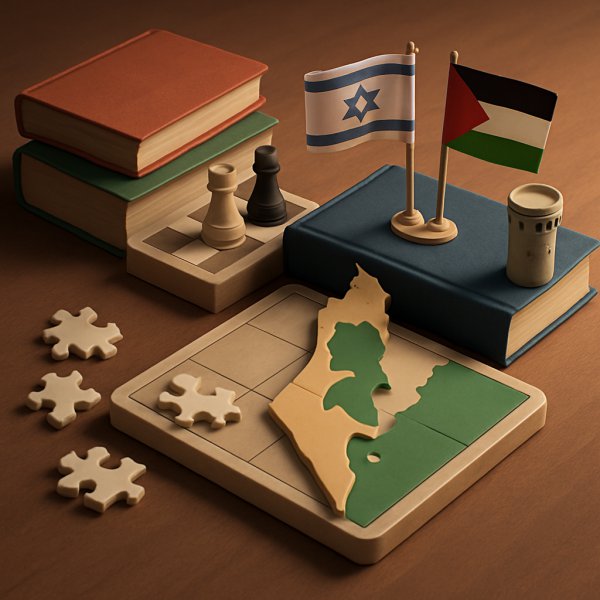
Why a small strip of land captures the world’s attention, and why you should care
Imagine a neighborhood where three families insist the attic belongs to them because their grandparents lived there, the living room holds sacred family heirlooms for all three, and every hallway has scars from fights over the light switch. Now magnify that confusion over centuries, toss in empire politics, mass migrations, competing national movements, and modern weapons, and you have a sense of what is happening between Israel and Palestine. This conflict matters because it shapes lives on the ground, fuels global politics, and tests how the world deals with competing claims to land, dignity, and safety.
The story is long, and it is not a single narrative. There are layers: ancient history, imperial decisions, modern nationalism, trauma, legal arguments, everyday survival, and attempts at peace that collapsed or stalled. Learning the full picture helps you move beyond headlines and slogans, and gives you the tools to judge new developments thoughtfully rather than reactively. If you want a concise roadmap that takes you from ancient roots to today's headlines, with human stories, practical ways to learn more, and clear explanations of what people mean by two-state or one-state ideas, you are in the right place.
I will guide you through the past and present in a clear, step-by-step way, using everyday analogies, pointing out common myths, and giving you reflection prompts to test your understanding. By the end you should be able to explain the conflict to a friend, identify the main turning points, and know concrete steps you can take if you want to be involved responsibly. Let us start by walking back through time to understand why this particular patch of land became so contested.
How ancient history sets the stage without deciding everything today
Long before modern politics, the land between the Mediterranean Sea and the Jordan River was home to many peoples and rulers. Ancient tribes known in the Hebrew Bible as Israelites formed kingdoms here, and Jerusalem grew as a religious and cultural center. Empires - Assyrians, Babylonians, Persians, Greeks, and Romans - all ruled the region in turn, reshaping its demography and institutions. Crucially, after the Roman conquest and the destruction of the Second Temple in the first and second centuries CE, many Jews dispersed across the Mediterranean and beyond, creating a long Jewish diaspora while some communities remained on the land.
After the seventh century CE the region became predominantly Arab and Muslim with significant Christian and Jewish minorities, following the Muslim conquest. Over centuries people of different faiths and backgrounds lived under various rulers, and the land changed names and borders according to the empires of the day. This long, mixed history explains why multiple peoples have legitimate historical and emotional ties to the same places, but it does not mean that modern political claims can be settled by ancient history alone. Nations and states are modern inventions, and the disputes we see today take shape in the modern age.
From Ottoman quiet to rising nationalisms in the nineteenth century
For about four centuries before World War I, the area was part of the Ottoman Empire and was administratively connected to broader Syrian and Lebanese provinces. Life was local, agricultural, and defined by Ottoman land laws, taxes, family ties, and village networks. In the late nineteenth century, two currents arrived that changed the political landscape. One was European Jewish nationalism known as Zionism, born largely in response to growing anti-Semitism in Europe and advocating for a Jewish national home in Palestine. The other was rising Arab nationalism, as educated elites across the Middle East began imagining new post-imperial states after centuries of Ottoman rule.
Jewish migration to the area increased in several waves, known as aliyot, bringing people, capital, and new agricultural and urban projects. At the same time the Arab inhabitants of the land, both Muslim and Christian, cultivated their own national consciousness and resisted what they saw as a threat to their majority status and land. The result was growing friction as communities competed for land, political influence, and cultural recognition. By the time imperial politics began to rearrange the Middle East in the wake of World War I, the ground was prepared for a much bigger storm.
Britain, declarations, and the partition idea that tried to solve too much
After World War I the Ottoman Empire collapsed and Britain took administrative control under a League of Nations mandate. The British public statements complicated matters. In 1917 the Balfour Declaration expressed British support for a Jewish national home in Palestine while promising to preserve the civil and religious rights of existing non-Jewish communities. That double promise contained an inherent tension that became a source of conflict. Jewish immigration continued, and Arab resistance intensified into riots and revolts during the 1920s and 1930s.
By the end of the Second World War the Jewish plight from the Holocaust increased international sympathy for a Jewish state, while Palestinian Arabs demanded self-determination. The United Nations proposed a partition plan in 1947 that recommended splitting the land into separate Jewish and Arab states, with Jerusalem under international administration. Jewish leaders accepted the plan, though not all were happy with the borders. Arab leaders and most Palestinian leaders rejected it, arguing it unfairly gave a large portion of the land to a Jewish state while Arabs were the majority population in many parts of Palestine overall. Violence escalated between the communities as the British prepared to leave.
1948, the birth of Israel, and the Palestinian Nakba
When Jewish leaders declared the State of Israel in May 1948, neighboring Arab states invaded, and a full-scale war erupted. That war ended with armistice lines in 1949 which were later called the Green Line, and with Israel controlling more territory than the UN partition plan had allocated. The war produced a huge human upheaval. Around 700,000 Palestinians either fled or were expelled from their homes in the events Palestinians call the Nakba, or catastrophe. Many became refugees in Gaza, the West Bank, Jordan, Lebanon, and Syria, creating a refugee crisis that continues to be central to the conflict.
Jordan controlled the West Bank and East Jerusalem, and Egypt controlled Gaza through the 1950s and 1960s. The creation of Israel fulfilled the Zionist aspiration for a sovereign Jewish state, while for Palestinians the war cemented dispossession, refugeehood, and a galvanizing sense of loss. These outcomes set two core grievances in motion: Israeli security concerns and Palestinian claims for return, compensation, or statehood. The 1948 war did not resolve competing nationalisms, it hardened them.
1967 and the occupation that reshaped everything again
In June 1967, Israel fought the Six-Day War against Egypt, Jordan, and Syria, and captured the West Bank, East Jerusalem, Gaza Strip, Golan Heights, and Sinai Peninsula. The speed and scale of the victory had immediate and long-term consequences. Israel now controlled territories with large Palestinian populations, and this occupation began a new political reality. For many Israelis, the victory was a matter of survival and security, and for many settlers and religious nationalists it was seen as a historic return to ancestral lands. For Palestinians it signaled a prolonged military occupation, restrictions on movement, land confiscations, and the start of Israeli settlement construction in the occupied areas.
The United Nations produced Resolution 242 asking for Israeli withdrawal from territories taken in the conflict in return for peace and secure borders. That phrase - land for peace - became the basis for many negotiations, though its wording was deliberately ambiguous and subject to differing interpretations. Palestinian identity and political organization also evolved in this period, with groups like the Palestine Liberation Organization gaining prominence as representatives of national aspirations, even if their methods and goals changed over decades.
Unrest, diplomacy, and the hard lessons of peace attempts
The late twentieth century was dominated by cycles of uprising and diplomacy. The First Intifada, a largely grassroots Palestinian uprising that began in 1987, shook Israeli and global perceptions and gave momentum to political solutions. That led to the Oslo Accords in the 1990s, a series of agreements where Israel and the PLO recognized each other and planned a phased process toward Palestinian self-rule and a final status negotiation. A Palestinian Authority was established to govern parts of the West Bank and Gaza, and there was real hope in many quarters for a two-state solution.
Yet Oslo left many core issues unresolved - the status of Jerusalem, the borders, refugees, settlements, and security arrangements. During the 1990s and 2000s settlement expansion continued, and frustrations boiled over into the Second Intifada from 2000 to 2005, which was far more violent and deadly than the first one. The aftermath included tighter Israeli security measures, a barrier cutting into parts of the West Bank, and growing political polarization. In Gaza political dynamics shifted toward Hamas, an Islamist movement that rejected Oslo and later seized control of the territory in 2007, creating a split between the Palestinian Authority in the West Bank and Hamas in Gaza.
Where things stand today - fragments, barriers, and competing realities
Today the situation is characterized by fragmentation and asymmetric power. Israel is a sovereign, democratic state with a strong military and international ties, while Palestinians live under a mix of Palestinian administrative control, Israeli military control, and occupation. The West Bank is dotted with Israeli settlements that are considered illegal under international law by most countries, though Israel disputes this. East Jerusalem was annexed by Israel in a move not internationally recognized, and Gaza is governed by Hamas and blockaded by Israel and Egypt, producing severe humanitarian challenges. Periodic wars between Israel and Gaza-based militants cause civilian suffering and deepen mutual resentment.
International responses vary. Some countries support a negotiated two-state solution as the best path to mutual recognition and peace. Others prioritize Israel's security above all, and some emphasize Palestinian rights and end to occupation. Diplomatic efforts have repeatedly stalled, with trust deficits, internal politics on both sides, regional geopolitics, and changing international priorities all undermining progress. The result is a status quo that leaves both societies worse off, and a region that remains volatile.
What people actually argue for today - a quick comparison of major proposals
| Proposal |
What it says |
Main appeal |
Main criticism |
| Two-state solution |
Create two sovereign states, Israel and Palestine, roughly along pre-1967 lines with land swaps |
Preserves national self-determination for both peoples, internationally supported |
Political fragmentation, settlements, and mutual distrust make it hard to implement |
| One-state solution |
Create a single democratic state for all citizens, Israelis and Palestinians |
Equality under one government, avoids contested borders and displacement |
Demographic and identity fears, power-sharing breakdowns, potential end of a Jewish-majority state |
| Confederation / federation |
Two entities with shared institutions and open movement, joint management of Jerusalem |
Tries to combine self-rule with practical cooperation |
Complex governance, requires high trust and strong institutions that do not exist now |
This table simplifies complex proposals, but it helps clarify why the core disagreements are both political and existential: are the goals national separation, equality within a single polity, or some hybrid that allows both identities to flourish?
Common myths and why they do not help us understand reality
There are several popular myths that oversimplify and confuse the conflict. One myth is that this is only a religious war between Jews and Muslims. In reality religion matters, but the conflict is also about land, national self-determination, security, and political power. Another myth is that Palestinians or Israelis have no historical claims. Both peoples have deep historical and emotional ties to the land, and modern claims are rooted in different kinds of history and law. A third myth is that international law is irrelevant. While international law does not resolve politics by itself, it shapes diplomatic norms, influences public opinion, and provides frameworks for human rights and refugee issues.
Dismissing either side as entirely right or wrong prevents understanding the complex motivations and legitimate grievances each side holds. Nuance is not a moral compromise. It is a precondition for imagining lasting solutions that reduce harm and respect human dignity.
Human stories, everyday realities, and why statistics do not tell the whole story
Numbers matter - casualties, refugees, checkpoints, settlement counts - but they cannot convey the daily lived reality of people who dream of normal lives. Picture a Palestinian family in the West Bank applying for permits to visit a hospital, or a Jerusalem resident whose access to their own neighborhood is restricted. Picture an Israeli family that lived through rocket attacks from Gaza, feeling continuous anxiety about safety. These personal stories explain why fear, trauma, and grief drive choices as much as ideology or policy analysis.
There are also stories of cooperation. Joint Israeli-Palestinian NGOs, business partnerships, and medical collaborations show that practical cooperation is possible even in tense contexts. Those micro-level bridges do not replace political solutions, but they show a human capacity to navigate complexity that statistics alone miss.
How to think about justice, security, and possible futures
When you try to evaluate proposals, ask three questions: What does this do for human security? Who gets political voice and rights? How does it address past injustices? Different people prioritize these questions differently. Some put security first, arguing that until people feel safe, political solutions cannot hold. Others emphasize justice and remedies for dispossession. A durable solution likely needs to balance both, providing security guarantees while recognizing rights and historical grievances.
Think of it like repairing a house after a long fight. You need to secure the building so no one gets hurt, but you also need a fair plan for who gets which rooms, who pays for repairs, and how to restore trust so residents can live together or apart without new violence.
Reflection questions to solidify your thinking
- How does knowing the historical sequence of events change your initial impressions of the conflict?
- Which human stories stuck with you, and how do they complicate a single-sentence explanation of the conflict?
- If you had to prioritize one principle in a peace deal - security, justice, or self-determination - which would it be and why?
- What narratives did you previously accept without question, and what evidence would make you revise them?
- How might regional or global politics influence local decisions on the ground?
Take a moment to jot down answers, and compare them with a friend who has a different viewpoint. Conversations are one of the best tools for understanding complexity.
Practical steps you can take right now if you want to learn more or help
Start by broadening the sources you read. Mix reporting from Israeli, Palestinian, and international outlets, and include human rights organizations and academic analyses. Consider these concrete steps: follow journalists and organizations that provide on-the-ground reporting; read primary documents like the Oslo Accords and UN resolutions; support credible humanitarian groups that operate in Gaza, the West Bank, and Israel if your aim is immediate civilian aid; learn basic Arabic or Hebrew words related to the conflict to better understand sources; and attend local talks or university panels to hear diverse perspectives. If you plan to advocate publicly, prioritize accuracy and avoid amplifying dehumanizing rhetoric.
Small, sustained habits of learning and empathy are more effective than one-off declarations. If you care about policy, engage with elected representatives in a way that calls for human rights and practical solutions rather than slogans.
Why hope is not naive, and how progress can still happen
The pattern of this conflict shows long, painful cycles interspersed with windows of progress. Oslo proved that the impossible can become possible if political will and international mediators align, though it also showed how fragile agreements can be without robust enforcement and confidence-building. Realistic hope recognizes obstacles, acknowledges suffering, and invests in practical steps - reducing violence, enabling economic improvements, protecting human rights, and creating incremental trust-building measures.
You do not have to resolve centuries of history to make a difference. Encouraging dialogue, supporting humanitarian relief, educating yourself and others, and holding leaders accountable to ethical and legal standards are all practical contributions. The road to a just and lasting peace will be long, but the alternative is an endless continuation of harm.
Closing: staying curious, empathetic, and engaged
The Israel-Palestine story is difficult, sometimes tragic, often maddening, and also full of human dignity and resilience. Understanding it requires patience, willingness to confront uncomfortable truths, and a refusal to reduce complex narratives to simple slogans. By learning the history, listening to personal stories, questioning myths, and taking concrete steps to engage thoughtfully, you become part of a more informed public conversation. That kind of public wisdom matters because policies are shaped by citizens, and better-informed citizens are likelier to push for solutions that protect people, respect rights, and build durable peace.
If you leave here with one takeaway, let it be this: history explains why things are hard, but it does not fully determine the future. Small acts of learning, compassion, and principled engagement add up. Engage your curiosity, check your assumptions, and keep asking tough questions. Solid understanding is the first step toward being useful in a world where complex problems call for thoughtful citizens rather than soundbite diplomats.