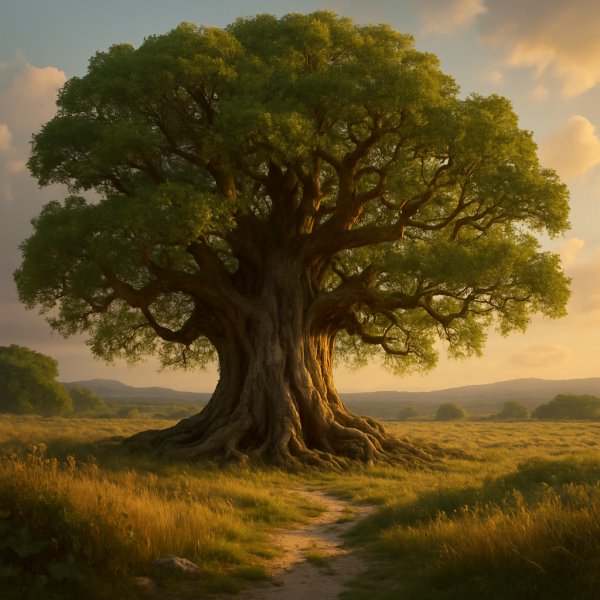
<h2>A living thing older than your civilization - would you believe it?</h2>
Imagine standing beneath a tree that sprouted before the pyramids were finished, or walking across a meadow that has been reproducing itself for tens of thousands of years without ever needing a mate. That is not fantasy; our planet still hosts living things that predate most human institutions, languages, and kingdoms. The question "What is the oldest living thing on the planet right now?" sounds simple, but it is also delightfully tricky, and answering it forces us to think about what we mean by "living," "individual," and "age."
In the next pages you will meet a handful of contenders - ancient trees, enormous clonal colonies, long-lived animals, and mind-boggling microbial continuity - and learn why each could claim the title depending on how you define the terms. This is a guided tour that mixes science, stories, and a little philosophy about time, identity, and conservation.
<h2>Why the question is trickier than it looks - definitions matter</h2>
When people ask "oldest living thing," they usually picture a single organism that has been alive for an extraordinary span. That is one legitimate interpretation, and in that category the winners are usually ancient individual trees. But "living" can mean different things: individual versus clone, continuous organism versus lineage, or cellular continuity where the genetic material persists even as cells are replaced.
To make sense of different claims you need three clarifications. First, individual age means the number of years since an organism started its own separate life - for example the germination of a single tree seed. Second, clonal age refers to a genetically identical group of organisms that reproduce asexually, forming a single genetic individual that can persist by replacing material over millennia. Third, lineage or genetic continuity asks a deeper question - how long has a genetic or metabolic line persisted through ancestral chains - and that can reach back billions of years for microbes. Each of these concepts produces a different "oldest" claimant.
<h2>Meet the contenders - a quick comparison table</h2>
Here is a concise table to set the stage, with approximate ages and the reason they might be considered the oldest. Age estimates are based on dendrochronology, radiocarbon, genetic studies, and growth-rate calculations, and many have uncertainty ranges because dating living things is rarely exact.
| Candidate |
Type |
Approximate age range |
Why it claims the title |
| "Methuselah" bristlecone pine (White Mountains, USA) |
Individual tree |
~4,800 - 5,000 years |
Oldest known non-clonal individual by tree-ring dating |
| "Prometheus" bristlecone (cut 1964) |
Individual tree (dead) |
~4,900 years at death |
Previously the oldest-known individual before destruction |
| Pando (Utah aspen clone) |
Clonal colony |
Estimates from 10,000 to 80,000+ years |
Large clonal organism reproducing via root suckers |
| Posidonia oceanica meadows (Mediterranean seagrass) |
Clonal plant meadow |
Tens of thousands to over 100,000 years (site-dependent) |
Long-lived clonal seagrass with genetic persistence |
| Greenland shark |
Vertebrate animal |
Up to ~400 years |
Longest-lived vertebrate estimated by eye-lens radiocarbon |
| Deep-sea sponges and corals |
Animals |
Thousands to tens of thousands of years |
Slow-growing species dated by growth rates and carbon methods |
| Microbial lineages (stromatolites, cyanobacteria) |
Microbial mats/lineages |
Billions of years (lineage continuity) |
Microbial life has persisted in various forms for ~3.5+ billion years |
| Turritopsis dohrnii (immortal jellyfish) |
Jellyfish species |
Potential for cellular rejuvenation, not truly immortal in wild |
Can revert to juvenile form in lab conditions, causing confusion |
Note: Ages vary by site and method; scientists continue to refine estimates. The point is not an exact number but an understanding of categories and why there is no single, simple answer.
<h3>Oldest single individuals - the bristlecone pines and what tree rings tell us</h3>
White-bark bristlecone pines (Pinus longaeva) in the high White Mountains of California have produced some of the most famous living age records on Earth. Scientists use dendrochronology - counting and cross-matching tree rings - to date living trees precisely. One named tree, commonly referred to as "Methuselah," is estimated to be nearly 5,000 years old, making it the oldest known non-clonal individual living organism. Its exact location is secret to protect it from damage.
Dating ancient trees is an art and a science. Researchers match patterns of wide and narrow rings across many specimens to build continuous chronologies that can reach back millennia, and radiocarbon testing provides cross-checks. The story of "Prometheus," a bristlecone felled in 1964 and later dated to nearly 4,900 years, is also a cautionary tale about how human actions can erase living history. Those trees are living archives of climate and ecological memory - each ring is a natural page recording water, temperature, and stress.
<h3>Longest-living organisms by cloning - Pando and ancient meadows</h3>
Clonal organisms change the game because an individual "genet" can regenerate parts repeatedly for millennia. Pando, the aspen clone in Utah, is a single genetic organism consisting of thousands of stems that sprouted from the same root system. Estimates of Pando's age vary widely because clonal age is hard to determine - some studies suggest tens of thousands of years, others give lower numbers. The technique relies on measuring growth rates, soil accumulation, and genetic differences across the stand, all carrying uncertainty.
Seagrasses such as Posidonia oceanica form large meadows in the Mediterranean and elsewhere that are reproductive clones and can persist for very long spans. Genetic and radiocarbon studies of some meadows suggest ages from tens of thousands to over one hundred thousand years for certain patches, though values depend on location and methodology. The key idea is this - while the individual blades die and regrow, the genetic clone has persisted, maintained by asexual propagation, making it arguable as one of the planet's oldest living organisms.
<h3>Ancient animals - who holds the vertebrate and invertebrate records?</h3>
Among animals, different groups hold different records. The Greenland shark has been estimated to live for up to about 400 years using radiocarbon dating of eye lens proteins, making it the longest-lived vertebrate currently known. Corals and certain deep-sea sponges can be astonishingly old as well; giant boulder corals and glass sponges grow extremely slowly - sometimes mere millimeters per year - and individual colonies may be thousands of years old based on growth rates and dating.
Some deep-sea sponges and corals may even reach ages comparable to clonal plants in certain locations, though direct dating of sessile animals is difficult and often comes with large error bars. These animals can serve as long-term environmental recorders, because their skeletal growth bands and isotopic signatures archive ocean chemistry and climate history.
<h3>The immortal jellyfish - true immortality or lab trick?</h3>
Turritopsis dohrnii, nicknamed the "immortal jellyfish," has captured the public imagination because it can revert from its adult medusa stage back into a juvenile polyp, effectively restarting its lifecycle. This cellular reprogramming is fascinating and important for studies of aging and regeneration, but it is not a ticket to biological immortality in nature. In the wild, these jellyfish face predators, disease, and environmental hazards, and most die before any theoretical reset would save them. The phenomenon points to intriguing biological mechanisms but does not change the broader landscape of "oldest living" claims.
<h2>Microbial continuity - the oldest lineages on Earth</h2>
If you shift the question from "oldest individual organism" to "oldest living lineages," microbes win by a margin that dwarfs trees and clonal plants. Stromatolites and the fossilized remains of cyanobacteria push microbial life back at least 3.5 billion years, and modern descendants of those metabolic pathways still power ecosystems today. The continuity here is genetic and metabolic rather than identity of cells; the specific cell that composed a 3.5-billion-year-old microbe is long gone, but the biochemical systems have an ancient, unbroken history.
This raises an important philosophical point: are we interested in the age of an organism's body, the age of its genome, or the age of a living process? For practical and conservation reasons we usually focus on living bodies or clones that we can observe today, but appreciating microbial continuity connects us to the deep, unbroken saga of life on Earth.
<h2>Why this knowledge matters - conservation, science, and perspective</h2>
Knowing which beings are oldest is not just trivia. Ancient individuals and clonal organisms are living records of environmental history, and they often host unique genetic adaptations to survive extremes. Old trees store climate data in rings; seagrass meadows sequester carbon and stabilize sediments; coral and sponge skeletons archive ocean chemistry. Because of their age, these organisms can be especially vulnerable to rapid environmental change and human disturbance, and they can take centuries or millennia to recover if lost.
Practical steps you can take include supporting conservation of old-growth habitats and clonal meadows, observing posted protections at white-bark Bristlecone sites or dune systems, reducing carbon footprint to limit climate stress on ancient organisms, and participating in citizen science projects that monitor tree health, coral bleaching, or seagrass cover. By protecting these organisms we preserve both natural heritage and living datasets that help scientists understand long-term ecological change.
<h2>Common misconceptions, cleared up</h2>
- "The immortal jellyfish is immortal in nature." Not quite - it can revert life stages under certain conditions, but it still dies from predation, infection, or environmental catastrophes.
- "Oldest means longest-lived species." No - an ancient species can have short-lived individuals. The question usually concerns the age of an individual or clone, not the age of a species.
- "A clone and an individual are always the same." They are not. A clonal colony may be genetically one individual but physically composed of many modules that appear like separate organisms.
- "We can date every living thing exactly." Dating living things involves methods with uncertainties. Tree rings give precise yearly counts, but radiocarbon and growth-rate extrapolations come with error ranges.
- "Microbes are not 'alive' in the same sense." Microbes are alive and have sustained life's continuity for billions of years, but their cells turn over rapidly - the ancient claim refers to lineage rather than single-cell age.
<h2>Mini challenges and thought experiments to try</h2>
- If you visit an ancient tree site, observe the protection signs and imagine each ring as a year of stories. Try sketching the landscape and noting how the tree's presence affects soil, shade, and other species. This is a practical mindfulness exercise and a quick ecology lesson.
- Think about the difference between "the same body" and "the same genes." Which feels more like "identity" to you - a cloned meadow that regenerates, or a single tree that grows continuously? Write a short paragraph arguing for one definition.
- Look up local conservation groups that monitor old-growth trees, seagrass, or corals, and consider volunteering. Hands-on participation helps you appreciate the timescales these organisms inhabit.
<h2>The short answer, wrapped in nuance</h2>
If you want a crisp answer, here it is with necessary caveats: the oldest known non-clonal individual living organism is a bristlecone pine in California commonly called "Methuselah," at roughly 4,800 to 5,000 years old. The oldest living clonal organisms are likely massive clones such as Pando, the Holocene-range age estimates of which vary but may range from thousands to tens of thousands of years, and certain seagrass meadows that genetic and radiocarbon data place at tens of thousands to possibly over 100,000 years. If you widen the definition to unbroken biological lineages, microbes top the list with continuity measured in billions of years.
There is no single, perfectly correct "oldest living thing" without specifying what you mean by living and age - and that is exactly why the question is fascinating. It asks us to define life in time, to respect continuity at scales far beyond a human lifetime, and to recognize that protecting these ancient beings is an act of stewardship for both science and wonder.
"To stand beside an organism that survived millennia is to hear history in slow motion" - let that sentence inspire you to look twice at old trees, expansive meadows, and long-lived sea creatures, and to value the deep-time stories they still carry.