<h2>When willpower takes a coffee break: a short story that might be your life</h2>
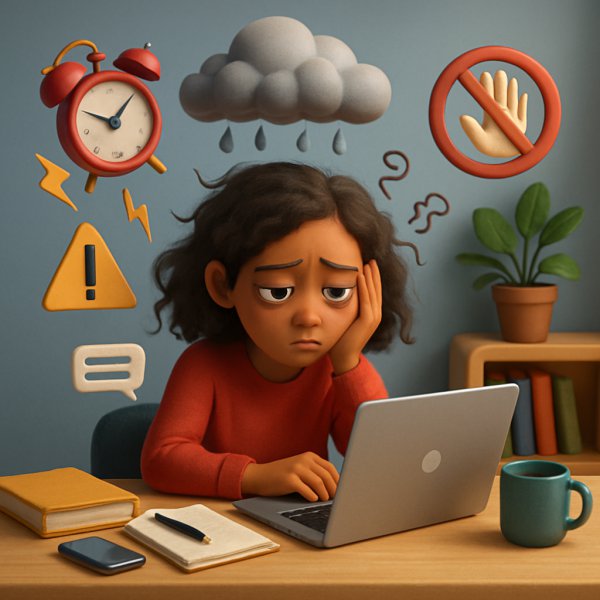
Maya slept four hours, hit snooze twice, sprinted to a meeting, gulped coffee like it was an IV, and by lunchtime she had ordered two unnecessary things online, eaten an entire bag of chips, and texted her ex something she would regret. She blamed a "lack of willpower," and then went home and promised to be better tomorrow. The story is familiar because almost everyone has a Maya day now and then, and it raises a deliciously important question: did Maya fail because she is weak, or because her biology and environment were stacked against her?
The short answer is that stress and sleep are engines under the hood of self-control and decision making. They do not merely nudge you; they change how your brain prioritizes information, how quickly you react, and whether you choose the safe route or the flashy shortcut. In this article we will walk from concrete scenes, like Maya's, into the science of hormones and brain circuits, debunk some myths, and then give practical, research-based strategies you can use tomorrow to make clearer decisions and preserve self-control when it matters most.
<h3>Two background actors with starring roles: what "stress" and "sleep" actually mean for your choices</h3>
Stress is not a single villain; it is an umbrella term for a set of physiological reactions your body mounts when it perceives threat, challenge, or overload. Acute stress triggers a rapid release of adrenaline and noradrenaline, and a slightly slower release of cortisol, which together sharpen some responses and blunt others. These chemicals are great when you need quick action - think avoiding a car accident - but when they surge during complex planning or moral decisions, they push the brain toward fast, habitual, or emotionally driven choices instead of careful, reflective ones.
Sleep is more than rest - it is the brain's nightly maintenance schedule. During sleep, circuits involved in attention, memory, and impulse control are consolidated and recalibrated. When you shortchange sleep, the prefrontal cortex, which is the brain region that does the heavy lifting for self-control and executive decisions, underperforms. The result is slower thinking, worse impulse control, and a higher likelihood of relying on shortcuts and immediate rewards rather than long-term goals.
<h3>The brain under stress: why tough times make us choose the quick fix</h3>
Under acute stress, your brain shifts into survival mode. The prefrontal cortex temporarily downgrades its influence, while the amygdala - the emotional alarm system - and the striatum - the habit center - gain power. This is an adaptive trade-off in many situations because it speeds reaction time, but it wreaks havoc on decisions that require weighing options, resisting temptation, or planning ahead. Classic behavioral changes include increased reliance on heuristics, greater risk-taking in some contexts, and a narrowing of attention to immediate threats or rewards.
Neuroscientist Robert Sapolsky and stress-research leaders like Bruce McEwen have shown that chronic stress goes further, remodeling brain structure in ways that make those fast, reactive patterns more likely over time. The prefrontal cortex can show reduced volume and connectivity, hippocampal function - important for contextual memory - can decline, and the amygdala can become more reactive. The Yerkes-Dodson law, a century-old finding, reminds us that stress follows an inverted U-shape: moderate arousal can improve performance, but too little or too much will reduce it. Knowing where you sit on that curve helps explain when stress sharpens you and when it dulls you.
<h3>Sleep as the nightly trainer for self-control and clear thinking</h3>
Sleep restores cognitive control. Studies by sleep scientists including Matthew Walker and others show that sleep deprivation produces measurable declines in prefrontal cortex activity, and increases amygdala reactivity to emotional stimuli, a neural pattern that mirrors the effects of acute stress. Behaviorally, sleep loss reduces working memory, slows reaction time, increases impulsivity, and makes riskier or more short-sighted choices more likely. The comparison that often gets cited is research suggesting that a day without sleep produces impairments similar to a legally intoxicated state, with 17 hours awake approximating moderate alcohol impairment and 24 hours awake approximating a blood alcohol level above common legal limits in many countries.
Sleep also supports the consolidation of complex memories and the integration of new information into existing frameworks, which matters for decision making. If you are trying to learn from recent mistakes, plan for the future, or resist temptation based on long-term goals, sleep helps lock those lessons in and restores the cognitive bandwidth to act on them.
<h4>Quick reference table - what stress and sleep do to your brain and choices</h4>
<table>
<tr>
<th>State</th>
<th>Primary brain changes</th>
<th>Common behavioral effects</th>
<th>Everyday signs</th>
</tr>
<tr>
<td>Acute stress</td>
<td>Higher adrenaline/cortisol, PFC downregulation, amygdala up</td>
<td>Faster reactions, more heuristics, emotional choices</td>
<td>Rushed decisions, tunnel vision, snap judgments</td>
</tr>
<tr>
<td>Chronic stress</td>
<td>Altered PFC and hippocampus structure, heightened amygdala</td>
<td>Habitual responses, impaired planning, memory issues</td>
<td>Constant anxiety, forgetfulness, poor impulse control</td>
</tr>
<tr>
<td>Sleep deprivation</td>
<td>Reduced PFC activity, increased amygdala reactivity</td>
<td>Slower reasoning, more impulsivity, riskier choices</td>
<td>Foggy thinking, irritability, overconsumption of sugar/caffeine</td>
</tr>
<tr>
<td>Good sleep and low-moderate stress</td>
<td>Optimal PFC-hippocampus balance, regulated cortisol</td>
<td>Better planning, greater restraint, longer-term thinking</td>
<td>Clear focus, steady mood, fewer impulsive buys</td>
</tr>
</table>
<blockquote>"Sleep is the single most effective thing we can do to reset our brain and body each day." - paraphrase of common findings in sleep research</blockquote>
<h3>Real-life case studies: when the science shows up in the messy world</h3>
Case one: medical residents working extended shifts. Landmark research has shown that sleep-deprived medical trainees are more prone to medication errors and attentional lapses, and that reducing shift length improves performance and patient safety. One influential study found that extended shifts significantly increased attentional failures and mistakes, which prompted policy changes in many hospitals. The story is a clear policy-level example of how sleep and work design shape high-stakes decisions.
Case two: a trader at the end of a long stress-filled week begins to favor big, risky bets. Under time pressure and stress, he stops running through contingencies and starts relying on heuristics from pattern recognition and habit. Research into stress and economic decisions shows that stress can increase risk-seeking or risk-avoidant behavior depending on the person and context, but the common denominator is speed over deliberation. This explains many real-world financial blunders during crises when stress is high and sleep is scarce.
Case three: the midnight shopper. After a bad night, consumers are more likely to choose immediate rewards and pay less attention to long-term costs. Marketing studies show that sleep-deprived shoppers spend more on impulse items and discount future consequences. These everyday micro-decisions add up and are precisely the kinds of behaviors that illustrate the combined effects of stress and sleep on self-control.
<h3>Common myths and the uncomfortable truths</h3>
Myth: Willpower is an infinite muscle you can train to the point of immortality. Truth: Early research proposed the "ego depletion" model, whereby self-control is a finite resource that can be used up. However, large multi-lab replications and meta-analyses produced mixed results, so the simple resource metaphor is too neat. More nuanced findings suggest self-control fluctuates with biological states, motivation, beliefs about willpower, and context. For example, people who believe willpower is unlimited often show fewer depletion effects, which highlights the role of mindset alongside biology.
Myth: Glucose is the fuel for willpower, so eat a candy bar and you will resist better. Truth: While glucose is necessary for brain function, the specific idea that brief self-control failures are cured by a sugar hit is over-simplified and not robustly supported. Long-term patterns of nutrition, sleep, and stress management matter far more than a single snack.
Myth: A little sleep loss does not matter. Truth: Even modest, chronic sleep restriction accumulates and impairs executive function in subtle ways that erode decision quality and self-control over time. Short naps can help transiently, but regular, sufficient sleep is the reliable solution.
<h3>Practical playbook - how to protect self-control and make better choices</h3>
The first principle is to design your life so that high-stakes decisions happen when your brain is at its best - usually after adequate sleep and before stress accumulates. Use scheduling to your advantage: place important meetings and financial choices in the morning after a good night, and avoid signing big contracts late at night or immediately after a turbulent event.
Next, reduce the number of trivial choices that sap mental energy. Automation and precommitment are your allies: create if-then plans - for example, "If I see a soda machine, then I will drink water" - and simplify daily routines so willpower is reserved for what matters. Build environments that remove temptation rather than demand resistance, and use defaults - like automatic savings plans - to make good choices the path of least resistance.
Stress management strategies that are backed by research include cognitive reappraisal, brief focused breathing, and behavioral activation. Reappraisal - labeling arousal as useful energy instead of a sign of collapse - can preserve performance in stressful moments, according to work by social psychologists like Alia Crum and Jeremy Jamieson. Simple breathing practices and a short walk can reduce acute physiological arousal and give you the space to choose deliberately instead of reacting.
Sleep hygiene is foundational. Aim for a consistent 7 to 9 hours of sleep per night, wind down 30 to 60 minutes before bed with low-stimulation activities, avoid caffeine after midday if you are sensitive, and consider a 10 to 20 minute power nap when you need a quick alertness boost. If you are chronically short on sleep, prioritize a sleep-schedule intervention for a week and track how your decision quality changes.
Helpful checklist:
- Schedule big decisions for when you are rested.
- Automate routine choices to save cognitive energy.
- Use if-then implementation intentions for temptations.
- Practice stress reappraisal in the moment: "This arousal is helping me perform."
- Take short naps and manage caffeine strategically.
- Track sleep and decisions for self-awareness.
<h4>A two-week experiment - a tiny challenge to test the theory</h4>
Week one: keep your normal routine and log three decisions each day that you regret or that feel impulsive, along with your sleep hours and stress level. Note context - time of day, hunger, and whether caffeine was consumed. Week two: apply two changes - sleep at least one more hour per night if possible, and schedule major decisions when you are rested. Continue the log and compare results. The exercise cultivates awareness and produces direct evidence for how sleep and stress shape your choices.
Reflective questions to ask each evening: Which decision was hardest today, and why? Did I postpone anything that required more deliberation? What small environmental change could have prevented a bad choice? These prompts teach you to notice patterns and to convert insight into new habits.
<h3>For leaders who want better organizational decisions</h3>
Designing systems to minimize stress and sleep-deprivation effects is a force multiplier. Limit late-night decision-heavy meetings, stagger high-stakes tasks so they do not fall on chronically tired team members, and create policies that allow for recovery - for example, reasonable shift lengths, rest breaks, and the option to reschedule important reviews after sufficient rest. Invest in simple structures - checklists, standardized procedures, and defaults - that reduce reliance on exhausted willpower.
Leaders can also cultivate norms that destigmatize rest and stress management. When executives model good sleep and stress practices and when organizations schedule important decisions deliberately, the overall decision quality improves and costly errors decline.
<h3>A pocket metaphor and final takeaways</h3>
Think of self-control as a phone battery and sleep as the nightly charging routine, while stress is the app that runs in the background and eats power faster. You can optimize both by changing the charger - better sleep habits - and by closing battery-hungry apps - reducing chronic stress and trivial decisions. You cannot simply will yourself to full charge when the battery is dead, but you can design habits, environments, and mindsets that keep the battery topped up.
Bottom-line takeaways: prioritize sleep, schedule important choices when you are rested, reframe stress when possible, automate trivial decisions, and use simple behavioral tools like if-then plans and short naps. The science is clear that sleep and stress are not mere background conditions - they are the context in which every decision and act of self-control happens. With small, consistent changes you can turn that context from foe to ally, and make tomorrow's Maya story a little less likely.