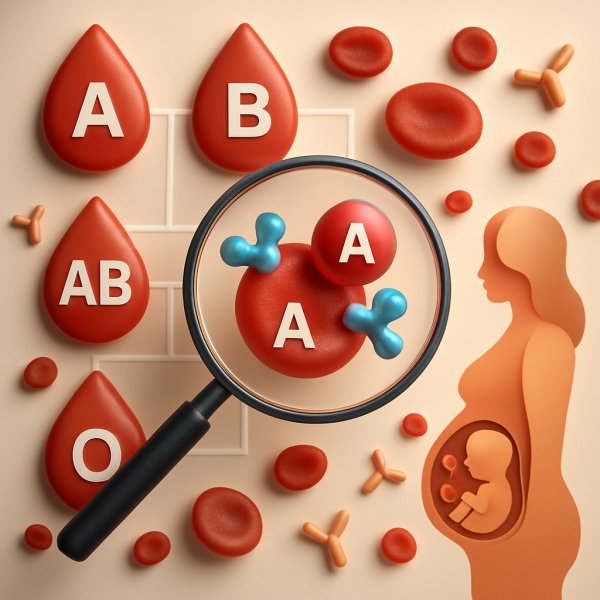
What your drop of blood hides, and why it deserves your curiosity
Imagine a family gathering where everyone wears a colored badge, and the badges decide who can share a sandwich with whom. Your blood works a bit like those badges: small signals on the surface of red blood cells that tell the immune system "friend" or "foreign." Understanding why multiple blood groups exist is not just a biology lesson, it is a passport to a better grasp of medicine, evolution, and even some surprising human stories. And yes, knowing your blood type can one day save a loved one’s life, or your own.
The story starts with avoidable mistakes and a heroic discovery. Before the 20th century, transfusions were often fatal because the body rejected "unknown" blood. In 1901, Karl Landsteiner noticed that the blood of some people caused clumping when mixed with others, and he uncovered the ABO system. That discovery transformed medicine, making safe transfusions possible and giving birth to transfusion medicine. Behind that practical story lies a bigger question: why did our species evolve multiple blood "badges" instead of just one?
In short, blood groups result from small differences on the cell surface, immune defense strategies, and evolutionary histories tied to disease and migration. We will unpack all of this step by step, with clear images, memorable analogies, and concrete examples you can share at your next dinner. Put on your curiosity glasses, and keep a practical question in mind: how do these distinctions affect my medical choices and my health?
This text will lead you from the basics - what these markers are and how they work - to evolutionary ideas that explain why they exist, including their practical importance today. You will leave with clear explanations, a few memorable anecdotes, and concrete actions to take. If you like to think along the way, short reflection questions will encourage you to apply the ideas to your own life.
The invisible signals: antigens on red blood cells and antibodies in plasma
Blood groups are defined by sugars and proteins stuck to the surface of red blood cells, called antigens. These antigens are like molecular signposts - they say "I belong to house A" or "I belong to house B," or sometimes "I have no special sign." The immune system reads those signs; if it sees a sign it does not recognize, it can produce antibodies, which are like spotlights that bind foreign signs and cause the cells to be destroyed or to clump together. This antigen-antibody interaction explains why mixing certain bloods can be dangerous.
A useful way to picture it is as locks and keys. Antigens are the locks on the doors of red blood cells, and antibodies are the keys that attach to those locks. If the key does not match, it may still bind in a way that causes a jam - in the body this shows up as clumping and destruction of cells, sometimes with serious consequences. That is why blood compatibility is not a mere formality: the recipient’s "locks" and the donor’s "keys" must be compatible to avoid a reaction.
The two best-known systems are ABO and Rh. The ABO system is based on the presence or absence of two main antigens, A and B. The Rh system, especially the D antigen, determines Rh-positive or Rh-negative status. But there are other, lesser-known systems, like Kell, Duffy, or Kidd, which can also be important in certain transfusions or in people who have repeated exposure to foreign blood.
Why genetics created multiple groups: inheritance rules and surprises
Blood groups are inherited fairly simply, but with some interesting subtleties. For the ABO system, there are three main alleles: A, B and O. The A and B alleles are co-dominant, which means that if you inherit one A and one B, you are group AB and you express both antigens. The O allele is recessive; it does not produce an antigen, so two O alleles give blood type O. This logic easily explains why two parents with types A and B can sometimes have a child with type O.
Rh status, particularly Rh D, is mainly determined by the presence or absence of a gene encoding the D antigen. If you have the D antigen, you are Rh positive; if not, you are Rh negative. The inheritance follows Mendelian patterns, but there are genetic variants that can complicate laboratory interpretation. In some medical contexts, genotyping is performed to precisely identify variants, especially for people who need regular transfusions.
Understanding blood group inheritance helps not only to estimate the likely blood types of your children, but also to explain clinical phenomena such as maternal-fetal incompatibility. For example, an Rh-negative mother carrying an Rh-positive fetus can produce antibodies after a first exposure, which can threaten later pregnancies. Thanks to this knowledge, medicine now offers effective preventive measures.
Evolutionary reasons: why nature keeps multiple variants instead of one
The key question is: if one blood type were universally safer, why did evolution not eliminate the others? The answer involves several forces acting together, like evolutionary conductors that favor diversity. First, certain antigens provide partial resistance to specific infections. For example, there are links between type O and better resistance to severe malaria, while other types may be more susceptible to certain infections. These local advantages can explain why certain types persist in regions where particular diseases predominate.
Second, diversity can be maintained by heterozygote advantage - that is, having two different versions of a gene can be better than having two identical copies. This keeps multiple alleles in the population. Third, historical events such as migrations, population bottlenecks, and founder effects have shaped the distribution of blood groups around the world. Some populations show very particular frequencies because of historical events rather than direct selection.
Finally, there are surprising molecular interactions between pathogens and blood antigens. Some viruses and bacteria use antigens as entry points; others are blocked when a particular antigen is present. These shifting selective pressures, depending on environment and time, explain why no blood type "won" everywhere, and why diversity remains useful for the species.
Concrete examples of pathogen - blood group interactions
Several pathogens show particular affinities for certain antigens. For example, noroviruses seem to bind preferentially to some blood-group-related antigens, which helps explain why people of certain types are more or less susceptible to that type of foodborne illness. In the case of malaria, some studies show that severe malaria is less frequent in individuals with blood type O, which may have increased the frequency of that type in endemic areas.
Conversely, agents like Vibrio cholerae can cause more severe disease in people with blood type O, according to some epidemiological studies. It is important to note that these associations are statistical tendencies and not absolute rules: you can be type O and develop severe malaria, or be AB and be perfectly resistant to a given infection - immunity depends on many factors. The exact mechanisms remain an active area of research, which keeps the topic lively and evolving.
These interactions partly explain the geographic distribution of blood groups. Where a particular disease has been a selective pressure for thousands of years, you often see different blood-group frequencies compared with areas without that pressure. But many other socio-historical factors also influence these frequencies.
How blood groups influence medicine today: transfusions, pregnancy, transplants
The main medical application of blood groups remains transfusion. Giving or receiving incompatible blood can cause an acute hemolytic reaction, which can be fatal. That is why blood banks routinely test ABO and Rh, and sometimes other systems depending on the clinical context. In emergencies, O negative blood is often used as an apparent universal donor, but this is a temporary solution and not ideal for long-term use.
Pregnancy is another area where blood groups matter. Rh incompatibility can lead to maternal sensitization and hemolytic disease of the newborn in subsequent pregnancies. Since the introduction of anti-D immunoglobulin injections, the risk has been drastically reduced, which is a clear example of how blood-group knowledge has prevented significant suffering.
For transplants, lesser-known blood antigens can also cause problems, as can tissue antigens such as HLA. Compatibility is therefore one component among many, but knowing blood groups remains a basic prerequisite. Finally, in forensic medicine and genealogy, blood groups have played an interesting historical role, although today whole-genome data largely replace these limited clues.
Simple summary table of ABO and Rh groups
| Blood type |
Antigens on red blood cells |
Antibodies in plasma |
Can receive from |
Can donate to |
Approximate worldwide frequency |
| A |
A antigen |
Anti-B |
A, O |
A, AB |
~30% |
| B |
B antigen |
Anti-A |
B, O |
B, AB |
~10% |
| AB |
A and B antigens |
No notable anti-A/B |
A, B, AB, O |
AB only |
~5% |
| O |
No A/B antigens |
Anti-A and Anti-B |
O only |
O, A, B, AB |
~55% |
| Rh positive |
D antigen present |
- |
depends on ABO |
can donate to Rh+ |
variable by region |
| Rh negative |
D antigen absent |
can develop anti-D after exposure |
caution - requires Rh negative for safety |
can donate to Rh+ only if the difference is managed |
|
Note: Frequencies vary by region and ethnic group, and the table simplifies clinical reality. In practice, blood typing is always done before any major transfusion.
Untangling myths: what blood groups do not mean
There are many myths about blood groups, some amusing, others potentially dangerous. For example, the idea that your blood type determines your personality or your optimal diet is not supported by solid scientific evidence. Those theories belong to entertainment, not medicine. Similarly, being type O does not make you invincible against infections, and being AB does not condemn you to any particular disease.
Another common misunderstanding concerns the "universal donor." O negative is often called the universal donor for red blood cells in emergencies, but rules differ for plasma or platelet transfusions. In addition, relying on O negative regularly is not sustainable for blood supplies, which is why regular and diverse donations are important. Finally, some people think that knowing their blood type solves all blood-related medical problems; in practice, additional tests and medical history are often required.
In medicine, caution is essential: the simplicity of slogans like "universal donor" or "blood type X = personality Y" masks a more nuanced reality. It is wise to remain critical of simplistic claims and to ask for reliable sources when you hear surprising information.
Concrete actions to take today - useful and simple
If you want to turn this knowledge into useful actions, here are a few easy steps you can take. First, if you do not know your blood type, ask for it during a medical checkup or take a quick test at a blood donation center. Knowing your type can speed emergency care, and it is often free when you donate blood. Next, consider becoming a regular donor - diversity in donations saves lives, and some communities lack donors for rare types.
For women of childbearing age, find out your Rh status and tell your gynecologist; preventing Rh sensitization is a concrete medical success. If you are on long-term treatment that might require transfusions, talk with your care team about blood genotyping to optimize compatibility. Finally, when you travel or in risky situations, carry a card or an app that lists your blood type and allergies, to save time in an emergency.
- Also think about sharing this information with your family, as blood group inheritance can help anticipate children’s medical needs.
- If you have a rare blood type, look into donor registries or international blood banks that can help if needed.
Questions to prompt reflection and application
- Do you know the blood types of your parents and siblings, and can you deduce anything about your own chances of being A, B, AB or O?
- Have you ever been in a situation where knowing your blood type would have made things easier? What would you do differently now?
- Think about your region or country: are there historical or current diseases that might have influenced blood-group frequencies there?
- If you had to persuade someone to donate blood, what personal or emotional argument would you use to motivate them?
These small questions help you remember the concepts and translate the science into practical actions in your daily life.
Why learning this makes you smarter and more useful to society
Understanding why multiple blood groups exist gives you a window into human history, disease biology, and modern medical practice. It puts you in a better position to make informed choices for yourself and your loved ones - whether that means donating blood, following prenatal advice, or critically evaluating popular claims. Knowledge reduces anxiety: knowing that an incompatibility can be tested and managed, rather than imagining catastrophic scenarios, is reassuring.
On a broader level, every blood donation and every informed person contributes to a more resilient health network. Blood-group diversity, which may seem at first like a source of complications, is actually an evolutionary treasure that connects us to our past and sometimes protects us in subtle ways. And it is a fascinating story to tell: from risky transfusions to modern prevention protocols, humanity has turned a scientific discovery into lives saved.
Final encouragements to keep your curiosity alive
If a small drop of your blood can contain so many stories - genetics, epidemics, migrations, medical innovations - imagine how much other small things in life can teach you. Keep your curiosity alive, ask questions of your doctors, donate if you can, and share this knowledge. The next time someone mentions their blood type at the table, you will not only be able to answer "A, B, AB or O," but you can explain why those letters tell a much bigger story. This is the kind of practical, elegant knowledge that makes the world a little more understandable, and you a little more useful.