<h2>What is ADN? The tiny instruction book that built you, and why it feels like magic</h2>
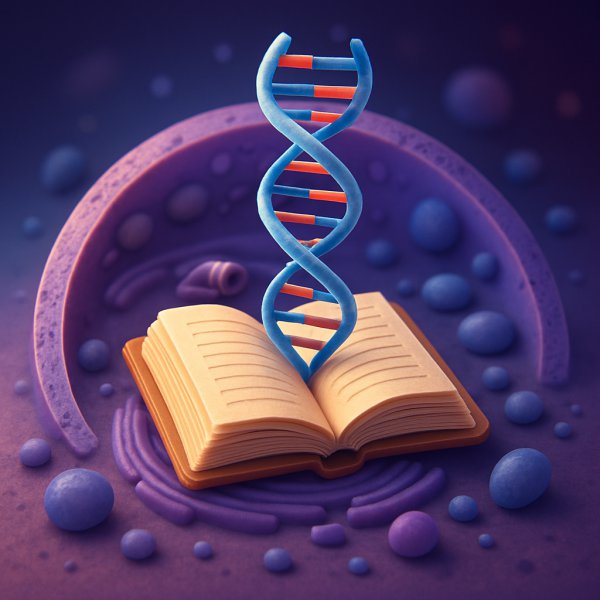
Imagine holding a book so small it fits in the nucleus of a cell, yet so detailed that every instruction inside helped build the person you are: your eye color, your blood type, the rhythm of your heartbeat, and even quirks like how you respond to certain foods. That microscopic book is ADN, the same thing most English speakers call DNA. ADN stands for "ácido desoxirribonucleico" in Spanish, and it is a molecule that stores biological information with mind-bending efficiency. It is not alive on its own, but it is the script that living systems read, copy, and sometimes rewrite.
Startling fact: if you stretched the ADN from one human cell into a straight line, it would be about 2 meters long. Each of your cells contains that two-meter-long molecule folded and packed into a nucleus smaller than a dust mote, and your whole body contains trillions of these copies. That scale gap is one reason ADN feels like magic; once we demystify its structure and logic, we discover a set of simple rules producing dazzling complexity.
<h3>ADN is the same as DNA - a quick history and name origins</h3>
If you have seen ADN written in Spanish, French, or many other languages, it is simply the local acronym for deoxyribonucleic acid. The molecule itself was identified as the carrier of genetic information through experiments in the early 20th century, and its now-famous double-helix structure was described in 1953 by James Watson and Francis Crick, based on Rosalind Franklin's X-ray diffraction data and other experimental clues. That discovery turned chemistry into storytelling - researchers could finally explain how biological traits are copied and passed between generations.
Scientific ideas develop over time. The concept that a molecular code carried traits came from experiments showing that cells could pass information without whole organisms being involved, and it was the structure of ADN that made the coding and copying mechanism both plausible and elegantly simple. Since then, projects like the Human Genome Project, completed in the early 2000s, provided a first complete readout of human ADN, and recent tools such as CRISPR have given us the ability to edit that code with increasing precision.
<h3>How ADN looks and speaks: bases, backbone, and the double helix</h3>
Visualize a twisted ladder. The sides of that ladder are a sugar-phosphate backbone, a repeating chain of molecules that gives structure and strength. The rungs are pairs of chemical bases - four letters in the biological alphabet: adenine, thymine, cytosine, and guanine, often written A, T, C, and G. A always pairs with T, and C always pairs with G, thanks to specific chemical attractions. That complementary pairing is the key to replication and information storage. The two strands run in opposite directions so the helix has a consistent geometry, and the order of bases along one strand is essentially the code for making proteins and regulating life processes.
Think of the bases as letters in a recipe. A stretch of ADN with a particular order of letters forms a gene, which is like a recipe for a protein. But a gene is more than the final recipe; it includes signals that tell the cell where to start reading, where to stop, and how to package the final product. The double helix is not static; it breathes, opens, and is accessed by enzymes when the cell must read or copy a section of the code.
<h4>Table: Quick ADN vocabulary</h4>
A small table helps anchor the terms you will see again and again
| Term |
What it means |
| Base (A, T, C, G) |
The letters of the biological alphabet that encode information |
| Nucleotide |
A unit consisting of a base, a sugar, and a phosphate; the building block of ADN |
| Gene |
A segment of ADN that carries instructions to make a functional product, usually a protein |
| Chromosome |
A long, organized structure of ADN and protein, carrying many genes |
| Genome |
The full set of genetic material in an organism |
<h3>How cells read ADN - the central dogma explained in friendly terms</h3>
In biology there is a useful shorthand called the central dogma: ADN is transcribed into RNA, and RNA is translated into protein. If ADN is the cookbook, RNA is the photocopy of a single recipe you take into the kitchen, and proteins are the dishes prepared by following that recipe. Proteins are the workhorses; they build structures, act as enzymes to speed reactions, serve as messengers, and more. Each step has checks, balances, and editing processes to ensure fidelity, but also flexibility when adaptation is necessary.
Transcription starts when cellular machinery opens a region of the ADN and makes an RNA copy. That RNA, often messenger RNA or mRNA, carries the code to the ribosome - the cell's kitchen - where transfer RNA brings amino acids together in the order specified by the mRNA. The resulting protein folds into a three-dimensional shape that determines its function. Small changes in the ADN code can alter a single amino acid, sometimes with dramatic effects, and other changes may do nothing noticeable. That is how genetic variation becomes biological diversity.
<h3>How ADN copies itself and why inheritance works the way it does</h3>
Before a cell divides, it must copy its ADN so each daughter cell gets a full set of instructions. ADN replication is semi-conservative, meaning each new molecule contains one old strand and one newly made strand. Enzymes work like meticulous copy editors: they unzip the helix, match complementary bases, correct many errors, and stitch everything back together. This combination of accuracy and occasional mistakes creates a balance between stability and variation.
In sexually reproducing organisms, special cell divisions called meiosis shuffle chromosomes and introduce variation through recombination - a process where similar chromosomes exchange segments. That shuffling, together with random segregation of chromosomes from each parent, creates the genetic uniqueness of offspring. Patterns of inheritance were first decoded by Gregor Mendel's pea plant experiments, long before the molecular mechanism was known, and ADN gives the mechanistic explanation for Mendel's observed ratios.
<h3>Why small changes in ADN matter - mutation, evolution, and medicine</h3>
A mutation is any change in the ADN sequence. Mutations can be as small as a single base substitution, or as large as the insertion or deletion of whole gene sections. Many mutations are neutral and have no obvious effect. Some are harmful, causing disease or dysfunction. A few are beneficial, giving their carriers an advantage in a particular environment. Over long timescales, beneficial mutations can spread through populations and drive evolution, while harmful ones are often filtered out by natural selection.
Real-world examples help make this concrete. A single base change in the gene that codes for the beta chain of hemoglobin causes sickle cell disease, which can be debilitating; that very same change offers protection against severe malaria in carriers. That trade-off explains why the mutation persists in regions where malaria is common. On the medical front, techniques such as gene therapy and CRISPR-based editing are being developed to correct harmful mutations, and in some cases those techniques have moved from lab experiments into clinical trials for conditions like certain blood disorders.
<h3>ADN in everyday life: forensics, ancestry, and powerful biotech tools</h3>
Your personal ADN shows up in many everyday technologies. Forensics uses short tandem repeats and other sequence markers to match biological material from crime scenes to individuals with very high accuracy when samples are good. Consumer ancestry tests compare your genetic variants with databases to infer likely geographic origins, though those inferences depend on the reference populations used and can be probabilistic rather than definitive. In medicine, genomic testing can identify mutations that indicate increased risk for certain cancers, inform drug choices, or guide treatment planning in personalized medicine.
Biotechnology has introduced tools that go beyond reading ADN to editing it. CRISPR-Cas systems act like programmable scissors that can cut ADN at specific locations, enabling scientists to add, remove, or alter sequences. This capability has been harnessed in agriculture, research, and experimental therapies. The potential is transformative, but it also raises ethical and safety questions - about how edits might affect future generations, about fairness in access, and about unintended consequences from tinkering with complex biological systems.
<h4>Case study: the DNA breakthrough that solved a murder and changed policing</h4>
In the late 1980s in Britain, a landmark forensic case used ADN profiling to identify a murderer by matching crime scene DNA to a suspect, an approach that has since revolutionized criminal investigations. The case highlighted both the power of genetic evidence and the need for careful chain-of-custody practices, legal safeguards, and awareness of false positives in complex databases. Today, ADN evidence is regularly used in courts, though interpretation still requires expert context.
<h3>Common misconceptions about ADN, corrected</h3>
List: Common misunderstandings and the clarifying reality
- Misconception 1: ADN determines destiny. Correction: ADN provides tendencies and potentials, but environment, lifestyle, and chance shape outcomes in powerful ways.
- Misconception 2: Your ADN is completely unique. Correction: Most of your ADN is shared with every human, and identical twins have essentially identical genomes; only parts vary enough for unique identification.
- Misconception 3: Gene means destiny. Correction: A "gene for X" usually means a gene influences a trait, often among many genes and environmental factors, not that it dictates the trait entirely.
- Misconception 4: Editing one gene fixes everything. Correction: Biological networks are complex; changing one part can have ripple effects, and many conditions involve multiple genes.
Clarifying these confusions helps avoid overhyped headlines, fear, or misplaced faith in genetics alone. Think of ADN as a high-quality blueprint that is interpreted and acted on by complex cellular systems and environments.
<h3>Mini challenges and thought experiments to deepen your understanding</h3>
Try these small mental exercises to test your grasp and spark curiosity. First, imagine a short ADN strand: ATG-CGT-TAC. If the cell reads in triplets where each triplet codes for one amino acid, how would small changes alter the outcome? Replace the middle G with an A and think about whether the protein would change. Second, consider an identical twin pair - if they have the same ADN, why might one develop a disease while the other does not? Reflect on the roles of environment, random molecular events, and epigenetic changes that alter how genes are expressed.
Another simple challenge is to estimate scale: you read that human ADN is roughly 3 billion base pairs long in a diploid cell. If each base pair were a letter in a book, how long would that book be, and what does that tell you about the information density in biology? These thought experiments sharpen intuition about scale, probability, and the limits of genetic determinism.
<h3>How to learn more and practical next steps if you are curious</h3>
If ADN fascinates you, pursue learning with a balanced mix of reading, interactive tools, and respectful skepticism. Good starter books include accessible genetics texts and popular science treatments that explain mechanisms without sensationalism. Free online courses, museum exhibits, and virtual labs offer safe ways to see experiments conceptually. If you want hands-on experience, community biotech labs and university outreach programs sometimes offer introductory workshops for beginners, but never attempt genetic experiments at home without proper training and oversight.
When exploring direct-to-consumer services like ancestry or health tests, read the fine print, understand privacy implications, and consider how data sharing could affect you and your relatives. For deeper scientific engagement, peer-reviewed articles and reputable science journalism provide reliable updates. Keep curiosity paired with critical thinking, and remember that new discoveries are often incremental and complex rather than dramatic.
<h4>Final metaphor and the main takeaways to remember</h4>
Think of ADN as an immensely compact library of instructions - a set of recipes, architectural blueprints, and operating manuals stacked and bound inside every cell. The book is copied, read, and sometimes annotated, with changes that can be harmless, harmful, or occasionally life-changing. Understanding ADN unlocks insights into medicine, evolution, identity, and ethics, and it gives us tools that can heal or harm depending on how we use them. The science combines elegant chemistry, information theory, and a dash of historical drama, resulting in one of humanity's most powerful explanatory frameworks.
If you remember three things, they are: ADN is the molecular code of life; its structure - complementary bases in a double helix - explains copying and inheritance; and small changes in that code are the raw material for evolution and the focus of modern medicine and biotechnology. Keep asking questions, try the mini challenges, and let your curiosity carry you into more detailed explorations. Science rewards the patient and the playful, so approach ADN both with respect and with a sense of wonder.