A surprising way to think about the internet that feels like déjà vu and the future at once
Imagine opening a familiar shop where the owner not only sets the price, but also controls who can enter, who hears about sales, and keeps the cash register locked in their private drawer. Now imagine a new kind of shop where the door opens automatically for anyone with the right key, receipts are written into a public ledger, and a group of customers vote together on which products to add next. The former is a lot like the web you use every day. The latter is where web3 ideas live - a different set of rules about ownership, trust, and participation. That difference is why conversations about web3 feel both philosophical and practical, and why it matters whether you pay attention or not.
You have probably heard buzzwords - crypto, blockchain, NFTs, decentralization - thrown around like confetti. The noise makes web3 sound either like a get-rich-quick scheme or a fanciful tech utopia. Both extremes miss the point. Web3 is an evolving set of technologies and ideas that change how software and online spaces grant power and value. It promises that the internet can be less like a series of private shops and more like networks people co-own and operate together.
If you want to understand web3 well enough to have a clear opinion, or to decide whether to try it, this guide walks you from a simple picture to the nuts and bolts, shows real examples, corrects common myths, and ends with concrete next steps you can take today. You will get stories, analogies, and questions that make you pause and apply concepts to your life. No prior blockchain degree required - just curiosity and a willingness to think about how digital tools shape who wins and who loses.
What web3 really is - the simple picture
At heart, web3 is about changing who controls digital systems. Traditional websites and apps run on servers owned by companies. Those companies can decide what you see, how your data is used, and who gets paid. Web3 reimagines parts of the internet so that some of these decisions are instead governed by open protocols, code, or communities rather than a single company.
Think of a public park versus a private club. In today’s web, many online spaces feel like private clubs - a company owns the gate, the rules, and the address book. Web3 is not necessarily all parks, but it aims to make more spaces where access, rules, and rewards are transparently shared or automated. That does not mean chaos - it means using cryptographic tools and distributed systems so that trust does not rest on any single actor.
This shift affects three interlocking things: how data and identity are handled, how value is created and shared, and how groups make decisions. When those three aspects change, so do incentives and opportunities. That is why the technology side is interesting, but the social and economic implications are where the real excitement - and the real risks - live.
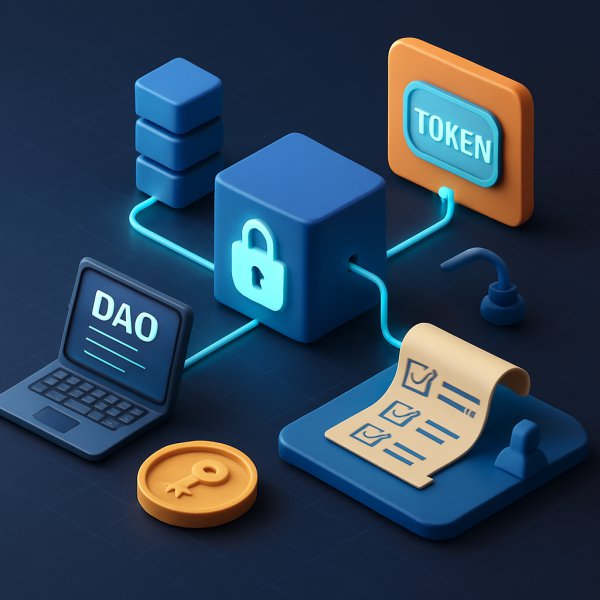
The building blocks: blockchains, smart contracts, tokens, and DAOs explained plainly
Web3 rests on a handful of technologies and design patterns. Understanding them is like learning the ingredients in a new recipe - once you know what each one does, you can taste why the combination produces a different flavor.
Blockchains are distributed ledgers - think of them as shared accounting books. Instead of a single company keeping the ledger, many independent participants hold copies and agree on entries using rules. That agreement process makes it hard to change records retroactively, which is useful when you want transparent, tamper-resistant histories.
Smart contracts are programs that run on blockchains. They are like vending machines: you put in coins, the machine checks the rules, and it either dispenses the snack or returns your money. Smart contracts automatically enforce agreements without a middleman. That enables decentralized applications, or dApps, which use smart contracts to provide services.
Tokens are units of value that live on blockchains. Some tokens represent money used for transactions. Others are utility tokens that grant access to features, or governance tokens that give holders voting power. Non-fungible tokens, or NFTs, are tokens that represent unique items - like digital art, tickets, or virtual land.
Decentralized autonomous organizations, or DAOs, are groups that use smart contracts and tokens to coordinate activity and decisions. Rather than a single CEO making all choices, members vote and the code executes what the community agrees on. DAOs are experiments in distributed governance and collective ownership.
How ownership, identity, and money shift in a web3 world
One of the clearest ways web3 changes things is in ownership. Today, if you create a piece of content on a social media platform, the platform often controls distribution and monetization. In many web3 models, creators can mint a token tied to their work and sell it directly to fans. That creates a clearer economic link between creator and audience, while also enabling new ways to reward participation.
Identity is another change. Rather than logging in with an email or social account, web3 often uses cryptographic keys. Your wallet - a piece of software - proves who you are without necessarily exposing a real-world identity. That can increase privacy and portability, because you can move your digital assets and reputation between apps. It also raises practical questions about account recovery and safety that require careful design.
Money-on-chain means some transactions and incentives can work without traditional banks. This creates fast, programmatic ways to pay, lend, or stake assets. But it also introduces volatility and regulatory uncertainty. The practical gain is composability - different protocols can interact like Lego blocks, creating financial primitives that developers can combine in novel ways.
Concrete examples that show web3 in action
Examples make abstract ideas feel alive. Imagine a music artist who releases songs as NFTs. Fans buy a limited number of collector tokens that grant access to exclusive tracks or voting power on tour details. The artist earns more direct revenue, and fans own a digital stake in the artist’s ecosystem. That ownership can create deeper engagement than a back-and-forth comment thread.
Consider decentralized finance, or DeFi. Instead of going to a bank for a loan, someone can post collateral to a smart contract and borrow tokens algorithmically. Markets run 24/7, and liquidity pools let people earn fees by supplying assets. This makes financial services more accessible in some ways, but it also requires users to understand risks like smart contract bugs and volatile collateral values.
DAOs coordinate communities around shared interests: funding open-source projects, governing a protocol, or managing a shared treasury for a collective project. One startup story involves a DAO that crowdfunded a film and then used token-holder votes to decide the director. That blurs the line between crowdfunding and community ownership.
Virtual worlds use NFTs to represent land, items, and avatars. Users buy, sell, and build on plots of virtual land, and the underlying ownership is provable on-chain. This enables economies within games or social spaces where users genuinely own digital goods.
A quick table comparing Web1, Web2, and Web3
| Dimension |
Web1 - Read-only web |
Web2 - Interactive, centralized web |
Web3 - Decentralized, ownership-centric web |
| Primary role for user |
Consumer of content |
Producer and consumer on platforms |
Participant, owner, and governance actor |
| Who controls data |
Publishers and server owners |
Platforms and corporations |
Users via wallets and open protocols |
| Money and payments |
External, offline |
Platform-mediated (ads, subscriptions) |
Native tokens, programmable money |
| Identity |
Browser, email |
Platform accounts |
Cryptographic wallets, self-sovereign identity |
| Governance |
Centralized (publishers) |
Corporate policy and moderation |
Token voting, DAOs, protocol governance |
| Example apps |
Static websites, directories |
Social media, marketplaces |
DeFi apps, DAOs, NFT marketplaces |
Common myths and what the evidence says
Myth 1 - Web3 is just crypto speculation. While speculation is real and has dominated headlines, web3 involves broader technical and governance patterns. DeFi, DAOs, and tokenized digital ownership are real use cases with users and utility beyond pure speculation. That said, many projects are speculative, and discernment is essential.
Myth 2 - Decentralization means no rules and total freedom. Decentralized systems still have rules - often written into code or voted on by token holders. They may be slower to change and harder to coordinate than a single company, so different trade-offs apply. Governance is still governance, even when it is distributed.
Myth 3 - Web3 replaces all existing institutions. Web3 is better thought of as a set of tools that can augment or restructure parts of our digital world. Banks, governments, and platforms will still exist and interact with on-chain systems. The question is where power and value are located, not whether centralized institutions will vanish.
Myth 4 - You need to be a developer or an investor to get involved. Many accessible applications exist, such as marketplaces for NFTs, wallets for personal assets, and communities run by DAOs. Learning how to use these tools responsibly is practical for non-technical users. Basic curiosity and caution go a long way.
The risks you should not ignore
No technology is neutral, and web3 carries specific risks that matter. Smart contract bugs can lock or lose funds. Centralized points of failure still exist in many projects, so not every project is truly decentralized. Token models can create perverse incentives that reward early insiders. Privacy is a double-edged sword: public ledgers enable transparency, but unless designed carefully, they can leak patterns about your behavior.
Regulation is unsettled. Some jurisdictions may treat tokens as securities, and tax rules for on-chain gains differ widely. Security practices matter more than ever - losing a private key can mean losing control of on-chain assets forever. Also, because web3 lowers barriers to creating economic systems, scams and bad actors are a persistent problem. Education, skepticism, and principled experimentation are your best defenses.
Practical first steps - how to explore web3 safely and usefully
If you are curious and want to try web3 without getting burned, follow a few cautious steps. Start by learning and observing, not transacting. Read established guides, follow reputable communities, and watch how projects evolve. Next, set up a basic wallet and practice receiving small amounts of test tokens on a testnet to learn how transactions work without risk.
When you start interacting with real applications, treat money as you would when trying a new country - only bring what you can afford to lose, and diversify your learning investments across projects. Use hardware wallets for larger holdings, and enable multi-factor security where available. Join community forums, read smart contract audits when available, and contribute by asking questions, not just trading.
If you are a creator or organizer, consider token models only after mapping incentives. Tokens can reward early contributors, but poor tokenomics create long-term problems. Combine token incentives with real product value, transparent governance, and clear communication to your community.
Short checklist to get started:
- Learn: read basic guides and tutorials.
- Observe: explore communities and projects without investing.
- Practice: use testnets to try transactions.
- Secure: use good password managers and consider hardware wallets.
- Participate: join a DAO or community as a contributor first.
- Build: if a developer, deploy small contracts on testnets before mainnets.
Questions that make you think - reflection prompts to sharpen your judgment
- Where in your life or work is centralized control creating missed opportunities for fairness or innovation?
- If you owned a tiny piece of an online community, how would your behavior change?
- What incentives would you build into a token to encourage long-term value instead of short-term speculation?
- Which parts of your current online routines would benefit from stronger privacy or verifiable ownership?
- How would you design a simple DAO to govern a neighborhood project or a shared creative space?
- What would it take for you to trust a product that manages money with smart contracts?
Spend time journaling quick answers to two of these questions. They force you to translate abstract benefits into concrete use cases, which is where meaningful evaluation happens.
How companies, governments, and people are already experimenting
You do not have to pick a side in a quarrel to notice real experiments happening. Companies are integrating token rewards into loyalty programs. Artists use NFTs to reach fans directly. Financial protocols offer new ways to borrow and lend. Some cities and regulators are exploring on-chain land registries and digital identity pilots.
At the same time, institutions that built Web2 are building Web3 features selectively. Large platforms may adopt some token-like mechanics while keeping central control. That means the future will be hybrid and messy - a mix of centralized convenience and decentralized possibility. Watching how incentives resolve will tell us which models scale or collapse.
A short guide to staying safe, skeptical, and curious
Thinking clearly about web3 requires both openness and skepticism. Be open to novel governance and ownership models that solve real problems. Be skeptical of grandiose promises without transparent mechanisms. Check whether a project publishes code, audits, and clear incentive designs. Verify who is behind initiatives, and whether they have aligned interests with the wider community.
Keep learning from credible sources, and treat hype as a signal to investigate, not to react. Practice safety by separating accounts, keeping minimal exposure when experimenting, and using reputable tools. When something sounds too good to be true, it usually is - the speed of innovation should not replace the need for critical thinking.
Final nudge - why understanding web3 makes you smarter today
Learning about web3 is less about joining a religious movement and more about expanding your toolkit for thinking about digital systems. Whether web3 becomes a dominant model or a niche of experiments, the underlying questions - who owns data, how communities coordinate, and how value flows online - will shape technology and policy for years to come. Understanding these mechanics helps you be a better consumer, creator, or builder.
If you take one thing away, let it be this: web3 gives us new ways to encode trust and incentives, but encoding does not eliminate the need for good governance, ethics, and design. The most successful projects will mix solid engineering with clear human-centered governance. Start small, stay curious, and you will find where web3 can add real value in your life or work. You might even help build a better part of the internet.
Reflection prompt to close - pick one real-world problem you care about and write three concrete ways web3 tools might help solve it, then pick one and outline the first three steps to test that idea. If you do that, you will have moved from curiosity to practical thinking, which is where real learning lives.