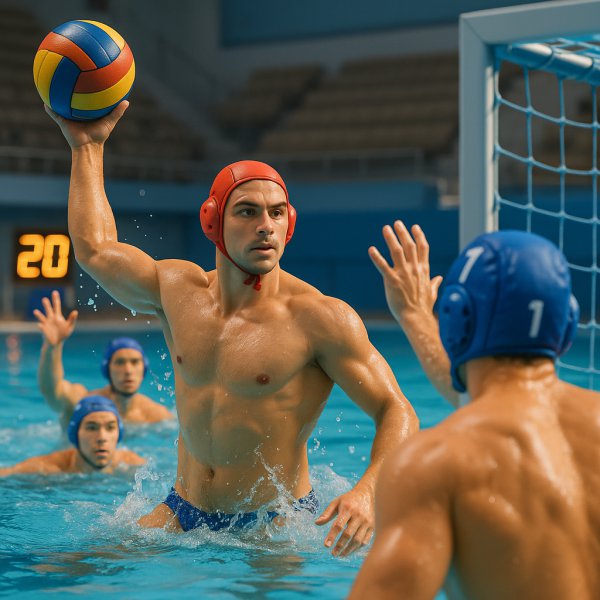
What if a chess match took place on water? A surprising splash opens the door
Imagine two teams, seven players each, battling not only for strategic superiority but also for breath control, swimming speed, and the ability to think three moves ahead while treading water. Water polo looks chaotic up close, but it is a finely tuned sport that mixes endurance, strength, tactics, and drama. Here is a surprising fact to hook you: water polo was one of the earliest team sports in the modern Olympic Games, appearing as far back as 1900, and its matches have produced some of the most iconic moments in sporting history.
If you have ever watched a clip and thought players are just “fighting” below the surface, or wondered why the ball is thrown so explosively, you are not alone. This guide will take you from the origins and famous stories of the game to the concrete rules, positions, and clever ways to watch, play, and understand water polo. By the end you will feel smarter, entertained, and ready to try a watch-challenge or a pool session.
From rough-and-tumble "water rugby" to polished Olympic sport - a short, lively history
Water polo grew out of water-based exhibitions in Britain and Scotland in the mid 1800s, where swimmers would wrestle for a ball and spectators loved the physicality. Those early contests were nicknamed water rugby or aquatic football, and they were rough, often played in rivers and at seaside resorts.
Formal rules began to appear in the 1870s, and an Englishman named William Wilson is frequently credited with codifying early versions of the game for organized clubs in Scotland and England. The sport evolved through the 19th and early 20th centuries, spreading across Europe, and establishing governing bodies. The International Swimming Federation, known by its French acronym FINA, took responsibility for regulating water polo rules and international competitions. The sport made its Olympic debut for men in Paris in 1900; women’s water polo joined the Olympic program in Sydney in 2000, providing a big boost to the global development of the women’s game.
Some matches burned into public memory. The most famous is the 1956 Olympic quarterfinal between Hungary and the Soviet Union, often called the "Blood in the Water" match, played against the backdrop of political tensions following the Hungarian uprising. The game was heated, literal blood was shed, and Hungary won 4-0 before going on to win gold, turning water polo into a symbol of national pride. In recent decades nations like Hungary, Serbia, Croatia, Italy, Spain, and the United States have become powerhouses, with stylistic differences between the European physical game and the US emphasis on swimming velocity and transition play.
What the pool looks like and who stands where - the playing field and lineup
Here is a compact table to give you the physical rules at a glance, then we will unpack how the game actually flows.
| Element |
Typical elite specification |
| Pool size |
Men: 30 m long by 20 m wide, Women: 25 m long by 20 m wide (FINA standards); minimum depth about 1.8 m |
| Team in water |
7 players - 6 field players and 1 goalkeeper |
| Roster |
Typically up to 13 players available, unlimited substitutions during play |
| Match length |
Four periods, usually 8 minutes of actual play time per period at elite levels |
| Shot clock |
30 seconds - time to attempt a shot once possession is established |
| Exclusion time |
20 seconds for major/exclusion foul |
| Penalty shot distance |
Penalty taken from the 5 m line |
| Goal size |
About 3.0 m wide and 0.9 m high above water |
Think of the pool as a battlefield with zones. Each team will usually place a center forward (or "hole set") near the opponent’s goal, supported by drivers who swim and cut into space, wings near the side lines who feed the center or take outside shots, and a point or perimeter player orchestrating the attack. The goalkeeper anchors the defense and often initiates fast breaks with long passes.
The rules that shape every thrilling moment - from possession to fouls to scoring
Water polo is governed by a compact set of rules that reward possession, efficient attacking, and disciplined defense. Understanding a few core mechanics will turn a confusing match into a compelling story.
- Possession and the shot clock: Once a team gains possession, it has 30 seconds to take a shot on goal. If the ball hits the goalpost or goalkeeper, the shot clock resets only if the shooting team regains possession. This 30-second limit forces teams to build attacks deliberately and punishes wasted time.
- Match time and stoppages: Games are divided into four periods, each with a set playing time (commonly 8 minutes at the elite level). The game clock stops for fouls, out-of-play balls, goals, and injuries, so real match time is longer than the nominal period length.
- Ball-handling: Field players must handle the ball with one hand only; they may swim holding or pushing the ball with one hand and pass or shoot with one hand. The goalkeeper is the exception and may use both hands to block or control the ball, inside and near the goal area, although exact privileges vary by rule interpretations.
- Ordinary fouls: These are minor infractions such as impeding a free opponent who does not have the ball. They usually result in a free throw to the fouled team and are a normal part of the tactical push and pull. Ordinary fouls are common and often set up resets or quick passing plays.
- Major or exclusion fouls: These include sinking, pulling back, or otherwise impeding a player who is not holding the ball in a way that prevents a probable goal opportunity, or aggressive play. The excluded player must leave the field into the penalty area for 20 seconds, creating a temporary man advantage for the attacking team. This is one of the most significant moments in a match, because it often leads to power-play goals.
- Penalty fouls: If a major foul prevents a probable goal inside the 5 m area, the referee awards a penalty shot from the 5 m line. Penalties are high-leverage moments similar to penalty kicks in soccer.
- Brutality: Violent or dangerous actions are punished severely, often with ejection for the rest of the game and additional suspensions. Referees take these actions seriously to protect player safety.
These rules combine to create high-intensity transitions: a blocked shot can turn into a sprinting counterattack, an exclusion can swing momentum, and a clutch penalty can decide a match.
Tactics and positions - think chess on water, with sprints and grabs
Tactics in water polo are rich and varied. At a glance, here are the core positions and their strategic roles, and then we will look at how teams build plays.
- Center forward (hole set): The physical hub in front of the opponent’s goal who must wrestle with defenders, receive passes under pressure, and either score or draw exclusions.
- Center back (hole D): The primary defender whose job is to neutralize the center forward, often through sustained physical contact.
- Wings and flats: These players operate on the sides and around the perimeter, creating passing angles and taking outside shots when space opens.
- Drivers: Agile swimmers who make incisive moves toward the goal to receive passes or create openings. Their timing and ability to beat defenders is crucial.
- Point or perimeter setter: The player who orchestrates the attack, switches play, and looks for mismatches or an opened lane.
Teams often run set plays that mirror handball or basketball motion: driving, picking, and screening to free the center or create open outside shooters. Defenses switch between zone structures and press defenses, and many teams use the exclusion penalty strategically by trying to draw fouls on the center to gain a 6-on-5 power play.
Common misunderstandings - what people get wrong and the truth behind the splash
Many people think players can stand up in the pool or deliberately touch the bottom to gain advantage. In official water polo, standing or using the pool bottom is not allowed - players must tread water or use the eggbeater kick to maintain position and power. This is fundamental because it shapes the athletic demands of the sport.
Another misconception is that water polo is simply "soccer in water" or that it is mostly brute force. While strength and physicality matter, the sport demands high levels of aerobic and anaerobic fitness, precise timing, spatial awareness, and team strategy. Sports science research consistently shows water polo athletes require exceptional cardiovascular endurance, repeated sprint capacity, and upper-body power, which is why training blends swimming, strength, and skill circuits.
Some viewers assume referees ignore anything that happens below the surface. In reality, referees watch closely for both visible and subtle infractions; exclusions are often given for illegal holds or pulls that deny a scoring chance. The surface chaos is frequently a well-disciplined struggle.
How to watch and learn actively - small challenges to get sharp eyes
Watching water polo can be a thrilling learning experience if you watch with a purpose. Here are three short, fun challenges to try during a single period of play.
- Challenge one: Count the shot clock resets. See how many possessions end before 15 seconds and how many use the full 30 seconds. This shows you whether a team prefers rapid attack or controlled buildup.
- Challenge two: Track exclusions and power plays. Make a simple tally of exclusions for each team and how many goals are scored on the man advantage. This will teach you the huge value of drawing exclusions.
- Challenge three: Watch the center forward for five possessions. Observe how the center tries to win position, how defenders react, and whether the center is feeding perimeter shooters or shooting themselves. This hones your tactical eye.
These tasks make the viewing experience interactive and improve your understanding faster than passive watching.
How to start playing or coaching - practical steps and quick training tips
If you want to try water polo, start with swimming fitness and basic ball-handling drills. The eggbeater kick is essential - it provides stability and vertical height for shooting and defending. Practice treading water while handling the ball and passing with one hand, then progress to shooting drills and game-like scenarios.
Here is a simple starter plan for a week of practice to build raw skills:
- Two swimming endurance sessions focusing on interval sprints and recoveries.
- Three ball sessions including passing, eggbeater strength workouts, and shooting sets from different positions.
- One game scenario session with small-sided games to develop tactical instincts and decision-making.
Gear is minimal - a water polo ball sized for your age group, a pair of water polo caps to protect ears and identify teams, and endurance swimsuits. Teams typically have goal equipment and set up practice drills around the 5 m line and center area.
Case studies from the pool - drama, tactics, and lessons
The 1956 Hungary versus Soviet Union match is not only a historical moment but a case study in how sport reflects politics, in which the physical game matched the political conflict. Hungary used a relentless center forward and crisp passing to dominate, but the match is remembered as a symbol of courage in the face of geopolitical tension.
A modern tactical case is the USA women's team in the 2000s and 2010s, which combined superior swimming fitness with quick transition play to dominate opponents. Their approach shows that bolstering swimming speed and conditioning can offset heavier, more physical European styles. Conversely, Serbia and Croatia have emphasized technical mastery around the center and tight team defense to control tempo and win championships.
Each of these examples highlights different paths to success: historical context and emotion shaping a team, athletic conditioning altering play style, and tactical choices dictating match outcomes.
Quick-reference cheat sheet - rules at your fingertips
Quote: "Water polo is control of chaos with purpose, one breath at a time." - a coach's shorthand for the sport.
- Players per team in water: 7 (6 field, 1 goalie)
- Shot clock: 30 seconds
- Periods: 4 - typical elite length 8 minutes each
- Exclusion penalty: 20 seconds ejection
- Penalty shot: awarded for a foul preventing a probable goal inside 5 m
- Goalkeeper: special privileges, may use two hands
- No touching bottom: players must tread water
Final splash - why water polo matters and how to keep learning
Water polo is a sport of contrasts: brutal and beautiful, relentless and strategic, simple rules and complex tactics. It teaches physical resilience, teamwork, and the art of making decisions when oxygen is limited and time is running out. Whether you want to watch with sharper eyes, start training, or just appreciate a match for its choreography, the game rewards curiosity and attention.
If you want a next step, try this short experiment: watch a recorded quarter of a high-level match, complete the three challenges listed above, and then rewatch a goal to see its buildup. Notice the small movements - the passive screens, the fake drives, the repositioning of the goalkeeper. Those small things are where champions are made.
Water polo combines history, spectacle, and science. It has famous political stories, enduring tactical evolution, and a vibrant modern scene. Dive in, and you will find a sport that makes you smarter about teamwork, strategy, and how humans compete under pressure and water.