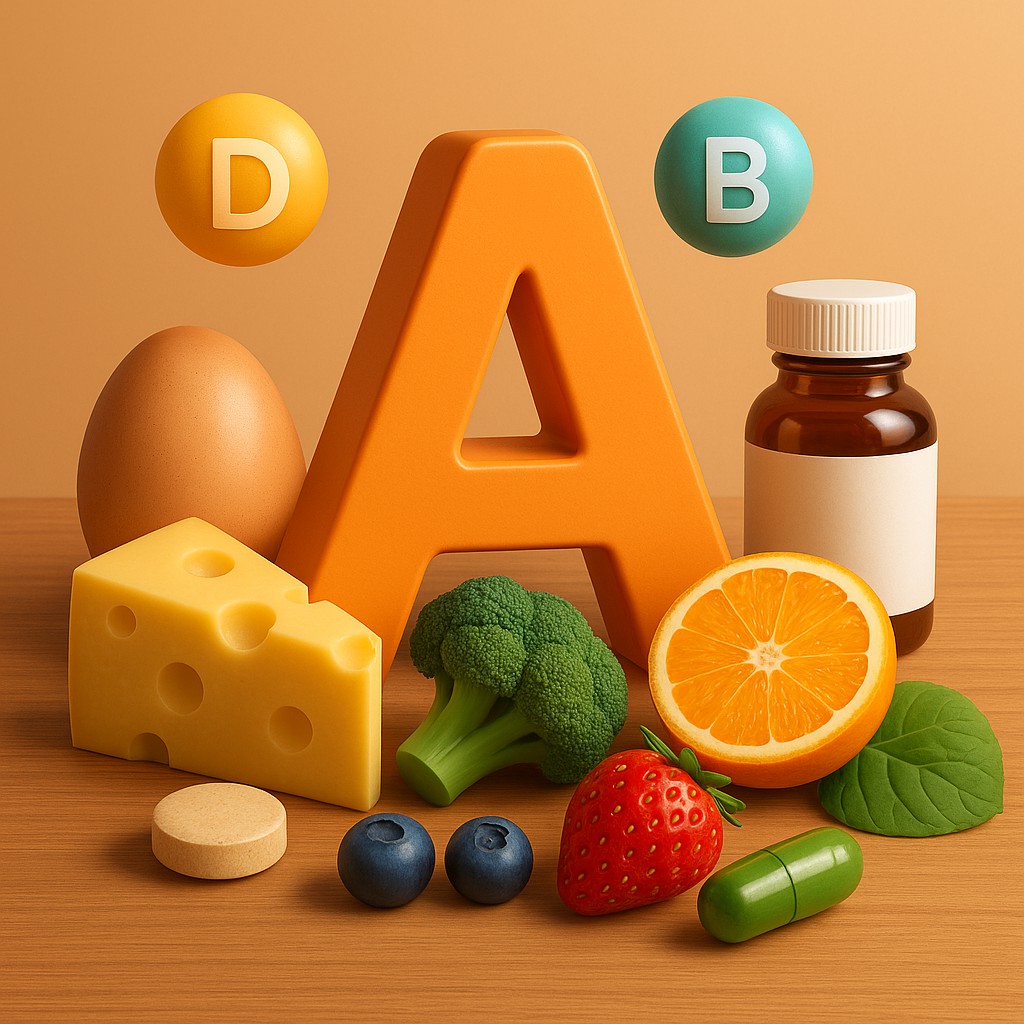
You have been eating, breathing, and moving in part because of tiny molecular coaches called vitamins. They are not flashy - no calorie-packed energy, no structural proteins - but they are indispensable helpers that turn food into fuel, genes into tissues, and small mishaps into health. Learning about vitamins is like peeking behind the curtain at the biochemical stage crew that keeps your body running, and once you see their roles, the landscape of food and health becomes easier to navigate.
This guide will take you from the historical detective stories that uncovered vitamins, through how they behave inside your body, to practical rules for getting the right amounts without panicking over every tablet on the shelf. Expect clear explanations, a few memorable stories, myth-busting, and one handy table to anchor the facts. By the end you will be able to read vitamin information on labels, understand why some vitamins build up and others do not, and decide when supplements are sensible.
The detective stories that led to the discovery of vitamins
The discovery of vitamins reads like a string of medical mysteries solved by observation, travel, and stubborn curiosity. In the 18th century, sailors dying of scurvy on long voyages offered the first clue - fresh citrus cured the disease, but nobody knew why. Later, in the 19th and early 20th centuries, researchers linked specific diets to diseases: beriberi in Asia tied to polished rice, rickets in industrial cities where children saw little sun, and pellagra in populations eating mostly corn. Those patterns suggested something essential was missing from diets, not just calories or protein, and gave rise to a new idea - small dietary factors essential to life.
The word "vitamin" came from the notion that these were vital amines, a term coined by Casimir Funk in 1912, although not all vitamins are chemically amines. Isolation and chemical identification followed: vitamin A and its role in vision, vitamin C as the antiscorbutic factor, and the B complex resolving into multiple distinct molecules such as thiamine, riboflavin, niacin, and later folate and B12. These breakthroughs mixed epidemiology, animal experiments, and advances in chemistry. Each discovery rewired our understanding of nutrition and led to public health measures like food fortification, which dramatically reduced deficiency diseases in the 20th century.
Two molecular lifestyles - fat-soluble versus water-soluble vitamins
Vitamins fall into two broad behavioral groups based on how they dissolve and move in the body: fat-soluble and water-soluble. Think of fat-soluble vitamins as long-term renters of the body's storage units - they dissolve in fats, travel with dietary lipids, and can be stored in the liver and fat tissue for weeks or months. This group includes vitamins A, D, E, and K. Because they stick around, chronic excessive intake can lead to toxicity for some of them, so dosing matters.
Water-soluble vitamins are more like commuters: they dissolve in water, circulate in body fluids, and excess amounts are usually excreted in urine within hours or days. The B vitamins and vitamin C belong to this group. Their short residency means daily intake is important, and deficiencies can appear fairly quickly if intake drops. Still, some water-soluble vitamins, notably B12, have special storage or recycling systems that can prevent deficiency for years in well-nourished adults.
This split explains a lot of practical advice: why you may need sun exposure or supplements for vitamin D despite diet, why megadoses of vitamin C are rarely retained, and why certain drugs or digestive problems cause deficiency by interfering with absorption rather than intake.
Meet the vitamins, their jobs, and where they hide
Below is a compact summary to help remember the main vitamins without memorizing obscure chemical names. After the table, I will unpack a few interesting functions and clinical notes about specific vitamins.
| Vitamin |
Type |
Key roles in the body |
Classic deficiency disease |
Common food sources |
Toxicity risk |
| A (retinol) |
Fat-soluble |
Vision, cell differentiation, immune function |
Night blindness, xerophthalmia |
Liver, dairy, orange vegetables, spinach |
Yes, very high intakes can cause liver damage and birth defects |
| D (calciferol) |
Fat-soluble |
Calcium absorption, bone health, immune modulation |
Rickets, osteomalacia |
Sunlight, fatty fish, fortified milk |
Yes, excess can cause hypercalcemia |
| E (tocopherol) |
Fat-soluble |
Antioxidant protecting cell membranes |
Rare: neuropathy in severe deficiency |
Vegetable oils, nuts, seeds |
Uncommon, very high doses can affect clotting |
| K |
Fat-soluble |
Blood clotting, bone metabolism |
Bleeding, especially in newborns |
Leafy greens, fermented foods, gut bacteria |
Low - very high doses can interfere with warfarin |
| B1 (thiamine) |
Water-soluble |
Energy metabolism, nerve function |
Beriberi, Wernicke-Korsakoff |
Whole grains, pork, beans |
Low |
| B2 (riboflavin) |
Water-soluble |
Energy metabolism, skin, eyes |
Cheilosis, sore throat, dermatitis |
Dairy, eggs, greens |
Low |
| B3 (niacin) |
Water-soluble |
NAD/NADP coenzymes for metabolism |
Pellagra - dermatitis, diarrhea, dementia |
Meat, grains, yeast |
High doses can cause flushing and liver injury |
| B5 (pantothenic acid) |
Water-soluble |
CoA synthesis, energy metabolism |
Rare |
Many foods |
Very low |
| B6 (pyridoxine) |
Water-soluble |
Amino acid metabolism, neurotransmitters |
Anemia, neuropathy |
Meat, potatoes, bananas |
High doses can cause neuropathy |
| B7 (biotin) |
Water-soluble |
Carboxylation reactions, hair and skin |
Rare |
Eggs, nuts, yeast |
Very low |
| B9 (folate/folic acid) |
Water-soluble |
DNA synthesis, cell division |
Megaloblastic anemia, neural tube defects |
Leafy greens, legumes, fortified grains |
Excess can mask B12 deficiency |
| B12 (cobalamin) |
Water-soluble |
DNA/RNA synthesis, nerve myelination |
Pernicious anemia, neuropathy |
Animal products, fortified foods |
Low |
| C (ascorbic acid) |
Water-soluble |
Antioxidant, collagen synthesis, iron absorption |
Scurvy - bleeding gums, poor wound healing |
Citrus, peppers, berries |
Low - very high doses cause GI upset |
A few vitamins with interesting backstories and quirks
Vitamin D behaves more like a hormone than a typical nutrient. Your skin makes it under UV light, and it helps regulate calcium and immune responses. Modern indoor lifestyles and sunscreen use have raised concern about vitamin D status. The solution is not always supplements - sensible sun exposure and fortified foods often suffice, but some people need targeted supplementation guided by blood tests.
Vitamin B12 can be hard to get for strict vegetarians and older adults. It requires stomach acid and intrinsic factor from gastric cells to be absorbed, and deficiencies can take years to appear because the liver stores B12. When deficiency occurs, DNA synthesis and nerve function suffer, and damage can become irreversible if not treated.
Vitamin A is powerful for vision and immunity, but too much preformed vitamin A during pregnancy can cause birth defects. Provitamin A carotenoids, such as beta-carotene from carrots, convert to vitamin A as needed and are safer even at high intake.
Why deficiencies and excesses happen - absorption, storage, and people at risk
Vitamins depend not just on what you eat, but on what you absorb, store, and use. Several factors influence vitamin status: food composition, cooking and processing, digestive health, medications, and individual needs set by life stage or illness. For example, boiling vegetables can leach water-soluble vitamins like vitamin C and B vitamins, while adding fat improves absorption of vitamins A, D, E, and K. Conditions that reduce stomach acid or remove parts of the intestine, such as gastric bypass or inflammatory bowel disease, can cause malabsorption of several vitamins.
Some life stages raise needs: pregnancy and breastfeeding increase demand for folate, iron, and other nutrients; growing children and adolescents need more for growth; older adults may require more vitamin D and B12 because of reduced skin synthesis and absorption. Certain medications alter vitamin metabolism - for example, anticonvulsants can speed vitamin D breakdown, and metformin is associated with lower B12 over time.
Excess intake is mainly a concern with fat-soluble vitamins and concentrated supplements. Because fat-soluble vitamins can accumulate in tissues, chronic high intake can cause toxicity. That is why more is not always better when it comes to vitamins - the body prefers balance over megadoses.
Are there vitamins still waiting to be discovered, or are we done?
Short answer - probably not in the classic sense. The canonical list of vitamins covers organic compounds the human body cannot make in adequate amounts and must obtain from the diet. For most of these, chemistry and biology have been thoroughly studied. Still, that does not mean dietary science is finished. A few related scenarios are worth noting.
First, there are conditionally essential nutrients - compounds the body can normally make, but under certain conditions must be obtained from food. Examples include choline and taurine for some populations, or particular amino acids during illness. These are sometimes called vitamin-like because they act similarly by being essential under specific circumstances.
Second, the gut microbiome is revealing nutrient contributions that complicate the picture. Gut bacteria can synthesize vitamin K and some B vitamins in small amounts, but whether that production is adequate for everyone is variable. Changes in microbiome composition could influence vitamin needs and may explain some population differences.
Third, the room for nuance is bigger than the chance of an entirely new classic vitamin. Scientists continue to refine how vitamins act as signals, how genetic differences alter needs, and how micronutrients interact. New molecular forms, transporters, or binding proteins might be discovered, but these would likely be refinements rather than an addition to the core vitamin list.
In short, the main set of vitamins is well established, but the edges - who needs what, how gut bacteria contribute, and how genetics change requirements - are active research areas. Clinical practice and public health will keep evolving as evidence improves.
Common myths and clear practical rules
People tell a lot of stories about vitamins, some useful, some misleading. Below are the biggest myths clarified and some practical, memorable rules.
- Myth: More is always better. Truth: Excess of some vitamins, especially fat-soluble ones, can be harmful. Supplements should have a purpose. Routine megadosing without medical indication is rarely helpful and sometimes dangerous.
- Myth: Supplements are the same as whole foods. Truth: Foods deliver complex mixtures of nutrients, fiber, and phytochemicals that act together. Supplements can help when a nutrient is hard to get from food alone, such as B12 for vegans or folic acid in early pregnancy.
- Myth: Natural vitamins are always superior to synthetic ones. Truth: Many synthetic vitamins are chemically identical and work just as well. The body often cannot tell the difference, though some forms are better absorbed than others.
- Myth: If you feel tired, take B vitamins. Truth: Fatigue has many causes. Only in deficiency states do B vitamins reliably relieve fatigue, so testing and medical evaluation are important.
Practical rules to remember:
- Eat a variety of colorful vegetables and fruits, whole grains, lean proteins, and some healthy fats. Variety covers most bases.
- Include some fortified foods - many cereals and dairy alternatives are intentionally fortified with folic acid and vitamin D for public health.
- Consider supplements when life stage or choices make deficiencies likely - prenatal folic acid, B12 for strict vegans, vitamin D in low-sun settings.
- Test before treating with high-dose supplements if deficiency is suspected. Labs for vitamin D, B12, and folate are commonly available.
- Remember interactions: vitamin K affects anticoagulant medications, certain B vitamins can mask others, and high-dose supplements can interact with prescription drugs.
How to remember vitamins - a few friendly mnemonics and habits
You do not need to memorize chemistry to be smart about vitamins, but a couple of mental hooks help. Remember fat-soluble vitamins with the sequence A, D, E, K - think "A Ducks Eat Kale" to picture a fat-based dressing helping absorption. For B vitamins, think of the B complex as a team that supports energy metabolism and brain function - B1 through B12, with folate and B12 especially important for DNA and red blood cells.
Build habits rather than memorizing numbers: include a source of vitamin C (a piece of fruit or some peppers) most days, eat leafy greens for folate and vitamin K, include fatty fish or fortified milk a few times a week for vitamin D, and consider a routine multivitamin during life transitions like pregnancy or restrictive diets after consulting a clinician. If you take medication or have a medical condition, check with your clinician before starting a supplement because personalized advice matters.
Final notes on testing, supplements, and when to seek help
Blood tests can help clarify suspected deficiencies. Vitamin D is measured as 25-hydroxyvitamin D, B12 as serum B12 and sometimes methylmalonic acid, and folate as serum or red cell folate. If you suspect a deficiency because of symptoms, diet, or medical history, discuss testing and supplementation with a healthcare professional. Over-the-counter multivitamins are generally safe at recommended doses, but they are not a cure-all. High-dose supplements should be supervised because they can cause harm or mask other problems.
Also keep in mind that public health measures like food fortification and improved food security dramatically reduced classic vitamin deficiency diseases in many countries. Your personal choices and social policies both shape vitamin status at the population level.
You now have more than a checklist - you have a framework. Vitamins are small molecules with outsized influence, split into two practical families by how they behave in the body, discovered through observation and chemistry, and largely well-mapped though always open to new detail about individual needs and gut interactions. Remember the stories - sailors saved by citrus, children helped by fortified flour - and let them guide a sensible approach: eat well, adjust for your life, test when needed, and favor balance over extremes.
Keep asking curious questions about what goes into your body, because understanding the reasons behind recommendations turns fleeting health tips into durable habits. Your future self will thank you for learning the difference between necessary, optional, and excessive when it comes to vitamins.