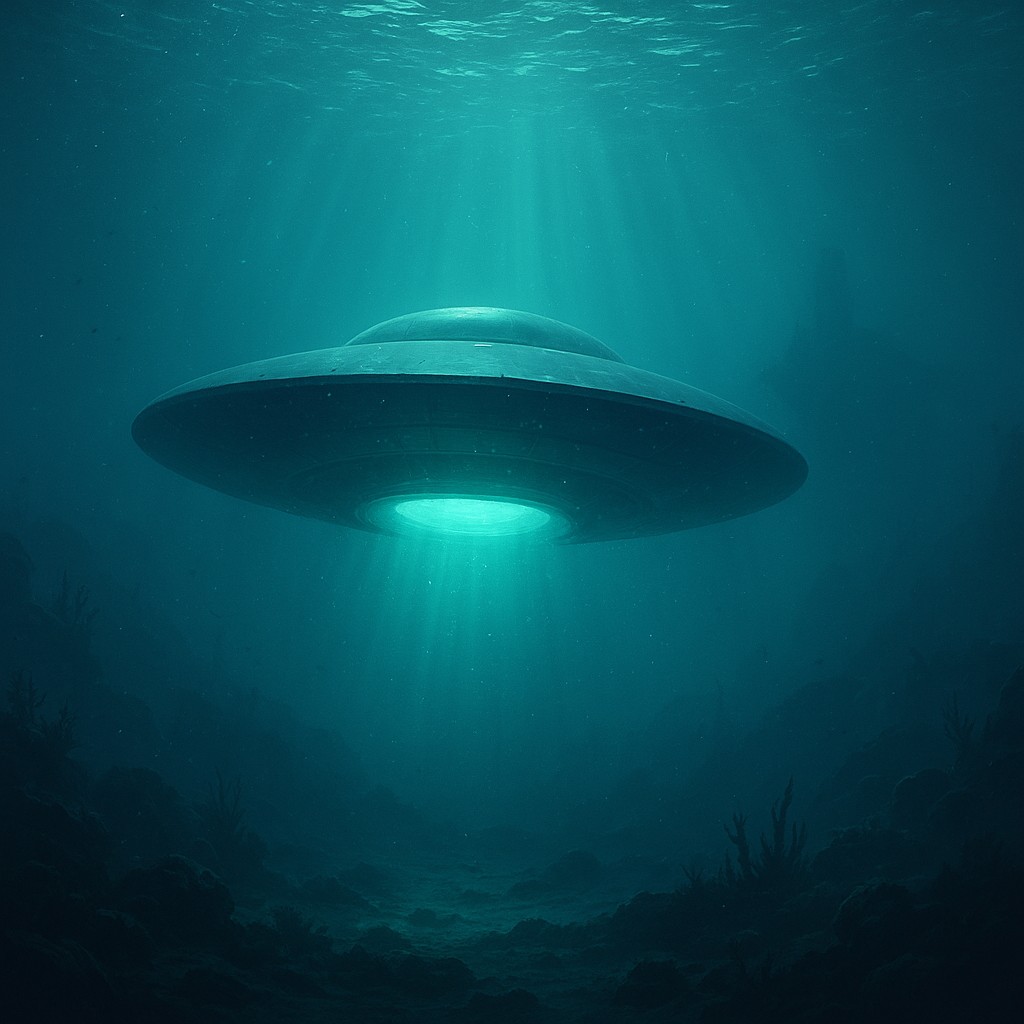
For decades, the idea that something strange is lurking beneath the waves has moved from the realm of Jules Verne-style science fiction into the corridors of serious government discussion. We have all heard the stories, usually shared in hushed, excited tones, about metallic craft plunging into the Pacific at impossible speeds or mysterious lights dancing under the surface of the Atlantic. It is a compelling narrative that taps into our innate fear of and fascination with the unknown depths of our oceans, which remain largely unexplored and, quite frankly, a little spooky.
These tales have evolved significantly in recent years, moving away from classic flying saucer lore and toward the concept of transmedium vehicles, or even vast, hidden motherships. As high-ranking officials and former military personnel testify before Congress about seeing objects that defy our current understanding of physics, the public is left wondering if we are living above a dormant underwater civilization. To understand why this theory holds so much cultural weight, we must separate genuine aeronautical mysteries from the cinematic leaps of logic that turn sightings into legends.
Exploring the Realm of Transmedium Phenomena
The primary driver behind the sudden surge in interest regarding underwater anomalies is the military's shift in terminology from UFOs to UAPs, or Unidentified Anomalous Phenomena. The term "transmedium" has become the new buzzword because it describes objects capable of moving between environments, such as from the air into the water, without a noticeable change in speed or a splash. When pilots report seeing a craft that behaves like an aircraft but then vanishes into the ocean, it forces us to rethink what kind of propulsion could possibly allow for that kind of transition.
Experts like retired Rear Admiral Tim Gallaudet have brought these observations into the light, suggesting that we need to pay closer attention to the maritime environment. From a scientific standpoint, the ocean is an ideal hiding spot because it is incredibly difficult to monitor effectively. Sonar technology, while advanced, has limitations, and the sheer vastness of the sea makes it easy for an object or a fleet of objects to remain undetected beneath the crushing weight of the water. This is exactly where the idea of a submerged mothership gains traction, as the ocean provides a natural, impenetrable cloak that our satellite sensors simply cannot pierce.
Separating Optical Illusions from Solid Evidence
One of the most important aspects of investigating these claims is the realization that cameras can lie, or at least, they can be remarkably misleading. We have all seen the viral videos of a small sphere dipping into the ocean, but organizations like the All-domain Anomaly Resolution Office have provided sobering, if less exciting, explanations for these events. In several prominent cases, what appeared to be a transmedium craft was an optical illusion created by the camera's movement and the object's distance from the horizon.
When an object travels at high speeds near the water, the lack of depth perception can create a "slingshot" effect, making it look like the object entered the water when it was actually just passing in front of or behind the waves. This is not to say that every claim is a misidentification, but it does highlight the gap between a compelling video and verifiable physical evidence. We must learn to distinguish between a genuinely anomalous data point that defies physics and a simple sensory trick that occurs when we operate at the edge of our detection capabilities.
The Cultural Gravitation Toward Hidden Bases
Why do we find the "mothership in the ocean" narrative so much more satisfying than the "secret prototype test" explanation? Human beings are natural storytellers who prefer a mystery that suggests intelligence and intent over one that suggests bureaucratic secrecy or technical glitches. The trope of an underwater base touches on the ancient myth of Atlantis, combining our love for lost civilizations with our modern anxiety about space travel. It feels more profound to believe that an advanced civilization has been watching us from the abyss for centuries than to accept that our sensors are occasionally failing to identify balloons and stray radar signals.
Furthermore, the scale of the ocean makes it the perfect candidate for a hidden home of an extraterrestrial or advanced terrestrial presence. If you wanted to monitor a civilization without being noticed, hiding in 20,000 feet of water where the pressure is immense and the light nonexistent would be a stroke of tactical genius. This imaginative leap is encouraged by the fact that we have explored less of our ocean floor than we have the surface of the Moon or Mars. When the facts are scarce, our imagination fills the gaps with elaborate, high-stakes narratives.
Assessing the Known Against the Speculative
To better understand the landscape of these discussions, it helps to look at the differences between the evidence we currently possess and the theories that have drifted into the public consciousness. The following table highlights why this topic is so hard to pin down with absolute certainty.
| Aspect of the Mystery |
Scientific/Prosaic Explanation |
Speculative/Conspiracy Theory |
| Object Propulsion |
Advanced drones or secret military tests. |
Non-human technology manipulating gravity. |
| Water Entry |
Optical illusion or perspective error. |
A hidden portal or underwater mothership base. |
| Sensor Confusion |
Clutter, birds, or sensory electronic drift. |
Evasive maneuvers by an intelligent actor. |
| Lack of Evidence |
The objects are transient or man-made. |
A vast, deliberate coverup by governments. |
By breaking these down, we can see that the gap between a "prosaic" explanation and a "speculative" one is not just about truth, but about the amount of trust we place in current technology and official reports. The government reports, such as those from the Pentagon's AARO, emphasize that they have found no evidence of extraterrestrial craft or hidden aquatic bases. However, those who follow the subject closely often point to the limitations of these reports, noting that just because we have not found them does not mean they are not there, waiting to be discovered by improved future technology.
Understanding the Scientific Process in UAP Studies
It is vital to remember that scientists and government analysts are not inherently trying to suppress the truth when they push back against the "alien mothership" theory. The scientific method demands that we rule out every possible mundane explanation before concluding that something is truly unknown, let alone extraterrestrial. When an analyst identifies a blob on a screen as a drone, a bird, or a sensor glitch, they are following a rigorous protocol to ensure that the data we collect is accurate. This can feel like a buzzkill to those looking for a grand revelation, but it is the only way to ensure that if we ever do find something truly extraordinary, we can prove it.
The current strategy from agencies like NASA is to advocate for better data. We need more sensors, better resolution, and a more open approach to sharing information, which will eventually allow us to move past the blurry photos and anecdotal stories toward a real understanding. If there are indeed objects interacting with our oceans in unexplained ways, history suggests that better data will eventually reveal the truth. By focusing on the collection of high-quality observations rather than jumping to conclusions, we turn the study of UAP into a legitimate scientific pursuit.
The Intersection of Technology and Curiosity
We live in a fascinating time where the barrier to gathering information is lower than ever, which is both a blessing and a burden. On one hand, we have the ability to analyze grainy footage and discuss these phenomena like never before, building a global community around scientific wonder. On the other hand, the velocity at which rumors travel can outpace the verification process, leading to a landscape where the "mothership" myth is taken as fact by thousands before it can be examined. Striking a balance between curiosity and caution is the hallmark of a healthy, inquisitive mind.
It is worth noting that skepticism regarding these phenomena does not necessarily negate the wonder of the ocean itself. Even without extraterrestrial motherships, our oceans remain one of the most mysterious and dangerous environments on the planet. We are still uncovering new species of deep-sea life and mapping mountain ranges in the dark zones that rival anything on land. Perhaps the true magic lies in the fact that we are only just beginning to map the theater in which these reports occur, and the ocean will continue to surprise us for generations to come.
Staying Grounded While Looking at the Stars
As you navigate the sea of information - and misinformation - regarding underwater phenomena, remember that being a skeptic does not mean being a killjoy. It means demanding that our wonder be fueled by the best possible data the world can provide. If you find yourself captivated by the idea of transmedium craft or ancient, hidden bases, keep asking questions, keep checking new reports from official scientific bodies, and keep holding that space for the unknown. Staying grounded in physical reality is not a limitation; it is the foundation upon which we will eventually build our understanding of our world and whatever might be hiding within it.
The journey toward understanding the mysterious objects that seem to haunt our skies and seas is far from over, and you are part of that process simply by staying curious and informed. Whether these reports eventually turn out to be the result of human ingenuity, optical tricks, or something truly revolutionary, the pursuit is well worth the effort. By engaging with these topics through a lens of precise analysis and playful intellectual curiosity, you transform from a casual observer into a thoughtful participant in the great mystery of our time. So, keep your eyes on the horizon, your mind open to new data, and enjoy the ride as we learn more about the strange and wonderful planet we call home.