Why peeking into a psychopath’s head matters more than gossip
Most of us encounter the idea of a psychopath in movies, true crime podcasts, or the friend who insists they met someone "chillingly charming." That pop-culture image is colorful, but it is also misleading in important ways. Understanding what really goes on in the head of a psychopath matters because it changes how we respond to risky behavior, informs legal and clinical decisions, and helps us design better interventions for children and adults at risk.
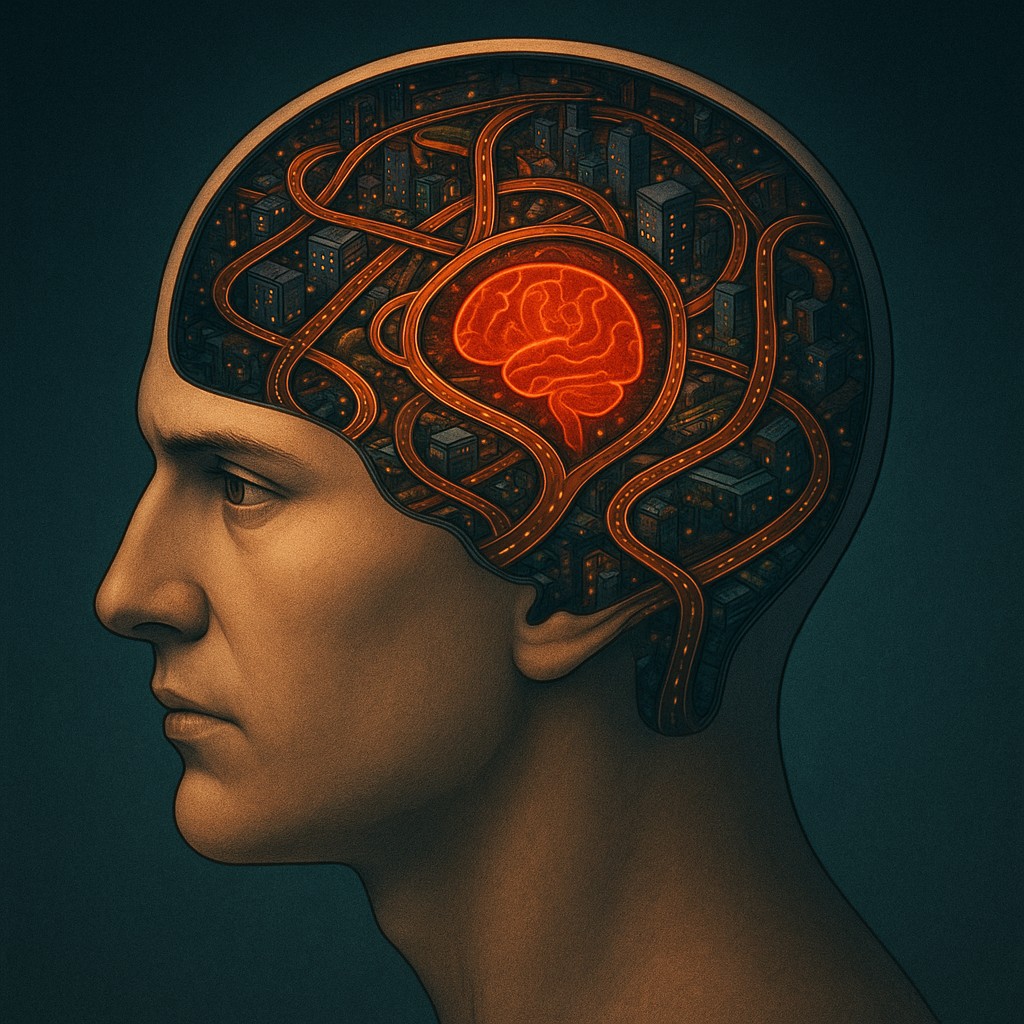
If you imagine the mind as a city, psychopathy is not a single broken building, it is a pattern of roads, lights, and plumbing that work differently. People with psychopathic traits often navigate social life with a different map - they can read social cues without feeling their weight, they seek reward rather than social connection, and their internal alarm system for guilt and fear seems muffled. Knowing why that happens is not about excusing harmful acts, it is about understanding cause and consequence so we can reduce harm and help those whose lives are off-course.
The personality checklist that neuroscientists and courts take seriously
Psychopathy is a clinical construct that researchers and some courts use to describe a cluster of personality traits and behaviors. The best-known tool is the Hare Psychopathy Checklist-Revised, often called PCL-R. It scores items like superficial charm, grandiosity, deceitfulness, lack of remorse, shallow affect, impulsivity, and criminal versatility, and groups them into interpersonal, affective, lifestyle, and antisocial facets. High scores on the PCL-R correlate with an elevated risk of reoffending and with a distinct clinical profile, which is why it gets attention in forensic settings.
It is important to separate psychopathy from nearby terms. Antisocial Personality Disorder, as defined in the DSM, emphasizes repeated rule-breaking and criminal behavior. Psychopathy includes those behaviors, but adds a specific affective-interpersonal core - a lack of empathy and shallow emotions - that makes it a narrower, and biologically informative, category. Sociopathy is a less precise lay term that often implies social causes like upbringing, whereas psychopathy has clearer links to temperament and biology as well as environment.
What emotion feels like - and how a psychopath’s internal world differs
When we say someone lacks empathy, that can sound simplistic. Empathy actually has two major parts - cognitive empathy and affective empathy. Cognitive empathy is the ability to understand what someone else is thinking or feeling, the "I get what you feel" part. Affective empathy is the capacity to share or resonate with another person’s emotional state, the "I feel with you" part.
Many people with high psychopathic traits show relatively intact cognitive empathy - they can read a room, predict reactions, and manipulate emotions with surgical precision. What tends to be blunted is affective empathy - the automatic sharing of emotion that makes someone feel remorse or distress when they hurt others. This creates a chilling combination: someone can know, but not care, and use that knowledge instrumentally to get what they want. As a result, moral emotions like guilt and shame are often shallow or absent, and fear responses to cues that would deter most people are reduced.
The brain regions that tilt the emotional scales
Neuroscience has found consistent differences in brain structure and function in people scoring high on psychopathy measures. One of the most replicated findings is reduced activity and sometimes smaller volume in the amygdala, a deep brain structure central to processing fear and emotional salience. The amygdala helps us learn from punishment and to respond to facial cues like fear or distress. When it is hyporesponsive, fear conditioning is weaker - a person may not learn to avoid harmful behavior because it does not register as threatening in the same way.
Another critical area is the ventromedial prefrontal cortex, abbreviated as vmPFC, part of the brain important for integrating emotion into decision-making. The vmPFC helps attach value to actions - it is where we tag choices with "this is shameful" or "this is rewarding in a bad way." Dysfunction here is associated with poor behavioral regulation, shallow moral reasoning, and a tendency to prioritize short-term gains over long-term consequences. Importantly, it is not just single areas but connections between them - weaker communication between the amygdala and prefrontal regions is a repeating theme in the data.
Brain chemistry and body signals - the biological orchestra
If brain regions are the instruments, brain chemistry is the orchestra. There is no one neurotransmitter that makes someone a psychopath, but patterns emerge. Serotonin, a chemical involved in mood and impulse control, is often implicated in impulsive and aggressive behaviors; reduced serotonergic function correlates with poor behavioral inhibition. Dopamine, the reward neurotransmitter, can be more reactive or differently tuned in those who seek thrill and immediate reward, which fosters risk-taking. Cortisol, the stress hormone, often shows lower baseline levels in high-psychopathy individuals, which may be linked to low anxiety and sensation-seeking.
Another piece of the puzzle is autonomic arousal: skin conductance, heart rate responses, and startle reflexes tend to be blunted. Low autonomic arousal is both a risk factor and a consequence - it can make punishment less aversive, and motivate the search for stronger stimuli to feel alive. Taken together, the chemical and physiological profile suggests a system that is less deterred by fear, more drawn to reward, and less naturally inclined to internal reins of guilt.
Genes, early life, and the shaping of a psychopathic trajectory
Psychopathy has both genetic and environmental contributors - it is not simply "born" or "made." Twin and family studies show substantial heritability for traits like callousness and impulsivity, indicating a biological predisposition. Specific genetic variants, including low-activity versions of genes that regulate neurotransmitters, increase vulnerability. A well-known example is low-activity MAOA interacting with childhood maltreatment, which raises the risk of later antisocial behavior.
Environment matters a great deal. Chronic early neglect, abuse, and inconsistent caregiving can amplify predispositions toward callous-unemotional traits. Prenatal factors, exposure to toxins, and traumatic brain injury also shift developmental trajectories. Crucially, these factors are probabilistic not deterministic - many people with these risks do not become psychopathic, and early intervention can change the course.
Behavioural patterns, not a single personality
Psychopathy is best thought of as a constellation of tendencies rather than a single, monolithic identity. Some individuals are primarily manipulative and charming, slipping into corporate or political roles without violence. Others are impulsive and violent, more likely to be seen in criminal contexts. The common thread is a pattern of emotional detachment from the suffering of others, and a propensity to view people instrumentally.
This variability explains why the stereotype of the white-collar genius psychopath is only partly true. Psychopathic traits can appear in many settings and can sometimes confer short-term advantages, such as fearless decision-making in risky environments. However, when those traits include impulsivity and criminal behavior, the social costs are high both for victims and for the person themselves.
Debunking the big myths with plain facts
Myth 1: All psychopaths are violent criminals. Fact: Many people with psychopathic traits are not violent and may function in society, though their interpersonal relationships are often exploitative or unstable. Myth 2: Psychopaths are immune to treatment, so we should give up. Fact: While traditional therapies designed for remorse-based change can be less effective, targeted interventions, especially early in life, can reduce harmful behaviors. Myth 3: Psychopaths cannot feel any emotion. Fact: They can feel some emotions, like anger and frustration, and can experience positive affect. What is often reduced is empathic concern and guilt.
Understanding nuance helps reduce sensationalism and increases our ability to respond practically and ethically.
How learning about psychopathy helps in everyday life
Knowing how psychopathy tends to work gives you practical tools. If you suspect you are dealing with someone who has high psychopathic traits, appealing to empathy or guilt will often fail because those levers are thin or absent. Clear rules, consistent consequences, and documentation are more reliable. In workplace contexts, focus on performance metrics, transparency, and checks rather than trusting charming reassurances.
At the same time, avoid overlabeling. Many difficult people lack psychopathy. Use observable behavior patterns - consistent manipulation, shallow remorse, repeated exploitative acts - rather than snap judgments based on charisma or coldness in a single moment. If safety is at risk, seek professional help.
A compact table to keep the differences clear
| Domain |
Typical emotional processing |
Psychopathic-style processing |
| Empathy - cognitive |
Can understand others' thoughts and feelings |
Often intact, can read emotions for advantage |
| Empathy - affective |
Feels with others, shares distress |
Reduced sharing of emotion, limited remorse |
| Fear response |
Stronger fear conditioning and avoidance learning |
Blunted fear response, weaker punishment learning |
| Physiological arousal |
Normal startle, higher reactivity to stress |
Lower baseline arousal, reduced startle and skin conductance |
| Moral decision-making |
Emotions inform moral aversion and guilt |
Decisions based more on reward calculus, less on guilt |
| Impulse control |
Generally better restraint tied to socialization |
Greater impulsivity and risk-seeking behavior |
Treatment, responsibility, and hope - not a fatalistic finale
A common fear is that psychopathy is a life sentence. The science says caution, not fatalism. Therapeutic strategies that focus on behavioral management, moral reasoning training, and reward-based systems can reduce harmful behaviors, particularly if started in childhood or adolescence. For adults, interventions that emphasize concrete incentives, strict structure, and skill-building in planning and impulse control show more promise than therapies that lean heavily on emotional insight.
Legal systems face hard questions about responsibility and risk. Biological insights should not be used to excuse harm, but they can inform more nuanced approaches to rehabilitation and risk assessment. Recognizing that some traits have biological roots does not negate agency - people with psychopathic traits still make choices, and society still needs mechanisms to prevent harm and promote accountability.
Quick pointers for remembering the essentials
- Psychopathy is a cluster of interpersonal and affective traits plus behavioral problems, measurable with tools like the PCL-R.
- Emotional detachment, not emotional absence, is key - cognitive empathy may be present, affective empathy often is not.
- Brain differences typically include reduced amygdala and vmPFC activity, weaker connectivity, and altered neurochemistry related to serotonin, dopamine, and cortisol.
- Genes and environment interact - early intervention can change pathways and reduce harm.
- Not all psychopaths are violent villains; many function in society, sometimes successfully, but often at a cost to others.
Finish smarter, with curiosity and compassion
Learning what goes on in the head of a psychopath does more than satisfy a morbid curiosity. It sharpens how we think about responsibility, safety, and the possibility of change. The picture that emerges is complex and surprisingly human - a mix of wiring, chemistry, experience, and choice that sometimes produces behavior we barely recognize as human. That complexity is where hope lives. If we can identify risk early, tailor interventions to how someone's brain and motivations actually work, and design social systems that limit harm while promoting better choices, we make a safer world and offer a chance for people to turn their lives around.
So the next time you hear the word psychopath tossed around like a costume at a party, remember the real story: it is not a monster under the bed, it is a pattern of traits with biological and social roots. Knowing that pattern gives you power - to protect, to respond wisely, and sometimes, to help.