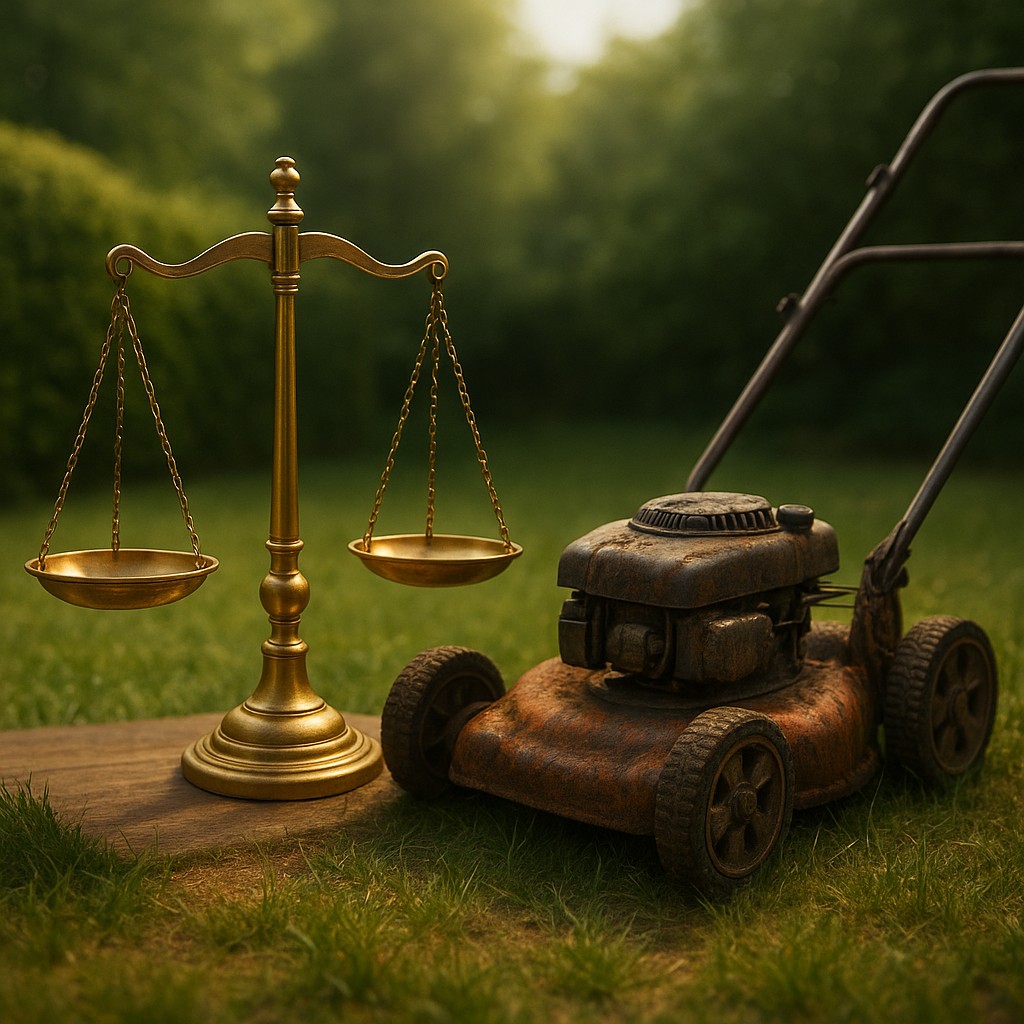
Imagine you lend your favorite lawn mower to a neighbor who is a bit scatterbrained. Weeks turn into months, and months turn into years. You watch that mower slowly rust away in his backyard, yet you say nothing. Ten years later, after the neighbor has finally repaired it at his own expense and started using it every day, you knock on his door and demand he give it back immediately. Legally, you might be right on paper because property is property, but morally and in terms of fairness, your long silence has created an unjust situation. This is where a fascinating and somewhat mysterious legal concept steps in: the doctrine of "Laches" (often described as the rule against unreasonable delay).
This rule isn't based on a rigid stopwatch found in a legal code. Instead, it relies on an imaginary set of scales held by a judge. The court system dislikes "ghosts of the past" that appear without warning, especially when their late arrival creates problems that can no longer be solved fairly. Laches is the safety rail that stops someone from sitting on their rights for an eternity, only to pounce on an opponent who reasonably believed the matter was closed. It teaches us that time is more than just a measurement; it is a fundamental part of justice itself.
When Silence Becomes a Legal Trap
To understand Laches, you should see it as a shield rather than a sword. It is used by a defendant (the person being sued) to tell the judge: "I may have made a mistake originally, but the plaintiff waited so long to complain that I can no longer defend myself properly today." This isn't just about the person suing being lazy. For Laches to apply, two major conditions must be met: an unreasonable delay and a concrete disadvantage to the other party. If you wait five years to challenge a contract, but that delay didn't actually hurt your opponent's case, Laches probably won't work. However, if those years allowed crucial documents to vanish, then you have a problem.
This "disadvantage" is the heartbeat of the doctrine. It usually falls into two categories: evidence-based or economic. Evidence-based harm happens when, because of your delay, witnesses have died, moved away, or simply forgotten the details. Economic harm occurs when the defendant has invested money or changed their life path because they thought you would never take action. For example, if you see someone building a home extension that crosses onto your land, but you wait until the roof is finished to file a lawsuit, you will likely run into the Laches defense. The judge will find that you let the other person go into debt unnecessarily through your silence.
A Flexible Clock vs. a Rigid Alarm
People often confuse Laches with the "statute of limitations," but they are very different cousins. A statute of limitations is a strict legal rule: if the law says you have three years to sue, it's over at three years and one day, no matter what. It is a digital alarm clock that cuts off abruptly. Laches, however, belongs to the world of "equity," or fairness. It is an old-fashioned clock with hands that move faster or slower depending on the situation. It can apply even if the legal deadline hasn't passed yet, or it can serve as a defense in cases where no specific law sets a time limit.
In the legal world, equity seeks to fix injustices that strict laws might overlook. Because of this, Laches is a tool of judicial discretion. A judge isn't forced to use it; they choose to do so if they feel the situation has become "inequitable" or fundamentally unfair. This flexibility makes the doctrine both powerful and feared by lawyers. You can't just look at a calendar to know if you're safe; you have to analyze the human and material impact that the passing of time has had on the case.
| Feature |
Statute of Limitations |
Doctrine of Laches |
| Source |
Written and codified laws |
Principles of fairness and past court rulings |
| Nature |
Fixed and rigid (a specific duration) |
Flexible and based on circumstances |
| Condition |
Passage of time alone is enough |
Delay + resulting harm to the other party |
| Application |
Applied automatically |
At the judge's discretion |
| Goal |
Legal certainty and predictability |
Justice and honest behavior |
When Memories Fade and Evidence Vanishes
One of the strongest arguments for Laches is how easily the truth breaks down over time. Justice relies on tangible proof: bills, emails, and eyewitness accounts. Yet time is the natural enemy of evidence. Hard drives fail, companies go bankrupt and shred their archives, and the human brain is tragically good at reinventing its own memories. By punishing excessive delay, Laches protects the integrity of the courtroom. It prevents courts from turning into theaters of guesswork where people try to piece together blurry facts from a bygone era.
Take an intellectual property dispute as an example. Imagine an artist claims that a famous song released twenty years ago stole their melody. If they waited two decades while hearing that song on the radio every day, it would be nearly impossible for the recording studio to find the original demos, old contracts, or sound engineers who could testify about how the song was actually written. Laches steps in here to say the artist "slept on their rights." By failing to act quickly, they effectively accepted the situation, or at the very least, made it impossible for the other side to defend themselves. The law does not help those who sleep; it helps those who stay alert.
The Nuance of Intended Inaction
It is important to note that Laches does not apply if the plaintiff had a valid reason for not acting sooner. If you were in a coma, if the other party was actively hiding information from you (fraud), or if you were legally unable to act, the fairness clock doesn't start ticking. The law doesn't expect you to be a superhero, just a reasonably attentive citizen looking out for your own interests. The question the court often asks is: "At what point should a normal person have realized they had a right to take action?"
Sometimes, a delay is actually a calculated strategy, which is something courts despise. Some people wait until their opponent becomes wealthy before suing over an old debt, hoping for a bigger piece of the pie. Others wait until a key witness for the defense disappears before launching an attack. This is exactly the kind of manipulation Laches is designed to stop. it demands a certain level of honorable behavior: if you have a grievance, speak up while the playing field is still level for everyone.
The Art of Staying Legally Alert
Learning about Laches changes how we see our responsibilities. It reminds us that in an organized society, being passive isn't a neutral choice; it has real legal consequences. Whether it is a neighbor dispute, a business disagreement, or an inheritance matter, being proactive is your best bet. By dealing with conflicts the moment they appear, you aren't being aggressive; you are showing respect for clarity and the truth. Justice is a muscle that withers if it isn't used at the right time.
Ultimately, the doctrine of Laches asks us for mental clarity and honesty in our relationships. It encourages us not to sweep old issues under the rug, because the dust of time eventually clouds the truth. By staying vigilant and acting with diligence, you don't just protect your rights, you also help build a healthier legal system where evidence stays fresh and resolutions are sincere. Keep in mind that time always moves forward, and in law, it is better to be a step ahead than to chase a clock that has stopped ringing for you.