What the forest is whispering: why underground mushroom talk matters
Imagine a forest as a bustling city, but one where the busiest streets are invisible, the delivery trucks are microscopic, and the town criers use chemistry and electricity instead of bells. Under that carpet of leaves, roots and fungal threads do things that shape the climate, the food on your table, and the survival of tiny seedlings. Learning how mushrooms communicate underground is not just trivia for nature nerds, it is a key to understanding resilience, restoration, and how ecosystems decide who lives and who dies.
This conversation below ground is old, messy, and remarkably efficient. Fungi form networks that link individual plants and even different species together, moving carbon, nutrients, and messages about threats. Because this dialogue affects tree growth, soil carbon storage, and disease spread, revealing how it works helps farmers, foresters, gardeners, and anyone who cares about a greener planet.
You do not need a microscope to care. Whether you want to grow healthier plants, restore a degraded patch of land, or simply go for a walk that feels richer, knowing the basics of fungal communication gives you tools and metaphors that stick. Over the next sections we will unpack the mechanisms, myths, and practical opportunities, with stories and simple experiments you can try at home or in the field.
Threads and telegraphs - what mycelium really is and why it is talkative
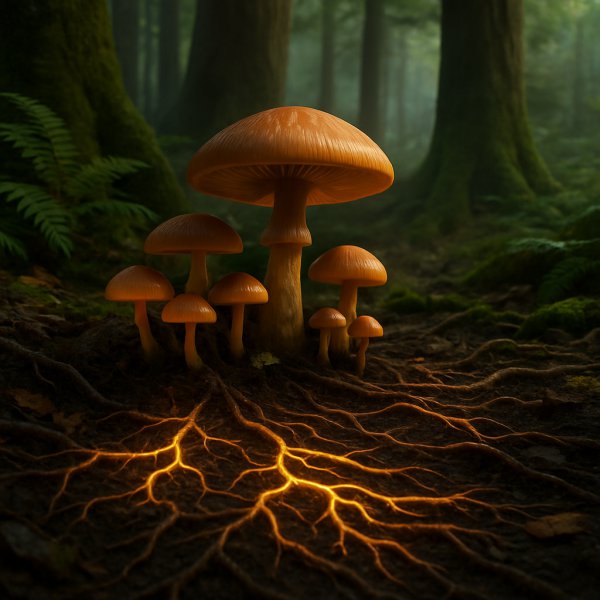
Mushrooms are the fruiting bodies of fungi, but the main actor is mycelium - a dense mesh of thread-like hyphae that threads through soil and wood. Think of mycelium as both the nervous system and the postal service of the fungal world. It explores, absorbs, and connects, growing where it finds food and contracting or rerouting when conditions change. Because hyphae physically bridge plant roots, they create pathways for resources and information to flow, giving fungi a central role in belowground communication.
Mycelium is smart in an ecological sense, not conscious in a human sense. The network grows toward nutrients and away from toxins, changing structure with local conditions. Hyphae can fuse with compatible partners, enabling direct cytoplasmic continuity, and they can also stop, block, or reroute growth when faced with competitors or decay. These dynamic decisions create an emergent system capable of transmitting signals and redistributing resources across meters of soil.
Understanding mycelium is crucial because much of the "conversation" happens on and along these hyphal threads. When a tree sends sugars to its fungal partners, or when fungi send mineral nutrients back, the actual transactions are mediated by membranes, transport proteins, and chemical gradients running through those same threads. Mycelium is the infrastructure; the communication is the traffic.
Chemical conversations - how molecules send messages underground
Chemical signaling is the oldest and best-documented channel fungi use. Fungi and plants exchange a language of sugars, amino acids, hormones, and volatile organic compounds. Plants release root exudates - sugars and signaling molecules - to attract beneficial fungi. In return, many fungi provide phosphorus and nitrogen in exchange for carbon, creating a mutualistic conversation that benefits both parties.
When a plant is attacked by pests or drought-stressed, it can change its exudate profile, effectively "telling" nearby fungi about its condition. Fungi, in turn, may alter the flow of nutrients to favor stressed neighbors or change fungal-produced compounds that prime other plants for defense. Some fungi even produce small molecules that mimic plant hormones, enabling them to manipulate host physiology. These chemical whispers can travel micrometers to meters, depending on concentration, diffusion, and the movement of water through soil.
Not all chemical signals are friendly. Pathogenic fungi release toxins and enzymes to invade, and plants release antimicrobial compounds in response. Chemical signaling is thus a marketplace of offers and warnings, shaped by selective pressures and opportunistic behavior.
Electrical impulses and rapid signaling - hyphae as living wires
Beyond slow chemical diffusion, fungi also use faster electrical signals to transmit information. Hyphae can carry action-potential-like spikes, changes in membrane potential that propagate along the network. These electrical events correlate with environmental changes - wounding, osmotic shifts, or sudden nutrient pulses - and can trigger rapid responses like altered growth patterns or secretion of enzymes.
The concept sounds surprising until you remember that all cells use ion gradients to function, and fungi have long, continuous cytoplasmic compartments where ions can travel. Electrical signals allow a fungus to coordinate distant parts of its mycelium quickly, mobilizing resources or defensive compounds in response to a localized cue. While research is still mapping exactly what these spikes encode, they provide a fast layer of communication that complements slower chemical exchanges.
Imagine a fungal postal system where letters and packages move by foot for local deliveries, but there are also telegraph wires for urgent news. That is the interplay between chemicals and electrical signals in fungal networks.
The Wood Wide Web - mycorrhizal networks that link plants together
One of the most famous concepts in belowground communication is the Wood Wide Web - the idea that mycorrhizal networks connect trees and plants into a shared resource and information economy. Mycorrhizal fungi colonize plant roots and extend far into the soil. When multiple plants partner with the same fungal network, carbon and nutrients can move from one plant to another, often in response to relative source-sink dynamics.
Research has shown young seedlings receiving carbon from older trees via shared networks in certain systems, and that fungus-mediated transfer can influence seedling survival under shaded or nutrient-poor conditions. Importantly, these exchanges are not always altruistic - fungi usually receive a cost in carbon and will favor hosts that provide benefits, creating a negotiated partnership rather than a simple communal bank.
The Wood Wide Web metaphor is powerful but sometimes overstated. Connections do exist, and they affect ecology, but the exact balance of cooperation, competition, and manipulation is complex and context-dependent. Mycorrhizal networks amplify both help and harm, depending on who benefits most in a given situation.
Fungal diplomacy and defense - how networks warn and protect
Fungi participate in plant defense diplomacy. When an insect chews leaves, the plant may send chemical alerts into its roots, which then propagate through mycorrhizal partners. Nearby plants connected to the same network can become "primed" to ramp up their defenses faster if attacked. Fungi themselves can also produce antibiotic compounds to suppress soil pathogens or allocate resources to help an infected plant cope.
At the same time, parasites exploit networks. Some pathogenic fungi hijack resource flow for their own reproduction, and certain plants act as carbon sinks, draining fungal resources. The outcome of these interactions depends on environmental factors, species identities, and the health of the network. Fungi are active agents in this diplomacy, deciding where to send resources and when to enforce boundaries.
Memory, learning, and information processing - is there a fungal mind?
When scientists ask if fungi remember or learn, they do not mean human memory. Instead, they investigate whether past events influence future responses. Fungi can show priming - a prior stress makes a subsequent response faster or stronger. For instance, a mycelium that has experienced drought may later adjust growth patterns more rapidly when water becomes scarce again. Structural changes in hyphae, altered gene expression, and stored metabolites all contribute to this form of ecological memory.
Networks also process information by integrating multiple signals and producing coordinated outcomes. This is not cognition in the animal sense, but it is emergent decision-making. The mycelial network acts like a distributed processor, weighing nutrient gradients, partner quality, and damage cues to allocate efforts where they pay off most. This capacity makes fungal networks adaptable and essential to ecosystem stability.
Human uses and the promise of listening to fungal networks
Understanding fungal communication opens practical doors. Farmers can use mycorrhizal inoculants to improve crop nutrient uptake and drought resilience, and restoration projects can inoculate soils to speed recovery. Urban planners and foresters are beginning to consider mycelial connectivity when designing plant communities, choosing species that foster robust networks. Even novel technologies are emerging that use fungal electrical signals as biosensors for environmental monitoring.
However, applying this knowledge requires nuance. Not all inoculants work equally, and some practices, like excessive phosphorus fertilization, can disrupt symbioses. Effective use of fungal services involves fostering healthy soils, reducing harmful chemicals, and supporting diverse plant communities that allow networks to form and function.
Case study 1 - A controversial handshake: Suzanne Simard and the Wood Wide Web
One of the most influential figures in this field is ecologist Suzanne Simard. Her research on carbon transfer among trees via mycorrhizal networks brought the Wood Wide Web into the public eye, showing that older trees can support seedlings through fungal bridges. These findings changed how scientists and foresters think about forest dynamics and regeneration.
The story did not stop there. Some follow-up studies questioned the magnitude and ubiquity of these transfers, and debates emerged about whether the original interpretations implied intentional cooperation among trees. The take-home is not that the idea was wrong, but that ecological systems are nuanced. Simard’s work sparked productive research and public interest, and the controversy helped refine methods and temper grand metaphors with careful measurement.
Case study 2 - Seedling survival in the rain forest: a fungal lifeline
In tropical rainforests, seedlings often receive critical help from mycorrhizal networks. Experiments where researchers blocked hyphal connections showed that some seedlings grew slower or died without fungal links, especially in shaded understory conditions where photosynthesis is limited. These studies illustrate real-world consequences of these underground communications and how they shape forest composition over time.
Such case studies remind us that fungal networks influence species coexistence, succession, and the resilience of ecosystems. They are not background details, but active players determining which plants thrive.
How to become a fungal-friendly gardener or observer - a practical action plan
If you want to test fungal communication and support networks where you live, here is a simple narrative plan you can follow. Picture yourself as a local mycelial steward - planting, observing, and learning over a season.
- Choose a small patch or pot where you will experiment, and document current plants and soil conditions with photos and notes. This gives you a baseline to notice change.
- Reduce disturbance - avoid turning the soil excessively and stop using broad-spectrum fungicides and high phosphorus fertilizers that can harm symbioses. Let fungal threads remain intact.
- Add organic matter - spread a layer of compost or wood chips to feed saprotrophic fungi and improve soil structure, creating more habitat for mycelium to grow.
- Introduce or encourage mycorrhizae - use a reputable mycorrhizal inoculant for trees or vegetables, or incorporate native woodland soil from a healthy site if permitted. Plant diverse species to support a richer network.
- Observe and experiment - plant paired seedlings, one with hyphal access and one physically separated by a fine mesh that allows chemicals but not hyphae, then compare growth and stress responses through the season.
- Record and adapt - keep a simple journal of growth, pest attacks, and watering patterns. Over time you will see how fungal support influences outcomes and can adjust practices accordingly.
- Share results - join a local gardening group or citizen science project to compare experiences and scale up successes.
Short checklist:
- Document your site
- Stop disruptive practices
- Add organic matter
- Inoculate or encourage fungi
- Set up an observational experiment
- Keep a journal and share results
These steps help you practice "listening" to your soil and building conditions where fungal communication becomes an asset rather than a mystery.
Common confusions and myths clarified
Myth - Fungi are plants. Reality - Fungi belong to their own kingdom, with different cell walls and nutrient strategies. Their biology is distinct and enables unique forms of communication. Myth - The Wood Wide Web means all trees are selflessly helping each other. Reality - Transfers occur, but they involve costs, benefits, and sometimes manipulation. The system mixes cooperation with competition. Myth - You can plug an inoculant in and instantly transform any soil. Reality - Inoculants help in some contexts, but long-term success requires healthy soil, plant diversity, and appropriate management.
Clearing up these confusions helps set realistic expectations for science and practice. Fungal networks are powerful, but they operate under ecological constraints and evolutionary histories.
Quick comparison table - signaling channels in fungal networks
| Signaling type |
Speed |
Range |
Typical message examples |
Strength of evidence |
| Chemical exudates and hormones |
Slow to moderate - minutes to days |
Micrometers to meters via diffusion and transport |
Nutrient status, stress indicators, colonization cues |
Strong, well-documented |
| Volatile organic compounds |
Moderate - seconds to days |
Short-range in soil air spaces, longer aboveground |
Alarm signals, attraction of predators of herbivores |
Moderate, context-dependent |
| Hyphal fusion and cytoplasmic transfer |
Variable - hours to days |
Direct, meter-scale when networks connect |
Direct nutrient and molecule transfer |
Strong for many mycorrhizal systems |
| Electrical spikes |
Fast - seconds to minutes |
Can propagate along meters of mycelium |
Rapid stress signals, coordination triggers |
Emerging, growing evidence |
This table summarizes how different channels complement one another to create a layered communication system.
Reflection questions to deepen your understanding
- When you observe a stressed tree or dying plant in your neighborhood, how might fungal networks be contributing to its decline or supporting nearby plants?
- If you had to design an experiment to test whether mycorrhizal networks improve drought resistance in seedlings, what would your control and treatment look like?
- How would your gardening or land-management choices change if you treated soil as a community with active conversations rather than an inert growing medium?
Spend a few minutes writing down answers - this kind of active reflection helps cement the concepts and often generates practical ideas.
Key takeaways to remember
- Mycelium is the fungal network that connects soil, roots, and plants, acting as infrastructure for resource movement and signaling.
- Communication occurs via multiple channels - chemicals, electrical spikes, hyphal fusion, and volatile compounds - each with different speeds and ranges.
- Mycorrhizal networks can transfer nutrients and information between plants, influencing growth, defense, and survival, but interactions are complex and often context-dependent.
- Practical stewardship - reduced disturbance, added organic matter, and thoughtful inoculation - can strengthen beneficial networks for gardens and restoration.
- Popular metaphors like the Wood Wide Web are useful, but they should be balanced with scientific nuance about cooperation, competition, and context.
- You can test and observe fungal effects with small experiments that control hyphal access and record outcomes over time.
Go experiment and stay curious
Belowground communication is a reminder that the world is more connected than it looks. Mushrooms are not chatty in a human sense, but their networks move nutrients, warnings, and opportunities in ways that shape landscapes and livelihoods. By paying attention and trying a few small experiments, you will not only see the invisible at work, you will become part of the dialogue - a gardener, steward, or scientist who listens and responds. The next time you walk through a wood or tend your garden, remember that a complex, ancient conversation is happening under your feet - and now you have the vocabulary and tools to notice it, nurture it, and maybe even join in.