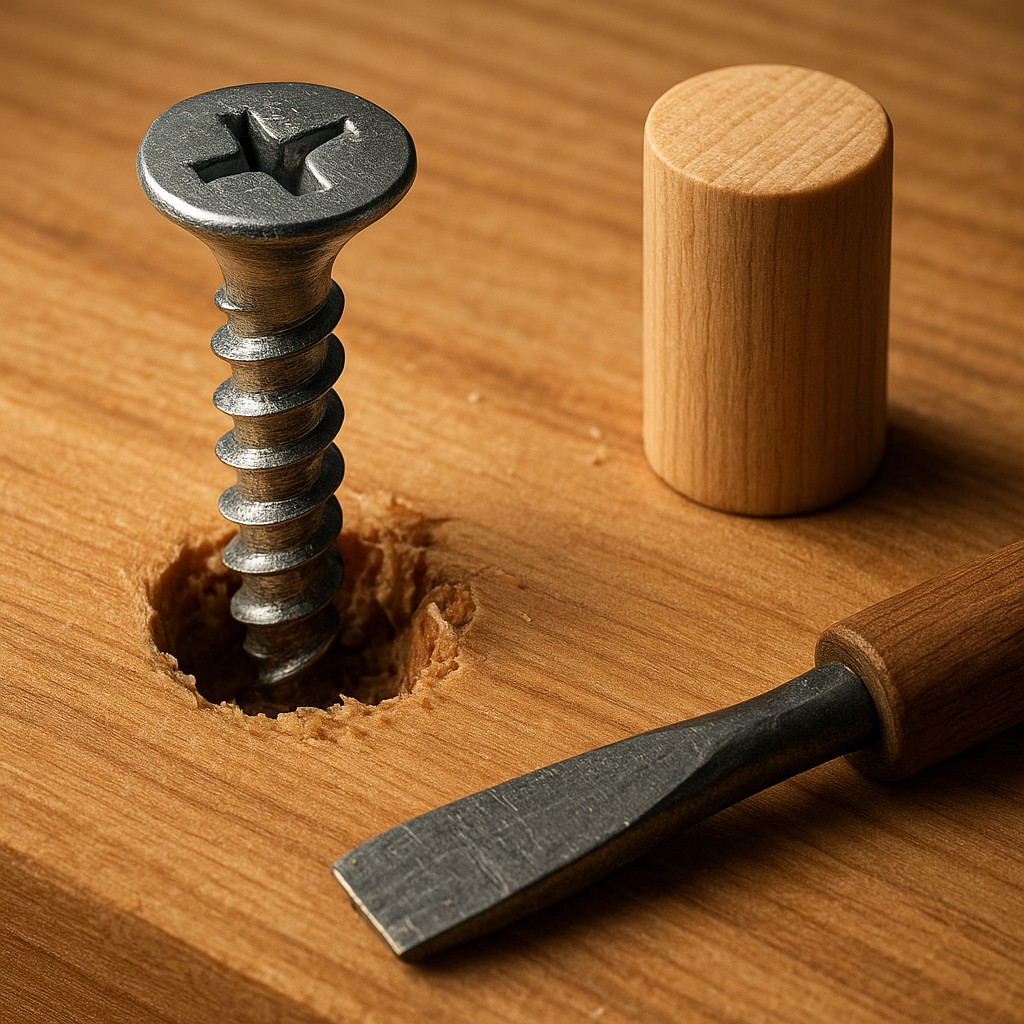
Imagine the frustration of a project that is nearly finished, only for a single screw to spin endlessly in place. It is a strange feeling when that sudden loss of resistance signals that the wood fibers have finally given way. You were aiming for a snug fit, but instead, you are left with a hollow hole where the screw rattles like a loose tooth. This problem, known as a stripped screw hole, is a rite of passage for anyone who has ever used a screwdriver. It usually happens when the metal threads of the screw act like a tiny, accidental drill bit, grinding down the delicate insides of the wood until there is nothing left for the metal to grab.
While it feels like a total mechanical failure, a stripped hole is actually an opportunity to understand the physics of friction and engineering. The wood is not "broken" in the usual sense; it has simply lost the density it needs to push back against the screw threads. To fix it, you do not need high-tech resins or industrial tools. Often, the solution is sitting in your kitchen pantry or at the bottom of a junk drawer. By putting fresh material back into that empty space, you can restore the balance that allows a screw to do its job. It is a process of reclamation, turning a useless pit back into a high-friction stronghold.
The Microscopic Tug of War Inside a Screw Hole
To fix a hole, we first have to understand why it works in the first place. Wood is not a solid, uniform block of plastic. It is a complex network of cellulose fibers held together by a natural glue called lignin. When you drive a screw into wood, you are not just making a hole. The tapered threads actually push those fibers aside, compressing them and creating a tight, spring-like pressure against the metal. This is the secret to "grip." The wood wants to expand back into the space the screw is taking up, and that constant pressure creates the friction necessary to keep the screw from vibrating loose or pulling out.
When a hole is stripped, this microscopic tug-of-war is lost. This usually happens because the screw was over-tightened, causing the metal threads to cut through the wood fibers like a saw. Once those fibers are severed, they turn into sawdust. This dust has no strength and cannot push back against the screw. You are left with a hole that is slightly larger than the screw itself. Without physical contact between the metal and the solid wood grain, friction drops to zero, and the screw becomes a useless piece of hardware sitting in a dusty tunnel.
Restoring Friction with a Simple Shim
The most elegant way to solve this problem is to make the hole smaller by adding new "sacrificial" wood fibers. This is where the toothpick method comes in. By inserting several small wooden slivers, such as toothpicks, matchsticks, or even shavings from a cedar shingle, you provide the screw with a fresh set of "teeth" to bite into. When you drive the screw back into a hole packed with these fibers, the screw does not just push into empty space. Instead, it wedges the new wood pieces against the original walls of the hole.
This creates a massive amount of sideways pressure. As the screw goes down, it crushes the toothpicks, forcing them to take the shape of the threads while pinning them against the solid wood. This "mechanical wedging" is the key to the repair. It mimics the original density of the wood. In many cases, it can actually be tighter than the original hole because you are packing more material into the space than was there before. It is a low-tech solution that relies on how wood naturally squeezes and bounces back.
Choosing the Right Filler for the Job
Not all "stuffing" is the same. The material you choose depends on the size of the hole and how much weight the screw needs to hold. For a small hinge screw on a kitchen cabinet, a few toothpicks will work. For a larger hole in a door frame, you might need something stronger, like a golf tee or a carved-down wooden peg (a dowel). The goal is to fill the hole enough so that the screw has to struggle to get in, but not so much that you risk splitting the surrounding wood.
| Filler Material |
Best Use Case |
Pros |
Cons |
| Toothpicks |
Small craft projects or thin cabinet hinges. |
Easy to find; fits small holes perfectly. |
Can be brittle if made of soft wood. |
| Matchsticks |
Medium holes like drawer pulls or light door hardware. |
Soft wood allows for high compression and easy threading. |
Must remove the flammable head first! |
| Golf Tees |
Large holes, such as exterior door hinges or fence posts. |
Extremely dense hardwood; creates a permanent, strong fix. |
Requires trimming flat with a saw or chisel. |
| Wood Dowels |
Major failures where the hole is massive or jagged. |
Restores the most "meat" to the wood; can be re-drilled. |
Requires a drill to clear the hole to match the dowel size. |
| Bamboo Skewers |
Deep holes or damp environments. |
Incredibly strong fibers; naturally resists rot. |
Very hard; can be difficult for small screws to penetrate. |
If you want an even better repair, add a drop of wood glue to your filler. While the physical wedging of the fibers does most of the work, the glue helps by bonding the new fibers to the old walls. This prevents the "plug" from spinning or sliding out if you ever remove the screw later. However, do not fill the hole with glue alone. Glue without wood fibers is brittle and cannot grip a screw thread. The combination of the fiber's bulk and the glue's stickiness creates a professional-grade repair.
Why Liquid Fillers and Putty Often Fail
A common mistake is thinking that wood putty or "liquid wood" is the best way to fix a stripped hole. While these products are great for fixing how something looks, like filling a dent before painting, they are usually poor choices for holding a screw. Most wood putties are designed to be soft so they can be sanded or blended with the wood grain. They do not have the long, tough fibers found in real wood. When you drive a screw into dried putty, it tends to crumble or crack under the intense pressure.
True mechanical grip requires materials to interlock. Real wood fibers can bend around a screw thread without snapping, whereas many hardened fillers act more like dried clay. They have no internal strength to resist the force of a screw being pulled out. If you must use a chemical filler, look for products labeled as structural epoxies, which use resins to mimic the toughness of wood. Even then, most experienced carpenters will tell you that a scrap of real wood and a dab of glue will work better nine times out of ten.
The Limits of the Quick Fix
It is important to know when a toothpick is not enough. This wedge-and-friction method is fantastic for "shear" loads, where the weight pulls down across the screw, like a hinge holding up a door. However, it is less reliable for "tension" loads, where the weight tries to pull the screw straight out of the hole, like a hook in the ceiling holding a heavy plant. Because the grain of your filler (the toothpicks) usually runs in the same direction as the screw, the threads are grabbing the sides of the fibers rather than cutting across them.
In high-stress joints, such as the support beams of a deck or the frame of heavy furniture, a stripped hole might need a more serious "plug" repair. This involves drilling out the damaged area with a large bit to create a clean, round hole, then gluing in a solid hardwood dowel. Once the glue dries, you have a fresh start with solid wood. You can then drill a new "pilot hole" (a small starter hole) into that dowel. This restores the original strength of the wood grain, ensuring the joint can handle the weight it was designed for.
Master the Physics of Your Home
Learning to repair a simple screw hole is more than just a handy trick; it is a lesson in how the materials around us work. We live in a world built mostly of wood and metal, two materials with very different personalities. Metal is stubborn and precise, while wood is organic, flexible, and wears out over time. Understanding how to manage the relationship between them - how to fill a void to create tension and use friction to your advantage - is the foundation of all repair work. It changes your perspective from seeing a "broken" object to seeing a system that just needs a little adjustment.
The next time a screw won't tighten, do not reach for a larger screw or give up. Instead, look at the hole as a tiny engineering puzzle. By adding a few slivers of wood, you are following a tradition of repair as old as woodworking itself. You are restoring the grip and ensuring your projects stay strong. There is a deep satisfaction in knowing that a problem that seems so final can be solved with something as simple as a toothpick and a bit of cleverness. Keep a box of skewers in your toolbox; you never know when a little extra fiber will save the day.