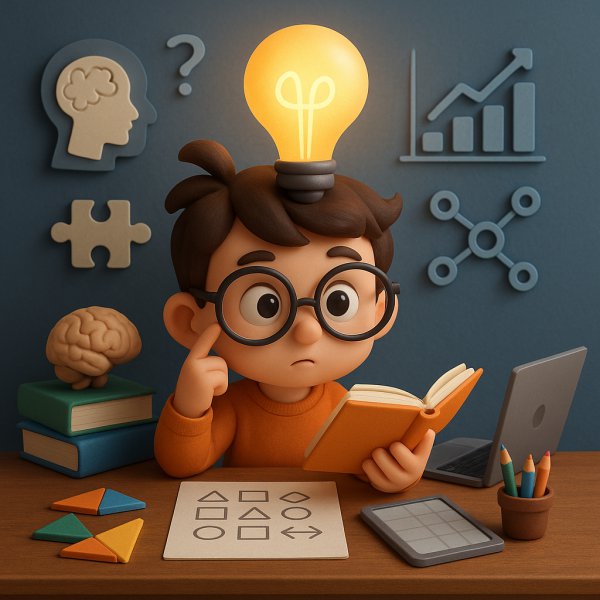
Ever wondered what it is really like to think faster than most people?
Imagine you walk into a room and your brain immediately files what you see into a dozen neat mental folders: patterns, people, possible next moves, a joke you could make, a question to ask, and a problem you could solve later. You notice connections other people do not, you read faster, and sometimes you feel like you are watching a high-speed movie while everyone else is watching frame by frame. That blend of exhilaration, curiosity, and occasional exhaustion is a common report from people with IQs higher than average.
This is not hero worship of numbers. Intelligence is complicated, context matters, and IQ tests measure certain kinds of cognitive ability more than others. Still, when someone tells you they have a high IQ, they are usually describing a cluster of experiences: quick pattern recognition, intense curiosity, rapid learning, and occasional friction in social settings. Let us take a guided tour through what those experiences feel like, why they happen, how they can be used, and how to handle the pitfalls - with humor, concrete examples, and practical steps you can try today.
The cognitive landscape: what higher-than-average IQ often feels like in day-to-day thinking
People with high IQs commonly report faster information processing and a knack for recognizing patterns. When faced with a new problem, many can generate multiple solution paths quickly, mentally simulating outcomes before committing to one. This can make learning new skills feel like connecting pre-built circuits rather than assembling from scratch. For example, a high-IQ student might grasp complex algebraic structure in a single lesson while peers need repeated practice. That speed can be thrilling and efficient, and it can also create impatience when the world moves at normal human speed.
Another frequent trait is deep and sometimes relentless curiosity. A small observation can trigger a multi-hour rabbit hole of questions - how it works, why it behaves this way, what would happen if you altered one variable. Working memory and abstraction skills tend to be strong, meaning these individuals can hold many pieces of information at once and see the overarching model that links them. But speed and depth do not guarantee perfect outcomes; executive functions like task completion, emotional regulation, and social navigation are separate skills that can lag behind raw cognitive horsepower. In short, thinking quickly and thinking well are related but distinct.
A quick comparative snapshot
| Experience or trait |
Higher-than-average IQ |
Typical experience |
| Speed of learning new abstract ideas |
Fast; often few repetitions needed |
Gradual; repetition helps consolidate |
| Pattern recognition |
Strong; connects disparate ideas easily |
Often needs explicit teaching to see links |
| Curiosity depth |
Deep, long rabbit holes possible |
Curious, but often more focused breadth |
| Boredom in routine tasks |
High likelihood of boredom |
Lower boredom in repetitive tasks |
| Social fit at school or work |
May feel out-of-sync or misunderstood |
Easier social synchronization |
| Risk of overthinking |
Higher, leading to rumination |
Moderate, with more reliance on heuristics |
The emotional and social dimension: intelligence is not only a brain thing
A common myth is that smart people sail through life because thinking fast solves everything. The reality is more subtle and human. High cognitive ability can intensify emotional reactions, heighten sensitivity to injustice, and amplify internal standards about competence and correctness. Perfectionism and fear of failure are common companions, because when you can do most things easily, anything you struggle with feels like a breach of identity. That can lead to procrastination, avoidance, or extreme self-criticism.
Socially, asynchronous development is a frequent pattern. A child might be intellectually advanced but emotionally aligned with peers, or vice versa. As an adult, someone might carry a vocabulary that intimidates others, or a hunger for discussion topics that friends find exhausting. That mismatch can lead to loneliness or discomfort. Yet many high-IQ people develop strong empathy, creative humor, and a keen sense of fairness that makes them excellent collaborators once they learn to modulate intensity and translate ideas into accessible language.
“Being very smart is like having a sports car engine in a family sedan: thrilling speed under the hood, but you still have to learn to drive safely on crowded roads.”
Common myths about high IQ, and what research actually shows
-
Myth: IQ is fixed and unchangeable.
Reality: IQ shows substantial stability but is influenced by education, environment, health, and practice. Interventions like targeted cognitive training, schooling, and enriched environments can change cognitive performance, especially in younger years.
-
Myth: High IQ guarantees life success.
Reality: IQ predicts certain outcomes like academic performance and job training success, but noncognitive factors - grit, emotional intelligence, social skills, opportunity, and luck - matter a great deal. Longitudinal research, such as Lewis Terman’s study of gifted children, found many succeeded, but not all became famous geniuses; life trajectories varied widely.
-
Myth: People with high IQ are socially isolated geniuses.
Reality: Many are socially well-adjusted. Social issues often come from mismatch in interests or communication style rather than inability to form relationships.
-
Myth: IQ measures all types of intelligence.
Reality: Standard IQ tests measure reasoning, working memory, processing speed, and verbal and spatial skills, but they do not capture creativity, musical ability, social intelligence, or practical problem solving fully. Theories by Sternberg and Gardner highlight multiple facets of intelligence that IQ does not summarize.
Practical ways to channel a high IQ into productive, satisfying outcomes
High intelligence is a tool. Without intention and supporting habits, it can lead to underuse, frustration, or dead-end perfectionism. Here are evidence-informed strategies to leverage cognitive strengths while compensating for potential weaknesses.
-
Seek intellectual peers and mentors. Being around people who challenge you prevents stagnation and reduces the frustration of always being ahead. Join clubs, courses, or online communities that match your interests.
-
Practice explaining ideas simply. Teaching filters out fuzzy thinking and improves memory. Try the Feynman technique: pick a concept, explain it in plain language, identify gaps in your explanation, and iterate. This also improves social currency - people enjoy clear, relatable insights.
-
Cultivate emotional skills deliberately. High cognitive ability does not automatically produce emotional intelligence. Learn to label feelings, practice active listening, and consider therapy or coaching to handle perfectionism, anxiety, or social friction.
-
Structure projects to beat perfectionism. Use time-limited bursts, minimum viable products, and external deadlines to get things done. Your capacity for complexity can make you overdesign every detail; set constraints and release versions.
-
Use cognitive offloading and tools. Write things down, use spaced repetition for deep knowledge, and break large tasks into small, prioritized steps. High working memory can tempt you to keep everything in your head, but external systems free cognitive bandwidth for creativity.
-
Embrace diverse interests rather than single-minded specialization. High-IQ individuals often have wide curiosity. Curate a portfolio career or hobbies that allow you to explore multiple passions and cross-pollinate ideas.
Small experiments to try now - exercises that sharpen and reveal your thinking style
-
Explain a complex idea to a 10-year-old. Pick a topic you love. Explain it in plain language, then ask a non-expert if they really understand. This reveals your mental model gaps and improves communicative clarity.
-
The pattern hunt challenge. For one hour, try to find five non-obvious patterns in everyday life - in news headlines, commuting routines, or social media behavior. Note how quickly you spot links, and whether those links hold up under scrutiny.
-
The "time box and ship" experiment. Choose a hobby project. Commit 90 minutes to build a first version, then stop. Reflect on how fear of imperfection influenced your work and what you learned from finishing quickly.
These small labs train translation skills, humility, and the discipline to convert insight into impact.
When high IQ becomes a struggle - signs and solutions
Sometimes intelligence creates friction rather than advantage. Common red flags include chronic boredom, persistent procrastination, social isolation, depressive episodes tied to unmet expectations, and feeling like a fraud despite achievements. These are not "proof" of not being smart; they are signals that other systems need tuning.
If you notice these signs, consider practical responses. Seek psychological support for mood or anxiety issues; these are treatable and can improve both quality of life and productivity. Find meaningful challenges that match your level of ability - that might mean entrepreneurship, research, creative pursuits, or highly specialized technical work. Build routines for sleep, exercise, and social contact; cognitive performance is tightly linked to physical and emotional health. Finally, practice curiosity-inquiry rather than self-judgment: ask what you need to thrive, not just what you must prove.
Real-life snippets and research that help explain the picture
Lewis Terman’s longitudinal study of gifted children, started in the 1920s, tracked high-IQ individuals through their lives and found many led productive, healthy lives, but outcomes varied. The study highlighted that intelligence helps, but it is not destiny. Contemporary cognitive research shows that working memory and processing speed correlate with IQ test scores, while creativity and practical problem solving draw on additional networks and life experience.
Consider the story of Maya, a fictional composite based on many real accounts. As a child she read voraciously, skipped grades, and felt bored in class. As a young adult, she alternated between intense bursts of productivity and deep procrastination fueled by terror of failure. When she found a small community of like-minded peers and learned to translate ideas into stories, her work gained impact and her loneliness reduced. Her path illustrates the common pattern: cognitive gifts plus social translation and emotional skill produce lasting impact.
Takeaway: intelligence as a useful, human tool
Having an IQ higher than average can feel like being handed a Swiss Army knife with many blades. It is versatile and powerful, but you still need to learn which blade to use, how to avoid cutting yourself, and how to share tools with others. Intelligence gives bandwidth to understand complexity, but the full craft of life requires curiosity, humility, emotional regulation, social skill, and consistent practice.
If you are exploring what high IQ feels like in yourself or in someone you care about, try small experiments: explain, teach, join peers, and cultivate habits that turn insight into action. Celebrate curiosity and the joy of deep thinking, and remember to give yourself permission to be imperfect, social, and human along the way.
Quote to take with you:
“Intelligence is not a solo act. It wants company, practice, and a bit of patience.”
If you want, try a personalized mini-plan next: tell me one area you love thinking about, and I will sketch a 30-day challenge to grow both your cognitive and social leverage in that domain.