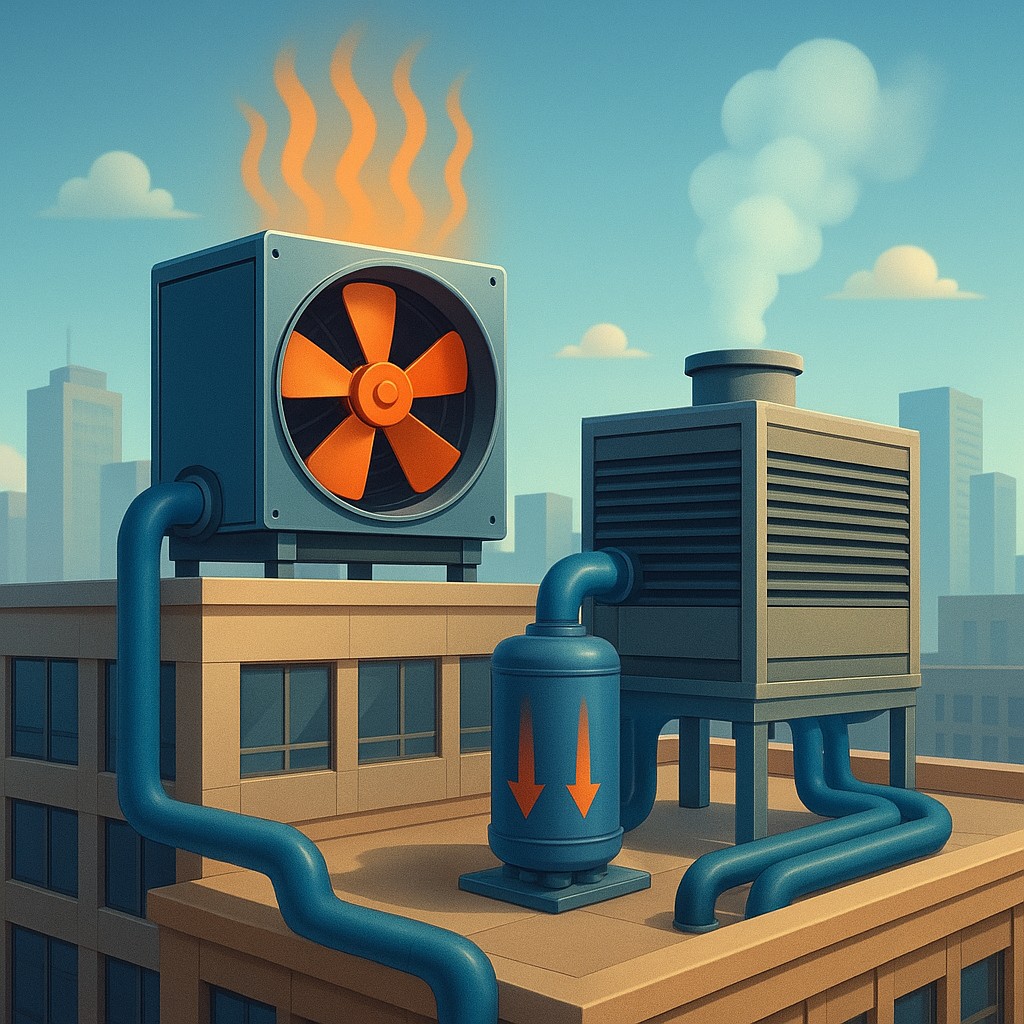
Imagine a typical summer afternoon in a crowded city. As you walk past a large office building or a data center, you might notice a massive fan unit on the roof, howling as it blasts waves of shimmering, hot air into the sky. This is the industrial version of leaving the oven door open while the air conditioner is running. We live in a world that is obsessed with energy efficiency, yet we throw away nearly two-thirds of the energy we produce. This discarded energy, known as waste heat, is a "thermal tax" we pay for every megawatt-hour of electricity used to run servers, forge steel, or bake bread.
For decades, we have treated this low-grade heat-usually between 50 and 90 degrees Celsius-as a nuisance to be vented as quickly as possible. It is too cool to spin a traditional steam turbine and too spread out to be easily turned into electricity. However, a new wave of energy startups is flipping the script by asking a counterintuitive question: what if we used this "exhaust" to actually cool things down? By using a process called thermal vapor compression and advanced absorption cycles, engineers are building machines that swallow waste heat and spit out chilled water. It is a technological magic trick that turns thermal pollution into the fuel needed for air conditioning, finally closing a loop that has been leaking energy for over a century.
The Chemistry of Catching a Chill
To understand how heat creates cold, we first have to look at how a standard refrigerator works. Your kitchen fridge uses a mechanical compressor, a loud, power-hungry pump that squeezes a refrigerant gas until it becomes hot and pressurized. It then lets that gas expand, which causes the temperature to drop rapidly, sucking heat out of your groceries. The "mechanical" part is the problem; it requires a massive amount of high-quality electricity to keep that compressor spinning. In a world where data centers consume an ever-growing share of the global power grid, relying solely on electricity to fight the heat generated by those very servers is a recipe for disaster.
Thermal vapor compression systems replace that electricity-guzzling compressor with a chemical or thermal "pump." Instead of using a motor to squeeze a gas, these systems use pairs of substances that have a natural, almost magnetic attraction to one another, such as water and lithium bromide, or ammonia and water. When waste heat from a factory enters the system, it provides the energy needed to separate these two substances. Once they are apart, they are "hungry" to rejoin. By controlling when and where they come back together, we can create a powerful suction effect that acts just like a mechanical compressor. This process, called absorption, provides the same cooling as a traditional AC unit but uses the "junk" heat from the building next door instead of a heavy draw from the electrical grid.
This shift in perspective is profound because it moves us away from a linear model of energy use. In a linear model, you buy fuel, burn it, use what you can, and throw the rest away. In a thermal loop, the "waste" from one process becomes the "fuel" for the next. This doesn't just save money; it changes the physics of the building. We stop looking at a data center as a giant heater that is expensive to cool and start seeing it as a thermal power plant that produces cooling as a secondary product.
Moving from Pistons to Molecular Attraction
The true genius of these systems lies in how they manipulate the boiling points of liquids. Most of us know that water boils at 100 degrees Celsius, but that is only true at sea level. If you drop the pressure low enough, water will boil at room temperature. In an absorption chiller driven by waste heat, we create a vacuum where a refrigerant (usually water) boils at very low temperatures, absorbing heat from its surroundings as it turns into vapor. This is what creates the "cold" used for air conditioning.
The historical problem has been how to turn that vapor back into a liquid without using a massive mechanical pump. This is where the "chemical compressor" comes in. A concentrated salt solution, like lithium bromide, acts like a chemical sponge. It sits in a chamber and literally sucks the water vapor out of the air. As the salt absorbs the water, it keeps the pressure in the system low, allowing more water to boil and more cooling to happen. Eventually, the "sponge" gets too wet and can't hold any more water. This is when the waste heat from the factory finally steps onto the stage.
The waste heat is piped through the wet salt solution, heating it just enough to boil the water back out. This "dries" the salt solution so it can be used again and sends the water vapor to a condenser to be turned back into a liquid. Because the system relies on the chemical attraction between salt and water, the only moving parts are usually small, low-power fluid pumps. The bulk of the work is done by the waste heat itself. It is a silent, elegant dance of molecules that replaces the grinding friction of pistons and turbines.
Scaling Solutions from Data Centers to Districts
While the science is sound, the physical reality is a bit more complicated. Unlike a sleek, portable air conditioner, these thermal systems are often quite massive. They involve heat exchangers, vacuum chambers, and complex plumbing. This is why you won't see an absorption chiller under your kitchen counter anytime soon. They thrive in places with a constant stream of waste heat and a high demand for cooling, like college campuses, hospitals, or server farms.
| Cooling Method |
Primary Energy Source |
Main Components |
Ideal Use Case |
| Traditional Vapor Compression |
Electricity |
Mechanical Compressor, Fans |
Homes, Small Offices, Cars |
| Absorption Cooling |
Waste Heat (Hot Water/Steam) |
Absorber, Generator, Heat Exchanger |
Factories, Data Centers, District Cooling |
| Thermal Vapor Compression |
Low-pressure Steam/Heat |
Ejectors, Nozzles |
Heavy Industry, Refineries |
| Evaporative Cooling |
Water Evaporation |
Wet Pads, Fans |
Dry Climates, Agriculture |
The scalability of this technology is currently being tested through "District Energy" projects. In these setups, a single central plant harvests heat from several industrial sources and distributes cooling to an entire neighborhood through insulated underground pipes. It treats cooling like a utility, much like water or power. This centralized approach solves the size problem. You don't need a complex chemical plant in the basement of every building if one efficient system serves a dozen city blocks. This also protects the system against downtime; if one data center goes offline, the heat from a nearby laundry facility can keep the cooling loop running.
Startups are now focused on making these units smaller and "plug-and-play." By using new materials for heat exchangers, such as advanced plastics or 3D-printed metals, they are making these units more efficient at lower temperatures. Older systems needed "high-grade" heat (above 100 degrees Celsius) to work, but the latest generation can start working using water that is only 60 degrees Celsius. This is a game-changer because it opens the market to "low-grade" heat, which makes up the vast majority of industrial waste.
Overcoming the Complexity of the Thermal Loop
If this technology is so revolutionary, why isn't everyone using it? The answer is infrastructure and the "complexity tax." Installing a traditional electric chiller is simple: you buy it, plug it in, and you're done. A thermal vapor compression system requires integration. You have to pipe hot exhaust from your machines into the chiller, manage the pressure of the chemicals, and ensure the heat source is consistent. It is an engineering challenge rather than a simple purchase.
Maintenance is another factor. Dealing with vacuum seals and salt solutions requires different skills than fixing a standard AC unit. For a factory owner, saving 80% on a cooling bill is great, but the fear of a specialized system breaking down is a major hurdle. Furthermore, it can take longer for these systems to pay for themselves compared to traditional units, though this is changing as electricity prices rise and carbon taxes become more common. When venting heat carries a financial penalty, recycling that heat becomes much more attractive.
There are also misconceptions about "free energy." These are not perpetual motion machines; they still follow the laws of physics. You aren't creating energy; you are scavenging energy that has already been paid for. If the factory stops producing heat, the cooling stops too. Because of this, these systems are best used as part of a "hybrid" strategy, where they do most of the work but a traditional electric system stays on standby as a backup. This approach lowers the risk for business owners while still capturing massive efficiency gains.
Redefining Efficiency in a Circular Economy
The shift toward thermal vapor compression represents a broader change in how we think about waste. In the 20th century, efficiency was about making one machine better; in the 21st century, efficiency is about connecting the whole system. We are beginning to see energy not as a product to be used once and tossed away, but as a resource that can be reused through multiple stages. A unit of energy might first power a high-performance computer, then, as waste heat, drive a chiller to cool that same computer, and finally provide warm water for a nearby greenhouse.
This "cascading" use of energy is the mark of a mature industrial society. By turning thermal exhaust into cooling fuel, we are essentially finding a hidden oil well inside our own factories. It is a form of engineering alchemy that asks us to look at a plume of steam not as a sign of productivity, but as a missed opportunity. As these systems become smaller and more affordable, the "hum" of the city will change from the hungry roar of compressors to the quiet, clever pulse of a thermal loop.
The promise of this technology is a world where we no longer have to choose between digital progress and protecting the environment. We can have our data centers and factories while reducing our footprint on the planet. It invites us to notice the invisible flows of energy all around us and recognize that the solutions to our greatest challenges are often hidden in the things we've been throwing away. When we learn to close the loop, we don't just save power; we unlock a more resilient way of living.