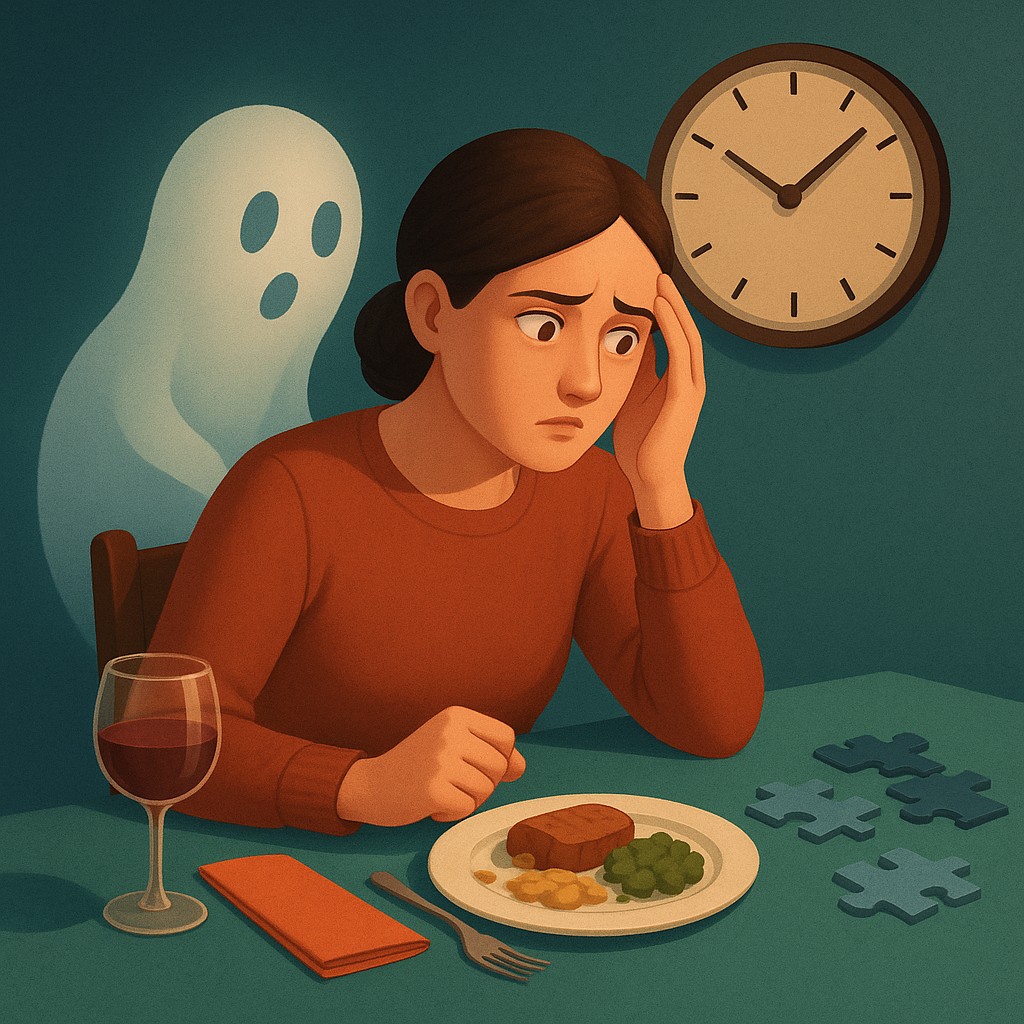
Have you ever sat down for a relaxing dinner only to find yourself obsessing over an email you forgot to send or a half-finished puzzle on the coffee table? It feels like a tiny, persistent ghost is hovering over your shoulder, whispering about all the things you have not yet crossed off your list. This mental itch is not a personal flaw, nor is it a sign that you are losing your mind. In fact, it is a built-in feature of human biology that ensures we do not wander away from important goals before they are actually finished.
This phenomenon happens because of how our brains manage high-priority information versus data that is no longer useful. When we start a task, our brain enters a state of mental tension that keeps the details of that project active and easy to reach in our working memory. Once the task is polished off, the brain effectively hits the delete button on those specific details to make room for new information. However, if the task is interrupted or left hanging, that tension remains, keeping the information at the very front of your mind. Understanding this process is the secret to moving from a chronic procrastinator to a productivity powerhouse.
The Curious Tale of the Forgetful Waiter
The discovery of this psychological quirk did not happen in a high-tech lab, but in a busy 1920s restaurant in Berlin. A young psychologist named Bluma Zeigarnik was sitting with her colleagues when they noticed something strange about the waitstaff. The servers had an amazing ability to remember complex, multi-course orders for dozens of tables at once without writing every single detail down. They could recall exactly who ordered the schnitzel and who wanted their coffee black, but only until the bill was paid.
Once the payment was finished and the group left the table, Zeigarnik tested the waiters. She found that they could no longer remember almost anything about what the guests had eaten or where they had sat. The moment the "loop" was closed, the information vanished. Zeigarnik went back to her lab and began conducting experiments, asking participants to complete various tasks like stringing beads or solving puzzles. When she interrupted them during the work, they were twice as likely to remember what they were doing compared to the tasks they were allowed to finish. This proved that the brain treats an incomplete task as an active file that must be stored in high-priority mental real estate.
The Mental Tension That Keeps Us Awake
To understand why this happens, we have to look at how the brain manages its limited energy. Your brain is a bit of a miser when it comes to power consumption; it does not want to waste effort holding onto facts that are no longer relevant to your survival or your goals. When you are in the middle of a project, the brain creates a "psychological tension" which acts like a persistent notification on your phone. This tension keeps the neurons firing around that specific subject because it assumes you will need those details again very soon.
This is why cliffhangers in television shows are so effective. When an episode ends with the hero hanging off a ledge, your brain experiences the Zeigarnik Effect in full force. Because the situation is not resolved, your mind continues to chew on the possibilities, making you more likely to tune in next week or click "next episode" immediately. The brain hates an open loop, and it will keep you in a state of mild agitation until you find out if the hero survives. This same mechanism explains why a song gets stuck in your head, particularly if you only heard a short snippet of the chorus. Your brain wants to finish the melody, and it will loop the part you know over and over in an attempt to find the ending.
Strategy and Statistics for Managing Mental Load
While the Zeigarnik Effect is a powerful tool for memory, it can also be a major source of stress if it is not managed correctly. When we have twenty different projects in various states of "unfinished," our brains are constantly pinging us with reminders for all of them. This is often called "cognitive overlap," and it can lead to burnout and mental exhaustion because your working memory is being clogged by these open loops.
| Feature of Task |
Impact on Memory |
Practical Application |
| Incomplete |
High Memory Recall |
Stop mid-sentence to make restarting easier tomorrow. |
| Interrupted |
Highest Memory Recall |
Use a planned break to soak in a new concept. |
| Completed |
Low Memory Recall |
Finish a project to clear mental space for a new one. |
| Multitasking |
Fragmented Memory |
Avoid starting too many things at once to prevent mental "noise." |
By looking at the table above, we can see that we remember things best when we are interrupted. This suggests that the brain treats an interruption as an emergency signal to save current data. However, there is a fine balance to strike. If you have too many incomplete items on your plate, the Zeigarnik Effect stops being a helpful memory aid and starts becoming a source of anxiety. The goal is to have a few purposeful open loops rather than a chaotic mess of half-baked ideas.
Turning the Itch into a Productivity Superpower
Now that we know our brains are designed to obsess over things that are unfinished, we can use this to stop procrastination in its tracks. One of the hardest parts of any project is simply getting started, particularly if the task feels overwhelming. You can "hack" your brain by starting with a tiny, five-minute version of the task. Once you have made even a small amount of progress, the Zeigarnik Effect kicks in. Your brain now recognizes the task as "open," and it will naturally nudge you to go back and finish it.
Another effective technique involves stopping when things are going well. Hemingway was famous for stopping his writing sessions in the middle of a sentence. While this sounds counterintuitive, it is actually brilliant. Because the sentence and the thought behind it are incomplete, his brain stayed engaged with the story overnight. When he sat down the next morning, he did not have to stare at a blank page wondering where to start; the Zeigarnik Effect had kept the "open loop" of that sentence ready for him, allowing him to jump right back into his work.
Avoiding the Dark Side of Open Loops
While using this effect can make you more efficient, you must be careful about leaving too many threads dangling. Every incomplete task acts like an app running in the background of a smartphone; it might not be the main thing you are doing, but it is still draining the battery. If you have dozens of projects started but never finished, you will likely feel a persistent sense of unease or "mental clutter." This can lead to insomnia, as your brain tries to resolve these loops while you are trying to sleep.
To combat this, you can perform a "closing ceremony" at the end of your day. If you cannot finish a task, write down exactly where you left off and what the next three steps are. Research suggests that by creating a concrete plan to finish a task, you can trick the brain into a state of "false resolution." This allows the mental tension to drop, letting you rest without that nagging itch. You are effectively telling your brain, "I haven't finished, but I have a map to get there," which is often enough to let your working memory relax and reboot.
Challenging the Myths of Multitasking
There is a common misconception that being "busy" is the same thing as being "productive," but the Zeigarnik Effect shows us why this is rarely true. When we bounce between five different emails, a report, and a phone call, we are creating a mountain of open loops. Each task is fighting for the same limited mental resources, leading to high stress and poor memory. People who claim to be great multitaskers are often just people who are constantly being nagged by their own brains, as their minds desperately try to keep track of a dozen unfinished stories at once.
Instead of trying to do everything at once, the smarter approach is to use the Zeigarnik Effect one step at a time. Focus on one major task, and if you must take a break, do so at a point that is easy to jump back into. Do not try to hold the entire architecture of a complex project in your mind while also trying to plan your grocery list. By finishing one thing before moving to the next, you "clear the cache" of your brain. This ensures that when you do move on, you have 100 percent of your mental energy available for the next challenge.
The Art of the Intentional Pause
In our fast-paced world, we are often taught that stopping is a sign of weakness or laziness. However, the science of memory suggests that the "intentional pause" is actually a sophisticated tool. By knowing exactly when to step away from a problem, you allow your subconscious to keep working in the background. Many of history's greatest scientists and artists found their breakthroughs not while staring at the problem, but while taking a walk or doing the dishes. Their "open loop" was still running, and because the brain was not focused on the hard work of the moment, it was free to make new connections.
Think of your mind as a high-performance engine. If you leave it running constantly at top speeds without ever finishing a lap, it will eventually overheat. But if you learn to shift gears, using the Zeigarnik Effect to maintain momentum and "closing ceremonies" to cool down, you can keep performing at a high level indefinitely. It is about working with your biology rather than against it. When you understand that the "nagging itch" of an unfinished task is just your brain trying to be a helpful assistant, you stop feeling stressed and start feeling empowered.
The next time you find yourself stuck on a difficult problem, try walking away right in the middle of a thought. Leave the book open on the table, leave the code half-written, or leave the sketch unfinished. Trust that your brain is much more capable of handling complexity than you give it credit for. By leaving that door slightly ajar, you invite your mind to keep exploring, dreaming, and solving even while you are off enjoying the rest of your life. Embrace the power of the unfinished, and you will find that your path to the finish line becomes smoother and more inspired than ever before.