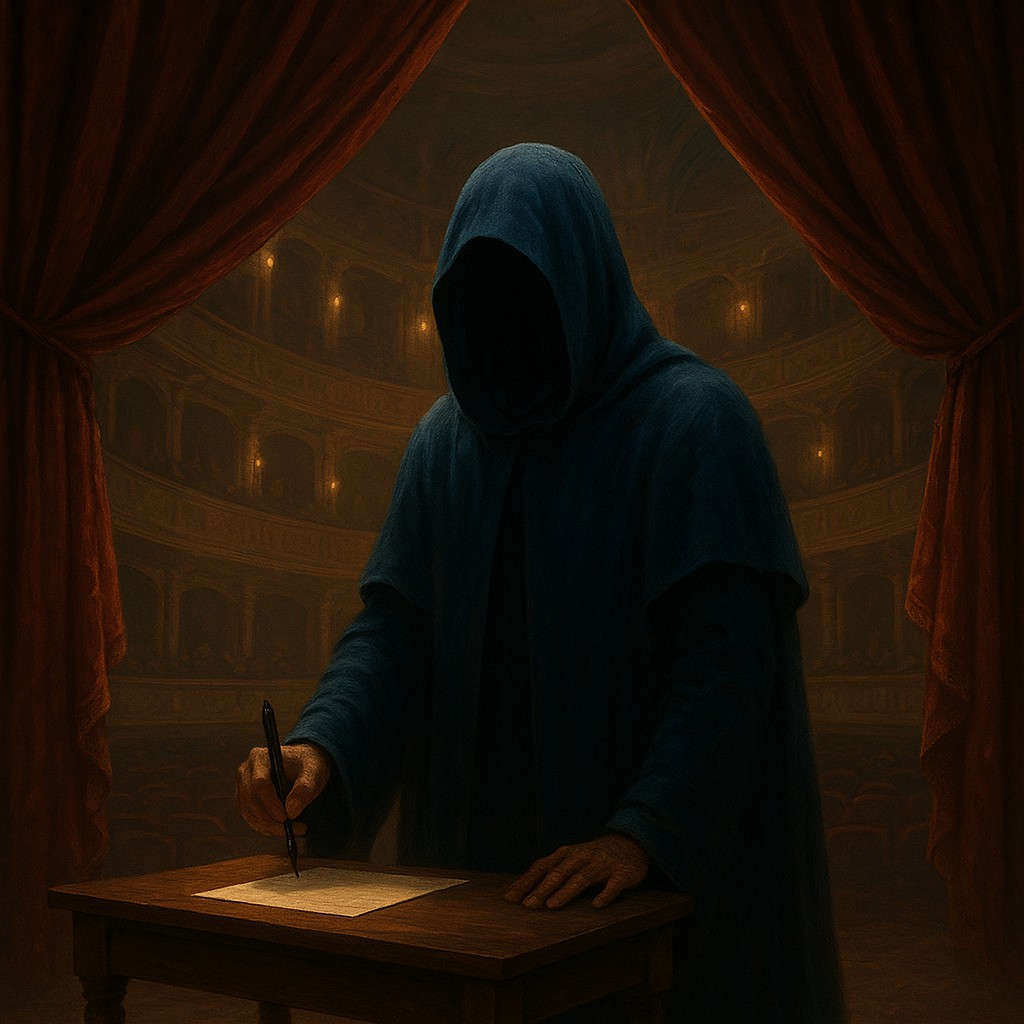
Imagine you are waiting in the wings of a grand theater, about to step onto the stage for the performance of a lifetime. The catch is that you have no idea which character you are playing. You might be the wealthy lead living in a penthouse, or you might be the struggling stagehand working three jobs just to get by. You could be young, old, perfectly healthy, or living with a chronic illness. You do not know your race, your gender, your natural talents, or even your religious beliefs. Now, while standing in this state of total uncertainty, someone hands you a pen and tells you to write the laws that will govern the entire theater company.
This scenario is the heart of one of the most powerful mental tools ever created for thinking about fairness. In 1971, a quiet Harvard philosopher named John Rawls published a book titled A Theory of Justice, which transformed how we think about organizing society. At the center of his theory was a thought experiment he called the "Original Position," protected by a "Veil of Ignorance." It is a surprisingly simple idea that cuts through the noise of political shouting matches and personal greed to find what it actually means to be just. By temporarily forgetting who we are, we finally become capable of seeing what everyone actually needs.
Stepping Behind the Curtain of Self-Interest
To understand the Veil of Ignorance, we first have to admit an uncomfortable truth: humans are generally bad at being objective when our own interests are on the line. When we argue about taxes, healthcare, or education, we often start with our own bank accounts and lifestyles. Then, we work backward to find a "moral" reason why things should stay the same or change in our favor. A billionaire is unlikely to fight for a 90 percent inheritance tax, just as a professional athlete might not see the urgency in funding wheelchair ramps unless they personally know someone who needs them. We are tied to our own identities, which limits our moral imagination.
Rawls suggests that to find "Justice as Fairness," we must enter a hypothetical state where all these defining traits are stripped away. Behind the veil, you are a "rational agent" with a basic understanding of psychology, economics, and sociology, but zero knowledge of your specific place in the world. You do not know if you are smart or dull, rich or poor, or whether you belong to a majority or a marginalized group. This lack of information is actually your greatest asset. Because you are rational and do not want to suffer, you will naturally try to design a system that is safe for everyone, just in case you end up at the bottom of the social ladder.
This is not about being a saint or a selfless hero. In fact, Rawls assumes you are still acting out of a type of self-interest. However, because the veil hides your identity, your self-interest becomes tied to the well-being of the whole group. You cannot gamble on a society that treats a specific group poorly because you might wake up tomorrow as a member of that very group. The veil transforms "what is good for me" into "what is fair for anyone," creating a logical bridge between personal desire and social justice.
The Two Pillars of a Fair Foundation
If we were all sitting behind this veil right now, what kind of rules would we actually agree on? Rawls argued that we would not just pick things at random. Instead, he believed we would settle on two fundamental principles to serve as the bedrock of our new society. These principles ensure that no matter where you land after the veil is lifted, your life has dignity and opportunity. He called these the Liberty Principle and the Difference Principle.
The first priority would be basic liberties. Behind the veil, you would not risk living in a society where your speech is censored or your right to vote is taken away, because you might end up being the person with the "unpopular" opinion. Therefore, the first principle guarantees the widest set of fundamental freedoms possible, as long as those freedoms do not interfere with the freedoms of others. This includes things like freedom of conscience, freedom of association, and the right to own personal property. These are the non-negotiables that protect your independence as a human being regardless of your status.
The second principle deals with the messy reality of money, power, and social standing. Rawls knew that a perfectly "equal" society, where everyone has the exact same amount of money and the exact same job, is likely impossible and might even lead to stagnation. However, he argued that inequalities are only justified if they meet two conditions. First, offices and positions must be open to everyone under conditions of fair equality of opportunity. Second, and most famously, any inequality must be to the greatest benefit of the least advantaged members of society. This is often called the "maximin" strategy: you want to maximize the minimum possible outcome.
Comparing Fairness in Different Social Structures
To see the Difference Principle in action, it helps to compare how different societies might distribute resources. In a purely merit-based or capitalist society, we often celebrate the winners while assuming the losers simply did not work hard enough. But behind the veil, we realize that talent is often a "natural lottery." You did not choose to be born with a high IQ, a fast metabolism, or a knack for coding. Therefore, Rawls argues we should treat our talents as a common asset that should benefit everyone.
| System Type |
Priority behind the Veil |
Outcome for the Least Advantaged |
| Strict Equality |
Everyone gets the exact same amount. |
The minimum is stable but potentially very low because there is no incentive to work harder. |
| Utilitarianism |
The greatest good for the greatest number. |
Risk of a minority being sacrificed for the comfort of the majority. |
| Rawlsian Justice |
Inequalities must benefit the poor. |
The minimum is as high as possible; everyone has a safety net. |
| Unregulated Meritocracy |
Rewards go to the most "talented." |
The minimum can be zero; high risk of extreme poverty and suffering. |
By looking at the table, we can see why a rational person behind the veil would choose the Rawlsian approach. While a meritocracy might offer the chance to become a billionaire, the risk of ending up homeless is too high to be a rational bet. Similarly, while strict equality sounds fair, it might lead to a world where no one has an incentive to become a doctor or an engineer, making everyone's quality of life lower. The Veil of Ignorance leads us to a middle ground where we allow some people to have more, but only if their success helps pull the rest of the world upward.
Practical Experiments in Modern Living
While the Veil of Ignorance is a philosophical tool, its applications are incredibly practical for modern design. Take, for example, the concept of Universal Design in architecture. When an architect designs a building, they could use the veil to ask: "If I didn't know if I were a world-class sprinter or someone using a wheelchair, how would I design this entrance?" The result is a ramp or a level entry that works perfectly for both people. By designing for the most vulnerable, we often create a system that is better for everyone.
We can apply this to corporate culture as well. Imagine a CEO and a junior intern designing a company’s parental leave policy. If they were both behind a veil and did not know which role they would occupy, they would likely land on a policy that provides strong support for all employees. The CEO would not vote for a "zero-leave" policy because they might end up being the intern who needs time off to care for a newborn. It forces the person in power to consider the reality of the person with the least power, not out of charity, but to ensure the system works for anyone.
This model also serves as a brilliant detector for empty political talk. When a leader proposes a law that clearly benefits one specific group while harming another, we can ask: "Would they agree to this law if they didn't know they were in the winning group?" If the answer is no, then the law isn't based on justice; it is based on leverage. The Veil of Ignorance reminds us that a truly just society is one you would be willing to enter at any random point, confident that your basic needs and dignity would be protected.
Correcting Common Myths and Doubts
A common misunderstanding about the Veil of Ignorance is that it requires us to become mindless robots or that it advocates for a boring, grey world where no one can be special. Critics often argue that humans are naturally competitive and that a society based on the "maximin" principle would kill innovation. However, Rawls is not arguing that we should destroy competition or talent. He is simply saying that the rules of the game should be fair. A game of poker is fun because people win and lose, but it only stays fun as long as the deck isn't stacked in favor of the dealer.
Another myth is that the Veil of Ignorance is a "how-to" guide for personal psychology. People often ask, "How can I actually forget who I am?" The answer is: you can't. Rawls was not suggesting that we can literally wipe our memories or that we should ignore our heritage and identity in our personal lives. The veil is a tool for writing laws and making policy. It is a way for a group of people with different backgrounds to find a common language of fairness. It isn't a call to be identity-less; it’s a call to be identity-neutral when we are deciding what the state owes to its citizens.
Finally, some think this model is a form of communism in disguise. This is a misunderstanding of the Liberty Principle. Rawls was a firm defender of individual rights and the market economy. He simply believed that "the market" is a tool we use to organize society, not a deity we should serve at the expense of human suffering. By applying the Veil of Ignorance to our economic systems, we do not necessarily get rid of the market; we just put "pothole protection" on the road so that a bad turn of luck does not end in a total catastrophe for an individual.
Broadening the Scope of the Thought Experiment
As we move deeper into the 21st century, the Veil of Ignorance is becoming more relevant than ever due to the rise of Artificial Intelligence and climate change. Consider the ethics of AI. If we are training a machine to decide who gets a loan or a job interview, we should design that algorithm behind a veil of ignorance. If the developers did not know their own ethnicity or gender, they would be much more careful to ensure the algorithm does not have hidden biases. They would want to ensure the code is fair for everyone because they might be the ones being judged by it.
In terms of the environment, we can even extend the veil across time. This is known as the "intergenerational veil of ignorance." Imagine you are designing a policy on carbon emissions, but you do not know which generation you will be born into. You might be a person living in the 1950s, or you might be a child born in the year 2150. If you do not know your place in time, you would never agree to a policy that burns all the fuel and ruins the atmosphere today, because you might wake up in the future facing the consequences. This expansion helps us think about our responsibility to people who haven't even been born yet.
This mental model ultimately shifts our focus from "me" to "us." It challenges us to look at the structures of our world and ask if they are actually fair or if they just happen to benefit the people currently holding the pen. It turns morality into a logic puzzle. If you cannot justify a rule while being ignorant of your own status, then that rule is not a principle of justice; it is just a byproduct of your current advantage. By stripping away the accidental details of our lives, we find the essential requirements for a life well-lived.
Navigating the Map for a Better World
The beauty of the Veil of Ignorance is that it does not give you a list of "correct" political answers; instead, it gives you a better way to ask the questions. It demands that we exercise our empathy through the lens of logic. When we look at a failing school system, a lack of affordable housing, or an uneven justice system, the veil stops us from saying "that's not my problem." It forces us to realize that in a different version of the universe, it very easily could have been our problem. It is a reminder that our success is often built on a foundation of luck, and our failures are often the result of missing safety nets.
As you go about your week, try applying this experiment to the small interactions and large debates you encounter. When you see a new policy at work, ask if you would support it if you were the lowest-paid person in the office. When you hear about a new law, ask if you would want it to pass if you were a member of the group most affected by it. This simple shift in perspective is like a superpower for the mind. It doesn't just make you a better citizen; it makes you a more thoughtful friend, a fairer leader, and a more compassionate human being.
You now possess a master key that can unlock some of the most complex moral dilemmas of our time. The Veil of Ignorance is not a dusty academic theory; it is a living, breathing guide for building a world that we would all be proud to inhabit. It invites you to step out of your own shoes for a moment so that you can better understand the ground upon which everyone walks. Carry this perspective with you, and you will find that "fairness" is no longer a vague feeling, but a clear, actionable vision for a society where everyone has the chance to flourish. The performance is starting, and now that you've written the script from behind the veil, you can step onto the stage with confidence, knowing the show is fair for every character in the cast.