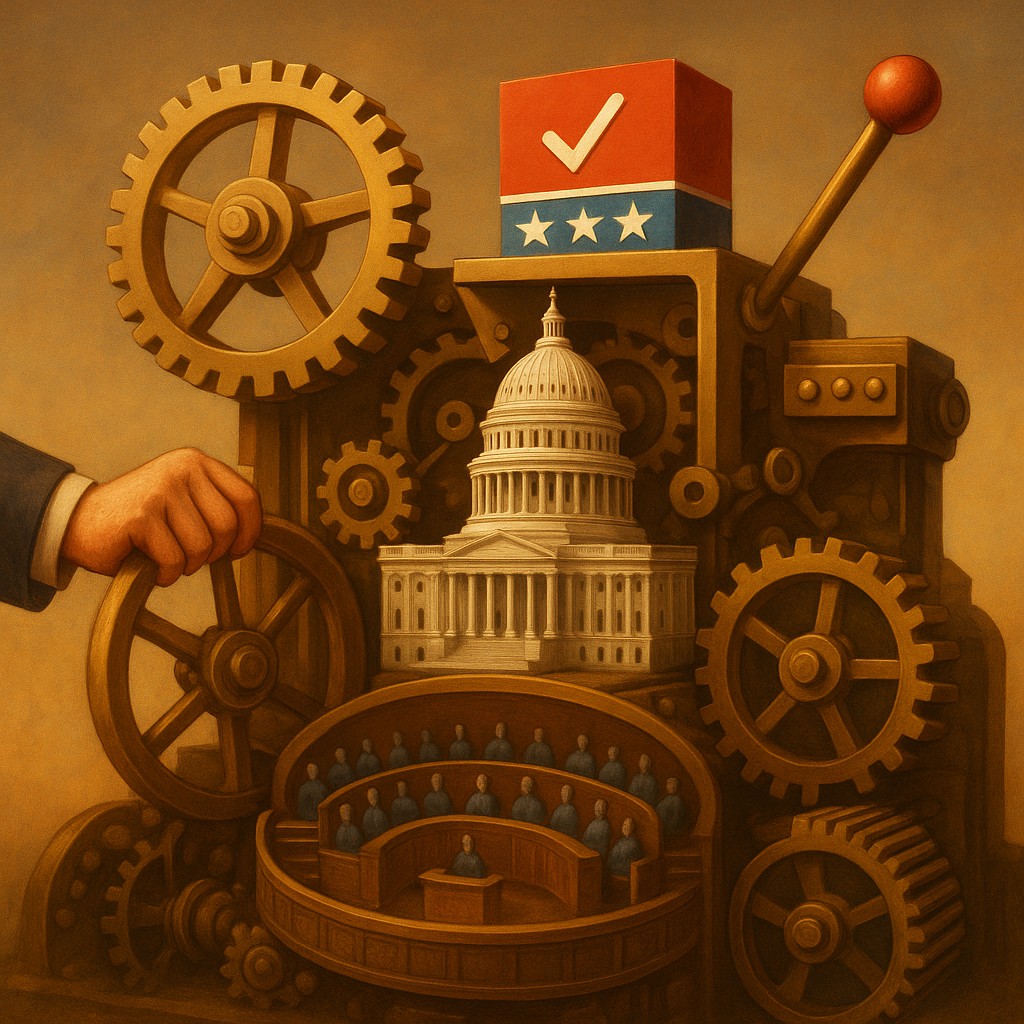
Imagine for a moment that the United States government is a giant, complex machine. Every four years, we pick a new primary operator, the President, to sit at the steering wheel. While the President gets the spotlight and the fancy plane, they do not actually own the machine. They share the controls with a massive, 535 member board of directors known as Congress. Halfway through the President's four-year shift, the American public holds a massive performance review. This is the midterm election. While it might lack the Hollywood glitz of a presidential race, this is often where the real power shifts happen.
The midterms are effectively a national pulse check. Because they occur exactly two years into a presidential term, they serve as a report card for the person in the Oval Office. If the public is happy, they might give the President more teammates in Congress. If they are frustrated by the price of eggs or the direction of foreign policy, they might pack Congress with the President's rivals, effectively putting a boot on the machine's wheels. Understanding the midterms is the secret to knowing why some Presidents get everything they want, while others spend two years staring at a wall of legislative "No."
The Mechanics of the Congressional Shuffle
To understand what happens on a midterm Tuesday, we have to look at the two very different rooms that make up Congress: the House of Representatives and the Senate. The House is like a crowded, noisy coffee shop where everyone is on a short lease. Every single one of the 435 members must run for reelection every two years. This means the House is incredibly sensitive to the public mood. If a specific trend or grievance sweeps the nation, the House feels the vibration first. Because seats are handed out based on population, the House represents the "will of the people" in an immediate, local sense.
The Senate, however, is more like a quiet, prestigious library. Senators serve six-year terms, which is a lifetime in politics. To keep things stable, only about one-third of the Senate is up for election during any given midterm. This staggered system ensures that the entire government does not flip overnight. While the House might react to a headline from last week, the Senate is designed to move more slowly. During a midterm, you see a full reshuffle of the House but only a surgical update to the Senate. This creates a fascinating dynamic where one party might win big in the "room of the people" while the remaining two-thirds of the Senate stay exactly as they were.
The Curse of the Sitting President
If you look back through nearly a century of American history, a strange and consistent pattern emerges: the President’s party almost always loses. It is a trend so reliable that political scientists often treat it as a law of nature. Since the end of World War II, the party in power has lost an average of about 26 seats in the House and four seats in the Senate during the midterms. There are many theories as to why this happens, but the most popular is the "surge and decline" theory. In a presidential year, voters are excited and turn out in high numbers. Two years later, that excitement has often faded, and those who are angry at the government are far more motivated to go to the polls than those who are satisfied.
This "punishment" effect makes the midterms a season of defense for the President. Even a popular leader can lose their majority simply because their supporters stayed home to watch Netflix while the opposition party showed up in raincoats and snow boots to cast a protest vote. This is why you see Presidents campaigning frantically for candidates you have never heard of in states where the President doesn't even live. They know that if they lose their majority in Congress, their "To-Do" list for the next two years is essentially headed for the paper shredder.
| Feature |
House of Representatives |
United States Senate |
| Total Seats |
435 (Based on population) |
100 (2 per state) |
| Term Length |
2 Years |
6 Years |
| Up for Election |
All 435 seats every 2 years |
About 1/3 of seats every 2 years |
| Role in Midterms |
Fast-paced, high turnover |
Slower, selective changes |
| Main Power |
Budget and spending bills |
Confirming judges and treaties |
Beyond Washington and Into the Statehouse
While national news focuses on whether Democrats or Republicans will control the "Gavel," there is a second, secret layer to the midterms at the state level. In many states, voters also choose their Governors, Attorneys General, and State Legislators. This is often where the laws affecting your daily life actually get made. While Congress might argue about big-picture issues like the national debt, your state government decides the quality of your roads, the curriculum in your schools, and how easy it is for you to vote in the next election.
Furthermore, state-level wins in a midterm can have a massive "domino effect" on future national politics. The people who win state legislative seats are often the ones who draw the maps for congressional districts. If one party controls a state's legislature during a redistricting year, they can draw those lines to make it much easier for their party to win for the next decade. This is called gerrymandering, and it is a powerful tool. So, while everyone is staring at the big scoreboard in D.C., the real long-term power might be shifting in a state capital you have never visited.
Correcting the Myth of the Useless Vote
A common misconception is that midterms are "off-year" elections that do not really matter because the President is not on the ballot. This could not be further from the truth. In fact, a midterm can completely transform the identity of a presidency. If the President’s party loses control of Congress, we enter a period called "divided government." In this scenario, the President can no longer pass major laws or budgets without asking the opposition for permission. This often leads to "gridlock," where nothing gets done, or it forces the President to rely on "Executive Orders." These are temporary rules that the next person in charge can easily erase.
Another myth is that midterms only attract older, more partisan voters. While it is true that turnout is lower than in presidential years, the demographics are changing. In recent cycles, younger voters have started showing up in record numbers, proving that the midterms are becoming a primary battleground for social issues. Whether it is climate change, reproductive rights, or economic policy, the midterms are the moment when the public tells the government what they care about right now, rather than waiting four years to speak up.
When the Gavel Changes Hands
So, what actually changes the day after the election? If the majority flips, the first thing to shift is the "Agenda." The majority party in each chamber gets to decide which bills even get a vote. If the President wants to pass a new healthcare plan but the House is controlled by the opposition, that bill might never even leave the committee room. It is effectively ghosted. The new majority can also launch investigations. They gain "subpoena power," which means they can legally force officials to testify under oath and dig through government documents. This makes life very uncomfortable for a sitting administration.
Secondly, the Senate holds the keys to the judicial branch. If a President wants to appoint a new Supreme Court justice or a federal judge, the Senate has to approve them. If the Senate is controlled by the opposition party, the President might find it impossible to fill these seats with people who share their ideology. This ripple effect can last for forty years, long after the President has retired to write their memoirs. The midterms, therefore, are not just about the next two years; they are about the next several decades of American law and order.
Entering a voting booth during a midterm is like being a judge on a reality TV show. You get to decide if the main character stays or if the supporting cast gets a complete overhaul. It is the moment where the "checks and balances" you learned about in school actually come to life. By participating, you are not just choosing a name; you are choosing whether the government moves at a sprint, a crawl, or a complete standstill. It is a quiet, powerful process that ensures no single person holds all the keys to the kingdom for long, keeping the American experiment in a constant, restless state of motion.