Every time you ask a generative AI to write a toaster-themed poem or code a complex database migration, a tiny physical ripple moves through the global power grid. Behind the smooth interface of the chatbot lies a massive network of data centers. These facilities are packed with high-performance chips that are, for all practical purposes, the most expensive space heaters ever built. These chips require an enormous, steady stream of electricity to maintain their digital focus. However, the world's energy grids were never designed for the sudden, ravenous appetite of a silicon intelligence that never sleeps. This has created a tense standoff between our digital ambitions and the physical reality of copper wires and power plants.
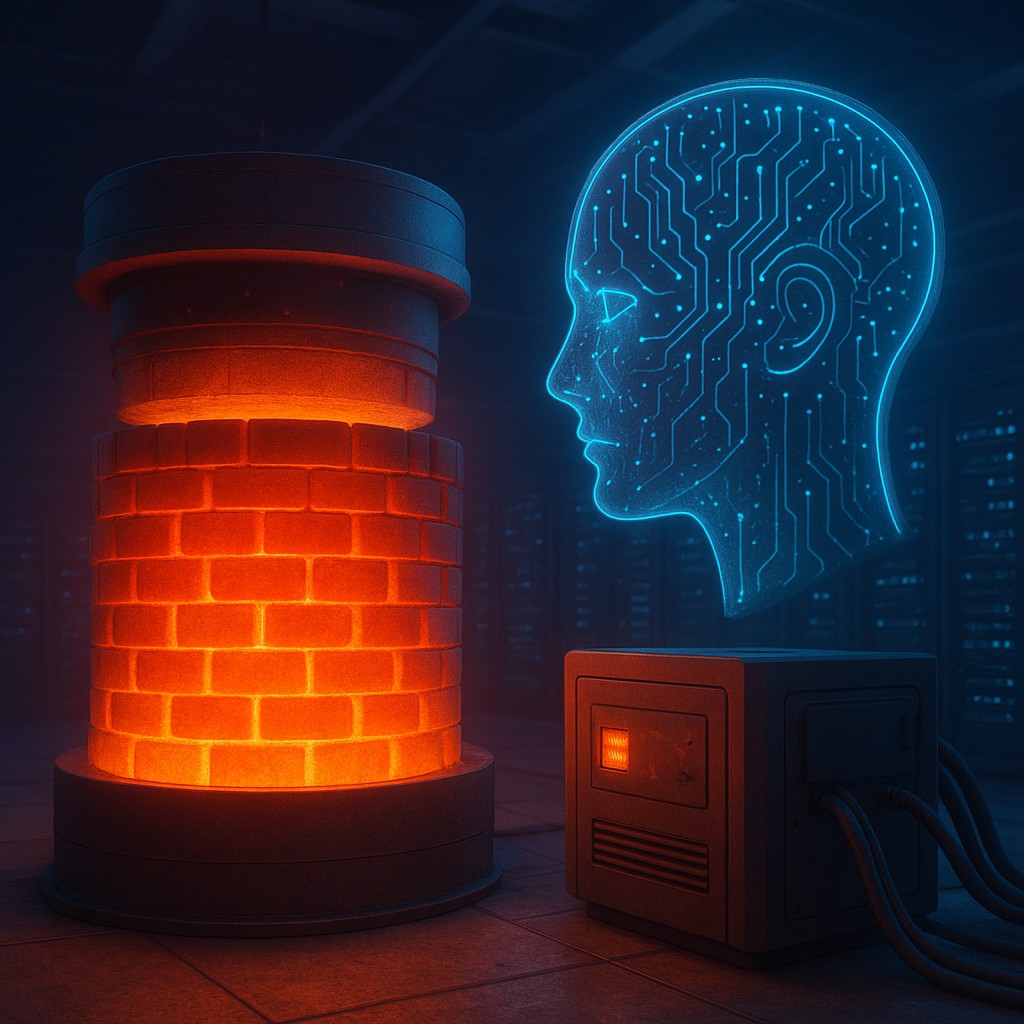
To keep these digital minds humming without crashing local power grids, engineers have turned to a solution that feels remarkably primitive yet technologically brilliant. They are building giant, insulated silos filled with stacks of iron and brick. These materials are heated until they glow like the embers of a dying sun. This is the era of the thermal battery, a system that acts as a massive "buffer" for the planet's energy. By capturing extra electricity when the sun is shining or the wind is blowing and storing it as raw heat, these systems allow data centers to separate their power usage from the immediate availability of the grid. This ensures that the AI revolution does not flicker out on a cloudy day.
The Insatiable Hunger of the Silicon Mind
To understand why we are suddenly stacking hot iron in giant boxes, we first have to appreciate the scale of the energy challenge posed by artificial intelligence. Traditional data centers, which handle your emails and cloud storage, are relatively predictable. AI, however, is a different beast entirely. Training a large language model requires thousands of specialized chips working together for months, consuming more electricity than a small city. Even the "inference" phase - the moment you actually ask the AI a question - draws significant power because the chips must perform trillions of calculations in a fraction of a second to generate a response.
This constant demand creates a "baseload" problem. Renewable energy sources like solar and wind are great for the environment, but they are intermittent, meaning they only work when the weather cooperates. The sun sets and the wind dies down, but the demand for AI processing stays at a steady, high plateau. If a data center relies only on the grid, it risks causing brownouts or having to rely on "peaker" plants - gas turbines that kick in when demand spikes and produce heavy carbon emissions. The industry needed a way to store vast amounts of energy for long periods, but the solution had to be more sustainable and affordable than the batteries currently on the market.
While we often think of "batteries" as the sleek rectangles of lithium and cobalt found in our phones, that technology has major drawbacks for industrial storage. The natural resources needed for chemical batteries are expensive to mine and difficult to recycle. Furthermore, the batteries themselves tend to wear out after a few thousand charge cycles. More importantly, they struggle to hold enough energy to power a massive data center for several days at a time without becoming far too expensive. This is why engineers looked back at the basic laws of physics to find a more rugged, ancient solution.
Turning Electricity Into Incandescent Bricks
The concept of a thermal battery is elegantly simple: it treats heat as a currency that can be stored and traded. When electricity is cheap and plentiful - perhaps during a particularly windy afternoon - that energy is sent into high-resistance heating elements. These are similar to the coils in a kitchen toaster but on a much larger scale. These coils are woven through massive stacks of iron-rich bricks or solid carbon blocks inside a heavily insulated silo. The electricity warms these materials until they reach temperatures over 1,500 degrees Celsius. At this point, the inside of the silo is literally white-hot.
The magic of these systems lies in their insulation. Because the silos use advanced materials that prevent heat from escaping, the iron bricks can stay hot for days or even weeks. This is effectively "frozen" energy waiting to be used. When the data center needs power but the grid is under pressure, the system begins a heat exchange. Air or another fluid is pumped through the glowing bricks, absorbing the intense heat. This superheated air is then used to boil water into steam, which spins a traditional turbine to generate electricity. In more advanced setups, specialized solar cells capture the light from the glowing blocks and turn the radiance directly back into power.
It is important to distinguish this process from the cooling systems used for the AI chips themselves. While servers do generate a lot of heat that must be managed, thermal batteries are not used to "store" the waste heat from the computers. Instead, they are a dedicated energy reserve. They stand as a separate power bank that ensures the facility can stay online 99.999 percent of the time without burning fossil fuels when the sun goes down. It is a closed loop of energy that uses the heat-holding capacity of common metals to solve a high-tech problem.
Comparing Energy Storage Philosophies
When choosing how to back up a multibillion-dollar facility, engineers have to weigh cost, duration, and environmental impact. The move toward thermal storage reflects a shift toward "long duration" thinking. The goal isn't just to cover a five-minute dip in voltage, but to provide a steady stream of power for half a week. Below is a comparison of how thermal iron batteries stack up against common lithium-ion batteries.
| Feature |
Lithium-Ion Batteries |
Thermal Iron Batteries |
| Primary Material |
Lithium, Cobalt, Nickel |
Iron, Graphite, Firebrick |
| Energy Medium |
Chemical Reaction |
Sensible Heat |
| Useful Lifespan |
10 to 15 years (Wears out) |
30+ years (Stable) |
| Duration of Backup |
Minutes to 4 hours |
10 to 100+ hours |
| Safety Profile |
Risk of catching fire |
Passive heat (Cannot burn) |
| Environmental Cost |
High mining impact |
Low (Uses abundant materials) |
| Storage Cost |
High per unit of energy |
Low per unit of energy |
As the table shows, the "iron block" method wins on longevity and cost-effectiveness for large-scale needs. While lithium-ion is perfect for a laptop or an electric car where weight and quick power are essential, it is a poor choice for a building that isn't moving and needs to store energy for days. The iron doesn't wear out; you can heat it up and cool it down tens of thousands of times without the material losing its capacity. This makes it a multi-decade investment for a data center operator.
Thermodynamic Stability in a Volatile World
One of the best reasons to use hot iron for energy storage is that it simplifies the supply chain. We live in a world where the materials for high-tech electronics are often caught in global political disputes. Iron and brick, by contrast, are found almost everywhere. By using "dirt cheap" materials to solve a "high-tech" problem, engineers are creating a more resilient infrastructure. This is a big-picture correction: we are using the most abundant materials on Earth to support the most complex software ever written, merging the Bronze Age with the Information Age.
Furthermore, these thermal systems are flexible in how they deliver energy. Because they store raw heat, they can be used for more than just making electricity. Many industrial processes, from food processing to chemical manufacturing, require intense heat. A data center located near an industrial park could potentially share its thermal battery, providing electricity for the chips and high-pressure steam for a nearby factory. This concept, known as "cogeneration," turns the data center from a basic consumer into the heart of a shared, efficient energy ecosystem.
There is also a psychological shift happening in the engineering community. For decades, the goal of computing was to make everything smaller, faster, and cooler. We wanted chips that used less power and ran at lower temperatures. But as we hit the physical limits of hardware, we have realized that AI is simply a "heavy industry" of the mind. Like steel milling or aluminum smelting, AI requires massive energy inputs. By accepting this and building "heavy" energy solutions like 500-ton blocks of hot iron, we are finally aligning our infrastructure with the reality of our digital habits.
Scaling the Glowing Towers of Truth
As we move forward, the look of data centers will likely change. Next to the familiar, low warehouses filled with server racks, we will see towering, windowless silos. These silos won't hold grain or water, but rather the thermal heartbeat of the facility. The success of companies like Rondo Energy and Antora Energy suggests that this isn't just a small science project, but a growing industry. Tech giants are already looking at these thermal batteries as the only way to meet their "net-zero" carbon goals while expanding their AI capabilities at high speed.
This technology also provides a massive boost to the renewable energy sector. Currently, many wind farms are forced to "curtail," or shut down their turbines, because they produce more electricity than the grid can handle at that moment. Thermal batteries provide a place for that "homeless" energy to go. Instead of wasting the wind, we can use it to heat our iron blocks. In this way, the AI data center becomes a giant sponge for the grid, absorbing extra energy when it’s available and releasing it when the rest of the world needs it most. It is a win-win relationship that makes the entire energy grid more stable.
The move to thermal storage is a reminder that the future doesn't always look like a sci-fi movie. Sometimes, the most sophisticated solution to a twenty-first-century problem is a technology that a blacksmith from five hundred years ago would recognize. By understanding how matter works and how heat flows, we can build a foundation for artificial intelligence that is as solid as a stack of iron bricks.
The next time you use an AI and get an answer in seconds, imagine those glowing silos in the distance. The digital brilliance you are experiencing is powered by the stored fire of the sun, held captive in blocks of metal. This bridge between the elemental and the digital is a testament to human ingenuity. It shows that we can reach for the heights of artificial intelligence while keeping our feet planted firmly in the laws of physics. This change represents a more sustainable and thoughtful way to power the dreams of the future.