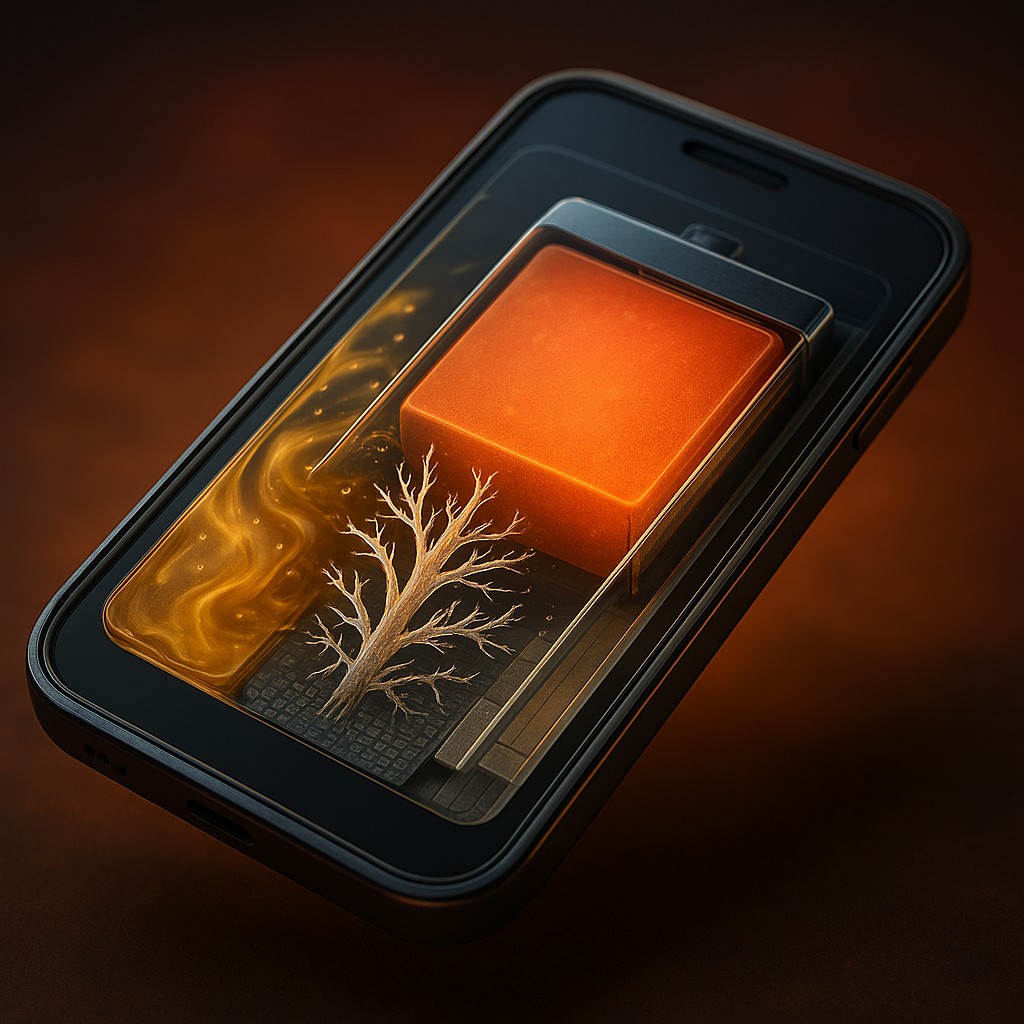
Think of your smartphone as a tiny, high-stakes chemistry lab tucked into your pocket. Most of the time, this lab runs like clockwork, silently powering your morning alarms and late-night scrolling. However, beneath that sleek glass-and-metal shell, a liquid chemical soup is working overtime to move energy back and forth. This liquid is the lifeblood of the modern lithium-ion battery, but it has a dangerous personality trait. Under the right conditions, it becomes temperamental, flammable, and prone to growing microscopic "stings" that can destroy the very device it powers.
As we demand more từ our technology - from cars that travel 500 miles on a charge to phones that top up in minutes - we are pushing this traditional liquid chemistry to its breaking point. Scientists and engineers are now planning a radical makeover to fix these safety and performance issues. The solution involves ditching the liquid entirely and replacing it with something much tougher and more stable. This move to solid-state technology is more than a minor tweak; it is a total shift in how we store energy, promising gadgets that are smaller, safer, and much more powerful.
The Microscopic Menace in Your Pocket
To understand why we need a solid-state revolution, we have to look at the villain of the story: the dendrite. In a standard battery, lithium ions swim through a liquid electrolyte - a substance that allows electricity to flow - between two poles called the anode and the cathode. When you charge the battery, these ions move to the anode to settle down. But they do not always settle evenly. Instead of forming a smooth layer, they sometimes pile up into tiny, jagged peaks. Over many charge cycles, these peaks grow into long, needle-like spikes called dendrites.
Think of dendrites as microscopic icicles growing inside your battery. If these needles grow long enough, they can pierce the delicate separator that keeps the two sides of the battery apart. When a dendrite bridges that gap, it causes a short circuit. Because the liquid in traditional batteries catches fire easily, this short circuit can lead to a sudden heat buildup, causing the battery to swell, hiss, or even burst into flames. This is why airlines are so strict about lithium batteries in checked luggage and why your phone feels hot when it is working too hard.
Trading Liquid Chaos for Solid Stability
The best fix for the dendrite problem is to replace that flammable liquid with a solid barrier, usually made of ceramic or specialized plastics. In a solid-state battery, the electrolyte does more than just move ions; it acts as a physical wall. Because the material is dense and solid, it creates a tough obstacle for those pesky lithium needles. Imagine trying to push a needle through a bowl of soup versus pushing it through a ceramic dinner plate. The ceramic layer is simply too hard for the dendrite to break through, which removes the risk of internal short circuits.
Beyond safety, removing the liquid lets engineers pack the battery parts much more tightly. Since they no longer need bulky safety systems to contain flammable fluids, battery packs can become much smaller and lighter. This "energy density" means we can fit a much higher power capacity into the same amount of space. Additionally, solid materials stay stable at high temperatures. This allows for much faster charging, because the battery can handle the heat of rapid energy transfer without the risk of "thermal runaway" - a dangerous chain reaction that leads to fires.
Why We Cannot Switch to Ceramics Overnight
If solid-state batteries are so much better, you might wonder why your laptop still uses the liquid kind. The problem is that ceramics are stubborn. While a ceramic layer is great at stopping dendrites, it is also very brittle. Ceramics are basically high-tech cousins of your favorite coffee mug. They are strong and heat-resistant, but they crack if you drop them or put them under uneven pressure. In a battery, even a microscopic crack in the ceramic gives lithium dendrites a highway to sneak through, ruining the purpose of the solid barrier.
Manufacturing these stone-like layers at a massive scale is another huge challenge. Making a ceramic electrolyte that is thin enough to save space, but tough enough to survive a bumpy car ride or a dropped phone, is an engineering nightmare. Furthermore, getting solid materials to touch each other perfectly is much harder than soaking them in liquid. In a normal battery, the liquid electrolyte wets every nook and cranny of the electrodes to keep electricity flowing. In a solid battery, if the ceramic layer loses perfect contact with the other parts at even one point, the flow of electricity slows down or stops.
| Feature |
Traditional Liquid Lithium-Ion |
Solid-State Ceramic Battery |
| Electrolyte State |
Flammable Liquid |
Non-flammable Solid |
| Dendrite Risk |
High (can cause fires) |
Extremely Low (physical barrier) |
| Energy Density |
Moderate |
Very High |
| Charging Speed |
Limited by heat management |
Potential for ultra-fast charging |
| Durability |
Flexible and resilient |
Brittle (prone to cracking) |
| Manufacturing Cost |
Low (proven technology) |
High (still experimental) |
Moving from the Lab to the Living Room
Researchers around the world are now searching for a "Goldilocks" material that has the strength of ceramic but the flexibility of plastic. Some are testing hybrid electrolytes, where ceramic particles are mixed into a flexible, plastic-like base. This creates a material that blocks dendrites like a wall but bends like a rubber seal. Other teams are developing "self-healing" solids that can fill in their own tiny cracks before a dendrite can exploit the weakness.
We are also seeing big breakthroughs in how these batteries are made. Using methods from the computer chip industry, companies are trying to "print" solid-state batteries in layers to ensure every part fits together perfectly. While we are still a few years away from seeing these in cheap electric cars, the work is moving fast. High-end tools, like medical implants and aerospace gear, are already starting to test these powerhouses. This paves the way for the everyday electronics we all use.
The journey from flammable liquids to rock-solid reliability is one of the most exciting areas in modern science. By mastering the art of the ceramic barrier, we are doing more than just making phone batteries last longer; we are building the foundation for a fully electric world. We are approaching a future where "low battery" anxiety is a thing of the past and the energy powering your life is as safe and stable as the floor beneath your feet. The transition is difficult and the materials are fragile, but the goal of a cleaner, safer world is worth the effort.