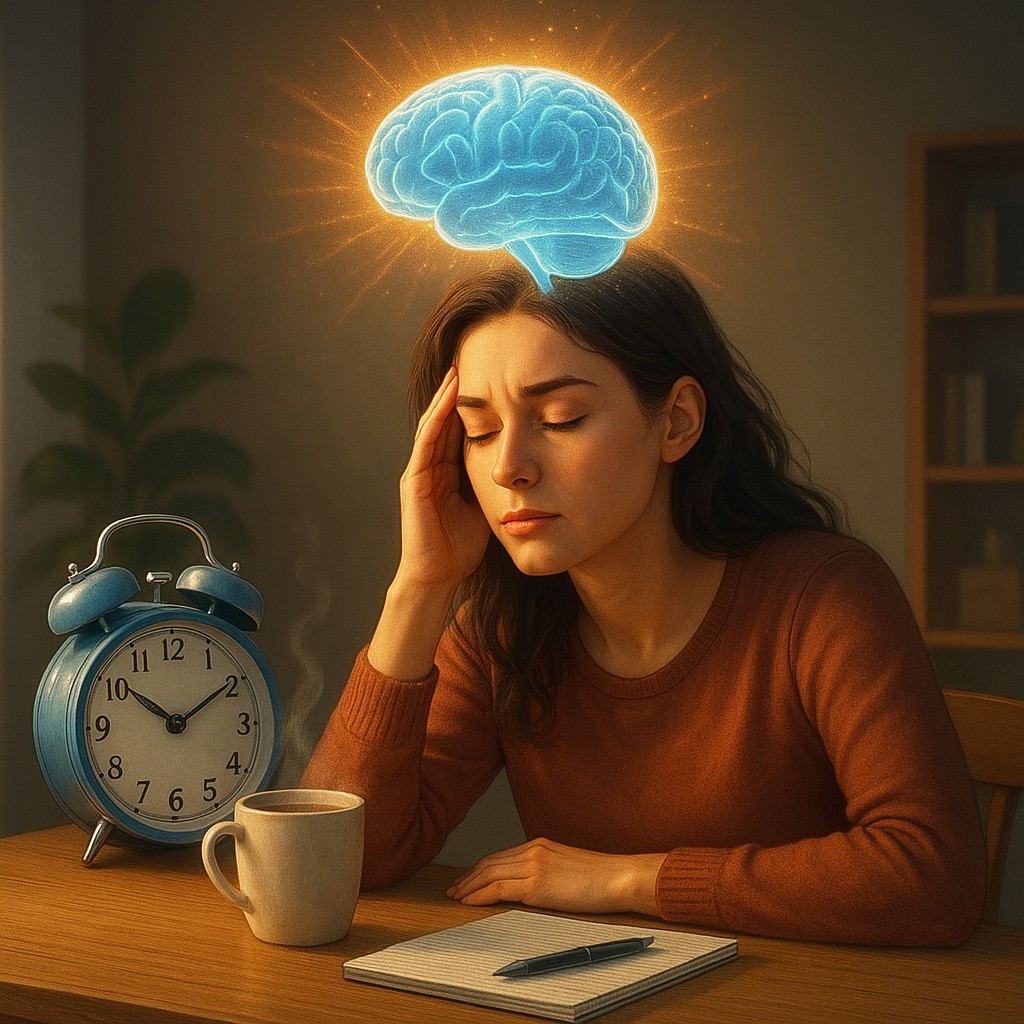
We have all had those mornings where the alarm clock feels like a personal attack. You stumble toward the coffee maker, mentally calculating exactly how many hours of shut-eye you managed to steal between scrolling through news feeds and staring at the ceiling. By the time you sit down at your desk, you have already decided the day is a loss. You tell anyone who will listen that you are "running on fumes," and like a self-fulfilling prophecy, a mental fog sets in, your focus drifts, and your productivity crashes. We treat sleep like a bank account that is constantly overdrawn, and the simple knowledge of our "debt" becomes a psychological weight that can feel heavier than the actual exhaustion.
But what if the number on your sleep tracker mattered less than the story you told yourself about it? New research into the "placebo sleep" effect suggests that our brains are incredibly easy to influence when it comes to recovery. In groundbreaking studies, researchers found that if they could convince sleep-deprived people that they had actually spent the night in a state of high-quality REM sleep (the deep, restorative stage of rest), those people performed significantly better on mental tasks. It turns out that believing you are rested provides a mental cushion. This helps you move past a "tired identity," allowing your brain to work with a level of precision that your internal biological clock shouldn't technically allow.
The Architecture of Expectation
To understand why believing you slept well can actually make you sharper, we have to look at how the brain processes personal experience. Much of what we feel in our daily lives is a construction based on what we expect to happen. For example, if you expect a wine to be expensive, the reward centers in your brain light up more vividly than if you think it is a bargain bottle, even if the liquid is exactly the same. Sleep works in a surprisingly similar way. When we convince ourselves that we had a "terrible night," we trigger a specific set of mental habits. We become hyper-aware of every yawn, we expect to make mistakes, and we give ourselves permission to do a poor job. This "nocebo" effect, where negative expectations lead to negative results, actually makes the mental decline we are afraid of even worse.
The placebo sleep phenomenon flips this script by hacking the brain's "executive functions," the command center for focus and logic. In studies, when a participant is told they had "above average REM sleep," even if they actually spent the night tossing and turning, their stress levels about being tired drop. By removing the anxiety of exhaustion, the brain frees up energy that would have been wasted on worrying. This allows the prefrontal cortex, which handles complex decision-making and steady attention, to work closer to its normal level. It is as if the brain finds a hidden reserve of energy simply because it was told the fuel tank was full.
Beyond the Pillow: The Science of Perceived Quality
A famous 2014 study by Draganich and Erdal serves as the foundation for this idea. They brought participants into a lab and gave them a short lecture on why REM sleep is the "gold standard" for mental health. After monitoring their pulse and brain waves overnight (or pretending to), researchers gave the participants a fake score. Some were told they had 25 percent REM sleep, which is excellent, while others were told they had only 16 percent, which is poor. The catch was that these numbers were completely made up and had nothing to do with how the participants actually slept.
When these individuals were later tested on their listening skills, speed, and memory, the group who believed they had great REM sleep performed much better than the "low REM" group. This suggests that the brain has a remarkable ability to ignore its current physical state based on the data it is given. If the mind believes the body is recovered, it stops sending out "emergency mode" signals. This doesn't mean the physical signs of tiredness vanish, but rather that the brain decides those signs are just irrelevant background noise rather than a total system failure.
| Component |
Physical Sleep Reality |
Placebo Sleep Perception |
Combined Effect on Performance |
| Mental Speed |
Slower due to lack of rest |
Kept steady by high confidence |
Moderate to high performance |
| Mood Control |
Irritability is common |
Resilient and optimistic |
Stable despite fatigue |
| Memory Access |
Fragmented and slow |
Fluid due to low anxiety |
Near-normal recall ability |
| Physical Energy |
Low cellular energy |
Adrenaline from "feeling ready" |
Functional but temporary boost |
Why the "Tired Identity" Is a Mental Trap
One of the most important lessons from placebo sleep research is how much we hold ourselves back by acting like a "tired" person. When we lean into the identity of someone who is sleep-deprived, we start to create our own limits. We might say, "I shouldn't lead this meeting because I only got five hours of sleep," or "I can't focus on this hard problem right now." This creates a loop of "learned helplessness," where we stop trying because we think we are bound to fail. The stress of knowing we didn't sleep enough creates a second layer of fatigue that is purely emotional. This emotional exhaustion is exactly what the placebo sleep effect manages to wipe away.
By believing we are rested, we skip the shame and frustration that usually follow a bad night. We approach tasks with what psychologists call "self-efficacy," the belief that we are capable of succeeding. When this belief is high, we are more likely to push through difficult problems and stay concentrated. The placebo doesn't necessarily create new brain connections, but it prevents the "tired" mindset from shutting down the ones we already have. It acts as a safety valve, releasing the pressure of expectation so the brain can simply get on with its work.
The Biological Floor: Where Mindset Reaches Its Limit
While the power of belief is strong, it is important to know the difference between "better performance" and "true recovery." We cannot simply think our way out of the biological need for sleep forever. Sleep is not just a mental state; it is a physical cleaning process. During deep sleep, a system in the brain acts like a dishwasher, flushing out toxic waste products that build up while we are awake. No amount of positive thinking can physically clear this waste; that requires the literal, unconscious state of sleep.
This means that placebo sleep is a short-term survival tool, not a long-term health strategy. If you rely on "tricking" yourself into feeling rested for weeks at a time, the underlying biological damage will eventually catch up to you. You might do better on a memory test today because you believe you slept well, but your heart health, immune system, and long-term brain health still need real rest. Think of the placebo effect as a "turbo boost" in a car; it can get you through a tough spot, but you eventually have to pull over and refuel.
Practical Tips for the Morning After
Since we know that how we view our sleep shapes our reality, we can use this to handle a rough night without needing a scientist to lie to us. The first step is to stop talking about how tired you are. Every time you tell a coworker how exhausted you feel, you are reinforcing that "poor sleep" story in your own brain. By choosing not to focus on the missing hours, you prevent the negative "nocebo" effect from taking hold. You are essentially providing your own placebo by shifting your focus away from what you lack and toward the work in front of you.
Another technique involves changing how you describe the physical feelings of tiredness. The feeling of being "tired" often feels the same as being excited, such as a slightly faster heart rate or a feeling of "buzzing" in the head. If you tell yourself that your body is "alert and ready" instead of "worn out and fragile," you can nudge your nervous system toward a more productive state. While this might sound like simple positive thinking, it is actually a strategy for managing emotions that reduces the stress spikes caused by worrying about sleep.
The Balance of Mind and Body
The fascinating world of placebo sleep reminds us that being human is a delicate dance between our physical bodies and how our minds interpret them. We are not just biological machines that run out of batteries; we are thinking beings whose success is tied to our confidence, our stories, and our expectations. When we master our mindset, we gain a level of grit that allows us to do well even when things aren't perfect. We learn that while we cannot always control how many hours we get on the pillow, we can control how much power we give to the "tired" voice in our heads.
As you go about your day, remember that your brain is incredibly loyal to the stories you tell it. If you feed it a story of being empty and failing, it will act that way. But if you feed it a story of strength and ability, it will find the resources to surprise you. Use this knowledge to get through the gaps on difficult days, but never forget to eventually give your body the deep, physical rest it deserves. You are now equipped with a powerful mental tool: the understanding that your potential today is not defined by the sleep you missed, but by the focus you choose to bring to the present.