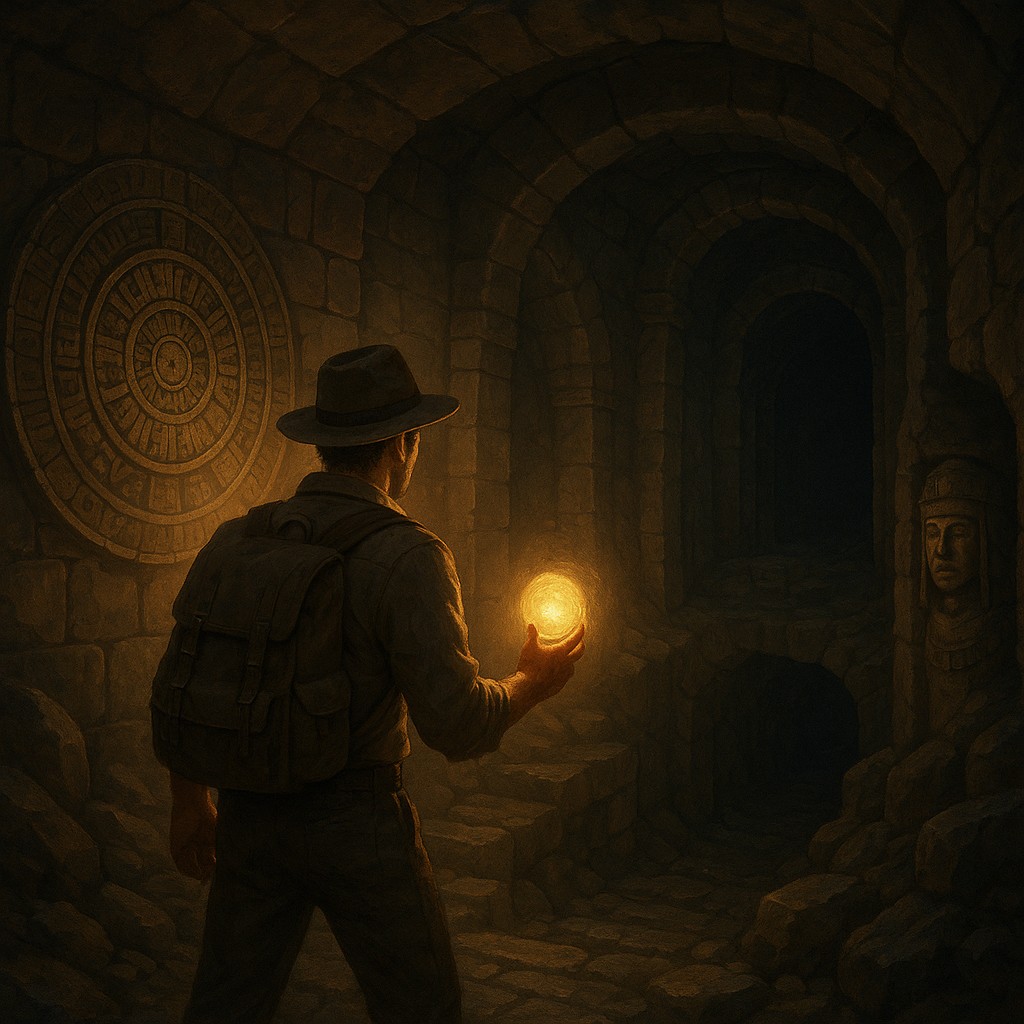
High in the Andes, the city of Cusco serves as a living museum where the stones seem to breathe with the weight of a thousand years. To the average traveler, it is the gateway to Machu Picchu, a place of colorful textiles and Spanish colonial buildings perched on top of massive, mortarless Inca walls. But for those who listen to the whispers in the cobblestone alleys or talk to the locals who have lived there for generations, Cusco is something much more mysterious. It is rumored to be a "hollow city," a place where the visible streets are merely a lid covering a vast prehistoric network of tunnels that stretches for miles underground.
This isn’t just a story for tourists. The belief in these hidden tunnels, known as chinkanas, is woven into the heart of Andean history and modern folklore. People don’t just talk about them in terms of archaeology; they describe them as doorways to other worlds or homes for non-human intelligences. Whether it is the legend of lost Inca gold or modern reports of strange lights hovering over the mountain peaks, the idea that something from another world is living right beneath the feet of Cusco’s residents is a persistent mystery. To understand why this theory is so popular, we have to dig through layers of history, geology, and a good amount of high-concept space theory.
The Chinkanas and the Legend of the Lost Inca Gold
The theory of underground aliens actually begins with real human history. The Inca were master architects, but they were also survivors. When Spanish Conquistadors arrived in the 1530s to melt down every gold artifact they could find, the Inca didn't just stand by. Tradition holds that the high priests and nobility used an extensive network of tunnels called chinkanas (a Quechua word meaning "the places where one gets lost") to hide their most sacred treasures. The most famous story involves the Chinkana Grande, a legendary passage said to connect the Qorikancha, the Sun Temple in the center of Cusco, all the way to the hilltop fortress of Sacsayhuamán.
Over the centuries, the search for these tunnels shifted from a hunt for gold to a hunt for something deeper. In the 1700s, several explorers reportedly entered the tunnels near Sacsayhuamán and never returned. Some stories say one man emerged days later, clutching a single golden cornstalk and babbling incoherently before dying. These tragic tales created a sense of dread and awe around Cusco’s underground world. By the 20th century, the mystery of how the Inca cut their stones with such precision evolved into "ancient astronaut" theories. People began to suggest that the tunnels weren't just for hiding gold, but were part of a high-tech bunker system left behind by visitors from the stars.
High-Tech Stones and Low-Tech Explanations
One of the main reasons people link Cusco to space travelers is the seemingly impossible quality of the stonework. If you stand before the walls of Sacsayhuamán, you see limestone blocks weighing over 100 tons, fitted together so perfectly that you cannot slide a piece of paper between them. Traditional archaeology explains this as the result of incredible labor, patience, and the use of bronze tools and river stones. However, many alternative theorists argue that the precision is so extreme it suggests the use of heat energy or vibration technology, tools that should not have existed in a Bronze Age society.
This technological gap is where the "underground alien" theory takes hold. Believers argue that if the Inca had help from extraterrestrial beings, or were descendants of a much older, advanced civilization, then the tunnels beneath Cusco were more than just storage rooms. They are often described as "cities of light" or laboratories where advanced technology is still being maintained. The logic is simple: if we can't explain how the stones were cut with laser-like precision, we must look for a builder who had that power. If they aren't on the surface, they must be underneath it.
The Science of Subterranean Cusco
While the stories of aliens are speculative, the existence of actual tunnels is supported by modern science. In recent years, archaeologists using Ground Penetrating Radar (GPR) - a tool that uses radio pulses to image what is under the soil - have confirmed that there are significant gaps and man-made passages beneath the city. This discovery has breathed new life into old legends, providing a factual skeleton for the folk stories to lean on.
| Feature |
Alien Theory Interpretation |
Archaeological and Geological Reality |
| The Chinkanas |
Secret entrances to a global "Agartha" network of alien cities. |
Ancient drainage systems and escape routes used during the Spanish conquest. |
| Sacsayhuamán Walls |
Molded using high-heat alien plasma tools. |
Precise dry-stone masonry using "trial and error" fitting methods. |
| The "Zone X" Caves |
High-energy portals for travel between dimensions. |
Natural limestone "karst" caves hollowed out by water over millions of years. |
| Strange Lights (UFOs) |
Spacecraft entering and exiting underground hangars. |
Tectonic pressure or electricity generated by quartz in the mountains. |
The reality of the Cusco underground is a fascinating mix of natural geology and Inca engineering. The region is full of limestone, a rock that is easily carved by acidic rainwater to create natural caves. The Inca viewed the earth as a living being (Pachamama) and used these caves as sacred shrines. When researchers find "anomalies" under the city, they usually turn out to be sophisticated drainage systems designed to keep the city from washing away during the rainy season, rather than hidden hangars for flying saucers.
Exploring the Energy Portals of the Sacred Valley
If you travel just outside Cusco to the Sacred Valley, the alien narrative gets even stronger at sites like Naupa Iglesia and Kenko. These places feature "altars" carved directly into the rock with sharp, geometric angles that seem too difficult for simple chisels to manage. Local "mystic" guides often tell visitors that these are not just religious sites, but "stargates" or portals. The theory suggests that the tunnels beneath Cusco act like a fiber-optic network of energy, connecting all these sites.
The people who believe in these beings often point to the high concentration of quartz and other minerals in the Andean soil. They argue that these minerals act like a natural battery, boosting the "frequency" of the area. This is why so many people report seeing glowing "orbs" or flickering crafts near the peaks of Ausangate or Salcantay. To believers, these aren't just random sightings; they are evidence of a base of operations. The underground tunnels are seen as a way for these beings to move without being spotted by satellites, staying hidden in the rocky folds of the mountains.
Why the Human Brain Craves an Underground Mystery
At its heart, the idea of aliens living under Cusco is a modern myth that serves a very human purpose. We live in an era where the entire surface of the Earth has been mapped by satellites, and there are very few "blank spots" left. By moving the mystery underground, we keep a sense of wonder alive. Cusco, with its deep roots in the clouds and its dark, mysterious foundations, is the perfect stage for this. It lets us bridge the gap between our ancestors, who looked at the stars with awe, and our modern selves, who search for life in the cosmos.
Furthermore, these stories are a way of giving power back to the indigenous people. If the Inca were working with advanced beings, it frames them not as a conquered nation, but as guardians of a cosmic secret that the rest of the world isn't ready for. Whether or not there is a pilot sitting in a cockpit five hundred feet below the main plaza, the legend itself is a testament to the power of Cusco. It is a city that refuses to be ordinary, a place where the line between the sky and the soil is permanently blurred.
The mystery of Cusco's underground world is a journey that starts with a single stone and ends at the edge of the galaxy. It invites you to look at the world with a sense of "as if" - as if the shadows in the caves have eyes, as if the ancient stones are still humming with power, and as if we are never truly alone. Whether you are exploring the ruins in person or just reading about them from home, let that curiosity lead you. The world is much deeper than it looks on the surface. often, the most incredible discoveries happen when we are brave enough to look beneath the obvious and imagine what else might be waiting in the dark.