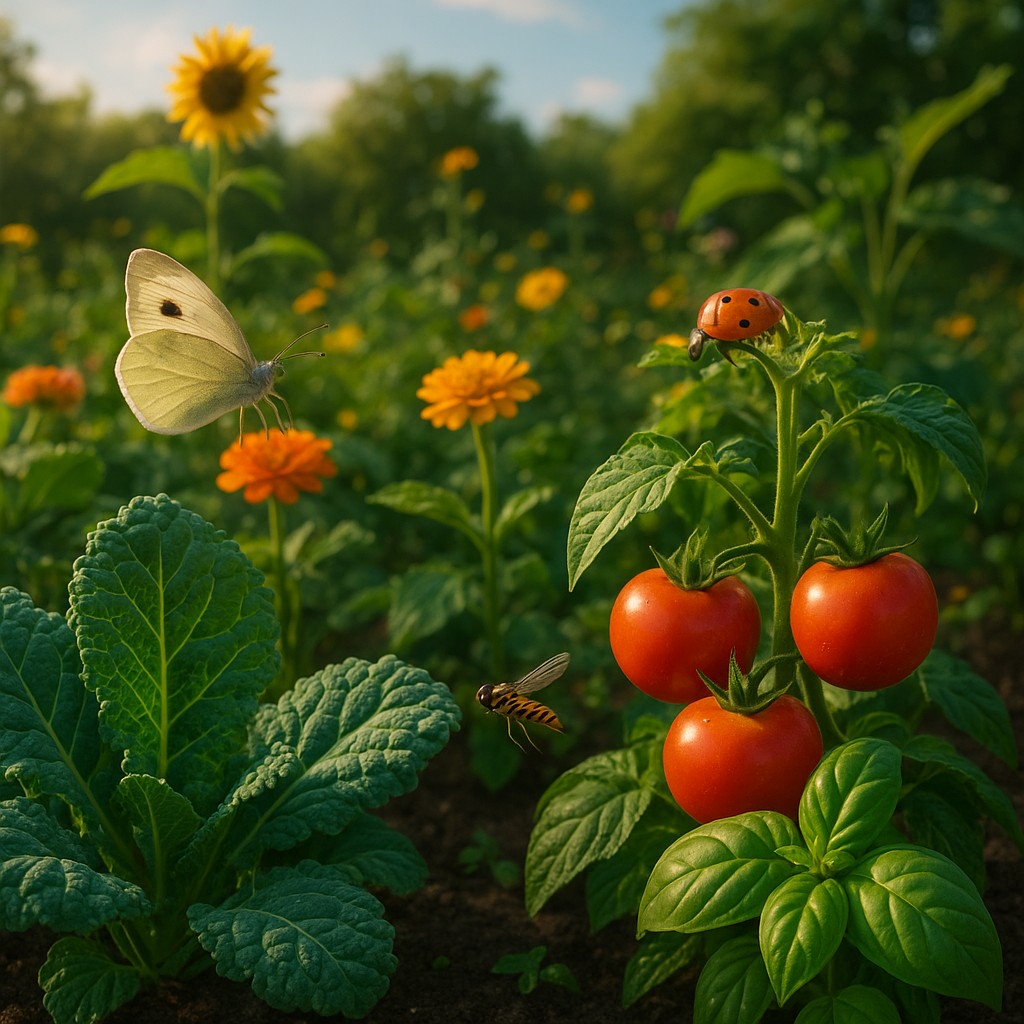
Imagine walking through a lush, vibrant backyard garden on a warm July afternoon. To the untrained eye, it looks like a beautiful, chaotic collection of green leaves, bright petals, and ripening fruit. However, beneath that aesthetic surface, a sophisticated form of chemical warfare and strategic signaling is taking place. The plants are not just sitting there passively soaking up the sun; they are engaged in a complex dialogue of scents and signals that determines who survives and who becomes a snack for a passing beetle. This invisible layer of communication is the foundation of what seasoned gardeners call companion planting, a technique that turns a simple plot of land into a high-tech security system.
By understanding how insects see, or rather, smell the world, we can begin to shape the environment to protect our favorite vegetables. Most garden pests are not wandering aimlessly; they are guided by highly sensitive antennae that pick up on specific volatile organic compounds, or VOCs. These are the "scent signatures" that every plant breathes out into the air. When a cabbage white butterfly catches the scent of a kale leaf, it acts like a beacon leading it to a feast. Companion planting is the art of disrupting that signal or, in some cases, hiring a private security firm of predatory wasps and ladybugs to handle the intruders.
The Chemistry of Confusion and Masking
To understand why a sprig of basil might save a tomato plant, we first have to appreciate how an insect smells its way through the world. Unlike humans, who rely heavily on sight, many garden pests navigate through a dense fog of chemical signals. When you plant a monoculture, which is a large area of just one type of crop, you are essentially creating a massive chemical lighthouse that screams "dinner is served" to every specialized pest in the county. These pests have evolved to home in on specific molecules with incredible precision, often ignoring all other scents to find their preferred host.
This is where "chemical camouflage" comes into play. When you mix strong-smelling herbs like marigolds, garlic, or mint among your vegetables, you are effectively jamming the enemy's radar. The pungent odor of a French marigold does not necessarily kill the pest, but it creates a confusing background noise. The pest arrives near your garden, but its sensors are overwhelmed by the competing chemical signals. It is the gardening version of trying to have a whispered conversation in the middle of a heavy metal concert. If the insect cannot isolate the specific scent of its host plant, it is much more likely to keep flying in search of an easier target.
Furthermore, some companion plants act as aromatic decoys. In these cases, the companion plant might produce a scent that mimics a plant the pest finds repulsive. By surrounding a sensitive crop with these aromatic bodyguards, a gardener creates a perimeter that keeps the most destructive visitors away. This method is far more sustainable than traditional pesticides because it does not rely on toxic chemicals that wash into the groundwater. Instead, it uses the natural evolutionary arms race between plants and insects to maintain a healthy balance.
The Push-Pull Strategy and Biological Recruitment
Effective companion planting often utilizes a sophisticated framework known as the "push-pull" strategy. This involves two distinct groups of plants working together to protect a central crop. The "push" plants are the ones we have discussed, such as onions or aromatic herbs, which repel pests by being unappealing or confusing. However, the "pull" component is where the real magic happens. Some plants, often called trap crops, are actually designed to be more attractive to pests than the main crop. For example, a gardener might plant nasturtiums on the edge of the garden to lure aphids away from their prized roses. The aphids gather on the nasturtiums, leaving the roses untouched.
Beyond simple distraction, plants can also act as recruitment centers for the "good guys." Many flowering companions, such as sweet alyssum or dill, produce nectar and pollen that serve as food for beneficial insects. These include hoverflies, lacewings, and tiny parasitoid wasps. While the word "wasp" might sound intimidating, these specific varieties are harmless to humans but lethal to garden pests. By providing a steady food source for these predators, you ensure they are already on-site when a pest outbreak begins.
This biological recruitment transforms the garden from a vulnerable food source into a functional ecosystem. In this scenario, the plants are effectively "paying" the predators with nectar in exchange for protection. Some plants have even evolved the ability to release specific distress chemicals when they are being chewed on. These "SOS" signals are specifically designed to attract the natural enemies of the insect currently eating the plant. When you use companion planting, you are strengthening these natural feedback loops, making the entire system more resilient and less dependent on human intervention.
Architectural Support and Nutrient Sharing
Not all companion relationships are based on chemical warfare; some are purely structural or nutritional. The most famous historical example of this is the "Three Sisters" technique practiced by various Indigenous groups in North America. This system utilizes corn, beans, and squash planted together in a single mound. The corn provides a tall, sturdy trellis for the beans to climb, saving the gardener the trouble of building support structures. In return, the beans are legumes, which have the unique ability to "fix" nitrogen from the air into the soil, providing a vital nutrient that the hungry corn desperately needs.
Meanwhile, the large, prickly leaves of the squash spread across the ground, acting as a "living mulch." These leaves shade the soil, which stops moisture from evaporating and chokes out weeds by blocking sunlight. This trio represents a perfect synergy where each member of the group provides a service that benefits the others. It is a lesson in efficiency that modern agriculture is only beginning to rediscover. By thinking about the physical needs of our plants, such as shade requirements and root depth, we can stack functions and grow more food in less space.
| Companion Pair |
How it Works |
Intended Benefit |
| Tomato + Basil |
Chemical Masking |
Repels thrips and hornworms while improving flavor |
| Rose + Garlic |
Olfactory Disruption |
Discourages aphids and Japanese beetles |
| Corn + Beans |
Nutrient Cycling |
Beans provide nitrogen; corn provides structural support |
| Carrots + Onions |
Scent Confusion |
Onions hide carrots from carrot rust flies |
| Cabbage + Dill |
Predator Attraction |
Dill attracts wasps that prey on cabbage loopers |
| Sunflowers + Pole Beans |
Structural Support |
Sunflowers act as a natural, edible trellis |
The Dark Side of the Garden: Allelopathy
While we often focus on how plants cooperate, it is important to remember that they are also competitors. Some species have developed a survival strategy known as allelopathy, which is essentially chemical sabotage. These plants release toxic substances into the soil or air that actively stop their neighbors from growing, ensuring that the "saboteur" has exclusive access to the sunlight and water nearby. This is not a malicious act, of course, but a highly effective evolutionary trait for dominating a local area.
The most notorious example of this in the home garden is the Black Walnut tree. These trees produce a chemical called juglone in their roots, leaves, and nut hulls. If you try to plant a vegetable garden beneath or even near a Black Walnut, you will find that many common crops, such as tomatoes, potatoes, and peppers, will quickly wither and die. The juglone interferes with the basic life processes of the sensitive plants, effectively poisoning them. However, even this "villain" has companions; grasses and certain berry bushes have evolved a resistance to juglone and can thrive in its presence.
Other plants use milder forms of allelopathy. For instance, some varieties of rye or sunflowers can prevent weed seeds from sprouting, which can be useful if managed correctly, but a disaster if you are trying to grow small vegetable seeds nearby. This serves as a vital reminder that "natural" does not always mean "friendly." A successful companion gardener must be an amateur chemist as much as a biologist, understanding which plants play well together and which ones are looking to claim the entire territory for themselves.
Overcoming Common Myths and Misconceptions
As companion planting has gained popularity, several myths have taken root that can lead new gardeners astray. One of the most common misconceptions is that companion planting is a "magic bullet" that eliminates the need for any other garden chores. While interplanting certainly reduces pest pressure, it is not a force field. A hungry enough grasshopper will eventually find your greens, regardless of how much basil you plant. Companion planting should be viewed as one tool in an Integrated Pest Management (IPM) strategy, which also includes healthy soil practices, removing pests by hand, and proper watering.
Another myth is the idea that "all herbs are good for all vegetables." In reality, the effectiveness of a companion plant depends heavily on the specific pest you are trying to deter and the local environment. For example, while marigolds are often called a universal protector, some studies suggest they mainly help with specific types of soil worms rather than every flying insect. It's also possible to overcrowd a garden in an attempt to add companions, leading to poor air circulation and an increase in fungal diseases like powdery mildew.
Finally, some gardeners believe that the "Three Sisters" model or other historical groupings can be copied perfectly in any climate. In reality, these systems were fine-tuned over centuries for specific locations and soil types. A gardener in a humid, tropical environment might find that the "Three Sisters" doesn't work well because the dense squash leaves create a breeding ground for mold. The key is to take the principles of companion planting, such as diversity, structural support, and chemical masking, and adapt them to your specific micro-climate through observation and trial and error.
Cultivating a Smarter Ecosystem
Embracing the logic of companion planting fundamentally changes how you view a garden. It shifts the perspective from seeing a collection of isolated individuals to seeing a vibrant, interconnected community. When you stop reaching for the spray bottle at the first sign of an aphid and instead start planting dill to attract ladybugs, you are participating in an ancient and beautiful biological dialogue. You are no longer just a grower of food; you are the conductor of a complex ecological orchestra, ensuring that every player has a role and an environment where they can thrive.
As you move forward with your own gardening journey, let curiosity be your guide. Watch how the bees interact with your borage, notice if the cabbage moths seem confused by your onions, and don't be afraid to move things around if a specific combination isn't working. There is a profound satisfaction in seeing a garden protect itself, powered by nothing more than sunlight, water, and the clever placement of a few fragrant herbs. By working with nature's existing systems rather than against them, you create a space that is not only more productive but also more resilient, sustainable, and truly alive.