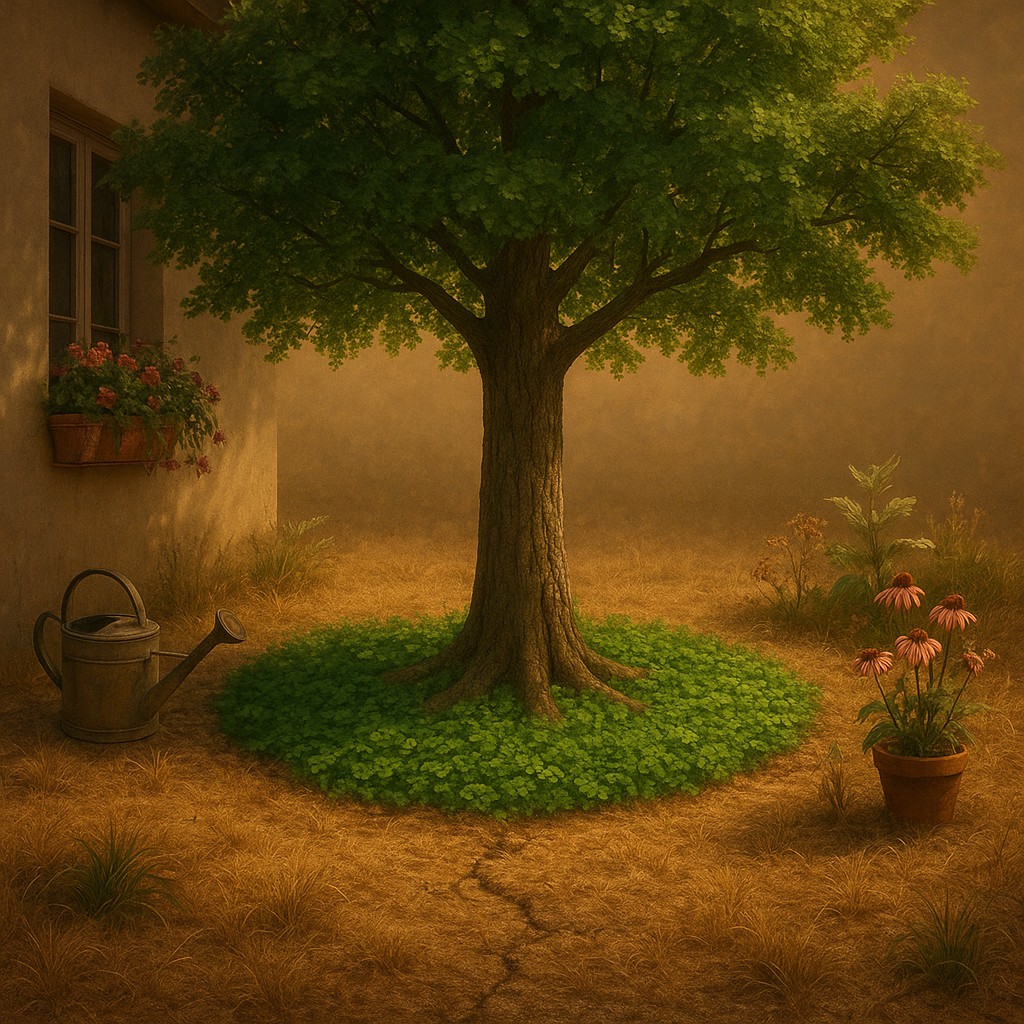
Imagine you are standing in a garden during the peak of a scorching August heatwave. The grass has turned into brittle, straw-colored brown, and the delicate flowers in your window boxes are drooping despite your best efforts with a watering can. However, right in the center of this parched landscape, a massive oak tree stands surrounded by a lush, green circle of clover and small ferns. It seems like a botanical miracle, as if the tree is casting a magical spell of hydration over its immediate neighbors. While it looks like magic, you are actually witnessing a sophisticated piece of underground engineering that defies the way we typically think about how plants "drink."
In the basic biology we learn in school, roots are portrayed as one-way straws that suck moisture out of the dirt to keep leaves hydrated. We assume that plants are fundamentally selfish, competing with one another for every available drop of dew. But beneath the surface, a much more cooperative and fascinating process is unfolding. This phenomenon, known as hydraulic lift, allows deep-rooted plants to act as natural pumps. They pull water from the dark, damp depths of the earth and share it with the sun-baked surface. By understanding this process, we can change the way we design our gardens, moving away from high-maintenance irrigation and toward a self-sustaining ecosystem that mimics the resilience of the forest floor.
The Underground Plumbing of a Thirsty Planet
To understand how a tree can double as a lawn sprinkler, we first have to look at soil physics and the anatomy of a root system. Most garden plants are "surface dwellers," meaning their roots occupy the top twelve to eighteen inches of soil. This area is rich in nutrients but is the first to dry out when the sun beats down. In contrast, many trees and certain hardy shrubs are "deep divers," often called phreatophytes. These plants send down powerful taproots that can reach ten, twenty, or even fifty feet below the surface. They tap into the water table or moisture trapped in deep clay layers that never see the light of day.
During a hot afternoon, these deep-rooted plants work overtime. As the sun hits the leaves, a process called transpiration occurs, where water evaporates through tiny pores called stomata. This creates a powerful suction, pulling water all the way from the deep roots up to the branches. It is a high-speed highway of hydration moving upward to fuel photosynthesis, the process of turning light into food. However, everything changes when the sun goes down. Once the lights go out in the garden, the pores close, photosynthesis pauses, and the "suction" from the leaves stops. This is when the plant’s internal plumbing begins to do something truly remarkable with all that pent-up water pressure.
The Night Shift and the Physics of Sharing
At night, the deep-rooted plant is no longer losing water to the atmosphere, but its roots are still sitting in very wet soil deep underground. Meanwhile, the topsoil remains incredibly dry. In the world of physics, water always wants to move from an area of high concentration to an area of low concentration. This is a principle known as a water potential gradient. Because the plant's internal tissues are now fully hydrated and there is no upward pull from the leaves, the water sitting in the roots begins to move toward the driest exit point.
This exit point happens to be the shallow roots located in the parched topsoil. Instead of holding onto every drop, the plant allows a portion of the water it gathered from the depths to leak out through its upper root hairs into the surrounding dirt. This isn't an accident or a "leak" in the traditional sense; it is a redistribution of resources. Throughout the night, the tree essentially re-hydrates the surface soil in its immediate area. By the time the sun rises, the shallow-rooted plants nearby, like ferns, mosses, or vegetables, have a fresh supply of "recycled" deep-well water to drink, courtesy of their tall neighbor.
A Comparative Look at Root Strategies
Not every plant is capable of performing this hydraulic miracle, and the effectiveness of the process depends heavily on the structure of the root system. Understanding which plants act as "pumps" and which act as "users" can help us categorize the residents of our gardens. In the table below, we can see how different types of vegetation interact with soil moisture during a drought, highlighting the unique role of those capable of hydraulic lift.
| Plant Category |
Root Depth |
Primary Function in Drought |
Relationship to Neighbors |
| Deep-Rooted Pumpers |
Very Deep (10ft+) |
Accesses water table; performs hydraulic lift |
Provides moisture to the surface; acts as a "nurse" plant |
| Surface Drinkers |
Shallow (0-2ft) |
Absorbs rainfall and surface dew |
Dependent on frequent watering or hydraulic lift |
| Drought Avoiders |
Moderate |
Goes dormant or sheds leaves to save water |
Neutral; stops using resources but does not share |
| Succulents |
Shallow/Wide |
Stores water internally in fleshy tissues |
Self-contained; does not share or require much from soil |
As the table suggests, the "Pumpers" are the unsung heroes of a sustainable landscape. Without them, the "Surface Drinkers" would perish within days of a dry spell. This interaction creates a micro-environment where the total amount of water available to the community is actually higher than what the sky provides through rain alone. It is a beautiful example of how biological diversity creates a safety net for the entire ecosystem.
Designing a Self-Watering Ecosystem
If you are a gardener or a fan of sustainability, the concept of hydraulic lift is a game-changer for how you plan your outdoor space. Instead of seeing a large tree as a competitor that steals nutrients, you can view it as a cornerstone of your irrigation strategy. By planting shade-loving or shallow-rooted species near deep-rooted "nurse" trees, you create a community that can withstand extreme weather. This is a core principle in permaculture, where the goal is to create "stacked" layers of vegetation that support one another through symbiotic relationships.
To make the most of this natural phenomenon, it helps to choose native species known for deep taproots. In North America, trees like oaks, maples, and certain types of pines are excellent at redistributing water. On a smaller scale, plants like alfalfa or even some varieties of sagebrush have been shown to perform hydraulic lift for nearby grasses. When you arrange your garden so that these deep-rooted species are mixed with more sensitive plants, you are essentially building a disaster-relief system. During a drought, the "pump" keeps the "users" alive, and in return, the ground cover helps keep the soil cool and prevents the "pump's" own surface roots from overheating.
Correcting the Myth of the Competitive Garden
One of the most common misconceptions in gardening is that plants are in a constant state of war. We often hear that we should clear away "weeds" or keep plants spaced far apart so they don't fight over water. While competition does exist, the science of hydraulic lift proves that cooperation is just as common in the natural world. Many people worry that a large tree will "suck the ground dry," leaving nothing for the flowers underneath. In reality, while the tree does use a lot of water, its ability to bring up moisture from depths that flowers could never reach often results in a net gain for the surface soil.
It is also important to remember that hydraulic lift is not a constant fountain. It specifically occurs when there is a significant difference in moisture between the deep soil and the surface. If the entire soil column is dry, or if the surface is already wet from rain, the "pump" won't move water in the same way. This is a targeted survival mechanism triggered by the environment itself. By recognizing this, we can stop over-watering our gardens and trust the natural physics of the earth to do some of the heavy lifting. We aren't just growing individual plants; we are managing a complex, fluid network of underground exchanges.
The Broader Impact on Global Ecology
Beyond your backyard, hydraulic lift plays a massive role in how entire landscapes survive climate change. In arid regions like the African savanna or the American Southwest, a few scattered trees can be the difference between a thriving grassland and a desert. These trees act as "islands of fertility," where the soil beneath their branches is significantly moister and more nutrient-rich than the open plains. Because they pull up water, they allow for a higher density of life, which in turn supports insects, birds, and larger mammals that rely on that vegetation for food.
Recent studies have even suggested that hydraulic lift can influence the local climate. When trees pull up deep water and release it into the upper soil, more water is available for evaporation during the day. This can lead to increased humidity and even contribute to local cloud formation and rainfall. It is a staggering thought: the roots of a single tree, working silently in the dark of night, can eventually influence the clouds in the sky. It reminds us that every part of our planet's water cycle is interconnected, from the deepest aquifer to the highest atmosphere.
Embracing the Wisdom of the Roots
The more we learn about the hidden lives of plants, the more we realize that the natural world is far more clever and generous than we once thought. Hydraulic lift is a stunning reminder that strength often lies in the ability to bridge two different worlds - in this case, the cool, hidden depths of the earth and the vibrant, sun-drenched surface. By mimicking these natural systems in our own lives and gardens, we can move away from wasteful habits and toward a way of living that honors the Earth's innate wisdom.
As you step back into your garden and look at that lone, deep-rooted tree, see it for what it truly is: a silent guardian and a generous provider. Every night, while the rest of the world sleeps, a quiet revolution of hydration is taking place beneath your feet. It is an invitation for us to think about how we can better manage the resources we have, and how we might also "lift" those around us when the seasons get tough. Armed with this knowledge, you can grow more than just a garden; you can foster a resilient, thriving community that stands strong against the heat, one deep root at a time.