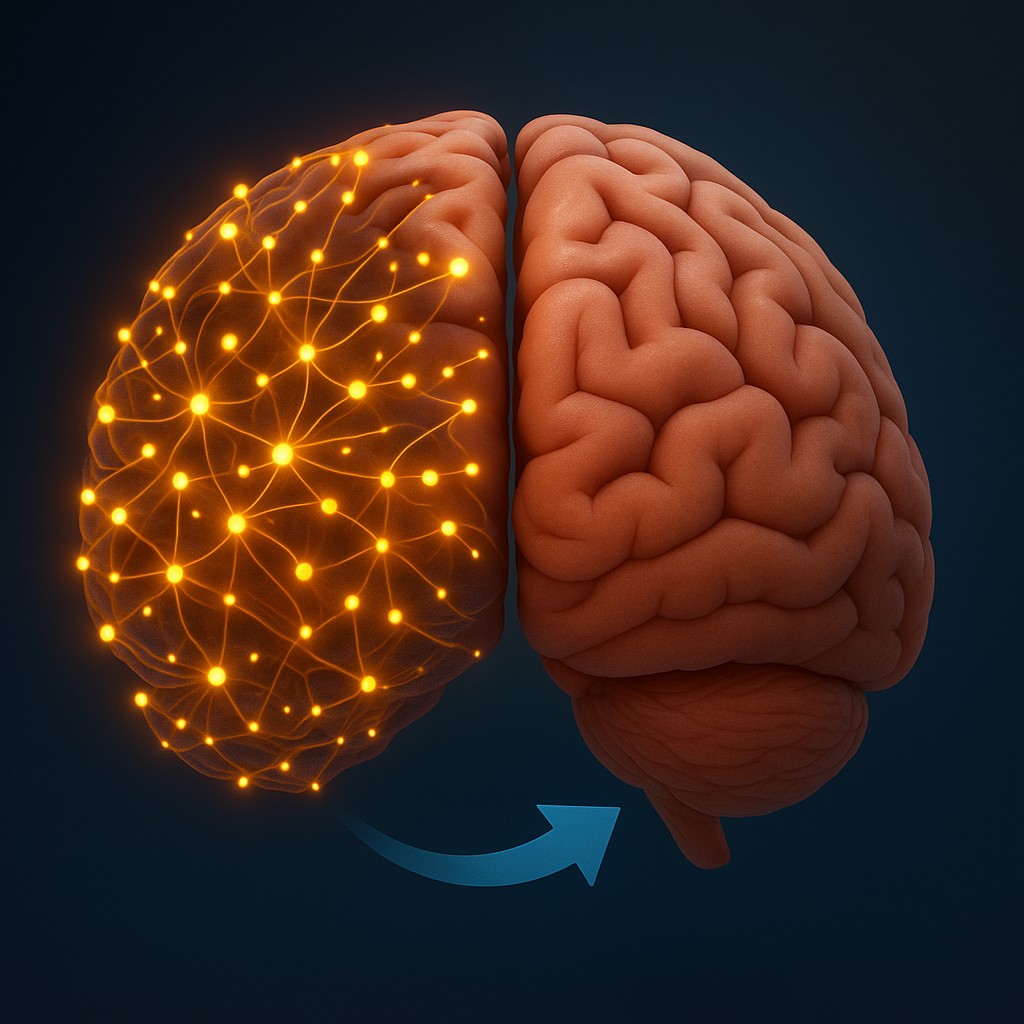
If you could peek inside a five-year-old’s brain, you would see a flurry of activity that looks less like a high-performance computer and more like a massive, over-caffeinated block party. At this age, the brain is packed with an astronomical number of synapses - the tiny gaps where brain cells, or neurons, pass messages to one another. In fact, a young child has significantly more of these neural connections than a fully grown adult. While this makes children incredibly adaptable and able to soak up information like sponges, it also creates a lot of internal "noise." Because there are so many paths for a signal to take, the brain's communication isn't very efficient. This is why toddlers aren't exactly known for long-term planning, controlling their emotions, or focusing on one task for more than three minutes.
As you move into your teenage years, your brain realizes that more isn't always better. To move from the chaotic flexibility of childhood to the high-speed processing of adulthood, the brain undergoes a massive renovation project known as synaptic pruning. It begins to systematically identify which neural pathways are being used and which ones are just taking up space. This doesn't happen by accident; it is a biological "use it or lose it" countdown. This process marks the transition from a "jack of all trades" brain that can learn anything to a "master of some" brain that is exceptionally good at the specific things you actually do. It is essentially the biological version of editing a messy first draft into a polished, sharp, and effective final manuscript.
The Microscopic Gardeners of the Mind
To understand how this renovation works at a cellular level, we have to look at the unsung heroes of the nervous system: the glial cells. For a long time, scientists thought glial cells were just the "glue" that held neurons together, but we now know they are the brain's highly specialized maintenance crew. Specifically, a type of cell called microglia acts like a microscopic gardener or a tiny security team patrolling the prefrontal cortex and other regions. These cells are tasked with "eating" or dismantling the synapses that aren't being fired regularly. When a neural connection sits idle for too long, it loses its molecular protection, signaling to the microglia that the path is no longer needed and can be cleared away.
This process is what makes the adolescent brain so sensitive to experience. Every time you practice a guitar scale, solve a math problem, or navigate a complex social situation, you are "tagging" those specific neural circuits for survival. The brain notices the high volume of traffic on those paths and decides to keep them. Conversely, if you haven't touched a paintbrush or spoken a second language in years, those connections are marked for demolition. The goal here is efficiency. By clearing away the clutter, the brain reduces the energy cost of maintaining useless connections and ensures that the most important signals can travel faster and with much higher precision.
Trading Raw Flexibility for Processing Power
The primary goal of synaptic pruning is to transform the brain from a dense forest into a high-speed highway system. When you are born, your brain is built for maximum "plasticity," meaning it can be molded by almost any environment. This is why a baby can learn any of the world's 7,000 languages with equal ease. However, there is a physical cost to this flexibility. Because signals have so many possible routes to take, they often spread out or slow down. As pruning occurs, the brain doesn't just cut away weak links; it also reinforces the survivors. This reinforcement often happens through myelination, where the brain wraps frequently used "highway" nerve fibers in a fatty insulating layer that allows electrical signals to travel up to 100 times faster.
This shift explains why the "window of opportunity" for certain skills seems to narrow as we age. In your early teens, your brain is still in a state of flux, making it the perfect time to hard-wire complex skills. By the time you reach your mid-twenties, the "hardware upgrade" is largely complete. Your brain is now a finely tuned machine, optimized for the tasks you performed most during those formative years. While we can still learn new things as adults, we are no longer working with a blank slate; we are trying to build new paths in a landscape that has already been paved. The adult brain is much better at deep focus and complex logic precisely because it isn't constantly distracted by the extra "noise" of a million unused connections.
Comparing the Developmental Stages of the Brain
| Feature |
Childhood Brain (Ages 2-10) |
Adolescent Brain (Ages 11-19) |
Adult Brain (Ages 25+) |
| Connection Density |
Extremely high; "over-connected" |
Rapidly declining via pruning |
Stable and specialized |
| Primary State |
High plasticity / flexibility |
Transition / reorganization |
High efficiency / stability |
| Logic & Control |
Developing; driven by instinct |
Under construction; impulsive |
Fully integrated; logical |
| Learning Style |
Passive absorption of everything |
Active specialization of skills |
Effortful, goal-oriented learning |
| Speed of Thought |
Slower due to signal "noise" |
Increasing as paths clear |
Peak precision and speed |
The Prefrontal Cortex Under Construction
The most intense area for synaptic pruning is the prefrontal cortex (PFC). This is the part of the brain located right behind your forehead, and it is responsible for what psychologists call "executive functions." These include things like impulse control, weighing the long-term consequences of your actions, and complex decision-making. Because the PFC is one of the last areas to finish its pruning and insulation process, the "emotional" centers of the adolescent brain, like the amygdala, often have a head start. This creates a temporary biological gap where a teenager has adult-strength emotions and drives, but the "braking system" of the PFC isn't fully wired yet.
Think of it as a high-performance sports car with a powerful engine but steering and brakes that are still being installed. This isn't a design flaw; it is a feature of evolution. The pruning process allows the prefrontal cortex to be shaped specifically by the environment the young person actually lives in. If a teenager has to navigate complex social circles or learn difficult survival skills, the PFC will prune itself to be highly efficient at those specific tasks. The "lag" in adolescent judgment is actually a sign that the brain is still gathering data before it finalizes its most sophisticated hardware.
Correcting the Myth of the Static Adult Brain
There is a common misconception that once the pruning of adolescence is over, the brain is "set in stone" and can no longer change. This has led to the pessimistic idea that you "can't teach an old dog new tricks." While it is true that the massive, systemic "liquidation sale" of connections slows down after your twenties, the brain never truly loses its ability to change. This is called neuroplasticity. The difference is one of scale and effort. In adolescence, the brain undergoes a structural overhaul driven by biology. In adulthood, neural changes are smaller and require more focused, repetitive effort to bypass the established "highways" our pruning years created.
Another myth is that "losing" brain connections during adolescence is a bad thing, or that it means a loss of intelligence. In reality, the loss of synapses is actually linked to better mental performance. Imagine you are trying to find your way through a city. If every single alleyway, driveway, and footpath is marked as a major road, you will get lost. If the city "prunes" its map to show only the main boulevards and expressways, you can reach your destination much faster. Intellectual maturity is not about having the most connections; it is about having the most effective connections.
Architecting Your Future Self
When you realize that your brain is physically dismantling and rebuilding itself during your youth, the way you spend your time becomes much more important. This isn't just about "learning for a test" or "practicing for a game." You are literally acting as the architect for the physical structure of your future mind. The activities you engage in consistently between the ages of 12 and 24 are the ones that get the "VIP treatment" from your maintenance cells. If you spend those years learning to think critically, practicing a musical instrument, or honing an athletic skill, your brain will build permanent, high-speed infrastructure for those abilities.
This biological reality is a powerful reminder that our habits do not just influence our behavior; they sculpt our anatomy. Adolescence is a once-in-a-lifetime opportunity to influence the "default settings" of your adult nervous system. It is a period of high stakes and high reward, where the brain is at its most vulnerable but also its most powerful. By understanding that your brain is choosing which parts of "you" to keep and which to discard based on your daily actions, you can take an active role in the pruning process, ensuring that the garden of your mind grows exactly the way you want it to.
The journey from the chaotic, exuberant mind of a child to the sharp, decisive mind of an adult is one of the most complex engineering feats in nature. It is a process of refinement, a shedding of the unnecessary to make room for the exceptional. So, the next time you find yourself struggling to learn a new skill or feeling the intensity of a changing mind, remember that it is just your internal maintenance crew hard at work. You are currently under construction, and the final result depends entirely on the circuits you choose to light up today. Embrace the pruning, for it is the secret to a faster, stronger, and more capable version of yourself.