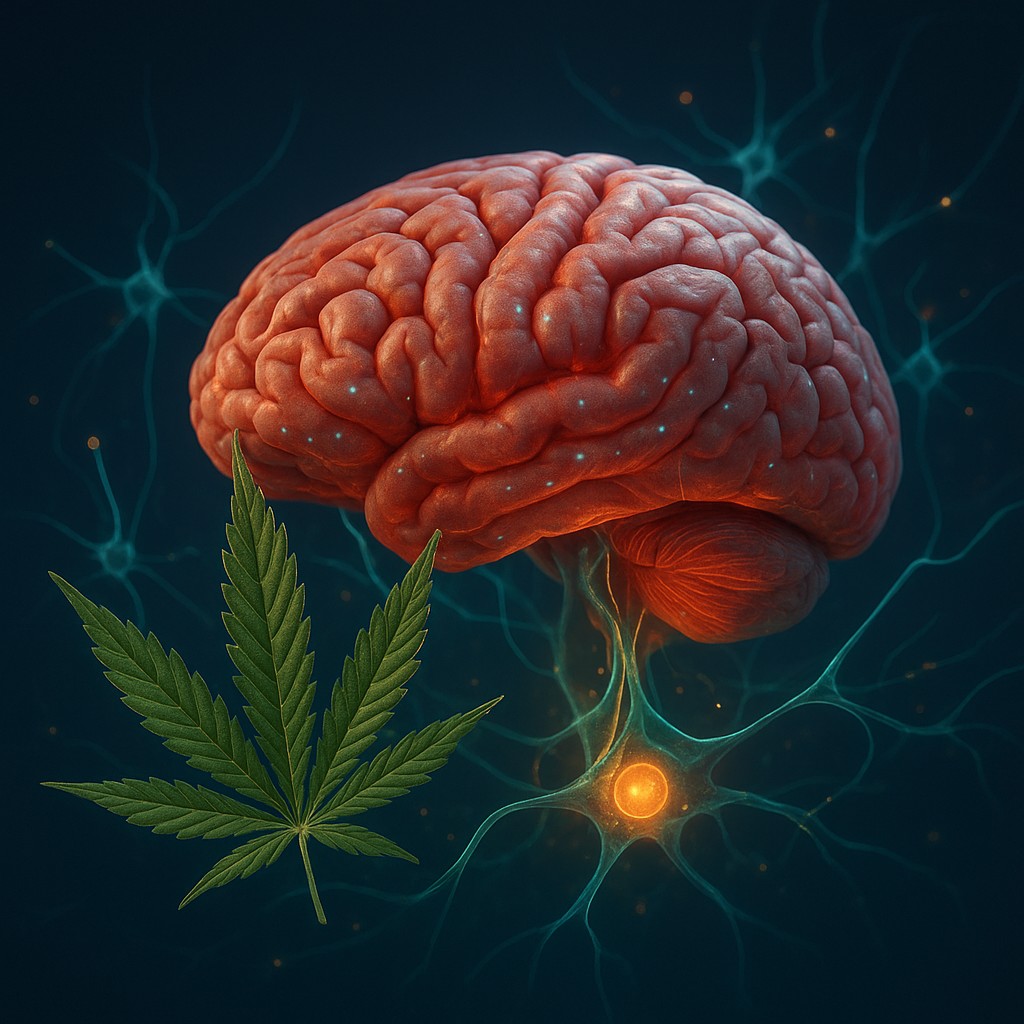
Imagine you are holding a tiny molecular key that can unlock dozens of different doors inside your head. For thousands of years, humans have experimented with this particular key, found in the sticky resin of the cannabis plant, to see what lies behind those doors. We often talk about marijuana in terms of how it makes us feel - relaxed, hungry, or perhaps a bit paranoid - but we rarely stop to peek under the hood at the actual machinery. Your brain is a buzzing electrical storm of billions of neurons. When marijuana enters the system, it acts like a guest conductor who decides to change the tempo of the entire orchestra without asking.
Understanding this process isn't just for scientists in lab coats; it is for anyone who wants to know how their own consciousness is wired. Our brains possess a vast, hidden network specifically designed to receive the chemical signals found in marijuana. This system, known as the endocannabinoid system, is the reason the plant affects us at all. If we didn't have the right "locks" on our cells, the "keys" in marijuana would simply float by without doing a thing. By diving into the chemistry of the high, we can see how a single plant can sharpen your appreciation for a slice of pizza while making you forget where you put your keys ten seconds ago.
The Internal Wireless Network You Never Knew You Had
Before we look at the plant itself, we have to look at the "home team" living inside your skull. Long before anyone ever rolled a joint, your brain was already producing its own version of cannabis chemicals called endocannabinoids. Think of these as your body’s internal wireless signal, helping different parts of the brain talk to each other to maintain balance. These chemicals, like anandamide (often called the "bliss molecule"), help regulate everything from your mood and appetite to how you feel pain and store memories. They are the subtle maestros keeping the volume of your brain activity at just the right level.
These internal chemicals work by binding to receptors, which are essentially specialized docking stations on the surface of your neurons. The most famous is the CB1 receptor, which is densely packed in areas of the brain that handle complex thinking, movement, and emotion. In a healthy, sober brain, these receptors are activated only when the body needs them. They act as a "dimmer switch" for your neurons. When a neuron is firing too fast and getting overwhelmed, the brain releases anandamide to tell it to slow down. It is a precise, delicate system designed for stability and survival.
The real plot twist happens when THC (tetrahydrocannabinol), the main active ingredient in marijuana, enters the fray. THC is a master of disguise. It looks so much like your natural anandamide that your CB1 receptors can’t tell the difference. But while your natural "bliss molecules" break down quickly and work in small, targeted areas, THC is like a flood that hits every receptor at once. It doesn't just nudge the dimmer switch; it grabs the dial and cranks it in ways the brain isn't prepared for. This leads to the characteristic high as the entire system begins shouting instead of whispering.
When the Hippocampus Takes a Sudden Vacation
One of the first things people notice under the influence of marijuana is that their short-term memory becomes a sieve. You might start a sentence with great enthusiasm and then, halfway through, completely lose your train of thought. This happens because the hippocampus, the brain’s primary center for processing and storing memories, is loaded with CB1 receptors. When THC floods this area, it disrupts the normal flow of information. It is as if the filing clerk in your brain decided to take a long lunch break, leaving all the incoming papers scattered on the floor.
This disruption explains why time often feels like it is stretching or slowing down. Because your brain isn't recording every moment with its usual precision, you lose your internal sense of rhythm. Ten minutes might feel like an hour because your brain is struggling to stitch together a continuous story of your experience. While this can make a movie feel more immersive or a song feel incredibly deep, it also means that complex tasks involving multiple steps, like following a recipe or solving a math problem, become much harder. Your brain simply cannot hold onto "Step A" long enough to get to "Step C."
Interestingly, this effect on the hippocampus is usually temporary in adults, but it raises important questions about long-term use. When the brain is constantly flooded with outside THC, it might think it has too many "wireless signals" and respond by reducing the number of available receptors. This is known as down-regulation. It is the brain's way of trying to find balance again, but it means that when the marijuana wears off, the brain might feel sluggish or "foggy" until it can rebuild those receptors. This is the physical basis for building a tolerance, where you need more of the substance to get the same effect.
The Dopamine Spike and the Munchie Mystery
Why does marijuana make everything from a cheap bag of chips to a documentary about deep-sea squids seem so rewarding? The answer lies in the reward system of the brain, specifically the nucleus accumbens. This area is responsible for releasing dopamine, the "feel-good" chemical that tells us we’ve done something good for our survival, like eating a meal or winning a game. THC stimulates this area indirectly. By turning off the "brakes" on certain neurons, it allows dopamine to flow more freely than usual.
This surge in dopamine creates the sense of euphoria and relaxation associated with a high. It makes ordinary experiences feel extraordinary. However, it also plays a trick on your appetite. Marijuana affects the hypothalamus, the brain's command center for hunger. Inside the hypothalamus are neurons that usually tell you when you are full. In a strange chemical reversal, THC can actually flip these neurons into "hungry mode," making them send out signals that you are starving even if you just finished a heavy meal.
To better understand how different parts of the brain react to marijuana, we can look at how specific regions are impacted by the plant's chemical compounds.
| Brain Region |
Primary Function |
Effect of Marijuana |
| Hippocampus |
Memory and learning |
Difficulty retaining new information and losing track of thoughts. |
| Cerebral Cortex |
Complex thinking and perception |
Altered sensory awareness and distorted sense of time. |
| Amygdala |
Emotion and fear |
Can lead to intense relaxation or, conversely, anxiety and paranoia. |
| Hypothalamus |
Hunger and thirst |
Stimulates appetite, leading to the "munchies." |
| Cerebellum |
Muscle coordination and balance |
Slowed reaction times and impaired physical coordination. |
| Nucleus Accumbens |
Reward and pleasure |
Increased dopamine release, creating feelings of euphoria. |
The Tug of War Between Calm and Paranoia
Not every experience with marijuana is a walk through a field of dopamine-drenched flowers. For many, one of the most confusing parts of the drug is its "Jekyll and Hyde" nature. One person might feel utterly relaxed, while another might feel like the walls are closing in or their heart is racing. This happens largely in the amygdala, the brain's smoke detector for danger and emotions. While low doses of THC can often quiet the amygdala and reduce anxiety, higher doses can overstimulate it, sending the brain into a state of high alert.
This is where your surroundings and state of mind become vital. If you are already stressed, adding THC can act like gasoline on a fire. Because the cerebral cortex (the thinking part of the brain) is also affected, it becomes harder for your logic to override the "false alarm" from the amygdala. You can’t easily tell yourself, "I'm just high, there's no real danger," because the very part of your brain that handles that reasoning is struggling to keep its thoughts in order.
Furthermore, marijuana contains more than just THC. It also contains CBD (cannabidiol), which is like the sober sibling to THC’s wild child. CBD doesn't bind to receptors in the same way; in fact, it can actually block THC from getting in. This is why different strains of marijuana feel different. A plant with a lot of CBD might feel more grounding and less likely to trigger anxiety, because the CBD acts as a buffer. It’s a complex chemical dance where the balance of these molecules dictates the final experience.
Developing Brains and the Construction Zone
One of the most important chapters in the story of marijuana is age. The human brain does not finish its major construction projects until around the mid-twenties. The last part to be "paved" is the prefrontal cortex, which handles decision-making and impulse control. If the brain is a company, the prefrontal cortex is the CEO. When teenagers or young adults use marijuana frequently, they are introducing a powerful chemical disturber during a critical phase of structural development.
Research suggests that heavy use during these years can actually change how the brain is wired. Because the endocannabinoid system helps guide how neurons connect to one another, flooding the system with THC can lead to "miswiring." This might result in a thinner cerebral cortex or weaker connections in the pathways that handle memory and attention. It’s a bit like trying to build a house while a giant party is happening on the construction site; it’s much harder for the workers to get the walls straight when there are constant distractions.
This doesn't mean the brain is broken forever if someone tried it once in high school, but it does highlight the sensitivity of the "plastic" brain. Plasticity is the brain's ability to change and adapt. While that is a superpower that allows us to learn, it also means the brain is more vulnerable to outside influences. Adults, with their fully developed neural pathways, generally don't see the same long-term structural changes. Understanding this distinction helps move the conversation away from moral judgments and toward biological realities.
Myths, Plasticity, and the Recovery of the Mind
There is a common myth that marijuana "kills brain cells." This is an oversimplification not backed by modern science. Unlike alcohol or certain poisons, THC doesn't typically cause the physical death of neurons. Instead, it changes how they communicate and how they are organized. It’s less like a wrecking ball and more like a heavy fog that settles over a city. The buildings (the neurons) are still there, but the traffic signals aren't working right, and the drivers can't see where they are going.
The health news is that the brain is remarkably resilient. For adults who stop using marijuana after a period of heavy use, the brain generally begins to bounce back. This is called up-regulation. The brain starts putting those CB1 receptors back onto the surface of the neurons, returning the system to its natural sensitivity. Within a few weeks of quitting, memory and attention often return to normal levels. The fog lifts, and the neural traffic signals start working again. This adaptability is one of the most hopeful aspects of biology; our brains are always trying to find their way back to balance.
Another misconception is that marijuana is "just a plant," implying it is entirely harmless. While it is true that it lacks the overdose potential of opioids, its effects on the brain are powerful. Just because something is natural doesn't mean it isn't a potent chemical intervention. By treating the brain with respect and understanding how these molecules interact with our neurons, we can make better decisions. Knowledge is the ultimate tool for navigating the world, and knowing exactly how a substance interacts with your grey matter gives you the power to be the master of your own biology.
Stepping Into a Smarter Future
Learning about brain chemistry is like being given a map to a city you’ve lived in your whole life but never fully explored. By understanding how THC mimics your internal chemicals, how it temporarily rewires your memory, and how it interacts with your emotional alarms, you have pulled back the curtain on one of the most talked-about substances on Earth. You are no longer just observing the effects; you are understanding the "why" behind the "what." This kind of scientific literacy allows you to see past myths and look at the world through the lens of evidence and curiosity.
As you move forward, let this knowledge inspire you to look at your own habits and the world around you with a more fascinated eye. Your brain is the most complex structure in the known universe, a three-pound miracle of evolution that allows you to dream, create, and think. Protecting its health isn't just a chore; it is an act of self-respect. Whether you are curious about medicine or the workings of the mind, remember that your brain is your greatest asset. Keep asking questions and stay curious about the incredible biological machine that makes you who you are.