That sudden prickling feeling: why goosebumps grab our attention
You have probably felt it before - a ripple along your arms when a movie hits a dramatic note, a shiver when you step into a cold shower, or the tiny bumps that appear when a story sends a chill through you. Goosebumps are brief, obvious, and oddly meaningful. They are a small, involuntary bodily event that manages to convey a lot: temperature change, emotion, surprise, or sometimes nothing we can immediately explain.
Why should we care about such a small thing? Because goosebumps are a window into how our bodies and brains translate experience into action, the way our evolutionary past still shapes our present, and how emotion and sensation are deeply connected. By understanding why you sometimes get goosebumps, you also learn how the autonomic nervous system whispers instructions through muscles and chemical messengers, and how music or awe can tug at the same wires as a sudden gust of wind.
This piece will walk you from the practical - what physically happens to your skin - to the poetic - how music and awe hijack the same systems evolution built for survival. Along the way you will get clear explanations, memorable analogies, practical tips to invite or calm goosebumps, and reflection prompts to make it personal. Read on and you will finish knowing more about yourself than you expected from a few tiny bumps.
The tiny machinery: what actually happens on your skin
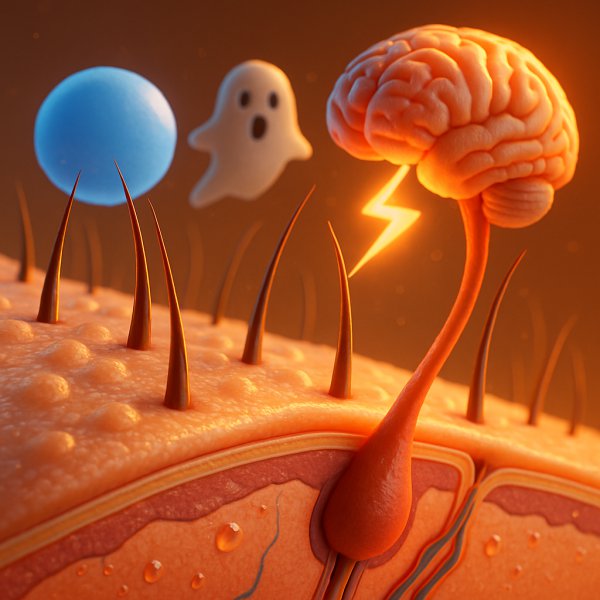
Goosebumps occur when tiny muscles attached to hair follicles contract. These are called arrector pili muscles, and they sit at the base of each hair. When they tighten the hair stands up and the skin around the follicle forms a bump - hence the term goosebumps or gooseflesh. This is a purely automatic response; you cannot usually make these muscles contract at will, because they are controlled by the autonomic nervous system.
The autonomic nervous system is the part of your nervous system that manages automatic bodily functions - heart rate, digestion, and pupil size, for example. Within this system, the sympathetic branch is important for goosebumps. When the sympathetic nerves fire, they release neurotransmitters and hormones like noradrenaline - and that signal travels to the arrector pili muscles and makes them contract. The same sympathetic surge also raises heart rate and diverts blood to essential organs in threat situations.
Two practical points flow from this: first, goosebumps are not a free-floating aesthetic thing - they are a physiological output of a larger so-called fight-or-flight network. Second, different triggers - cold, fear, or intense emotion - can all converge on that same muscle via shared neural pathways. So the bumps you get from shivering in winter and the bumps you get listening to a heartbreaking song are siblings in the nervous-system family.
The brain’s role: how sensation and emotion translate to prickles
The pathway from a trigger to goosebumps starts in the brain and/or spinal cord. For cold-triggered goosebumps, sensors in the skin send signals to the spinal cord and up to the hypothalamus, the brain region that helps regulate body temperature. The hypothalamus computes that you are cold and activates the sympathetic output to create heat - in furry animals this results in hair standing up to trap an insulating layer of air. In humans this is vestigial but still produces the same effect.
When the trigger is emotional - awe, fear, or beauty - higher-order brain regions get involved. The insula and anterior cingulate cortex, which help process feelings and bodily states, along with the amygdala, which evaluates emotional salience, send a cascade that ends up activating the sympathetic system. In the case of music-evoked chills, researchers have observed activity in reward circuits like the nucleus accumbens. That suggests that some chills are not just reflexive but tied to a pleasure response - the brain flags a peak moment in the music and the body answers with goosebumps.
There is also a spinal component that executes the final step. Motor neurons in the sympathetic chain send signals down to the tiny muscles at the base of each hair follicle. Think of the brain regions as the control room and the sympathetic nerves as the cables running to the light switches at each follicle. Once the switch flips, the hair stands up and you feel the bumps.
Cold, fear, and beauty - comparing the triggers that cause goosebumps
Although the mechanism - arrector pili contraction - is the same, the causes and associated feelings differ. Here is a snapshot comparison that makes the differences easier to spot.
| Trigger type |
Typical cause or context |
Primary neural pathway |
Common subjective feeling |
Typical duration |
| Cold |
Sudden drop in skin temperature, wind, immersion in cold water |
Skin thermoreceptors → spinal cord → hypothalamus → sympathetic output |
Physical chill, teeth chattering, desire to seek warmth |
Brief to several minutes while cold persists |
| Fear or startle |
Sudden threat, surprise, loud noise |
Amygdala and brainstem circuits → sympathetic activation |
Alarm, widened attention, heart racing |
Short, seconds to a minute unless threat persists |
| Aesthetic chills (music, awe) |
Powerful music, moving art, moral elevation, big vistas |
Insula/ACC and reward areas (nucleus accumbens) → sympathetic output |
Emotional goosebumps, pleasure, lump in throat |
Very brief, often aligned with a musical peak or image |
| Tactile or social |
Touch, hair being stroked, emotional touch |
Somatosensory pathways interacting with emotional areas |
Pleasure or discomfort depending on context |
Very brief, tied to stimulus |
This table shows why the same visible response - raised hair - can feel so different. Cold chills aim to preserve heat, fear chills prepare for action, and aesthetic chills reward perception - but all of them are run through the body’s sympathetic system.
Why evolution gave us goosebumps: survival, intimidation, and social glue
To make sense of the purpose of goosebumps, it helps to look to our furry relatives. For animals with thick fur, raising the hair has two obvious benefits. First, the fluff traps a layer of air close to the skin and provides insulation, which helps retain heat. Second, making oneself look larger by puffing up can intimidate predators or rivals. Many animals - cats, dogs, porcupines - visibly expand their profile when threatened.
Humans evolved with far less body hair, so the thermoregulatory benefit is small today but the mechanism persists. Another plausible function in social species is signaling. Goosebumps during fear or awe could have communicated a state of alarm or a shared emotional experience, helping coordinate group responses or bonding. For instance, the feeling of chills during a stirring communal song or ritual might have strengthened group cohesion across human evolution.
An analogy helps: imagine an old, antique clock that now only ticks quietly. The pendulum no longer sets off a loud chime, but it still swings. Goosebumps are like that pendulum - a vestigial movement that continues to signal important internal changes. They no longer warm us significantly, but they still reflect the state of our internal systems and can influence social and emotional interactions.
Why music and beauty give you goosebumps - the science of aesthetic chills
There is something deliciously surprising about getting goosebumps during a song. Studies have shown that peak emotional moments in music - a sudden harmony change, a return of a familiar motif, a vocal break - often coincide with chills. The brain seems to predict patterns in music and reward instances where those patterns are bent in emotionally pleasing ways. Those reward surges involve dopamine release in the nucleus accumbens, the same chemical currency that shows up for food, sex, or monetary reward.
Another ingredient is personal relevance. A song tied to a meaningful memory or a voice that triggers nostalgia is more likely to produce chills. Individual differences in sensitivity matter too; people higher in the personality trait called openness-to-experience report chills from music more often. Imaging studies show that when someone experiences chills from music, brain areas for emotion, reward, and attention light up together - a brief, synchronized orchestra.
So next time a crescendo makes your skin prickle, you can think of it as the brain’s reward system high-fiving the sensory systems. It is a small celebratory event - the brain marks a moment as special and the sympathetic nervous system provides the physical punctuation.
Why some people get goosebumps more often than others
Not everyone experiences goosebumps with the same frequency. Several factors explain the differences. Personality and sensitivity play a role: people high in openness and in trait empathy report more aesthetic chills. Cultural and experiential factors matter too - exposure to certain kinds of music or rituals can tune the brain to respond to particular patterns.
Biology is also at play. Genetic differences in autonomic reactivity, density of sensory receptors in the skin, and differences in brain connectivity can all influence how readily the sympathetic system fires. Age changes matter: infants and older adults sometimes show different piloerection patterns, and hormonal shifts can change autonomic responsiveness. Even mood state influences the likelihood of chills - being tired or distracted makes them less likely.
An important practical point is that many things reinforce each other. If you habitually listen to emotionally rich music, your brain may become more attuned to those cues and produce more chills. In that sense, goosebumps are both trait and state dependent - part of who you are, and part of what is happening to you right now.
When goosebumps might mean something medical - what to watch for
Most goosebumps are harmless and fleeting. Occasionally, persistent or unusual piloerection can indicate an underlying problem. Excessive sympathetic activity can show up in anxiety disorders, panic attacks, or hyperthyroidism. Localized or unusual patterns of piloerection might reflect nerve damage or spinal cord lesions - for example, people with spinal cord injury sometimes experience transient piloerection that is disconnected from normal sensation.
On the flip side, a sudden, recurrent pattern of chills without an emotional or cold trigger could warrant a medical check, especially if accompanied by other symptoms like unexplained weight loss, changes in heart rate, excessive sweating, or neurological signs. If you are concerned about persistent or disruptive goosebumps, it is sensible to consult a healthcare professional for an evaluation rather than trying to self-diagnose.
If you want goosebumps on purpose - simple experiments and techniques
Artists, musicians, and curious listeners sometimes want to cultivate chills deliberately. You can practice and perhaps amplify the experience by shaping the context and your attention. Try the following steps as a mini-experiment:
- Choose material with strong emotional meaning - a song that has personal significance, a speech that moved you, or a piece of visual art that stirs you. Personal relevance amplifies the response.
- Create contrast and expectation - music that builds slowly and then shifts suddenly, or a narrative that resolves unexpectedly, often triggers a strong reaction. The surprise or release is part of what causes the reward system to respond.
- Minimize distraction - sit in a quiet, comfortable place and focus closely on the stimulus. Attention amplifies neural synchrony.
- Use memory and imagery - recall a vivid memory associated with the stimulus or imagine a scene intensely. Memory engages the same emotional networks that produce chills.
- Try varied sensory contexts - a dimly lit environment, a cool breeze, or gentle tactile stimulation can heighten physical sensation and increase the likelihood of piloerection.
Remember that not every attempt will work and that people vary. If you do experience chills, note the timing and features of the stimulus - over time you may learn what reliably produces that lovely prickling sensation.
How to calm down unwanted goosebumps - practical grounding tools
Sometimes goosebumps come at inconvenient moments - in a meeting, during a lecture, or when you want to stay warm. You cannot directly will the arrector pili muscles to relax, but you can influence the sympathetic system. Try these grounded techniques:
- Warm the skin - put on a sweater or use a warm drink to raise local skin temperature. Thermoregulatory feedback reduces the hypothalamic drive for piloerection.
- Slow your breathing - take longer exhalations, breathe diaphragmatically, and shift toward slower paced respiration which engages the parasympathetic system and reduces sympathetic tone.
- Progressive relaxation - systematically relaxing muscle groups can lower overall arousal and diminish the sympathetic cascade.
- Reframe the stimulus - if the goosebumps are from anxiety, cognitive reframing or attentional shift can reduce the emotional driver.
- Move gently - light physical activity raises overall body temperature and can interrupt the immediate sensation.
These are gentle, nonpharmacological steps that can be applied instantly. If goosebumps are part of a broader pattern of anxiety or autonomic dysfunction, professional treatment such as therapy or medical evaluation may be appropriate.
Myths and misunderstandings - clearing up common errors
People often have confident but incorrect ideas about goosebumps. Let us correct a few:
- Myth: Goosebumps only happen when you are cold. Truth: Cold is a major trigger, but emotional and social stimuli often cause goosebumps without any temperature change.
- Myth: Goosebumps mean you are in danger. Truth: They can be part of a fear response, but they also occur during positive states like awe and pleasure.
- Myth: Humans get goosebumps because we need to warm up. Truth: The mechanism is inherited from furrier ancestors and no longer provides significant insulation in humans, though it still reflects thermoregulatory signaling.
- Myth: You can control goosebumps consciously. Truth: They are mostly involuntary, though attention and mood can influence likelihood.
- Myth: Only sensitive or artistic people get goosebumps. Truth: Individual differences exist, but most people experience goosebumps given the right triggers.
Sorting myth from fact helps you appreciate what goosebumps tell you about the body and when not to overinterpret a tiny bump on the skin.
Reflection prompts to make this personal
Take a moment to think about your own experiences with goosebumps. Consider these short prompts and pause to answer them mentally or jot down a few lines.
- When was the last time you felt goosebumps, and what was the context - cold, fear, music, or something else?
- Do you notice any patterns - specific songs, kinds of movies, or weather conditions - that reliably produce chills?
- How do you feel physically and emotionally when goosebumps happen - energized, wistful, alarmed?
- Can you recall a social moment (a concert, ceremony, or ritual) where shared goosebumps seemed to connect people? What made it feel communal?
These quick reflections turn abstract knowledge into personal insight and make it easier to remember what you have learned.
Small takeaways and a final nudge to explore
Goosebumps are a small but eloquent signpost of how mind and body are linked. The same tiny muscles that puff up your hair respond to changes in temperature, sudden fear, and even to the beauty of a song. Evolution left us this mechanism, once useful for fluffy ancestors and now serving as a physiological marker of deeply felt moments. Musicians, speakers, and storytellers can harness what triggers chills; anyone can learn to calm them when they are inconvenient.
Next time a shiver runs through you, notice it with curiosity rather than annoyance. Ask what drove it - a memory, a harmonic surprise, a draft of air - and let that tiny signal teach you something about how you respond to the world. Small as they are, goosebumps are a reliable reminder that our bodies are constantly translating the outer world into inner states, and that some of the most meaningful experiences are written in the skin.