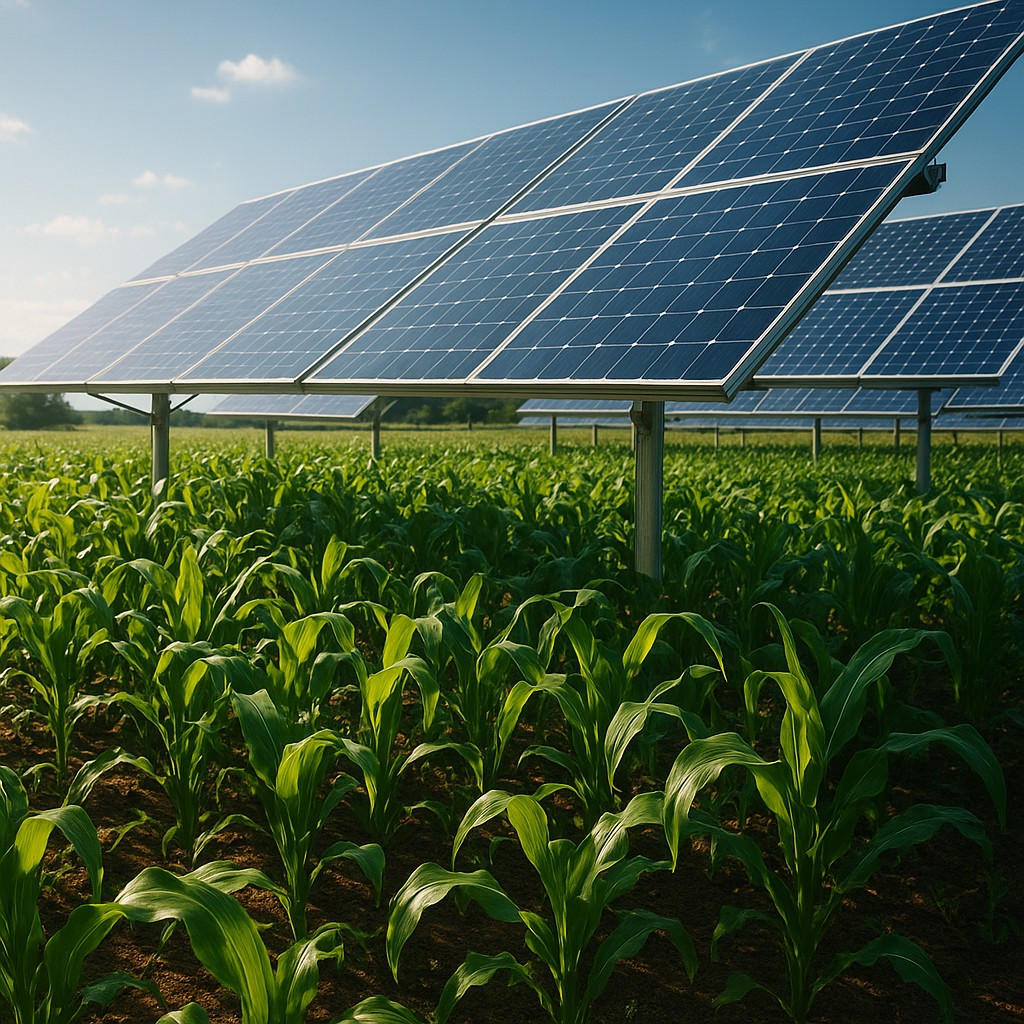
For decades, we have viewed the relationship between green energy and green thumbs as a zero-sum game. The usual logic suggested a simple trade-off: you could have a field full of food or a field full of solar panels, but never both without one side suffering. This conflict over land use often turned farmers and energy developers into rivals, competing for the same flat, sun-drenched acreage. One group wanted to capture light particles to feed people, while the other wanted those same particles to power our refrigerators. It was a classic "either-or" scenario that left little room for creative teamwork.
However, a fascinating shift in agricultural science is turning this rivalry on its head. By literally raising our solar infrastructure, we have discovered that panels and plants do more than just tolerate one another; they form a partnership where both sides win. This is the world of agrivoltaics - a design philosophy that treats the space beneath a solar array not as wasted ground, but as a high-performance microclimate. In the face of a warming planet and shrinking water supplies, this "both-and" approach proves that the shadow of a solar panel might be the most valuable tool a modern farmer owns.
The Midday Slump and the Biological Shield
To understand why shade is a gift to many plants, we first have to debunk the myth that more sun always equals more growth. Most of us imagine plants as solar-powered machines that run faster as the light gets brighter. In reality, many crops reach a "light saturation point" early in the day. Beyond this point, the plant cannot process any more solar energy for photosynthesis - the process of turning light into food. Instead, the extra radiation just generates heat, stressing the plant’s internal chemistry and forcing it into a defensive state.
When a plant gets too hot, it experiences what biologists call "midday depression." To keep from drying out, the plant closes its stomata - the tiny pores on its leaves used to breathe. While this saves water, it also stops the intake of carbon dioxide, effectively halting growth during the brightest hours. Agrivoltaic systems solve this by providing intermittent shade. By blocking the harshest overhead rays, the panels keep the plants below a dangerous heat threshold. This allows them to keep their pores open and continue growing while their "full-sun" neighbors are essentially huddling in survival mode.
This cooling effect goes deeper than just the leaves. Solar panels act as a physical barrier that blocks downward heat radiation and reduces the amount of warmth the soil absorbs. In dry regions, this can lower soil temperature by several degrees. Cooler soil protects the tiny microbes that help plants take up nutrients, ensuring that the "basement" of the farm stays healthy even when the world outside the array is scorching. It is a biological shield that turns a harsh environment into a stable sanctuary.
A Secret Weapon for Water Conservation
In traditional open-field farming, water often evaporates into the air before a plant can even take a drink. Evaporation is a constant thief, especially in dry climates where the sun beats down on moist soil. Agrivoltaic systems act like a lid on this system. By slowing down the wind and providing shade, the panels significantly lower the "evapotranspiration" rate - the total amount of water lost through the soil and the plant’s own "sweat."
Studies show that some crops grown under solar arrays require up to 30 percent less water to produce the same, or even higher, yields than those in open fields. This is a massive advantage for farmers dealing with drought or water restrictions. Because the soil stays moist longer after rain or irrigation, the plants go through fewer "thirst cycles," leading to more consistent fruit production and less physical stress. It turns a fragile farm into a resilient one.
Interestingly, this water-saving trick also helps the solar panels. Most people do not realize that panels actually lose efficiency as they get hotter; they prefer a cool breeze to a stifling heatwave. In an agrivoltaic setup, the plants underneath constantly release tiny amounts of water vapor. This natural cooling creates a plume of slightly cooler air that rises and bathes the panels above. The result is a double victory: the plants get the shade they need to save water, and the panels get the cooling they need to generate more electricity.
Matching the Crop to the Canopy
Not every plant is a fit for life under a solar array, but the list of shade-tolerant crops is surprisingly long and includes many of our most important foods. Finding the right match involves looking at how much light a plant actually needs versus how much it can handle. While corn and wheat generally demand intense, direct sunlight, many garden crops are perfectly happy with the dappled light of a raised solar structure.
| Crop Category |
Example Varieties |
Response to Agrivoltaics |
| Leafy Greens |
Lettuce, Spinach, Kale |
Very Positive; less bitter and larger leaves. |
| Root Vegetables |
Carrots, Potatoes, Radishes |
Positive; cooler soil prevents woody texture and stays moist. |
| Nightshades |
Tomatoes, Peppers |
Varies; often results in better fruit with fewer sun-scorch marks. |
| Legumes |
Beans, Peas |
Positive; longer growing season due to steady temperatures. |
| Woody Perennials |
Berries, Grapes |
Promising; protects blossoms from late frosts and heatwaves. |
The physical setup of the panels matters just as much as the crop itself. Engineers can tilt panels at specific angles or space them further apart to create "light corridors" that move across the field as the sun travels. This ensures no single plant is stuck in total darkness. Instead, the crops experience a rhythmic cycle of sun and shade, much like a forest floor. This dynamic light can actually trigger better growth, sometimes leading to larger leaves as the plant stretches to catch the available light.
Overcoming the Misconceptions of Complexity
The most common argument against agrivoltaics is that it is too expensive or difficult to build. Critics point to the need for taller mounting structures, which require more steel and stronger engineering to stand up to the wind. While the upfront cost is higher than a standard solar farm, this view misses the bigger economic picture. We have to look at how productive the land is as a whole, rather than just the cost of the hardware.
When a farmer installs agrivoltaics, they are "double-cropping" their land. They are harvesting energy for the power grid and harvesting vegetables for the market on the exact same footprint. In many cases, the money from the energy provides a stable, guaranteed income that can support the farm during years of poor crop prices or bad weather. It acts as a financial safety net against the unpredictable nature of farming.
Furthermore, the "complexity" of moving tractors under panels is a problem that has already been solved. In modern installations, the panels are raised high enough (often 8 to 10 feet) for standard tractors and harvesters to pass underneath. Row spacing is matched to the width of the farmer’s existing machines. While it takes more careful planning at the start, the day-to-day work remains very similar to traditional methods, but with healthier soil and lower water bills.
The Architecture of a Sustainable Future
The ultimate goal of agrivoltaics goes beyond just making solar panels popular. It represents a fundamental shift in how we view the "man-made" versus the "natural." For a long time, we behaved as though our infrastructure - power plants, roads, and grids - had to be separate from the ecosystems that sustain us. Agrivoltaics proves that our technology can be designed to actively improve an ecosystem's health.
By creating these stable microclimates, we are essentially building "climate-resilient zones." As global temperatures rise and weather becomes more unpredictable, the open-field model of farming becomes riskier. A massive heatwave that might wipe out a traditional bean field might only cause a minor slowdown in an agrivoltaic field, simply because the panels provided a crucial 5-degree temperature buffer. It is a form of insurance built from silicon and steel.
As we look toward the future of energy and food, we should see these shadows not as a lack of light, but as a space for survival. Every raised panel is a promise of cooler soil, every gallon of water saved is a victory for the local environment, and every kilowatt generated is a step toward a cleaner world. When we stop fighting for land and start sharing it, we find that the sun has more than enough to give to everyone. The next time you see a solar farm, do not just see a power plant; see a potential garden protected by a shield.