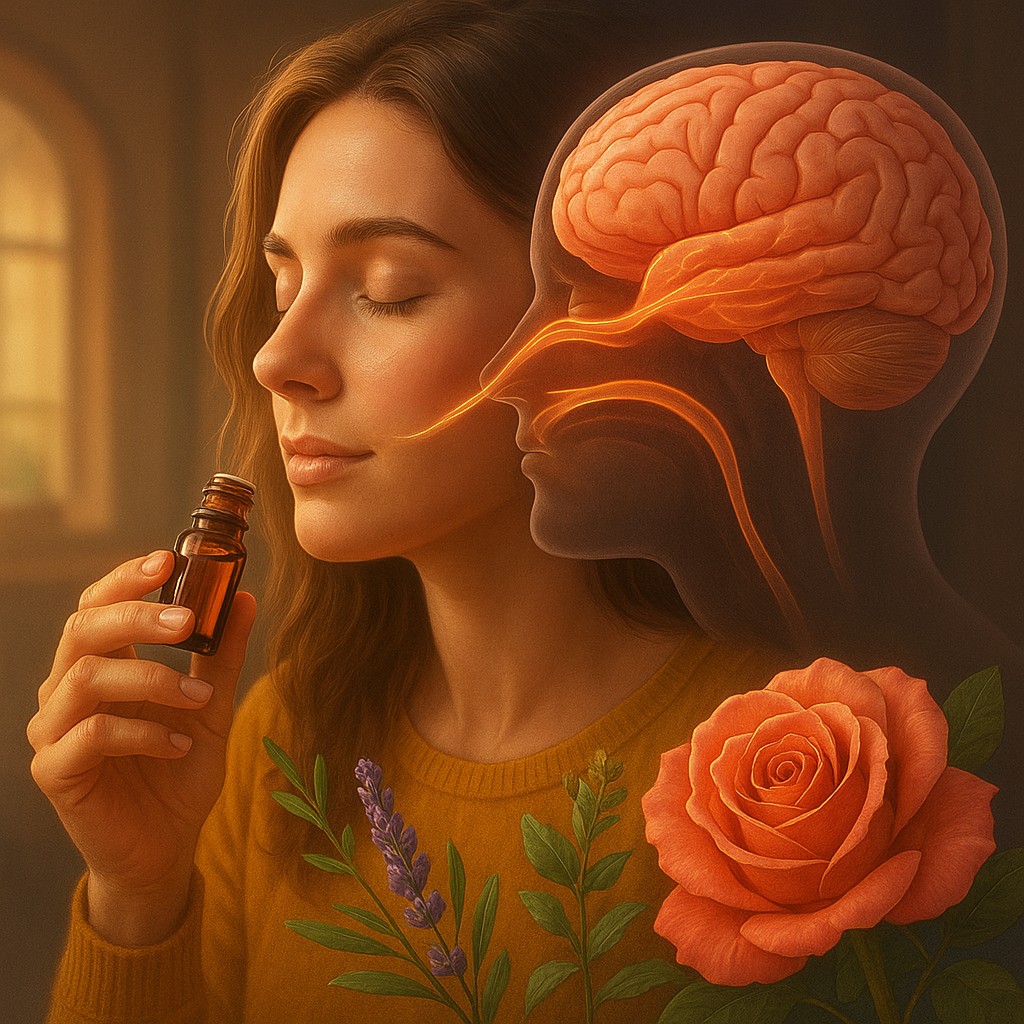
Walk into a bakery and you might suddenly feel calmer, hungrier, and oddly optimistic about your life choices. Catch a whiff of a certain perfume and you are no longer in your living room; you are back in a high school hallway with very specific feelings and questionable hair decisions. Scent does that. It sneaks past your inner critic and presses buttons you forgot you had.
Aromatherapy lives at the crossroads of charm and biology. People use essential oils and fragrant plants to relax, focus, fall asleep, or simply make a Tuesday feel less like Tuesday. Some claims are exaggerated, others have solid research behind them, and most make sense once you know how the brain handles smell. The science is far from dry — it is a story about a direct path from your nose to your feelings.
If you want to learn aromatherapy without wandering into mystical fog or a chemistry lecture, you are in the right place. We will start with how smell works, move into how it can shift mood, cover what aromatherapy can realistically do, and finish with safe, useful ways to use it.
Your nose has a VIP entrance to the brain
Smell is the odd sense out. Vision, hearing, and touch usually pass through a brain relay station called the thalamus before being processed further. Smell takes a shorter route. When you inhale, scent molecules rise to the top of your nasal cavity where special nerve cells, olfactory neurons, catch them with receptor proteins. Those neurons send signals straight to the olfactory bulb, a brain structure just above the nose that starts sorting the scent patterns.
From there, scent signals move quickly to brain areas involved in emotion and memory, including the amygdala (emotion and threat detection) and the hippocampus (memory). That is why a smell can hit you like a time machine. Over evolution, scent helped our ancestors find food, avoid danger, and recognize people and places. In other words, smell is old brain real estate, and it does not wait for your rational mind to catch up.
This shortcut helps explain how scents can change mood and body functions. The brain areas that process smell connect to the hypothalamus, which helps control hormones, stress responses, body temperature, appetite, and parts of the autonomic nervous system - the system that manages heart rate, digestion, and the balance between fight-or-flight and rest-and-digest. So aromatherapy is not mind control, but it can nudge systems that set the tone for how you feel.
How scent shifts mood: the three main pathways
When people say “lavender relaxes me” or “peppermint wakes me up,” a few overlapping mechanisms are at work. Thinking in these categories keeps you grounded and helps you spot overstated claims.
The brain’s meaning-making: memory, association, and context
A big part of a scent’s power is association. If chamomile reminds you of bedtime tea and being cared for, your body may start to relax before you even consciously notice the smell. If a “fresh linen” scent makes you think of a hospital, it may do the opposite. This is not just placebo in the dismissive sense. It is your brain doing what it evolved to do: predict what comes next from sensory cues.
Context matters more than people expect. The same scent can feel comforting in a warm bath and annoying in a crowded car. Your mood, expectations, and setting can amplify or cancel the effect.
The body’s response: arousal, stress, and the nervous system
Smell can sway physiological arousal. Some scents are often experienced as calming (usually floral, resinous, or soft herbal notes), while others feel energizing (often minty, citrus, or sharp herbal notes). Researchers sometimes measure this with heart rate, blood pressure, skin conductance (sweat response), and cortisol, a stress hormone. The effects are usually subtle, not dramatic, but they can matter, especially when built into daily routines.
Think of it as “tilt, not teleport.” Aromatherapy may tilt your nervous system toward calmer or more alert states, but it rarely zaps someone out of severe anxiety or depression on its own. When it helps, it usually does so as part of a larger toolkit.
Chemistry in the air: what essential oil components may do
Essential oils are complex mixes of chemicals. Some components can interact with the body in measurable ways, especially when inhaled and absorbed in small amounts. For example, lavender contains compounds like linalool and linalyl acetate, which have been studied for calming effects. Peppermint has menthol, which feels stimulating and cooling. Citrus oils often contain limonene, a compound linked to bright, uplifting aromas and possible stress-modulating effects in some studies.
Important reality check: natural does not mean powerful medicine, and it does not mean harmless. Essential oils are concentrated. Their chemistry matters, but so do dose, method, and the person using them.
Aromatherapy in plain English: what it is, and what it is not
Aromatherapy is the intentional use of plant-derived aromas, often essential oils, to influence mood, comfort, or wellbeing. People usually inhale scents (diffusers, personal inhalers, steam inhalation, scent on a tissue) and sometimes apply diluted oils to the skin. Aromatic baths or massage add the effects of touch, warmth, and ritual.
It is not a cure-all, and it is not the same as commercial “fragrance.” Many store-bought scents are synthetic blends made for consistency and performance. That is not necessarily bad, but research on aromatherapy usually involves essential oils with known plant origins and chemical profiles. Even then, essential oils vary by species, growing conditions, and extraction method, so one bottle labeled “lavender” may not smell or behave like another.
It also helps to separate two goals that get mixed together online:
- Mood and comfort support - for relaxation, sleep routines, or help focusing while working.
- Medical treatment - for curing infections, replacing psychiatric care, or “detoxing” the body.
The first goal is often reasonable. The second is where misinformation grows quickly.
What the research says (and what it doesn’t)
Aromatherapy research exists, but it is tricky. Smell is subjective, blinding is hard (people can often tell what they are smelling), and outcomes like “relaxation” depend on expectations and environment. Still, some consistent findings appear.
Areas with decent support
- Stress and anxiety in specific settings. Studies in clinical or high-stress places, like dental offices or pre-surgery waiting rooms, often find certain aromas, especially lavender, reduce self-reported anxiety. Sometimes small changes show up in physiological measures too.
- Sleep routines. Lavender is the poster child here. Evidence suggests it can improve perceived sleep quality for some people, especially when used consistently as part of a bedtime ritual. It is not a knockout drug, but it can be a helpful cue that signals “time to wind down.”
- Nausea and comfort. Peppermint and ginger scents are commonly used for nausea. Evidence is mixed, but many people find them helpful for mild nausea or queasiness. Context matters: if a scent becomes linked with relief, it can grow more effective over time.
Areas where claims often outrun evidence
- Depression, ADHD, trauma, and major psychiatric conditions. Early research explores scent and mood disorders, but aromatherapy should not be presented as a standalone treatment. It can support coping, relaxation, or routine, but it is not a replacement for therapy, medication, or medical care when those are needed.
- Immune boosts and “killing viruses in the air.” Some essential oils show antimicrobial effects in lab tests on surfaces or in petri dishes. Translating that to “diffuse this and you will not get sick” is a leap. Real homes are not petri dishes, and safe airborne concentrations are not the same as lab concentrations.
- Detox claims. Your liver and kidneys do the real detox work. Aromatherapy can support relaxation and comfort, which indirectly helps health, but it does not pull toxins out through your feet, bathwater, or vibes.
A quick guide to popular scents, their common uses, and cautions
Below is a practical snapshot. Treat it as a starting map, not medical advice.
| Scent (common oil) |
How it’s often used |
What it may feel like |
Notable cautions |
| Lavender (Lavandula angustifolia) |
Relaxation, sleep cues, stress |
Soft, floral, “exhale” energy |
Can irritate sensitive skin if undiluted, avoid overuse around pets that are sensitive to fumes |
| Peppermint (Mentha piperita) |
Alertness, mild nausea, headache comfort |
Cooling, sharp, energizing |
Can irritate, avoid near eyes, use extra caution with children, pets, and people with asthma |
| Sweet orange (Citrus sinensis) |
Mood lift, stress reduction |
Bright, cheerful, familiar |
Citrus oils can be phototoxic if applied to skin (especially cold-pressed oils), diffuse lightly |
| Bergamot (Citrus bergamia) |
Stress, mood support |
Citrus with a calming twist |
Phototoxic on skin unless labeled FCF (furanocoumarin-free) |
| Eucalyptus (Eucalyptus radiata/globulus) |
“Clear head” feeling, seasonal comfort |
Crisp, airy, medicinal |
Not ideal for young children, can trigger breathing irritation in some people |
| Rosemary (Rosmarinus officinalis) |
Focus, mental energy |
Herbal, awake, brisk |
Can be stimulating, use cautiously if you are sensitive to strong scents |
| Chamomile (Roman chamomile) |
Wind-down, soothing routines |
Gentle, apple-like, cozy |
Possible allergy risk for people sensitive to the ragweed family |
Misconceptions that keep aromatherapy stuck in fantasy land
Aromatherapy gets a skeptical look for a reason: the internet has given it a reputation for extravagant promises. Let us clear up the most common myths without throwing the whole idea away.
“If it’s natural, it’s safe”
Poison ivy is natural. So is hemlock. Essential oils are concentrated plant chemistry and can irritate skin, trigger headaches, worsen asthma symptoms, or be toxic if swallowed. Safety depends on dose, route, and the person, not on a “natural” label.
“One oil works the same for everyone”
Smell perception varies a lot. Genetics affect which receptors you have and how strongly you detect certain molecules. Past experiences shape how your brain reads a scent. Your hormonal state can change sensitivity. If lavender relaxes your friend but makes you feel trapped in a scented candle shop, that is normal.
“If you can smell it, it must be doing something powerful”
Smelling something means molecules reached your receptors, not that a medicinal effect is guaranteed. Many aromatherapy benefits come from attention, ritual, and association. That is still real and useful, but it is different from a drug-like effect.
“Diffusing more is better”
This is how people get headaches, sore eyes, and pets planning a move. Overexposure can backfire. In aromatherapy, subtle often works best.
How to use aromatherapy in a way your future self will thank you for
Aromatherapy is most useful when used like seasoning, not the main course. Here are practical ways to try it while staying safe.
Choose your goal first, then pick the scent
Before grabbing a random bottle, decide what you want:
- Downshift after work, reduce tension, or prep for sleep.
- Upshift for focus, morning energy, or workout motivation.
- Comfort during nausea, travel stress, or a rough day.
Then pick one or two scents you actually enjoy. Enjoyment is part of the mechanism, not an optional extra.
Make it a cue, not a one-time trick
Scent works well as a conditioned signal. Use the same calming scent during a consistent wind-down routine and your brain will start to link that smell with slowing down. Over time, the scent becomes a shortcut into the state you want.
A simple wind-down could be: dim the lights, plug in your phone, diffuse lavender for 15 minutes, stretch for 5 minutes, then stop the diffuser. The routine teaches your nervous system a pattern. The scent is the opening theme music.
Use safe methods and conservative amounts
Inhalation is usually the simplest approach. A diffuser in a ventilated room, a personal inhaler, or one drop on a tissue can be enough. If you are new, start with fewer drops than the diffuser manual recommends, not more.
Topical use needs dilution. Essential oils should generally be mixed with a carrier oil (like jojoba or sweet almond) before touching skin. Undiluted oils can irritate or sensitize skin over time. If you have sensitive skin, allergies, eczema, or you are using oils like cinnamon or clove, patch test first and be extra cautious.
Avoid ingestion unless a qualified professional advises it. Swallowing essential oils causes many avoidable problems, including toxicity and drug interactions. The “it is just a plant” logic fails here.
Keep your environment and housemates in mind
Scent is shared air. If you live with others, especially babies, children, pregnant people, or anyone with asthma or migraines, ask first and keep the scent light. Be cautious around pets. Cats, birds, and some dogs can be sensitive to certain oils, and they cannot tell you when they feel unwell.
The brain-body story you can actually remember
Use this simple model:
- Smell is fast because it takes a direct route into emotion and memory circuits.
- Mood is a system made of brain meaning-making, body arousal, and chemistry.
- Aromatherapy is a nudge that works best when paired with routines, not used as a rescue helicopter.
- Your preferences matter because association drives much of the effect.
- Safety matters because concentration changes the game.
That is the whole deal in five lines. Your brain pays attention to scent because it helped your ancestors survive. You can use that wiring to make modern life feel a little more manageable.
Turning curiosity into a personal scent practice
If you want to explore without getting overwhelmed, treat it like a small experiment. Pick one goal (sleep, focus, calm), choose one scent you like, and use it consistently for a week in the same context. Notice what changes: not just mood, but behavior. Do you scroll less at bedtime? Do you start work faster? Do you unclench your jaw sooner? Those are the practical wins aromatherapy is best at delivering.
Scent will not solve every problem, but it can be a gentle lever that makes it easier to do the things that actually help. In a world full of loud advice, there is something powerful about a tool that works quietly through breath, memory, and a few invisible molecules in the air. Keep it curious, keep it safe, and let your nose remind your brain that you have more control over your inner weather than you think.