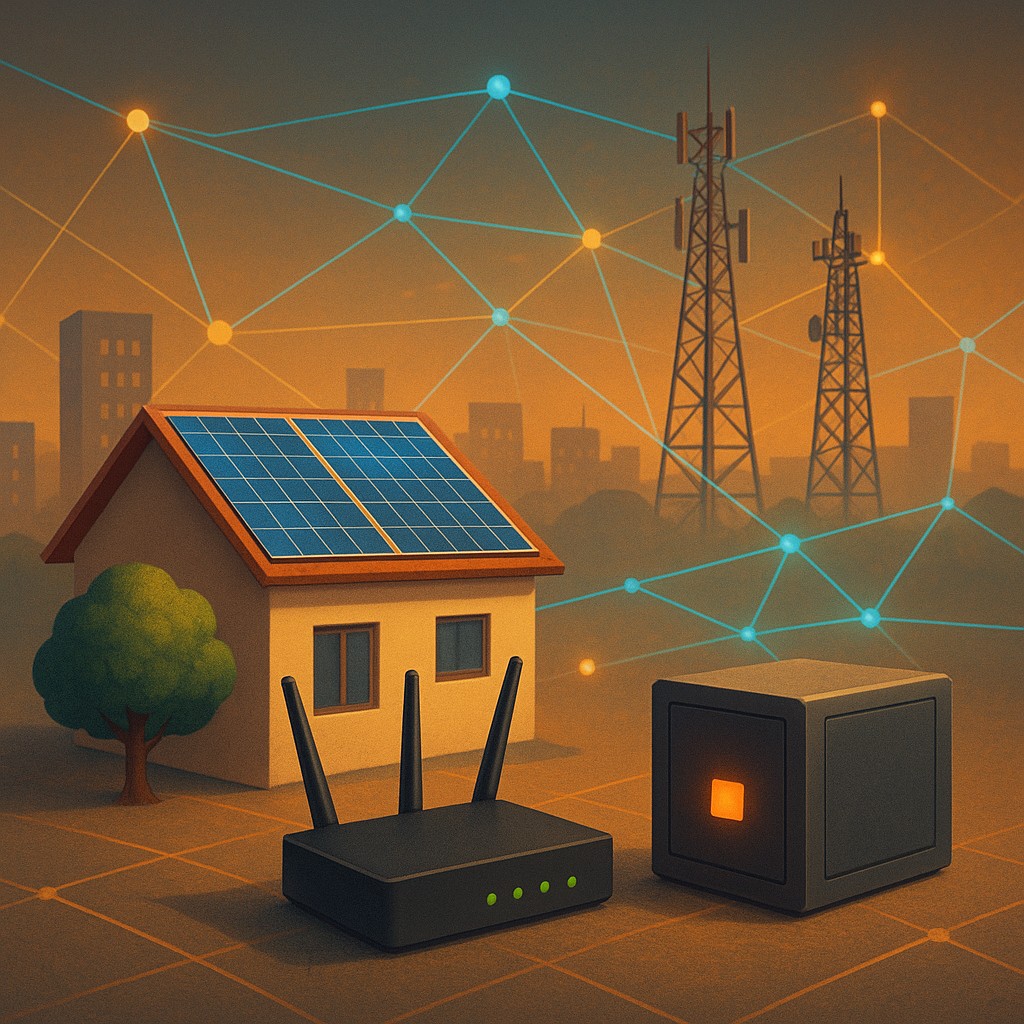
Take a second to imagine that the power grid, the cell towers, and the sprawling server farms keeping your digital life running aren't owned by a few giant, faceless corporations. Instead, picture a world where your neighbor’s roof helps power your toaster, your own Wi-Fi router helps provide internet to the whole city, and a small box in your hallway stores encrypted data for someone halfway around the world. This isn't a sci-fi dream of a perfect society; it is the core idea behind a fast-growing movement that turns regular people into the backbone of global infrastructure. By moving away from central "command and control" systems, we are seeing a new world where the physical things we use every day are built and kept running by the people who actually use them.
This shift is more than just a tech trend; it represents a massive change in how we think about ownership. For nearly a century, we have been passive customers, paying monthly fees to utility giants just to stay connected and powered up. If one central hub failed, an entire city could go dark or lose its internet. Decentralized Physical Infrastructure Networks, or DePIN for short, change the game by spreading the "brains" and "muscle" of these systems across thousands of different locations. This not only makes the system much harder to break, but it also puts the money earned from these services back into the pockets of the people who host the hardware.
The Magic of Crowdsourced Hardware
To understand how this works, we have to look at the old "top-down" way of building things. When a big phone company wants to provide 5G coverage, they have to buy land, get permits, hire construction crews, and put up massive towers. This is incredibly expensive and slow. In the decentralized model, the process works from the "bottom up." Instead of one company building a giant tower, ten thousand people buy small, low-power devices and plug them into their wall outlets at home. These devices talk to each other to create a coverage web that can be just as strong as a big tower, but much more flexible.
The "secret sauce" that makes people want to do this is the digital token. Building infrastructure is hard work, and nobody is going to host a noisy server or a bulky battery just to be nice. By using blockchain technology, these networks can automatically pay participants with digital credits or tokens for every bit of data they move or every kilowatt-hour of power they store. This creates a cycle that feeds itself: the more people provide the service, the better the network gets. A better network attracts more users, which makes the rewards more valuable, which encourages even more people to join. It is a global team effort where everyone wins by working together.
Turning Your Home Into a Mini-Utility Company
In simple terms, this means your role in the economy is about to get much more interesting. Take a smart home with solar panels and a backup battery as an example. Right now, most people just sell their extra power back to the electric company at whatever price the company sets. In a decentralized energy network, your battery could talk to other batteries in your neighborhood. If your neighbor is using a lot of power for their dryer while you are at work, your battery could automatically send them the extra juice they need. You aren't just a customer anymore; you are a tiny utility provider. The network makes sure you are paid fairly for that help without a middleman taking a big cut.
This idea goes far beyond just electricity. There are already networks where you can buy a small device to provide long-range wireless coverage for "Internet of Things" gadgets, like smart pet collars or package trackers. Other networks let you share the unused space on your computer’s hard drive to create a giant, decentralized "cloud" storage system that is cheaper and more private than those run by Big Tech. The common thread here is using "idle resources." We all have things like extra internet bandwidth, storage, or power that sit unused most of the day. DePIN acts as a bridge that lets us make money from those idle assets while helping the rest of the world get what they need.
Comparing Traditional and Decentralized Systems
To see the clear differences between these two worlds, it helps to look at them side-by-side. While traditional systems have served us well for decades, they come with built-in problems that decentralized systems are designed to fix. The following table highlights the main differences that make this shift so powerful.
| Feature |
Traditional Infrastructure |
DePIN (Decentralized) |
| Ownership |
Big corporations or governments |
Shared by thousands of individuals |
| Startup Cost |
Very high (billions in investment) |
Low (cost of one consumer device) |
| Reliability |
Low (if the center fails, everything fails) |
High (many backup points everywhere) |
| Innovation |
Slow and buried in paperwork |
Fast and driven by the community |
| Incentives |
Profit for shareholders |
Rewards for active participants |
| Growth |
Planned years in advance |
Fast, natural growth based on local need |
This comparison shows why big companies are starting to pay attention. While a corporation has to wait for board approval to expand into a new city, a decentralized network can appear in a new neighborhood overnight simply because a few dozen residents decided to buy and plug in the hardware. This organic growth model is much more efficient because it responds directly to what people need on the ground.
Overcoming the Challenges of Growing Big
While the potential sounds like a dream for tech fans, building these networks isn't always easy. One of the biggest hurdles is the "chicken and egg" problem. For a decentralized wireless network to be useful, it needs thousands of hotspots to provide a steady signal. But why would someone buy a hotspot if there aren't many users paying for the service yet? This is where token rewards come in. They act as a "jump-start" to reward early members for taking a risk. If the rewards are high enough, people will build the network before the demand even arrives, betting on the future value of the system.
There is also the issue of technical difficulty. Right now, setting up a DePIN device often requires some "tinkering" that the average person might find confusing. For these networks to truly compete with brands like Amazon or AT&T, the experience needs to be seamless. You should be able to plug a device into a wall, scan a code with your phone, and be done. Additionally, there are legal questions. Governments are still figuring out how to tax digital rewards and how to make sure these networks follow local laws when there is no single CEO to hold responsible. These are growing pains, common for any technology that shakes up a century-old way of doing things.
Debunking the Myth of the "Tech Genius"
A common misunderstanding about decentralized hardware is that you have to be a computer whiz or a full-time IT tech to participate. Some people worry that if they join, they will spend their weekends fixing server errors or managing complex energy trades. In reality, the goal of these systems is "set it and forget it." The software is designed to do the heavy lifting of moving data or balancing power levels automatically. Your main job is just to provide the physical space and the electricity for the device to run.
Another myth is that these networks are less secure. People often assume that if their data is stored on a neighbor’s hard drive, the neighbor can see it. This is where modern data coding, or cryptography, shines. In a decentralized storage network, your files are locked with a digital key, broken into tiny pieces, and scattered across dozens of different devices. No single device has a big enough piece to see anything useful, and even if they did, they don't have the key to unlock it. In many ways, this is actually safer than a central database, which acts as a "honeypot" for hackers. In DePIN, there is no single vault to break into, only a billion tiny pebbles scattered across a beach.
The Future of a Shared Economy
As these networks grow up, we will likely see the very layout of our cities change. Instead of massive power plants on the edge of town, we will see "Virtual Power Plants" made of thousands of home batteries working together in perfect harmony. Instead of overpriced data fees when we travel, we might see global, community-owned internet that costs a fraction of the price. The opening of infrastructure to everyone means that the competitive "moat" around these industries, once built from billions of dollars in concrete and steel, is being torn down by the power of people working together and using smart code.
This journey from being a passive customer to an active participant is perhaps the most exciting part of the DePIN story. It allows us to take back a sense of ownership over the services that run our lives. By chipping in a little bit of our own resources to a larger project, we become stakeholders in the world we live in. We are moving toward a future that is more reliable, more fair, and more human, one small device at a time.
The next time you see a cell tower or a power line, don't just see a piece of industrial equipment. See it as an invitation to join a new kind of global project. The tools to build the future are no longer reserved for a wealthy few; they are sitting on our desks, tucked in our garages, and hanging on our walls. By joining this decentralized shift, you aren't just saving a few dollars; you are helping to build a stronger and more open world where everyone has a stake in the systems that move us forward. Explore the networks, find a project that interests you, and take your place in the infrastructure of tomorrow.