Imagine you are applying for your dream job. You have spent years sharpening your skills, your resume is flawless, and your references are stellar. You hit "submit," and within three seconds, an automated email lands in your inbox: "Thank you for your interest, but we will not be moving forward with your application."
There was no interview, no phone call, and certainly no human being who actually looked at your qualifications. Instead, a silent algorithm running in a server farm thousands of miles away scanned your face, analyzed the tiny movements of your expressions in a video intro, or checked your data against a "success profile" that nobody outside the company understands. You hit a digital dead end before you even started.
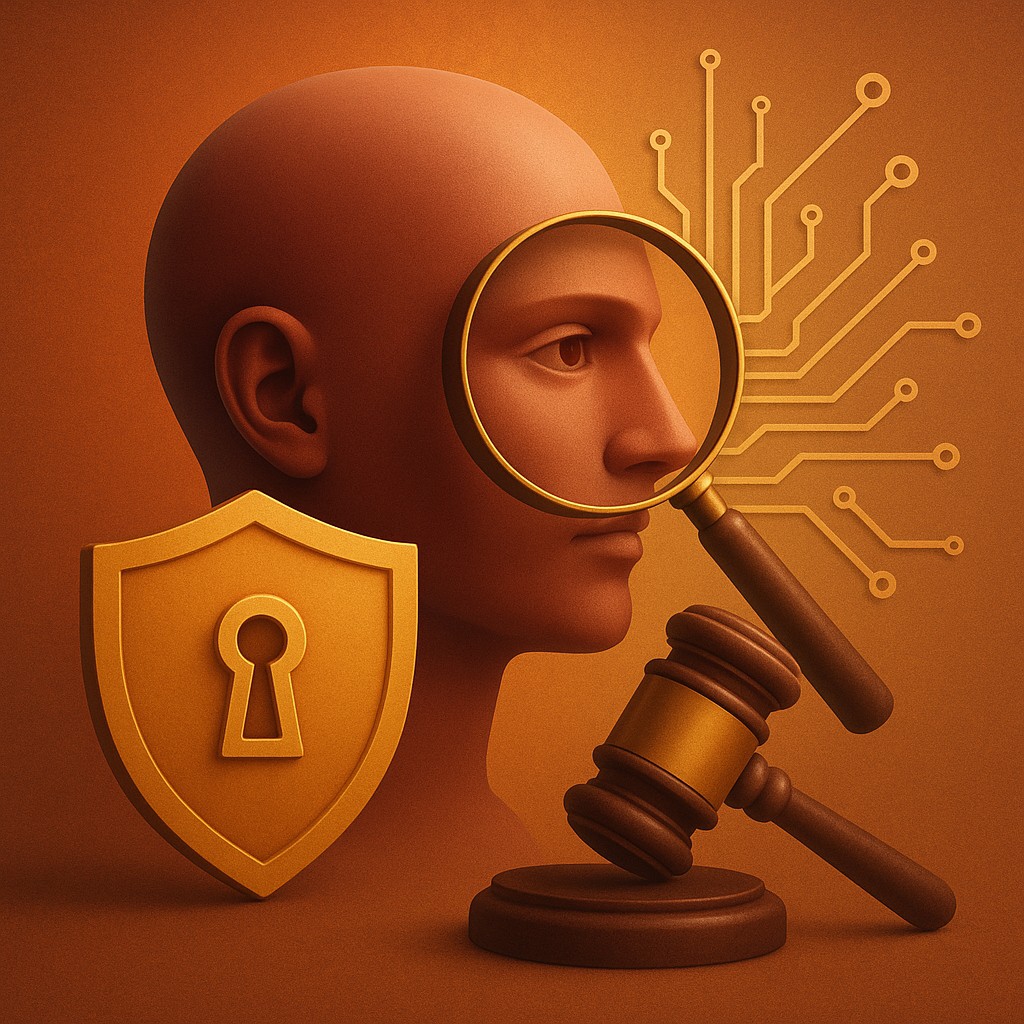
This scenario is no longer a plot point from a science fiction novel; it is the daily reality for millions of people in today's economy. From mortgage approvals to healthcare rationing and even court sentencing, automated systems are making life-altering choices. While these "black boxes" are marketed as efficient and fair, they often hide deep-seated flaws, inherited prejudices, and logical gaps that a human would spot in an instant. Because of this, a fascinating legal movement is gaining momentum in federal courts. It is known as the push for the "Right to a Human" - a concept designed to ensure that when technology makes a choice that changes your life, a person of flesh and blood remains accountable for the result.
The Ghost in the Decision-Making Machine
To understand why we need a legal "Right to a Human," we first have to admit that we are infatuated with data. As a society, we tend to believe that computers are more objective than people. We assume that because a machine uses math, it cannot be racist, sexist, or simply in a bad mood. However, algorithms are not born from pure logic; they are trained on historical data.
If a bank’s past records show they mostly gave loans to people in certain zip codes, the AI will "learn" that those zip codes are a sign of financial reliability. It does not know why; it just follows the pattern. This creates a feedback loop where the machine reinforces old biases while hiding them behind a mask of mathematical certainty.
The problem is made worse by what computer scientists call the "Black Box" effect. Many modern AI systems, particularly those using deep learning (a method where computers learn by recognizing complex patterns), are so complicated that even their creators cannot explain exactly why the machine made a specific choice. If a computer denies you a transplant or an apartment, and the developer says, "I don't know why it did that, the network just weighed your data that way," you are left in a legal and moral vacuum. The "Right to a Human" insists that "the computer said so" is not a valid legal defense. It demands that high-stakes decisions be explainable and reversible by a human supervisor who understands the nuances a line of code might miss.
When Your Face Becomes Your Social Security Number
Much of the current legal battle is centered on biometric privacy laws, such as the Biometric Information Privacy Act (BIPA) in Illinois or CUBI in Texas. These laws focus on our most intimate data: our fingerprints, iris scans, and the geometry of our faces. Unlike a password or a credit card number, you cannot change your face if it is hacked or misused.
When companies use this biometric data to power automated decision engines, they aren't just looking at numbers; they are looking at you. Federal courts are seeing more cases where plaintiffs argue that harvesting their physical identity to train a silent, automated judge is a fundamental violation of privacy and due process.
The fight over biometric data is the front line for "algorithmic accountability," or the idea that companies are responsible for their software's actions. If a company uses a scan of your face to decide if you are "productive" or "trustworthy" without your clear permission, they are essentially turning your own biology against you. Recent massive settlements, such as a $1.4 billion agreement involving Meta in Texas, show that the era of "move fast and break things" with personal data is hitting a wall. The courts are signaling that while AI is a useful tool, it cannot be the sole judge of a person’s identity or destiny without strict oversight.
Comparing Automated and Human Approaches
While it is easy to cast technology as the villain, the "Right to a Human" movement is not about banning AI. It is about creating a hybrid system where humans and machines balance each other out. Machines are great at processing billions of facts in a second, but they lack common sense and empathy. Humans are great at understanding context and unique situations, but we get tired and can be influenced by our own subconscious moods. The following table shows why the legal movement wants to keep a human involved in major life milestones.
| Feature |
Automated Decision (The AI) |
Human-Reviewed Decision |
| Speed |
Near-instant processing. |
Slower; requires time to think. |
| Consistency |
Always follows the same internal logic. |
Can vary based on the reviewer. |
| Contextual Awareness |
Low; struggles with unusual life events. |
High; can account for unique situations. |
| Transparency |
Often a "Black Box" with hidden logic. |
Can provide a spoken or written explanation. |
| Accountability |
Hard to "sue" a line of code. |
A specific person or board is responsible. |
| Bias Type |
Wide-scale historical bias (systemic). |
Personal, individual bias. |
The Legal Blueprint for Accountability
"Algorithmic accountability" sounds like a mouthful, but it simply means that if you build a machine that affects people's lives, you are responsible for the damage it causes. This is a shift from the early days of the internet, when platforms were often protected from being sued over what happened on their services. Today, lawyers argue that an algorithm is a product, and if that product is "defective" because it discriminates or makes errors, the company is liable. This is similar to how a car maker is responsible if the brakes fail. In the world of AI, the "brakes" are the human reviews and safety nets that catch errors before they cause real-world harm.
This movement is also pushing for "Algorithmic Impact Assessments." Think of these like environmental studies but for software. Before a company can launch an AI that screens tenants or grants parole, they would have to prove to a regulator that the system does not unfairly target specific groups. They would also have to show there is a clear "off-ramp" where a human can step in if the data looks suspicious. This turns the AI from a final authority into a "suggestion engine." The machine provides a recommendation, but a human must sign off on the final action, ensuring a name and a face are attached to every high-stakes choice.
Debunking the Myths of Machine Perfection
One of the biggest hurdles in this legal fight is the myth that machines are "smarter" than us. We often see headlines about AI beating chess masters or diagnosing skin cancer more accurately than doctors. While impressive, these are examples of "narrow AI." A machine can be brilliant at one specific task but completely lost when it comes to the bigger picture. For instance, an AI might correctly find that people who use proper grammar on social media are more likely to repay a loan. However, it wouldn't realize that this "rule" might unfairly punish brilliant immigrants who are still learning English but have a perfect financial history.
Another common myth is that adding a human to the process makes it "inefficient." Critics of the "Right to a Human" argue that if we have to review every decision, we might as well not use AI at all. This is a false choice. The goal is not to have a human double-check every minor calculation. Instead, the focus is on "High-Stakes Decisions." We don't need a human to review why Netflix recommended a specific movie to you, but we absolutely need one to review why software flagged your bank account for "suspicious activity" and froze your life savings. Efficiency should never be traded for a person's civil rights or the ability to fix a mistake.
The Future of Your Digital Rights
As we look ahead, the "Right to a Human" will likely become as standard as the right to an attorney or the right to privacy. We are entering an era of "Code as Law," where the scripts running in the background of our apps serve as the invisible judges of our society. By demanding human oversight, we are reclaiming our control. We are asserting that while technology can help us organize our world, it cannot define our worth or limit our opportunities without a way for us to appeal. The lawsuits happening today in federal courts are laying the groundwork for a world where we can enjoy the benefits of innovation without becoming slaves to an opaque equation.
You should feel empowered by this shift. The conversation is moving away from whether AI is "good" or "evil" and toward how we can govern it to serve human interests. As a consumer, an employee, and a citizen, your demand for transparency is your greatest tool. When you encounter a digital system that seems unfair, remember that the law is slowly but surely catching up to the code. We are not just data points in a massive experiment; we are individuals with the right to be seen, heard, and judged by our fellow humans. The future is not a vacuum controlled by robots, but a partnership where technology provides the power and humanity provides the heart.