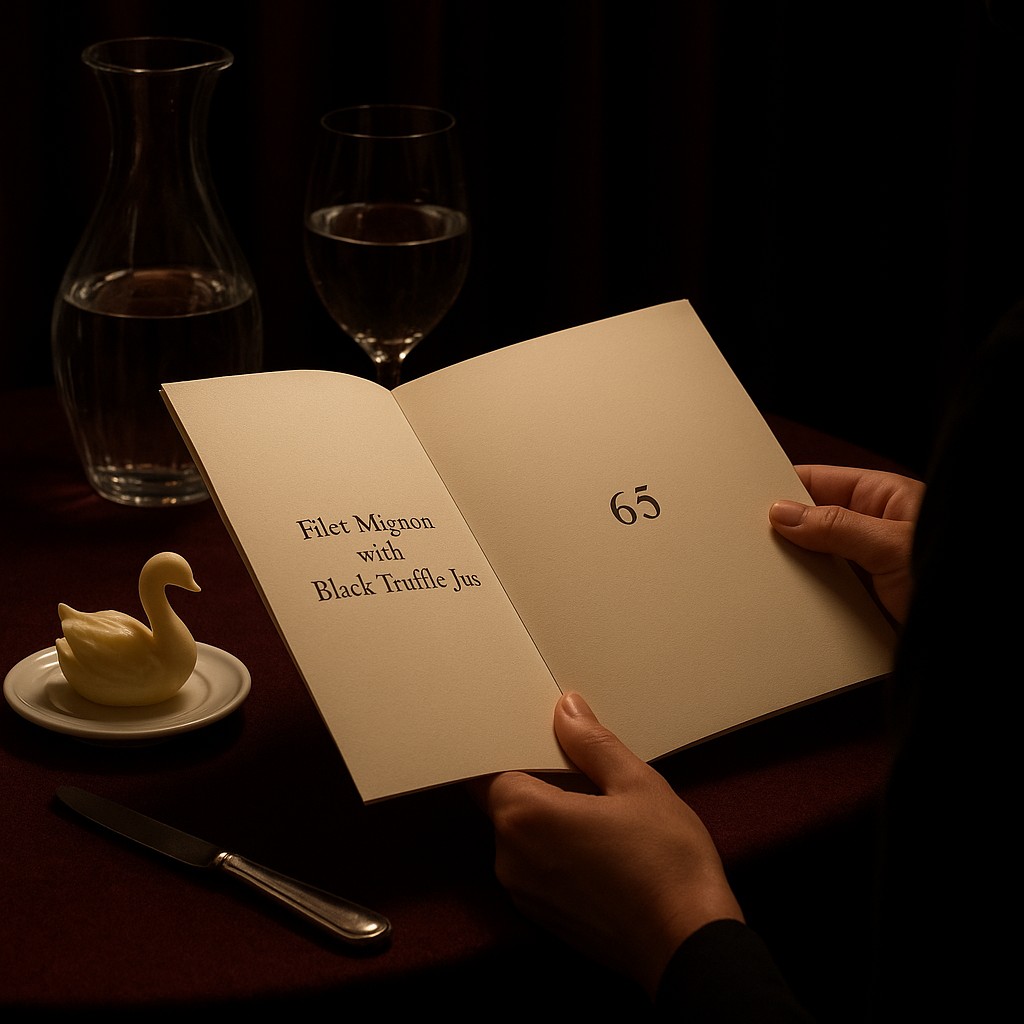
Imagine you are sitting at a candlelit, velvet-draped table in a restaurant where the server pours water from a crystal carafe and the butter is shaped like a tiny, regal swan. You open the heavy, cream-colored menu and notice something odd. Next to the "Filet Mignon with Black Truffle Jus," there is no $65.00 price tag. Instead, you see only the number 65, perhaps printed in a delicate, classic font. While it might look like a simple design choice to keep the page clean, removing that symbol is actually a calculated strike on your brain’s decision-making process. It is the result of a deep understanding of how humans perceive value, loss, and the literal sting of parting with their hard-earned money.
Retailers and restaurant owners have long understood that paying isn't just a logical trade of cash for goods; it is an emotional hurdle that can kill a sale. By removing that tiny, two-stroke symbol, they try to bypass a specific brain response that researchers call the "pain of paying." When we see a dollar sign, our brains don't just see a unit of measurement; they see a warning. This subtle nudge shifts our focus away from what the item costs and centers it on the pleasure of the experience. It is a masterclass in psychological decoupling - intentionally fraying the link between the joy of the product and the pain of the expense to keep us browsing and spending.
The Insula and the Neural Sting of Spending
To understand why a simple symbol carries so much weight, we have to look at the center of the human brain, specifically a region called the insula. In the early 2000s, neuroscientists using fMRI scans - imaging that shows brain activity - discovered something startling: when people see prices they think are too high, the insula lights up. This is the same area that activates when you stub your toe, smell something gross, or feel rejected by friends. In a very literal sense, the brain processes an expensive price as a form of physical or emotional distress. This "neural sting" acts as a biological brake, warning us to stop before we lose resources that might be vital to our survival.
The dollar sign acts as a powerful "prime" for this response. In psychology, a prime is a trigger that brings a specific thought or feeling to the front of your mind. The symbol "$" signals "money," which signals "expense," which finally signals "loss." When that symbol is there, your insula is on high alert, scanning the numbers for financial threats. However, when the symbol is gone, the brain processes a bare "18" or "45" more like abstract data than a personal attack on your bank account. Without that currency anchor, the brain struggles to immediately label the number as a loss, allowing the reward-seeking parts of the brain to take charge.
This internal tug-of-war between the insula (the pain center) and the nucleus accumbens (the reward center) decides every purchase you make. Retailers want to quiet the insula while amping up the reward center. By stripping away the currency sign, they essentially put a silencer on the brain’s alarm system. This allows the customer to focus on the marbled texture of a steak or the soft feel of Italian leather rather than calculating how many hours they had to work to earn that amount. It turns a transaction into an experience and a cost into just another feature of the object.
Detaching the Product from the Sacrifice
The goal of high-end branding is often "decoupling," a psychological state where enjoying a product is separated from the pain of paying for it. In a normal transaction, like buying gum with a five-dollar bill, the payment and the pleasure happen at the same time. You feel the loss of physical cash the moment you get the gum. Luxury goods, however, rely on delaying or hiding those costs. By removing currency symbols, luxury shops start decoupling the moment you look at the price tag. The number becomes a secondary detail - like the color or size - rather than the main barrier to buying it.
This concept goes beyond just missing dollar signs. Think about how modern society has shifted toward "contactless" and digital payments. Swiping a card or tapping a phone feels much less painful than counting out twenty-dollar bills. When you use cash, you see your resources physically disappear; your wallet actually gets thinner. When you see a symbol-free "95" on a boutique shelf, it feels like a mere suggestion. Research has shown that diners at restaurants with numeral-only menus spend significantly more per person than those who see prices with dollar signs or even prices written out as "ten dollars."
Removing the symbol also plays with "cognitive load," or how hard the brain has to work. When we see a price like $19.99, our brains have to process the symbol, the decimals, and the "left-digit effect" that makes us think 19 is much smaller than 20. But a clean, simple "20" is easy to process. It feels honest and direct, which ironically makes us more willing to pay it. Luxury brands use this simplicity to show confidence. They imply that if you have to worry about the specific currency or the cent-by-cent breakdown, you might be in the wrong place. This creates a social pressure that further numbs the pain of paying, as the desire to fit in or look successful overrides the biological urge to save.
| Pricing Format |
Psychological Effect |
Typical Usage |
| Traditional ($19.99) |
Triggers "pain of paying"; stresses thrift and bargains. |
Supermarkets, fast food, discount stores. |
| Written (Twenty Dollars) |
Increases reading time; slows down the decision. |
Mid-range cafes and unique boutiques. |
| Numeric Only (20) |
Reduces the feeling of loss; focuses on quality. |
Fine dining, high-end fashion, luxury resorts. |
| Price on Request (P.O.A.) |
Creates extreme exclusivity; price is an afterthought. |
Fine art, custom jewelry, luxury real estate. |
Context and the Idea of Abstract Value
Hiding currency symbols works best when the environment matches the "low-pain" strategy. You rarely see this at a hardware store or a discount grocery chain because those customers are looking for the "sting" of a low price to prove they are getting a bargain. In those cases, the dollar sign helps; it frames the number as a "deal." In a luxury setting, however, the focus is on "value" rather than "price." Value is what you think an item is worth to you, while price is what you give up. By hiding the symbol, the seller tips the scales so the benefit feels much heavier than the sacrifice.
This is also why high-end menus usually avoid "95 cents" or "99 cents." Those decimals are the marks of a sale, and they keep the brain tied to the world of budgets and pennies. A flat "50" looks like a solid design element on the page. It feels stable and "premium." To the consumer, a flat number suggests the price wasn't calculated to squeeze out every cent, but was chosen because it represents the true worth of the item. This builds a sense of trust, even if that trust leads to a much larger bill.
Furthermore, removing the symbol helps make the money feel "abstract." we use different "mental accounts" for different spending. We might be stingy with our grocery budget but very generous with our "vacation money." When a tag removes the $ sign, it helps move the purchase out of the "living expenses" category and into the "experience" or "reward" category. You aren't just spending 100 dollars; you are gaining "100 units of luxury." This makes it much easier to justify the purchase because it no longer feels like a direct hit to the money you need for rent.
Common Myths About Minimalist Pricing
Many people think minimalist pricing is just about being "fancy" or acting like a snob. While style matters, the real reason is almost always behavioral economics. Some believe that leaving off the dollar sign is meant to trick people into not knowing what they are spending. In reality, shoppers know exactly what the numbers on a menu mean. The goal isn't confusion; it's about how you feel. You know "40" means forty dollars, but you don't feel the weight of that money the way you would if the symbol were staring at you.
Another mistake is thinking this works on everyone. In truth, "spendthrifts" - people who feel little pain when buying things - aren't really affected by dollar signs. They were going to buy the expensive watch anyway. The real targets are "tightwads," consumers who feel a lot of pain when paying and naturally want to save. For them, removing the dollar sign is the bridge that helps them move from "I want this" to "I'll buy it." By lowering the mental distress, the retailer reaches more cautious spenders.
It’s also important to note that this isn't just for the super-rich anymore. As the "boutique" look becomes more popular, mid-level businesses are using these tricks to signal quality. You might see symbol-free menus at a trendy coffee shop or a modern hair salon. This is "prestige signaling." By copying the pricing style of a luxury brand, a small business can trick the customer’s brain into thinking their products are worth more. It creates an atmosphere of "affordable luxury," making the customer feel they are moving up in the world, even if they are just buying fifteen-dollar toast.
Navigating a World of Invisible Symbols
Once you recognize the "pain of paying" and how it’s managed, you see these nudges everywhere. From "one-click" buttons on websites to "credits" used in video games, the goal is always to move you away from the physical feeling of losing money. The most successful modern businesses make paying feel like a non-event. They want the trade to be so smooth that you only notice the cost when you check your bank statement weeks later.
However, knowing these tactics gives you a strong defense. The next time you see a menu with those floating, symbol-free numbers, try a simple mental trick: put the dollar sign back. In your mind, see the "$" and the ".00" next to that "55." Remind yourself that those numbers represent a specific amount of work, time, and other things you could have bought. By consciously linking the price back to the idea of currency, you wake up your rational brain and let your "pain centers" have their say. You move the decision from the emotional, impulsive side of your brain back to the analytical side.
This doesn't mean you should never treat yourself. There is real joy in a great meal or a beautiful piece of clothing. But by understanding the science of the "pain of paying," you become a more intentional buyer. You can enjoy the swan-shaped butter and the minimalist menu while keeping control over your wallet. When you can see the invisible dollar signs, the power of the nudge fades away, leaving you free to spend your money on things that truly bring you value.