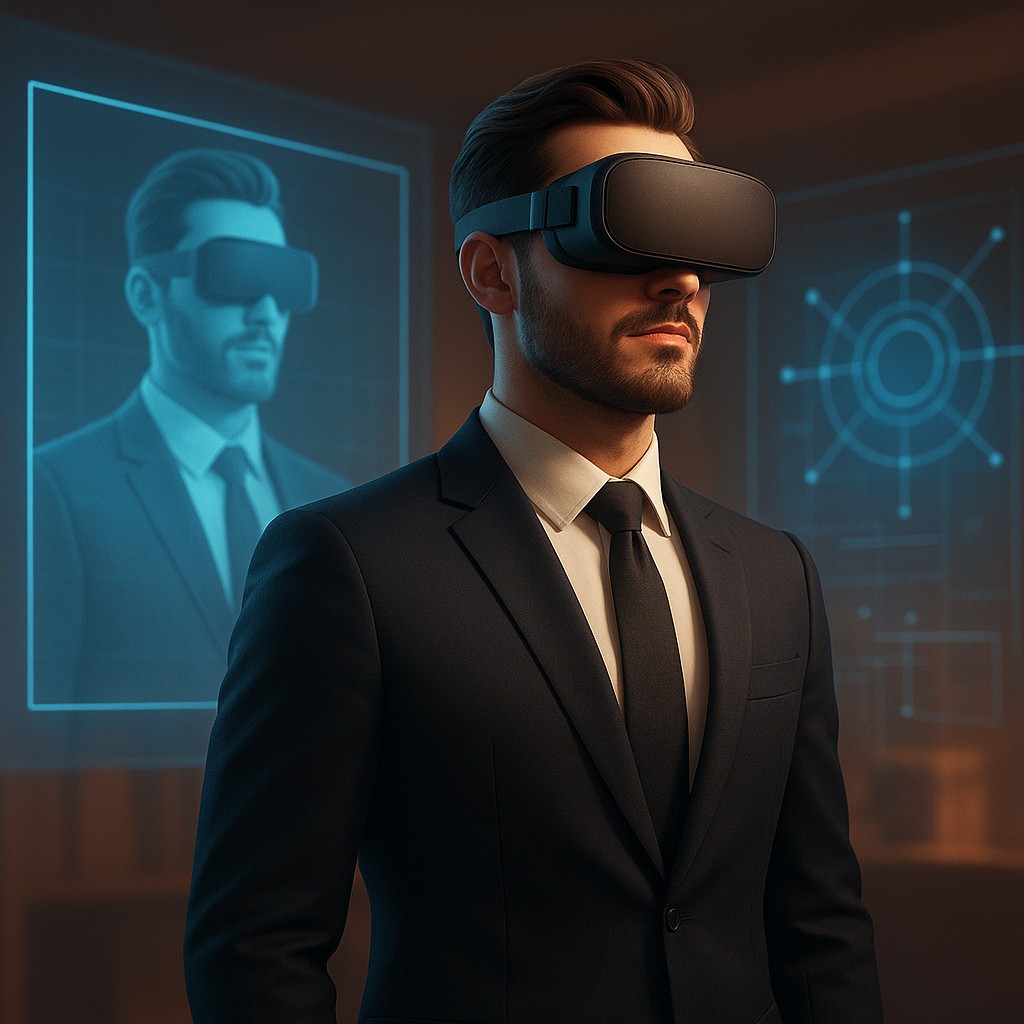
Imagine walking into a high-stakes meeting feeling a rush of nerves. Your palms are slightly damp, and you are second-guessing every word of your presentation. Now, imagine that instead of your physical body, you are using a digital avatar. This character stands six-foot-five, has a commanding presence, and wears a perfectly tailored suit. Suddenly, your posture straightens, your voice becomes deeper and more resonant, and you find yourself negotiating with a level of backbone you didn't know you had. You haven't had a sudden personality transplant, nor have you taken a miracle confidence pill. Instead, you are experiencing a psychological shift that blurs the lines between who we are and who we pretend to be.
This fascinating change in behavior is not just a quirk of gaming culture or a result of spending too much time online. It is a deeply rooted mental process where our brains take cues from our outward appearance to decide how we should act. Even though we know, logically, that the digital character on the screen is just a collection of pixels, our subconscious mind is much more literal. It sees a powerful figure and steps into the role of a leader, often carrying those traits back into the physical world long after the screen goes dark. We are entering an era where our identity is becoming fluid, shaped by the digital skins we choose to wear.
The Greek God in the Machine
Scientists call this phenomenon the Proteus Effect. It is named after the ancient Greek sea god Proteus, who was famous for his ability to change shape at will. Proposed by researchers Nick Yee and Jeremy Bailenson at Stanford University in 2007, the theory suggests that people act out the behaviors they think are expected of their digital avatar. It is a form of "self-perception theory," where we observe our own actions from the outside in. If I see myself looking like a marathon runner in a virtual world, I start to believe I have the stamina of one. This is not about being fake; it is about the brain using visual evidence to set its social expectations.
The beauty of the Proteus Effect lies in how subtle it is. Most people are completely unaware that their behavior is changing based on how their avatar looks. In various studies, participants given taller avatars negotiated more aggressively than those given shorter ones, even when they knew their height was assigned at random. The brain essentially looks at its "body" and says, "Oh, I see we are tall today; that means we are the ones in charge." This happens in milliseconds, bypassing our logic and tapping directly into the mental scripts we have learned about status, power, and social standing.
Mirrors of the Mind and Digital Self-Image
To understand why this happens, we have to look at how the human brain builds a sense of self. Our identity is not a static block of marble, but more like a dynamic piece of software that updates based on new data. When we enter a virtual environment, the brain creates a map of our body, a process called embodiment. If that map includes wings, a superhero’s physique, or even just a more symmetrical face, the brain adjusts our internal settings to match. This is particularly powerful because, in virtual reality, the feedback is instant. Every time you look in a virtual mirror or see your digital hands, the brain reinforces this new identity.
This leads to a concept called "behavioral confirmation." When we look like a person who is confident and social, we expect others to treat us that way. As a result, we act in a way that invites that treatment. We stand closer to others, we make more eye contact, and we speak more clearly. Interestingly, this effect does not vanish the moment you take off a VR headset. Researchers have found that the "residue" of the Proteus Effect can linger. A person who spends an hour acting as a diplomatic leader in a virtual space is more likely to handle a real-world disagreement with grace and composure later that evening.
The following table summarizes how specific avatar traits have influenced real-world psychological shifts in controlled studies:
| Avatar Trait |
Observed Behavioral Change |
Long-term Psychological Impact |
| Increased Height |
More confidence in negotiations |
Increased sense of social dominance |
| High Physical Attractiveness |
Increased openness and intimacy |
Reduced social anxiety in public |
| Athletic Build |
Better motivation for exercise |
Shift in perceived physical ability |
| Doctor or Scientist Gear |
Better focus and analytical thinking |
Higher accuracy in mental tasks |
| Creative or Artistic Style |
More "outside the box" problem-solving |
Expansion of perceived creative limits |
The Dark Side of the Digital Mask
While the Proteus Effect offers incredible potential for self-improvement, it also carries a warning. The process is neutral, meaning it works just as well for negative traits as it does for positive ones. If a user inhabits an avatar designed around negative stereotypes or one that appears weak, their performance and self-esteem can actually drop. This is a digital version of "stereotype threat," where people underperform because they subconsciously feel they must fit a negative image.
In some experiments, users assigned avatars that looked like villains or appeared to have low social status began to act more aggressively or show less empathy toward others. This suggests that the environments we inhabit online are more than just games; they are psychological training grounds. If we spend hours every day in a digital body that is treated poorly or looks dejected, we might accidentally train our brains to accept that as our reality. This makes the design of virtual workspaces and social platforms a matter of mental health, not just looks.
Building a Better Version of You Through Pixels
The real-world uses for the Proteus Effect are exciting, especially in therapy and professional training. Imagine using virtual reality to help someone with social anxiety. By placing them in the body of a charismatic speaker, they can practice feeling confident in a safe environment. The brain begins to build a bridge between the digital experience and physical reality, making it easier for that person to stay confident when the simulation ends. It is a form of exposure therapy where the "exposure" is to one's own potential.
Similarly, in professional settings, the Proteus Effect can be used to improve teamwork and empathy. By having employees use avatars that are different from their physical selves, companies can break down internal biases and build a more inclusive culture. If you spend a meeting seeing the world from a different perspective, your brain becomes more flexible in how it understands others. We are moving toward a future where "dressing for the job you want" involves more than just a suit; it involves choosing a digital presence that unlocks the best version of your mind.
As our lives become more integrated with digital spaces, understanding the Proteus Effect becomes a superpower. It allows us to be more intentional about how we present ourselves online, recognizing that the choices we make in a character creator tool can ripple out into our careers, our relationships, and our well-being. Your digital self is not a separate entity; it is a mirror that can either reflect your limits or amplify your strengths. By choosing avatars that embody the traits we admire, we are not hiding from who we are, but rather giving ourselves the visual permission to grow into who we want to become.