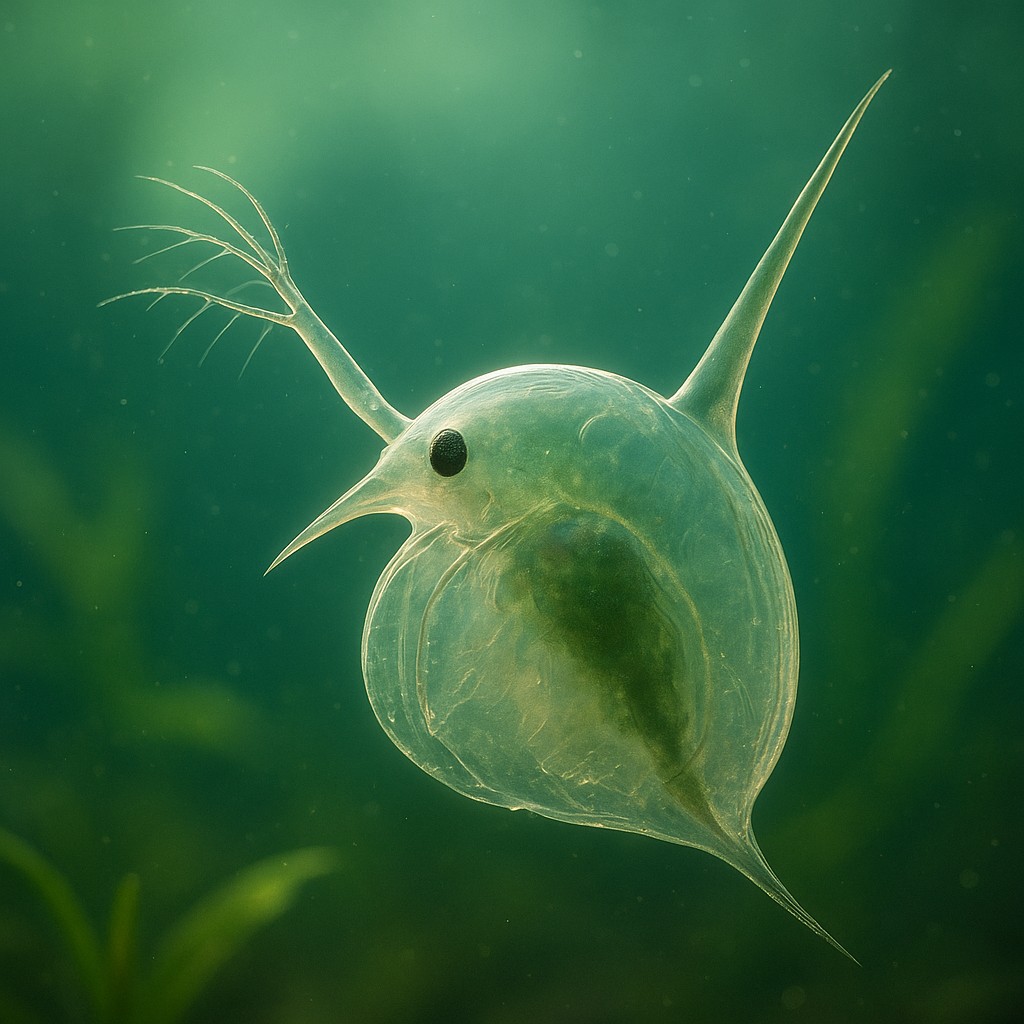
Imagine you are a tiny, clear water flea called a Daphnia, paddling through a calm pond. Most of the time, life is easy. Your body is sleek, built to graze efficiently on algae. Suddenly, the water begins to smell like a midge larva, a predator that wants to eat you. Instead of panicking or waiting millions of years for evolution to give your descendants armor, your body acts immediately. Within a single molting cycle, you grow a tall, pointed helmet and a sharp tail spine. These new features make you much harder to swallow. You have the same DNA you started with, but your physical shape has completely changed because the neighborhood just got dangerous.
This incredible superpower is called phenotypic plasticity. it changes everything we thought we knew about nature versus nurture. We often view DNA as a rigid blueprint, like a stone tablet that decides exactly who we are from birth. In reality, your genome works more like a "choose your own adventure" book or a computer program filled with "if-then" logic. If the environment sends one signal, the body follows Plan A; if things change, the body switches to Plan B. This flexibility is the secret to how life survives in a world that is unpredictable and often hostile.
The Genetic Switchboard and the Myth of Rigid Traits
To understand this concept, we have to stop believing that genes are destiny. While genes provide the instructions for building your body, they don't create a single, unchanging result. Think of your DNA as a massive library of cookbooks. Owning a book on Italian food doesn't mean you are eating pasta right this second. You only cook the recipes for which you have the right ingredients and a craving. Similarly, every living thing has a "norm of reaction." This is the full range of shapes, behaviors, and internal states that its genes can produce under different conditions.
Biological traits aren't just "on" or "off." They work more like dimmer switches. The environment acts as the hand on the switch, turning the intensity of certain traits up or down based on what is needed to survive. This is why a plant might grow wide, thin leaves in the shade to catch every bit of light, but grow small, thick leaves in the hot sun to keep from drying out. The plant isn't changing its genetic code; it is changing which parts of the code it reads. This "plastic" quality allows life to react with a speed that slow-moving evolution cannot match.
Shaping the Self in Response to the World
Once you know what to look for, you can see this plasticity everywhere. In animals, it often shows up as a temporary change that gives an individual an edge. Consider the Himalayan rabbit. These rabbits have a gene that changes fur color based on temperature. In the warm parts of their bodies, their fur grows white. However, in cold spots like their ears, nose, and paws, the cold triggers the production of black pigment to help soak up heat from the sun. If you safely held an ice pack against a Himalayan rabbit’s back for a few weeks, the new fur in that spot would grow in black. The rabbit’s DNA hasn't mutated; it simply followed a thermal "if-then" command.
In humans, we see this most clearly in our skin and muscles. If you lift heavy weights every day, your body decides the environment requires strength. In response, your genes kick-start a process to build bigger, stronger muscle fibers. If you stop lifting and sit at a desk instead, your body realizes that keeping heavy muscle is a waste of energy and "dials down" that trait. This isn't just about looks; it is a survival strategy. Our bodies constantly tune our biology to match our surroundings so we don't waste calories on tools we aren't using.
| Type of Plasticity |
How It Works |
Real-World Example |
| Morphological |
Changes in physical shape or structure. |
Water fleas growing helmets when predators are nearby. |
| Physiological |
Changes in internal chemistry or metabolism. |
Humans making more red blood cells at high altitudes. |
| Phenological |
Changes in the timing of life events. |
Trees flowering earlier in spring due to warm weather. |
| Behavioral |
Changes in actions or social responses. |
Fish becoming more aggressive when food is scarce. |
The Molecular Gears Behind the Magic
How does a cell actually "know" the world has changed? The process starts with sensors, which are usually proteins on the surface of cells that detect chemicals, light, or temperature. When a water flea senses the chemicals left behind by a predator (known as kairomones), these sensors send a signal deep into the center of the flea's cells. This signal doesn't rewrite the DNA, but it does change the "epigenetic" landscape. Epigenetics involves tiny chemical tags that latch onto DNA and act like "Do Not Enter" signs for the cell's machinery.
When the environment calls for a change, these tags can be added or removed, letting the cell read "locked" chapters of the genetic code. This process is called gene expression. It is like a guitar player using pedals to change the sound of the music. The guitar (the DNA) stays the same, but by stepping on a switch (the environmental trigger), the musician can move from a soft melody to a loud, heavy metal riff. This molecular agility is what allows a caterpillar to be a leaf-eating machine and then, using those same genetic instructions, rebuild its entire body into a butterfly.
When the Environment Moves Too Fast
As amazing as this flexibility is, it isn't a magic wand. One major limit of plasticity is that it depends on reliable "cues." For a change to be helpful, the organism must read its surroundings correctly. If a tree feels a few warm days in February and "decides" to grow leaves, a sudden late frost can kill those leaves and drain the tree's energy. In this case, being flexible was a mistake because the environment sent a false signal.
In the modern world, humans are changing the environment faster than biology can keep up. Climate change is a perfect example. Many birds use the length of the day (which never changes) as a cue to migrate so they arrive just as caterpillars (their food) are hatching. However, caterpillars respond to temperature (which is rising). Because the birds and caterpillars are following different cues, their schedules get out of sync. This "phenological mismatch" means the "if-then" programs in the DNA no longer work, which can threaten the survival of entire species.
The Cost of Living a Flexible Life
You might wonder why every living thing isn't perfectly flexible. Why doesn't every water flea just keep its helmet on all the time, just in case? The answer is economics. Plasticity is expensive. It takes energy to run the cellular machinery that monitors the environment. It takes time and calories to grow armor or build muscle. Furthermore, a "jack-of-all-trades" body is often less efficient than a specialized one. A flea with a permanent helmet might be slower and lay fewer eggs than a sleek flea that only grows armor when a predator is actually there.
There is also the risk of a "mismatch." This happens when an organism develops a trait based on its early life that doesn't fit its adult life. Researchers see this in humans through the "thrifty phenotype" idea. If a fetus receives signals in the womb that food is scarce, its genes might "dial" its metabolism to be extremely good at storing fat. If that child is then born into a world of high-calorie fast food, that efficient metabolism becomes a problem, leading to a higher risk of obesity and diabetes. The body’s attempt to be helpful in the short term created a long-term health struggle.
Embracing Our Inner Adaptability
Understanding phenotypic plasticity changes how we see ourselves. It shows that we are not finished products, but an ongoing conversation between our inner code and the outside world. This is empowering. It suggests that while we can't change our DNA sequence, we can influence how those genes work by choosing our environments, managing stress, and staying active. We are living proof of biological resilience, equipped with an ancient toolkit designed to help us bend so we do not break.
As you go about your day, keep the water flea in mind. Remember that you have a hidden depth of traits waiting for the right "if" to trigger a spectacular "then." The world is not just a place where you live; it is the sculptor that helps shape your biology. By understanding the beauty and the limits of our flexibility, we can better appreciate the intricate dance that has kept life thriving for billions of years. You are more than a blueprint; you are a living program of endless possibility.