When we picture the natural world, we usually imagine a high-stakes drama of survival. We think of a lion chasing a gazelle, a towering oak hogging the sunlight while saplings wither in its shadow, or an aggressive vine strangling a garden fence. We have been conditioned by a narrow view of Darwinism to see nature as a ruthless game where one individual must lose for another to win. This "survival of the fittest" mindset paints the wilderness as a place of constant, calculated competition where every organism hoards resources and elbows its neighbors aside.
However, if you look closer at the scorched sands of a desert or the salt-sprayed rocks of a coastline, you will find a much gentler story. In these harsh environments, life does more than just compete; it frequently cooperates by accident. This phenomenon, which ecologists call facilitation, is the unsung hero of biodiversity. It happens when one organism changes its local environment in a way that makes life easier for another species. There is no conscious kindness involved, no selfless intent, and no strategic alliance. It is simply a byproduct of living. By just being there, one plant or animal creates a small pocket of hospitality in a hostile world, allowing more delicate life forms to take root where they would otherwise die.
The Unintentional Heroes of the Desert Floor
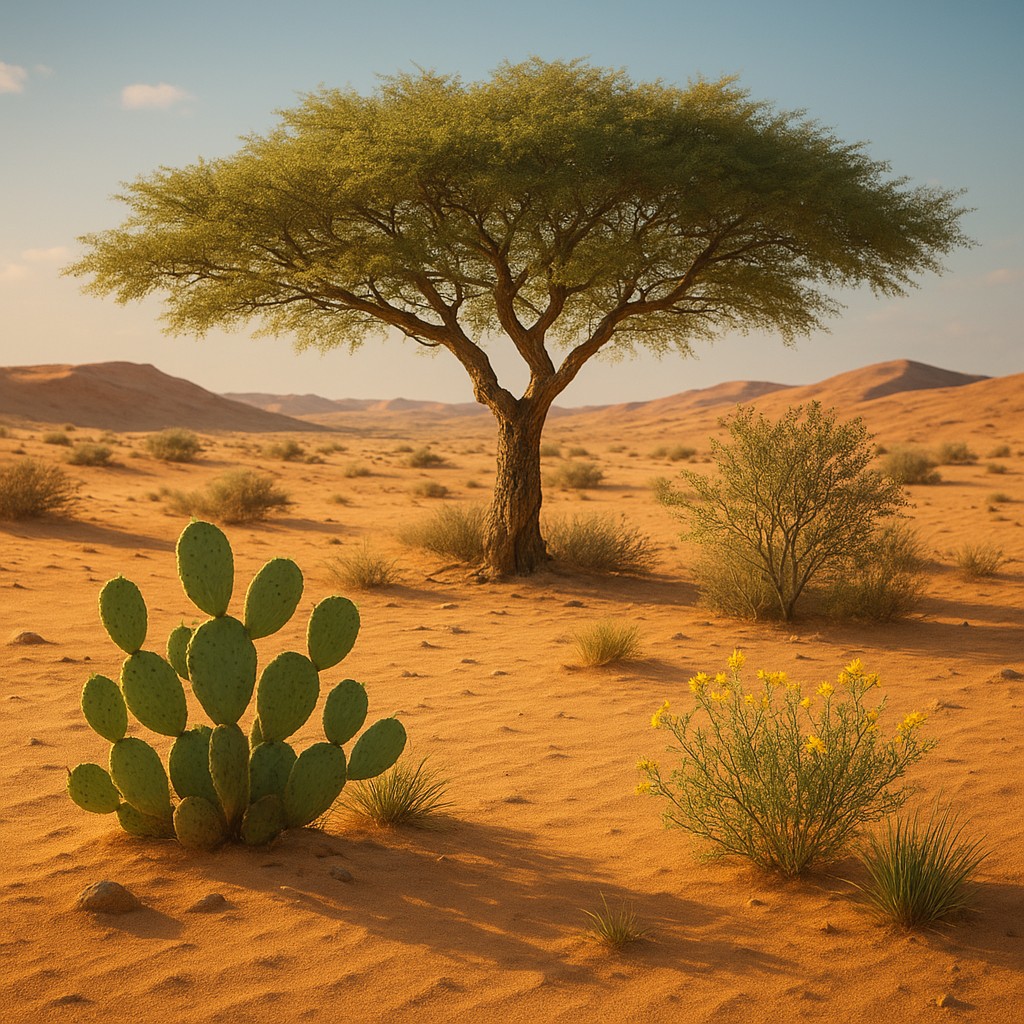
The most famous example of this accidental teamwork is the "nurse plant." Imagine a young saguaro cactus, a tiny green nub no bigger than a thumb, trying to survive its first summer in the Sonoran Desert. If it were stuck out in the open, the relentless sun would cook its tissues and the bone-dry soil would offer no relief. Enter the Palo Verde tree. This hardy, scrubby tree isn't trying to be a mentor or a protector; it is simply growing where it can. But its canopy creates a circle of shade, lowering the ground temperature by several degrees. Its falling leaves add a thin layer of mulch to the soil, which helps trap moisture from rare desert rains.
Underneath this Palo Verde, the tiny saguaro finds a "microclimate" - a local set of conditions - that is much milder than the surrounding wasteland. The tree acts as a biological umbrella and a living humidity regulator. Because the tree is there, the cactus survives. This relationship is the backbone of many ecosystems that look barren at first glance. Without these unwitting benefactors, the harshest parts of our planet would be even emptier. Facilitation essentially expands the boundaries of where life can exist, pushing the green line further into the brown. It turns a landscape of "impossible" into a landscape of "difficult but doable."
Creating a VIP Lounge in the Wilderness
To understand how facilitation works, it helps to think of the natural world as a series of environmental filters. Some places have high salt levels, others have extreme heat, and some have shifting sands that make it impossible to stay anchored. Facilitation works by muffling these filters. When a pioneer species moves into a difficult area, it physically changes the neighborhood. This isn't just about shade; it involves a complex set of benefits that ecologists call "stress reduction."
Think of a coastal sand dune. The wind is constant, the sand is unstable, and the salt spray is toxic to most plants. Marram grass, however, is a specialist that can handle these conditions. As it grows, its roots knit the sand together, stopping it from blowing away. Its blades slow down the wind at ground level. This creates a small, calm zone behind the grass where other, less hardy plants can finally get a foothold. The grass isn't inviting them in, but by stabilizing the ground, it has effectively built a VIP lounge for more sensitive species.
| Facilitation Type |
How It Works |
Real-World Example |
| Temperature Buffering |
The canopy provides shade and cools the ground. |
Palo Verde protecting young Saguaro cacti. |
| Soil Stabilization |
Roots hold the ground in place to prevent erosion. |
Beach grasses allowing coastal flowers to grow. |
| Nutritional Boost |
Plants add nitrogen or leaf litter to enrich the soil. |
Alder trees prepping the ground for spruce forests. |
| Physical Protection |
Thorns or dense branches hide others from grazers. |
Thorny shrubs protecting tasty grasses from deer. |
The Hidden Mechanics of Accidental Kindness
Facilitation isn't just about shade and wind; sometimes it happens at a chemical level beneath the surface. Some plants are exceptionally good at pulling nutrients from deep in the earth or even from the air. Nitrogen-fixing plants, like clover or alders, have a special relationship with bacteria in their roots that allows them to turn nitrogen from the air into a form that plants can eat. They are essentially biological fertilizer factories. When these plants drop their leaves or die, that nitrogen stays in the soil, creating a rich patch of ground for a neighbor to use.
There is also "hydraulic lift," which sounds like something from an auto shop but is actually a fascinating botanical trick. Some deep-rooted trees pull water from underground aquifers during the night. Because of how pressure works, some of that water leaks out of the roots into the upper, drier layers of the soil. Small, shallow-rooted plants nearby can then "steal" this leaked water the following day. The tree isn't trying to share; it is just a victim of leaky plumbing. Yet, for the smaller plant, this accident is the difference between life and death.
When the Student Becomes the Competition
While facilitation sounds like a lovely story, nature still has a dark side. A fascinating detail of these relationships is that they are often temporary or lopsided. In ecology, the line between neighborly help and a hostile takeover is very thin. As the protected plant grows larger and stronger thanks to its benefactor, the dynamic can shift. What started as a protective relationship often turns back into the classic competition we expect from the wild.
Take our saguaro and its Palo Verde nurse tree. After fifty or sixty years, that tiny cactus becomes a massive, multi-ton giant. It eventually grows taller than the tree that shielded it. At this point, the saguaro’s massive root system might start sucking up all the water in the area, and its heavy body might shade out the very tree that allowed it to grow. Ecologists sometimes see this as a betrayal. The nurse plant essentially helps a competitor reach maturity, leading to its own demise. This reminds us that in nature, "help" is a practical state, not a moral one. The environment is a shifting mosaic where roles change as organisms grow.
Helping Nature Heal Itself
Understanding facilitation has massive implications for how we fix the damage humans have done to the planet. For decades, traditional land restoration involved planting huge numbers of a single species and hoping for the best. Often, these seedlings would die because the damaged land was too stressed for them to handle. Modern restoration ecology is now taking a page out of the facilitation playbook. Instead of clearing a site and planting only one type of tree, scientists are using "nurse objects" or pioneer species to jump-start the recovery.
In some cases, researchers even use artificial facilitation. In overheated urban areas or ruined forests, they might install shade cloths or "nurse logs" - dead trees left to rot - to mimic the effects of a living nurse plant. By identifying which species naturally act as facilitators, we can plant islands of biodiversity. These islands then expand as they protect more sensitive species, eventually merging to form a healthy ecosystem. It turns out that the best way to grow a forest is not to fight the environment, but to find the plants that naturally make the environment friendlier for everyone else.
Seeing the World Through a New Lens
Once you learn about facilitation, the way you look at a park, a garden, or a forest changes. You stop seeing a collection of individuals and start seeing a web of unintended consequences. You might notice how a clump of weeds in a dry patch of lawn is the only place where the grass is still green, or how a specific shrub in the woods always has a cluster of wildflowers huddling beneath its branches. You begin to see that the "rugged individualist" version of nature is only half the truth.
This concept is a powerful reminder that stability and growth often come from the most unexpected places. In a world that can feel harsh and competitive, it is grounding to know that even the most "selfish" organisms end up making the world better for those around them just by existing. Life isn't always about beating the neighbor; sometimes, it's about the shade you accidentally cast while you're busy reaching for the sun. Carry this perspective with you, and you’ll find that the accidental teamwork of the natural world offers a masterclass in resilience and the power of presence.