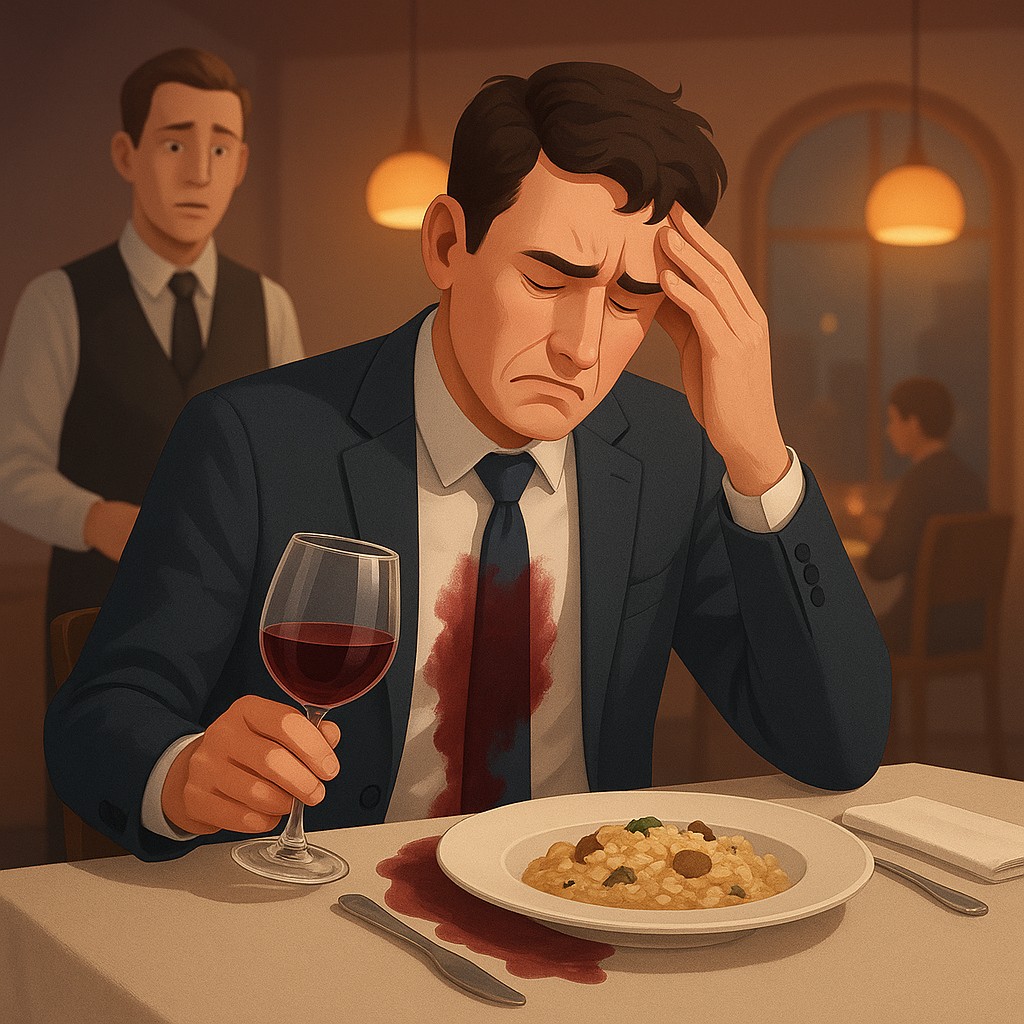
Imagine you are at a high-end restaurant celebrating a special occasion. For the first two hours, the service is flawless, the appetizers are delicious, and the atmosphere is exactly what you hoped for. However, just as you finish your main course, a waiter accidentally spills a glass of red wine on your lap, and the manager takes twenty minutes to settle the bill while appearing visibly annoyed. When you look back on that night a week later, you likely won't remember the exquisite truffle risotto or the perfect lighting. Instead, you will have a vivid memory of the cold wine hitting your clothes and the frustrating delay at the exit. Your brain has essentially filtered out hours of pleasure in favor of a few minutes of intense frustration.
This strange mental filtering system isn't a glitch; it is a deeply ingrained survival mechanism. Our brains are not sophisticated video cameras recording every second of our lives with perfect accuracy. Instead, we act more like directors cutting a movie trailer, focusing only on the most dramatic scenes and the closing shots. This bias in how we process history determines which vacations we want to repeat, which doctors we trust, and why we might actually enjoy a grueling hike that was objectively miserable for 90 percent of the trek. By understanding how these memory silos work, we can stop being victims of our own hindsight and start intentionally designing moments that stick for all the right reasons.
The Mental Accountant and Duration Neglect
When psychologists examine how humans evaluate past experiences, they often encounter a phenomenon known as duration neglect. In a perfectly logical world, a four-day vacation where you are quite happy should be twice as valuable as a two-day vacation where you are equally happy. However, human memory does not work like a stopwatch or a ledger. We do not add up the total units of happiness or pain over time. Instead, our "remembering self" is primarily interested in two specific moments: the most intense part of the experience, often called the peak, and the final moments, known as the end. Everything else, including the length of the event, tends to fade into the background.
This was famously shown in studies of medical procedures, such as colonoscopies (an internal exam of the colon), where patients rated their discomfort in real time and again after the procedure. In one group, the exam ended as usual. In another group, the doctor left the instrument in place for an extra minute without moving it. While this was mildly uncomfortable, it was significantly less painful than the rest of the procedure. Surprisingly, the group that suffered for a longer total time rated the experience as less painful overall because it ended on a low-intensity note. Their "average" memory was shifted by the calm ending, proving that a better finish can retroactively improve a difficult experience.
The Evolutionary Logic of High-Stakes Snapshots
It might seem irrational to ignore how long an event lasts, but from an evolutionary perspective, it makes perfect sense. Our ancestors did not need to remember exactly how many minutes they spent picking berries in a peaceful meadow. They needed to remember the exact moment a predator jumped out of the bushes or the specific path they took to escape a flash flood. The peaks of our experiences often involve high-stakes information that is vital for survival. If you touch a hot stove, your brain does not record the three minutes of pleasant cooking that came first; it records the peak of the pain to ensure you never make that mistake again.
This snapshot method of memory allows us to store vast amounts of information without cluttering our minds with boring details. The end of an experience is particularly important because it serves as the most recent data point regarding a specific place or person. If an interaction ends poorly, that is the most relevant information for your future safety or social standing. By prioritizing the climax and the conclusion, our brains create a shorthand version of reality. This helps us make quick decisions about whether to approach or avoid similar situations in the future. It is a biological efficiency that keeps our mental storage lean and focused on results.
Transforming the Daily Grind into Memorable Wins
Knowing that the ending carries so much weight in our memory provides a powerful tool for self-management. Many people make the mistake of working until they are completely exhausted, finally collapsing on the couch in a state of burnout. This ensures that their final memory of the workday is one of depletion and stress. By applying the peak-end rule, you can "hack" your own motivation. If you are working on a difficult project, try to end your session while you are on a roll or immediately after solving a small problem. This ensures that when you think back on the task the next day, your remembering self sees the experience as a success, making it much easier to start again.
The same applies to fitness. A long, grueling workout can leave you feeling discouraged if you end with a set of exercises that are too difficult or painful. However, if you finish your gym session with five minutes of light stretching or a brief, enjoyable cool-down, your brain will register a smooth finish. You will likely remember the workout as more rewarding and less taxing than it actually was. This creates a positive psychological cycle where your biased memory encourages you to keep up habits that might otherwise feel impossible. By managing the final few minutes of an activity, you are essentially tricking your future self into wanting to do it again.
Designing Peak Moments in Relationships and Business
In customer service and personal relationships, the middle often gets lost in a blur of routine. Most businesses spend a lot of energy making sure things are "okay" throughout the entire process, but the peak-end rule suggests this is an inefficient use of resources. A hotel that provides a standard stay but leaves a personalized, thoughtful gift in the room on the final day will likely receive better reviews than a hotel that was slightly better overall but had a chaotic checkout process. Companies that understand this focus on creating one extraordinary moment - a peak - and ensuring the farewell is seamless and warm.
In our personal lives, we can use this to strengthen our connections with others. We often worry about making every minute of a date or a family outing perfect, but science suggests we should focus our energy on one standout activity and a great goodbye. A simple dinner that ends with an unexpected, fun dessert or a heartfelt walk home will be remembered more fondly than a lavish, five-hour event that peters out into awkward silence or logistical stress. By identifying and magnifying the peaks, we can build a collection of memories that feel rich and fulfilling, even if most of our time is spent on ordinary tasks.
Comparing the Actual Experience vs. The Remembered Experience
| Feature |
The Experiencing Self (Real-Time) |
The Remembering Self (Looking Back) |
| Focus |
Every moment as it happens |
Specific highlights and the finish |
| Priority |
Total duration and average intensity |
Peaks of emotion and the final state |
| Logic |
Linear and additive (more is more) |
Narrative and selective (meaning is more) |
| Bias |
Sensitive to boredom and daily flux |
Driven by the Peak-End Rule |
| Outcome |
Lives through the actual event |
Makes decisions about future events |
Avoiding the Traps of Hindsight Bias
While the peak-end rule is a useful tool, it can also lead us into psychological traps. The most common pitfall is judging a person’s entire character or a long-term relationship based solely on how it ended. A lifelong friendship that falls apart over a single argument in the final year can feel like a waste of time in hindsight, even if it provided twenty years of joy. We must consciously remind ourselves that the remembering self is an unreliable narrator. If we are not careful, we might discard valuable experiences or stay in bad situations just because they had one or two high points.
To combat this, it helps to practice a form of "objective accounting." When evaluating a past phase of your life, try to look at the data points outside of the peaks. If you are considering quitting a job, don't just think about the terrible meeting you had this morning (the peak of stress) or the fact that you left with a headache (the end). Instead, try to calculate the percentage of days you felt productive or happy. By forcing ourselves to consider the duration that our brains naturally ignore, we can make more balanced decisions that aren't entirely dictated by the most dramatic snapshots in our memory bank.
Crafting Your Own Narrative
We are the authors of our own history, but we often forget that we have the power to edit the manuscript. The peak-end rule tells us that we don't need to be perfect every second of the day to live a life that feels wonderful in memory. We just need to be intentional about creating bright spots and "sticking the landing." Life is naturally full of mundane stretches, occasional boredom, and inevitable frustrations, but those don't have to be the defining features of your story. By taking control of the climaxes and the conclusions, you can curate a mental gallery that serves you rather than one that happens to you by accident.
Next time you find yourself in the middle of a difficult week or a taxing project, remember that the ending is still in your hands. Take a moment to finish on a high note, even if it’s just a small gesture of self-care or a tiny victory. Your future self will thank you for the gift of a better memory, and you will find that the way you value your life starts to match the effort you put into it. We cannot change the past, but we can certainly influence how the past feels, turning a chaotic collection of moments into a masterpiece of meaningful milestones.