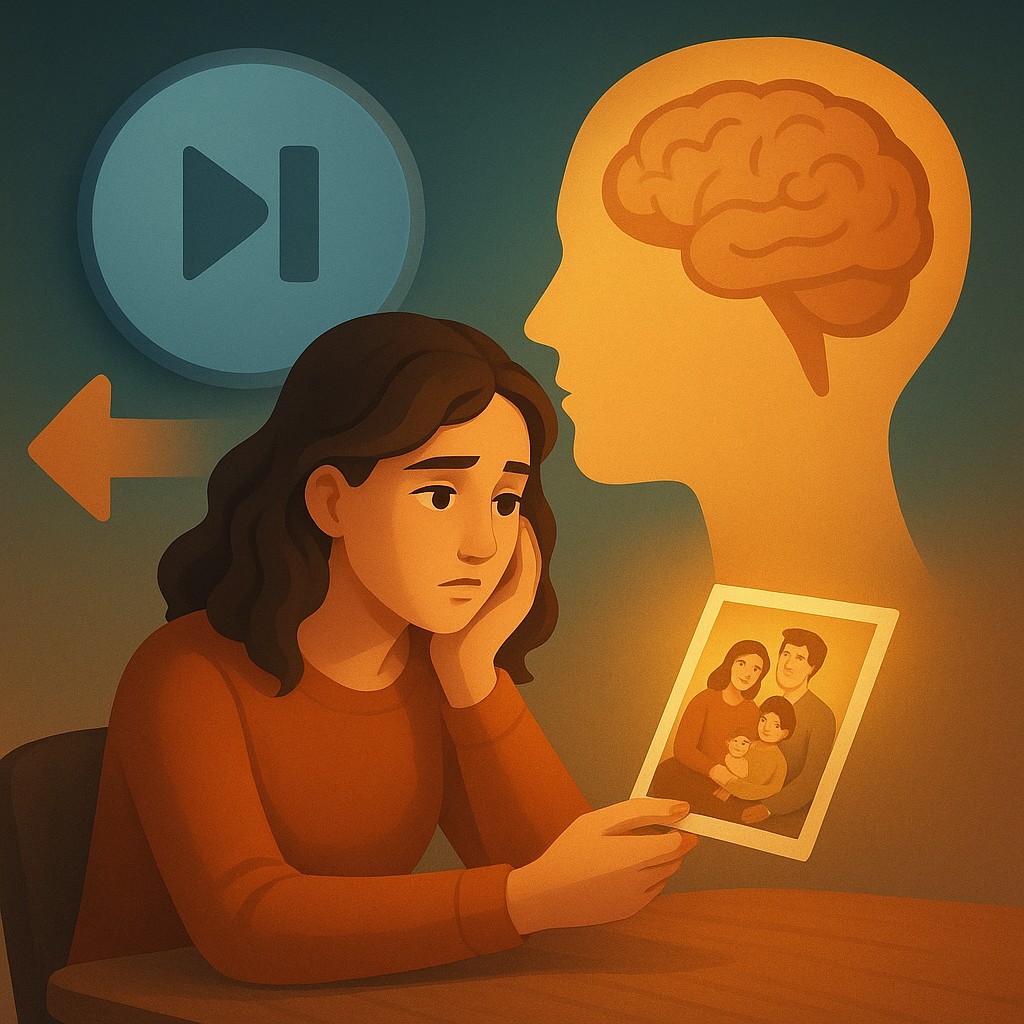
It is all too common to feel as though we are spiraling through a digital ocean of rapid-fire change, where the only constant is the nagging feeling that we are perpetually behind. When the future feels opaque or the present becomes an overwhelming torrent of information, the mind often performs a quiet, sophisticated maneuver: it hits the rewind button. This is not merely a sentimental indulgence or a sign that we have become stuck in the past. Instead, it is a biological survival strategy designed to pull us back to solid ground.
Your brain treats nostalgia as an internal emotional buffer, a cognitive safety mechanism that activates when you are facing high levels of uncertainty. Imagine your sense of self as a complex structure built on the foundation of your lived experiences. When that structure starts to wobble under the pressure of current stressors, your brain quickly accesses autobiographical anchors-vivid memories where your identity was stable and your problems were already solved. By reconnecting with these solidified versions of yourself, you are effectively using the past to remind your nervous system that you have survived challenges before and that you belong to an ongoing, coherent narrative.
The Cognitive Architecture of the Safety Trigger
To understand why your brain reaches back in time, we must first recognize that nostalgia functions similarly to a security system in a modern smart home. When the internal environment reaches a certain threshold of stress or social isolation, the brain initiates a search for stable data. This is typically triggered by sensory cues-a specific melody, the scent of a childhood meal, or even the crackle of a vinyl record. These stimuli act as keys, unlocking dense memory packets that contain not just the visual recall of an event, but the emotional residue of safety and belonging that accompanied those moments.
Once these memories are accessed, the brain begins a process of stabilization. If you are currently feeling lost in a career transition or overwhelmed by global instability, recalling a memory where you felt competent and supported creates a psychological continuity. It bridges the gap between who you were and who you are now, silencing the narrative that says you are currently adrift. This process functions like a biological shock absorber, lowering cortisol levels and signaling to the nervous system that you are still the same person with the same core strengths you possessed when the past was your present.
Navigating the Myth of Emotional Stagnation
A prevalent misconception is that wallowing in nostalgia is a path toward regression or a refusal to face reality. Critics often characterize it as a retreat into a fantasy world, suggesting that those who focus intently on the past are avoiding the heavy lifting of the present. However, psychological research paints a much more restorative picture. It suggests that nostalgia is not an escape from reality, but rather a restorative cognitive resource that provides the fuel necessary to engage with reality more effectively.
When you engage with your past in a healthy, intentional way, you are not trying to live there; you are mining that period for resources you can bring into the present. It provides a vital sense of social belonging, reminding you of the networks, figures, and versions of yourself that once provided validation and warmth. Think of it as a psychological backup drive. You are checking that your emotional architecture is still intact before you proceed into the unknown of the coming weeks or months. Far from being a sign of weakness, this reflects a highly evolved capacity for self-regulation.
The Taxonomy of Nostalgic Recovery
Nostalgia is not a monolith of longing for the good old days. It presents itself in various forms, each serving a slightly different tactical function in your mental life. Some nostalgic states are purely internal, involving the quiet contemplation of personal achievements to bolster current self-esteem. Others are intensely social, involving the shared recollection of traditions or events that reinforce one's status within a community. Recognizing which type you are currently experiencing can help you understand exactly which aspect of your identity needs re-anchoring.
The table below outlines the primary functions and associated benefits of these different modes of nostalgic reflection.
| Nostalgic Mode |
Primary Trigger |
Psychological Function |
Benefit for the Self |
| Personal-Identity Reflection |
Milestone memories |
Anchoring personal competence |
Rebuilds self-efficacy and resilience |
| Social-Belonging Recall |
Shared rituals or group history |
Reinforcing community ties |
Reduces isolation and loneliness |
| Sensory-Based Comfort |
Smells, sounds, or tastes |
Immediate cortisol reduction |
Restorative calm during high stress |
| Narrative Continuity |
Life story review |
Re-asserting a coherent identity |
Overcomes feelings of being adrift |
From Defensive Shield to Active Strategy
Because we know that nostalgia acts as an automatic safety mechanism, we can learn to use it as an active toolkit for navigating periods of transition. Instead of waiting for a random sensory cue to trigger a nostalgic episode, you can curate your own environment to provide comfort exactly when you need it most. When you feel yourself becoming burned out by the static and uncertainty of modern digital life, you can intentionally curate anchoring memories. These might be physical artifacts, photographs, or saved messages that represent your strongest and most stable self.
This practice is essentially a form of self-directed neuro-regulation. By proactively engaging with these symbols of your past stability, you are signaling to your amygdala that your current state is manageable and that your identity is not fragile. It turns a reactive, subconscious survival loop into a deliberate, empowering strategy for stability. You are effectively telling your brain that the past is not a destination you are fleeing to, but a reservoir of strength you are drawing from to build a more resilient future.
Beyond the Horizon of Memory
While the brain is designed to seek safety through the past, the true power of this mechanism lies in its ability to propel us forward. If you treat your past as an anchor, you must remember that an anchor is meant to keep a ship steady, not to prevent it from sailing. The stability you derive from your memories is what grants you the freedom to take risks in the present. You are capable of navigating extreme uncertainty precisely because you have a deep, internal map of your own history-a history that has already proven you are capable of adaptation and growth.
As you move through the unpredictable nature of your own life, remember that the urge to look back is actually a clever signal from your subconscious. It is inviting you to reclaim your strength, to acknowledge your progress, and to remember that you are more than just your current stressor. By honoring those past versions of yourself, you are not losing your footing in the present. You are gathering the momentum needed to face the next chapter with a steady heart and an informed, confident mind. Keep building your narrative, keep anchoring yourself in the truths you have already earned, and know that every time you look back, you are actually sharpening your vision for what lies ahead.