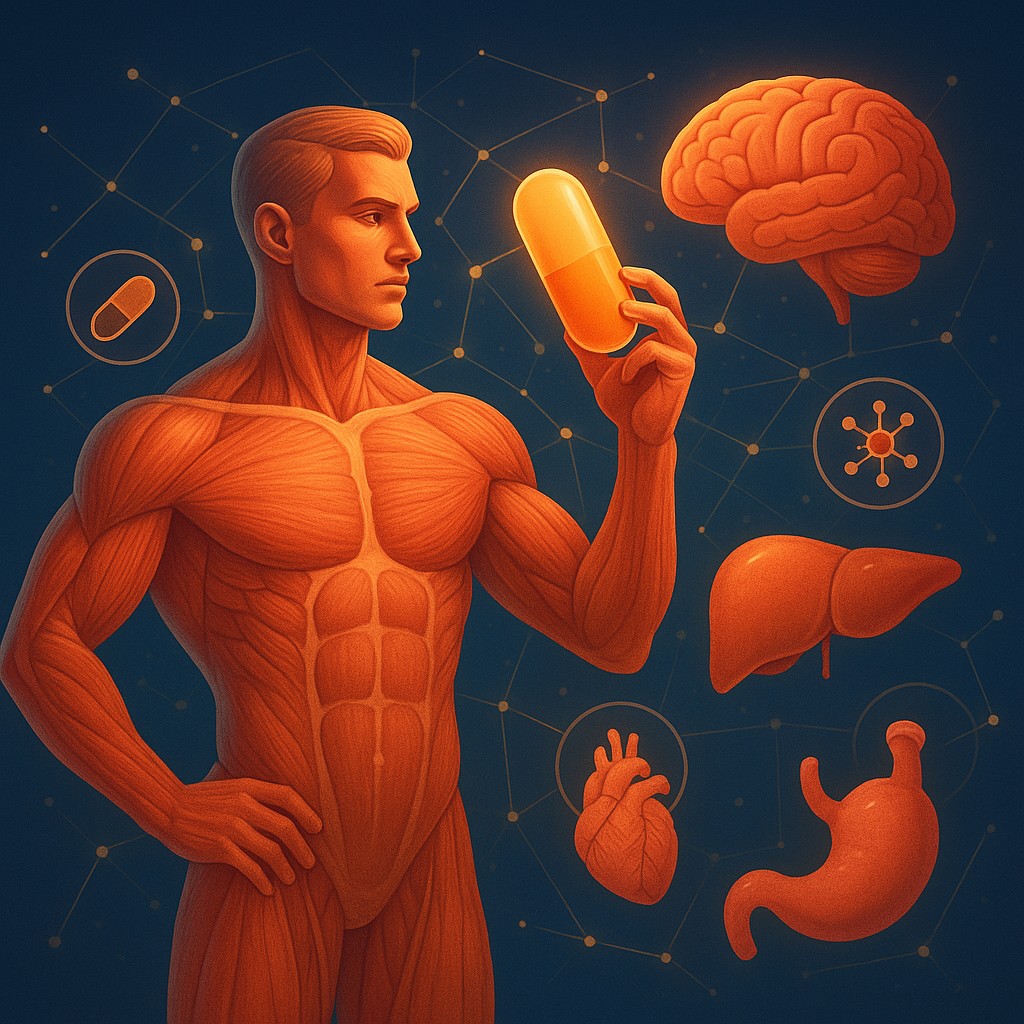
Imagine for a moment that your body is a vast, interconnected corporation. For decades, we have viewed our muscles as the humble blue-collar workers of this firm: the laborers responsible for the heavy lifting, the walking, and the occasional sprint to catch a bus. In this old model, muscles were thought to be relatively quiet, only "speaking" when they were sore or tired. We assumed their only job was to convert fuel into movement, much like a car engine burns gasoline to turn the wheels. However, recent breakthroughs in biology have revealed that our muscles are actually the high-level executives of the body, constantly sending out memos to every other department from the brain and liver to the gut and fat stores.
This shift in perspective is a biological revolution. When you use your muscles during physical activity, they don't just generate force; they transform into a sophisticated endocrine organ. This means they function exactly like your thyroid or your adrenal glands by releasing specialized chemical messengers into the bloodstream. These molecules, known as myokines, act as a real-time communication network. They tell the rest of your organs how to behave and how to perform at their best. Every time you lift a weight, go for a jog, or even take a brisk walk, you are essentially opening your own personal pharmacy and dispensing a cocktail of "wonder drugs" that you manufactured yourself.
The Secret Language of Moving Tissue
To understand how this internal conversation works, we have to look closely at the structure of the muscle fiber. For a long time, scientists thought that the benefits of exercise were mostly limited to the muscle being worked or were simply the result of better blood flow. However, we now know that contracting muscle fibers create and release hundreds of different types of myokines. These are small proteins that serve as signaling molecules. Think of them as text messages sent from your biceps to your liver, or from your thighs to your brain. Because these messages travel through the blood, they have "systemic" effects, meaning they influence the health of organs located far away from the muscle that actually did the work.
One of the most famous of these messengers is a protein called Interleukin-6, or IL-6. In the immune system, IL-6 is often linked to inflammation, but when it is released by your muscles during exercise, it acts very differently. In this case, it works as a powerful anti-inflammatory agent and a metabolism regulator. It signals the liver to produce more sugar for energy and tells fat cells to break down their stores to keep the body fueled. This is why the benefits of exercise feel so wide-ranging; your muscles are basically coaching your other organs on how to be more efficient and resilient in real-time.
Dispatching Chemical Memos to the Liver and Fat
The relationship between your muscles and your liver is particularly fascinating. When you exercise, the myokines released into the blood tell the liver to stop storing so much fat and focus instead on cleaning up its internal environment. This is a vital way to prevent conditions like fatty liver disease. Myokines like irisin, which was named after the Greek messenger goddess Iris, help the liver become more sensitive to insulin. This ensures that your blood sugar stays stable and your body doesn't have to overproduce insulin to get the job done. By taking control like this, your muscles act as the "police officers" of the metabolic system, keeping your internal chemistry from falling into chaos.
Furthermore, muscles talk to your fat cells in a process often called "cross-talk." Not all fat is the same. We have white fat, which stores energy, and "beige" or "brown" fat, which is much more active and actually burns energy to produce heat. Myokines like irisin have the remarkable ability to encourage white fat cells to act more like beige fat cells. This process, known as "browning," essentially turns your energy storage units into little furnaces. This means that a person with a healthy amount of muscle mass isn't just stronger; they are biologically wired to burn energy more effectively even when they are sitting still.
The Brain-Muscle Connection and Mental Clarity
Perhaps the most startling discovery regarding myokines is their impact on the human brain. Have you ever noticed that you think more clearly after a walk, or that a stressful day feels more manageable after a workout? That isn't just a placebo effect; it is the result of direct chemical signaling. One specific myokine released during exercise is called Cathepsin B. This protein can cross the blood-brain barrier, which is a strict "security checkpoint" that blocks most substances from entering the brain. Once inside, it triggers the production of Brain-Derived Neurotrophic Factor, or BDNF.
BDNF is often described by neuroscientists as "Miracle-Gro" for the brain. It helps repair damaged nerve cells and encourages the growth of new ones, particularly in the hippocampus, the area of the brain responsible for memory and learning. This is why regular physical activity is one of the most effective ways to prevent mental decline as we age. Your muscles are literally sending supplies to your brain to help it stay young and flexible. By viewing exercise as a form of "brain food," we move away from the idea that we work out just to look good in the mirror and toward the realization that we move to keep our minds sharp.
| Myokine Name |
Primary Target |
Main Function or Benefit |
| Interleukin-6 (IL-6) |
Liver and Fat |
Increases fat burning and lowers body-wide inflammation |
| Irisin |
White Fat Cells |
Converts "storage" fat into "burning" fat (browning) |
| BDNF (triggered by Myokines) |
Brain |
Boosts memory and learning while protecting against aging |
| Myostatin (Inhibited) |
Muscles |
Regulates muscle growth to prevent excessive bulk |
| Myonectin |
Liver and Heart |
Improves fat processing and heart health |
Correcting the Calorie Myth
One of the biggest misconceptions in fitness is that the main value of exercise is the "calories burned" during the session. If you look at a treadmill display and see that you've burned 300 calories, it's easy to think, "That's just one slice of pizza; why bother?" But this narrow view completely ignores the power of muscle. The 300 calories burned are the least interesting part of what just happened. The real value lies in the chemical shift that took place. That 30-minute jog just lowered chronic inflammation, told your brain to grow new cells, and signaled your liver to trim its fat stores.
When we focus only on calories, we treat our bodies like simple bank accounts, but our bodies are actually complex biological loops. Constant, low-grade inflammation is the root cause of many modern illnesses, including heart disease, type 2 diabetes, and even depression. By releasing anti-inflammatory myokines, your muscles act as a natural fire extinguisher for this internal inflammation. This is why "sitting is the new smoking" isn't just a catchy phrase; when we don't move, our muscles remain silent, the pharmacy is closed, and the fire of inflammation is allowed to burn unchecked throughout the body.
The Need for Modern Movement Habits
Because the release of myokines is a temporary response to muscle use, the benefits do not stay in your system forever. You can think of a workout like a dose of medicine that eventually wears off. To keep your internal pharmacy well-stocked, you need regular, consistent movement. This doesn't mean you have to spend two hours in the gym every day. Even short bursts of activity, like taking the stairs or doing a few squats while the coffee brews, can trigger these signals. The key is to avoid "muscle silence" for long periods.
Interestingly, different types of exercise produce different cocktails of myokines. Strength training might send signals that focus on bone density and muscle growth, while cardio, like cycling, might focus more on metabolic and brain-boosting signals. This is why a variety of movements is often recommended. By doing different activities, you are essentially broadening the vocabulary of your muscles, allowing them to send a more diverse and complete set of instructions to the rest of your body.
As you finish this and move back into your day, try to visualize your muscles not as heavy weights you're forced to carry around, but as a vibrant, intelligent broadcasting system. Every step you take and every object you lift is a powerful signal that tells your heart to stay strong, your brain to stay sharp, and your metabolism to stay flexible. You aren't just moving to burn energy; you are moving to lead a conversation that defines the very quality of your health. Your muscles are waiting to speak, and all you have to do to let them start is move.