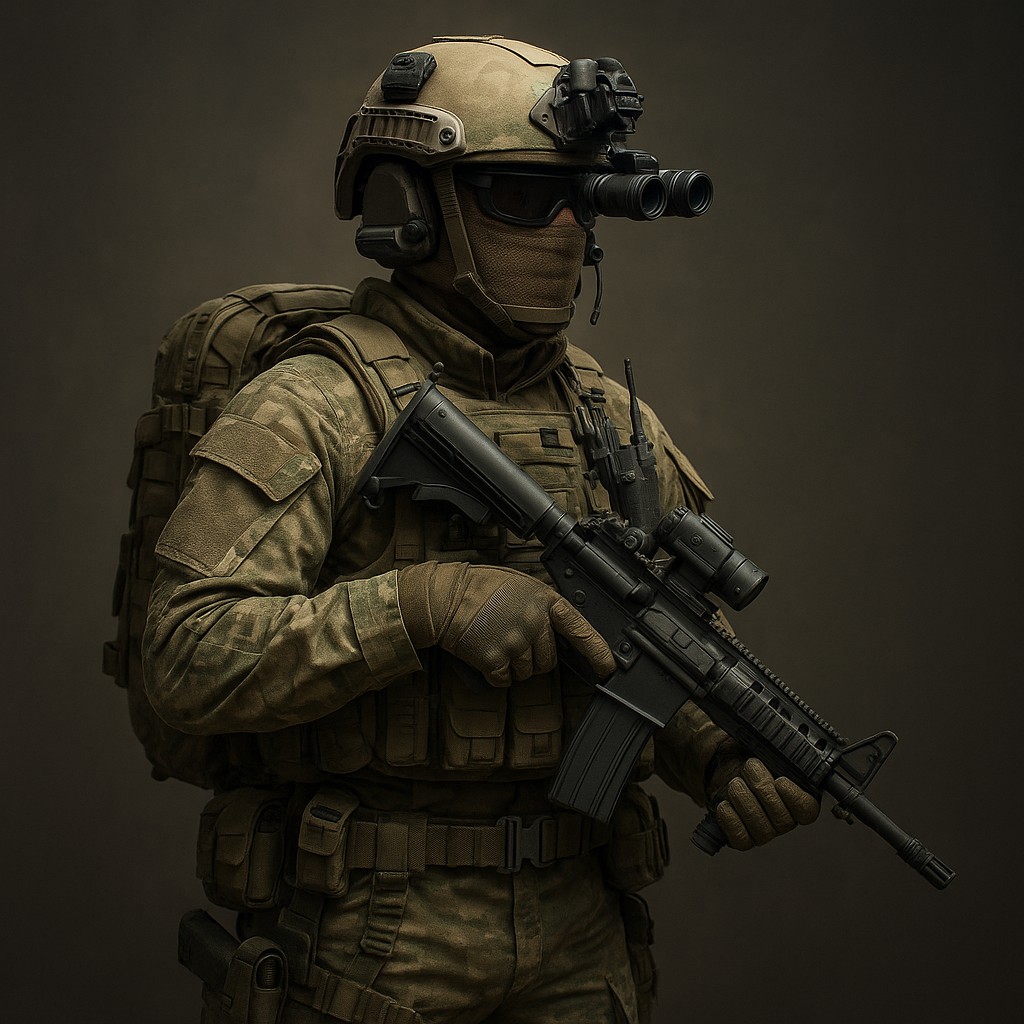
People often picture a modern soldier as "a person with a rifle and a helmet." That is not wrong, but it is wildly incomplete, like calling a smartphone "a rectangle that makes phone calls." Today's infantry soldier is closer to a walking network: wearing layered protection, guided by optics and sensors, linked by radios and data feeds, and supported by logistics that would put a camping store to shame.
This matters not because gear is glamorous, but because equipment shapes what soldiers can actually do, how safely they can do it, and how long they can keep going. The best way to understand modern military gear is to stop thinking of it as a pile of stuff and start thinking of it as a system. Every item has trade-offs, and the real skill is making those items work together without turning the soldier into an overburdened pack mule with Wi-Fi.
The modern soldier as a system, not a superhero
A common myth is that "more gear always equals more capability." In reality, every extra gadget competes for weight, power, attention, training time, and space on the body. Soldiers do more than carry equipment; they manage it under stress, often in heat, darkness, noise, and confusion. A tool that shines on a test range can become a burden if it is fragile, hard to use with gloves, or eats batteries.
Modern loadouts are built around a few core needs: survive, see, communicate, move, fight, and sustain. Survive means armor and medical gear. See means optics, night vision, and sometimes thermal imaging. Communicate means radios and headsets. Move means boots, packs, and ergonomic carrying systems. Fight means weapons and ammunition. Sustain means water, food, batteries, and weather protection.
One quiet truth shows up in every serious discussion: soldiers do not operate alone. Much of their "equipment" is actually a bigger ecosystem, including vehicles, drones, artillery, medevac helicopters, satellites, and supply chains. The individual kit is the tip of the spear, but the spear comes with a very large handle.
Clothing and protective gear that keeps people alive
If you remember one thing about modern soldier equipment, make it this: protection is layered. No single item solves every threat, because dangers vary. A soldier might face weather, rough ground, smoke, falling debris, slips, and ballistic threats. So the kit stacks solutions like a sensible wardrobe, only with more Velcro.
Uniforms today focus on durability, camouflage, and comfort for long wear. Camouflage patterns change with the environment, and they are not magic invisibility cloaks. They work best when combined with smart movement, use of cover, and avoiding shiny or high-contrast shapes. Modern patterns try to break up outlines and surface texture so the human shape is harder to spot.
Boots matter more than movies imply. The best helmet will not help if your feet are blistered and you cannot walk. Modern military boots aim for ankle support, traction, drainage, and climate compatibility. Soldiers may pick different boots for different conditions, and sock choices can become a science of their own.
Helmets, eye protection, and hearing protection
Modern combat helmets are usually made from advanced fibers, often aramid-based, and they are designed to reduce injury from fragmentation and blunt impacts. People sometimes assume a helmet is "bulletproof," but that is not a safe assumption. Helmets raise survival odds in many scenarios, but they are not force fields. Shape, padding, and retention systems matter because preventing traumatic brain injury involves both stopping fragments and reducing the energy transferred to the skull.
Eye protection is not just for dust. It shields against shrapnel, debris, and the everyday chaos that can permanently damage vision. Many soldiers use ballistic-rated goggles or glasses with interchangeable lenses for different light. Hearing protection has also become smarter. Some systems block harmful noise like gunfire while amplifying quiet sounds like voices, which protects hearing and helps communication.
Body armor and plate carriers
Modern body armor usually combines soft armor, which helps against fragments and some handguns, with hard plates designed for higher-energy threats. The plates sit in a vest or plate carrier that also holds pouches for magazines, medical kits, radios, and other essentials. This is where the "system" idea becomes real: the carrier is not just protection, it is a wearable storage layout that must be consistent and easy to use under stress.
Armor has clear trade-offs. It can be heavy, hot, and restrict movement, and more coverage usually means less mobility. Militaries constantly balance protection against the reality that soldiers must move, climb, aim, and breathe. In many units, the exact setup changes with the mission, terrain, and threat level.
Weapons: more than "a rifle," less than a video game menu
Most modern soldiers carry a rifle or carbine as their primary weapon, but the weapon is only part of the story. Real capability comes from the whole package: ammunition, magazines, sling, optics, maintenance kit, and training to use it safely and well.
Think of weapons by role. Some are general use, some cover longer range, some are for close quarters, and some provide area suppression or special effects. Popular culture treats weapon choice like a personality quiz. In real units, choice is about standardization, logistics, and the task at hand.
A quick comparison of common infantry weapons and their typical roles
| Category |
Typical role |
What makes it useful |
Common limitations |
| Rifle or carbine |
General-purpose individual weapon |
Versatile, accurate, manageable size |
Power depends on optics, training, and ammo load |
| Light machine gun |
Sustained fire for team support |
High volume of fire, helps control space |
Heavy weapon and ammo, needs heat management and upkeep |
| Designated marksman rifle |
Accurate fire at longer ranges within a squad |
Better optics and precision, extends reach |
Often heavier, slower to handle up close |
| Sniper rifle (specialized) |
Precision, observation, high-value targets |
Excellent optics, specialized training |
Not general-purpose, slow rate of fire, limited flexibility |
| Handgun |
Backup weapon for certain roles |
Compact, useful when a rifle is impractical |
Limited range and stopping power compared to rifles |
| Grenades and launchers |
Area effects and targets behind cover |
Reach positions bullets cannot |
Limited supply, needs careful handling and strict rules |
This table is intentionally broad. Models and calibers differ by country and unit, and details change over time. The key idea is that weapons exist in a team context. A squad gains capability because members bring different tools, not because everyone carries the same "best" weapon.
Optics and aiming aids: the quiet revolution
If you want to see what really changed in recent decades, look at optics. Many rifles now use red dot sights or magnified optics, which speed target identification and improve accuracy at range. Some setups combine a close-range sight with a magnifier, giving flexibility without needing multiple weapons.
You may hear about laser aiming devices and illuminators. These often pair with night vision and help aiming in low light. It might sound like night fighting becomes effortless. It does not. Night systems help, but they add complexity, demand battery management, and require training to avoid confusion and misidentification.
Maintenance, reliability, and the unglamorous truth
Weapons are machines, and machines need care. Soldiers often carry cleaning tools, lubricant, and small spare parts depending on unit practice. A reliable weapon comes from consistent maintenance and correct handling. This is not glamorous, but it strongly predicts whether equipment works when it must.
A common misconception is that militaries always field the newest gear. Some do, some do not, and many use mixed generations of equipment. What matters most is whether gear is supported with training, spare parts, and clear procedures.
Seeing and being seen: night vision, thermal imaging, and camouflage discipline
Humans are daytime animals, but conflict does not stop at night. Night vision devices, which amplify ambient light, let soldiers move and act in low light. Thermal imaging, which detects heat differences, can reveal people or vehicles even in darkness or smoke.
These technologies change both sides of the fight. If one side has thermal imaging, hiding gets harder. That forces the other side to improve concealment, move smarter, and reduce heat signatures when possible. "Invisible at night" is not permanent, it is an arms race.
Modern gear also includes devices meant to make soldiers visible to friends. Identification panels, infrared markers (seen through night vision), and signaling tools help prevent friendly fire and improve coordination. A soldier needs to hide from the enemy but be readable to teammates. That balance makes disciplined procedures just as important as gadgets.
Communication gear: radios, headsets, and the battlefield internet (sort of)
Movies love dramatic hand signals, but real operations rely on communication. Modern soldiers often carry radios, sometimes more than one depending on role. Their kit can include a handheld radio, a push-to-talk button mounted on gear, and a headset that works with hearing protection.
The goal is not just "talking," but coordination: calling for support, sharing positions, reporting hazards, and getting updates. Communication can also carry data, like messages and location info, though capabilities vary widely by military and mission.
A myth is that soldiers have perfect connectivity like a smartphone. Real radios can be blocked by terrain, buildings, weather, jamming, or simply distance. Battery life is another constant limit, which is why soldiers carry spare batteries and sometimes power-management tools. Communication is powerful, but it is never guaranteed, so units train for what to do when it fails.
Carrying the essentials: load-bearing gear, packs, and the tyranny of weight
"Tyrrany of weight" is a phrase you will hear from soldiers for good reason. Everything feels heavy after hours of carrying it. Modern load-bearing gear spreads weight across the torso and hips and keeps critical items reachable.
A typical setup uses a belt or vest system with pouches for ammo, medical supplies, and tools, plus a backpack for water, food, extra clothes, and mission items. Some units use modular attachment systems so pouches can move. The goal is consistency: a soldier should be able to find items by touch, in the dark, under stress.
Water is one of the heaviest necessities, and also one of the most important. Soldiers often use hydration bladders with drinking tubes, plus canteens or bottles as backup. Food comes as compact rations made for long shelf life. It is not gourmet, but it is fuel, and fuel matters.
A few common "small but mighty" items include:
- A multi-tool for quick repairs and adjustments.
- A headlamp or small flashlight with a low-light setting.
- Gloves that protect hands while allowing dexterity.
- Weather layers like a waterproof jacket or an insulating mid-layer.
Planning shapes the load. Short missions mean lighter packs. Long or uncertain missions make the pack grow. Soldiers and leaders constantly argue with physics, and physics usually wins.
Medical gear: the most important pouch on the vest
One major change over time is the focus on trauma care. Many soldiers carry an individual first aid kit meant for rapid response to severe injuries. Contents vary, but the idea is the same: immediate care in the first minutes can save lives.
Medical training has also shifted toward practical, scenario-based skills. This is not about turning every soldier into a doctor. It gives them the ability to act until medics arrive. In many militaries, the standard of care and evacuation options strongly shape mission planning.
Medical gear may not look "cool," but veterans often point to the medic, the first aid kit, and the systems that moved wounded people to higher care as what mattered most. Modern soldier equipment is as much about rescue as it is about fighting.
Special gear for specialized jobs: not everyone carries the same toolkit
Even inside infantry units, roles differ. A radio operator may carry extra batteries and antennas. A machine gunner carries heavier ammo. An engineer may carry breaching tools. A forward observer might carry devices for calling in and coordinating supporting fires, plus optical spotting tools.
Outside infantry, variety explodes. Combat engineers, reconnaissance teams, medics, and communications specialists all have distinct kits. Vehicle crews carry gear for tight spaces, including helmets with built-in comms. In cold climates, gear shifts to insulation, stoves, and skis or snowshoes. In hot climates, hydration and heat management become central.
This variety corrects another myth: there is no single "modern soldier loadout." There are families of loadouts for mission, climate, and role. Standardization exists, but so does customization, and the best systems allow both without chaos.
Drones, robots, and the near future of personal military tech
Small drones are one of the most noticeable changes in recent years. A compact drone can scout over a hill, around a building, or across a field without sending a person into danger. That boosts awareness, but it also brings new problems: drones can be detected, jammed, or shot down, and they need training and battery care like any other tool.
You may also hear about smart sights, integrated soldier systems, and augmented reality. The idea is to combine navigation, communication, and targeting info into a single interface. Done well, this cuts confusion. Done badly, it becomes a distraction strapped to someone's face. Militaries are still finding the sweet spot.
Power is the bottleneck behind many future ideas. More electronics need more batteries, and batteries add weight and logistics. Expect ongoing work on lighter power sources, longer battery life, and more efficient devices. The future soldier may not look radically different at a glance, but their equipment will keep getting smarter behind the scenes.
Clearing up common myths with a dose of reality
One myth is that modern gear makes warfare "clean" or easy. Better protection and sensors reduce some risks, but conflict stays dangerous and unpredictable. Equipment helps, but it cannot remove uncertainty, human error, or the brutal randomness of real environments.
Another myth is that all modern soldiers are equally equipped. In reality, gear varies widely across countries, units, and times. Even within one military, a frontline unit may have different priorities than a training unit. Supply and maintenance matter: a device that exists on paper is useless if it is broken, uncharged, or missing a key part.
A final myth is that the best equipment automatically wins. Superior gear can give an edge, but training, leadership, teamwork, logistics, and decision-making are often just as decisive. The most advanced tool is only as useful as the people and plans behind it.
A smarter way to learn: look for the "job" each item is doing
If you want to learn without drowning in model numbers and acronyms, try a simple trick: for every piece of gear, ask two questions. First, what problem is this trying to solve? Second, what new problems does it create - weight, complexity, batteries, training? That view turns a pile of kit into a coherent story.
Modern soldiers carry equipment shaped by centuries of hard lessons and a lot of engineering. The most impressive part is not the gadgets. It is how people learn to operate as teams, using tools that extend their senses, protect their bodies, and help them communicate under pressure.
Keep exploring with curiosity, and you will spot patterns: the tug-of-war between protection and mobility, between information and overload, between standardization and flexibility. Understanding those patterns takes you from "cool gear" to real insight, and it makes you harder to fool with flashy myths and movie logic.