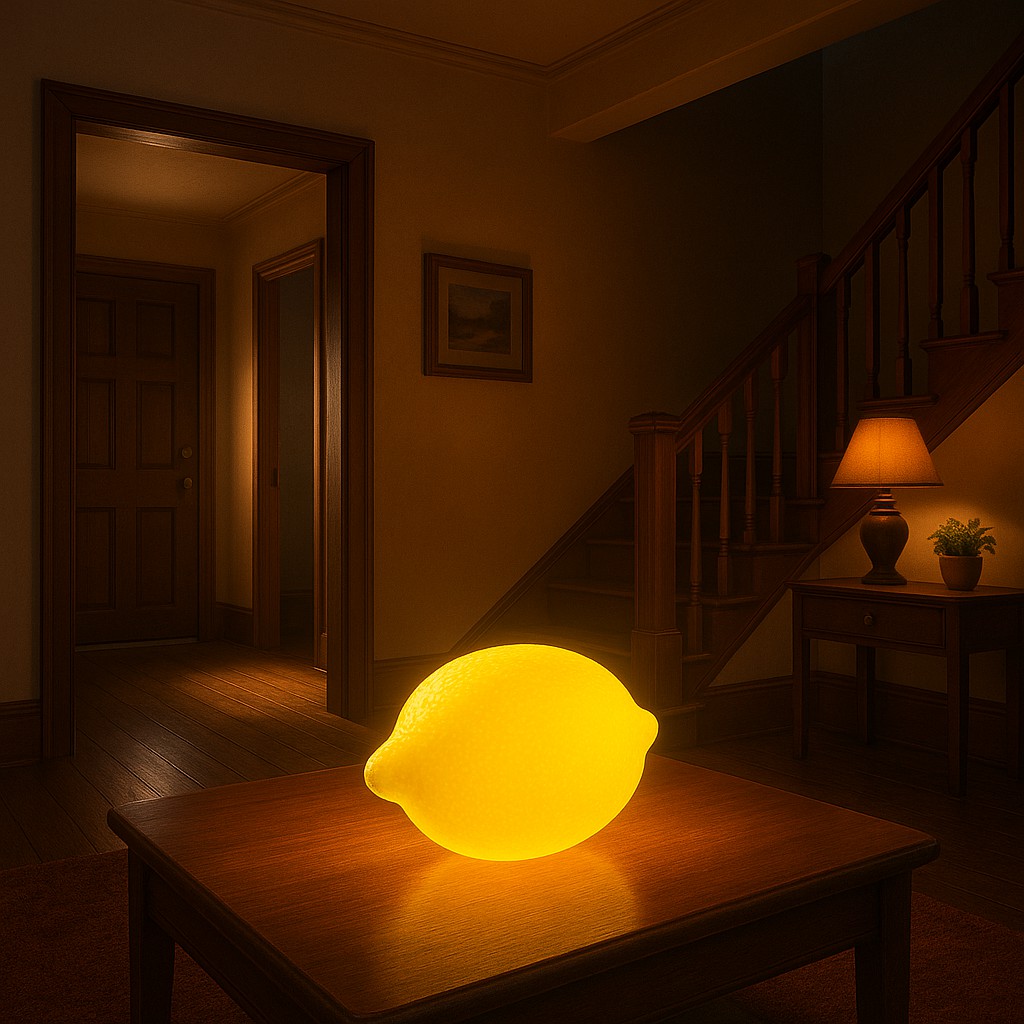
Imagine you are standing at the entrance of your childhood home. You can likely feel the weight of the door handle, hear the distinct creak of the floorboards in the hallway, and remember exactly where the light switches are, even in pitch darkness. This effortless navigation is more than just a life skill; it is a biological superpower. Our ancestors did not survive by memorizing long lists of abstract nouns or complex math formulas. They survived because they could remember which bend in the river had the cleanest water and exactly which tree marked the edge of a predator's territory. This evolutionary priority has left us with brains that are average at remembering "data" but world-class at remembering "places."
The Method of Loci, often called a Memory Palace, is the ultimate brain hack. It bridges the gap between our natural spatial talent and our modern need to retain information. By taking a piece of abstract data, such as a grocery list, a speech, or the periodic table, and "parking" it inside a mental map of a building you know well, you trick your brain into treating that information like a vital geographic landmark. Instead of struggling to recall a word, you simply close your eyes and look at your coffee table. If you have "placed" a giant, glowing neon lemon on that table in your mind, your brain will retrieve that image with a clarity that repetitive memorization could never achieve.
Bridging the Gap Between Ancient Survival and Modern Studying
To understand why this works, we have to look at how the human mind is built. Modern neuroscientists have discovered that the hippocampus, the part of the brain that forms new memories, is also deeply involved in navigation. In the famous "London Taxi Driver" studies, researchers found that drivers who spent years learning "The Knowledge" (the complex map of the city's streets) actually grew physically larger hippocampi. This shows us that our brains use "where things are" as the foundation for "what things are." When you use the Method of Loci, you are essentially hijacking these high-capacity spatial pathways to carry non-spatial information.
If you try to memorize twenty random items by repeating them over and over, you are relying on working memory, which is famously flighty and limited. It is like trying to hold ten grocery bags in your arms at once; eventually, something will drop. However, the Method of Loci allows you to set those bags down on the floor of your mental hallway. Once those items are "placed," they no longer compete for space in your immediate focus. You can walk away, think about something else, and return to your mental hallway later to find those items exactly where you left them. This shift from "temporary holding" to "spatial orientation" is the secret to why this technique has been used by everyone from Ancient Greek speakers to modern memory champions.
The Architectural Blueprint for Building Your First Palace
The beauty of a Memory Palace is that you do not need to be an architect or an artist to build one. In fact, the more familiar the building, the better it works as a storage unit. Most beginners start with their own home because the details are already etched into their subconscious. You do not have to "learn" where your kitchen sink is; you already know. The process begins by settting a clear, one-way path through your chosen space. You might start at the front door, move into the foyer, turn left into the living room, walk through the kitchen, and end in the backyard. This sequence is vital because it preserves the order of the information you want to remember.
Once your route is set, you identify specific "loci," or locations, along the way. These should be distinct pieces of furniture or features, such as a coat rack, a bookshelf, or a kitchen island. As you go through your list of information, you visualize a vivid, oversized, and often ridiculous image representing each item and place it firmly on a location. If you need to remember milk, do not just imagine a small carton. Instead, imagine a literal cow sitting on your sofa, wearing a hat and drinking a glass of milk. The more absurd, sensory, and "sticky" the image is, the more likely your brain is to flag it as important.
Five Essential Steps for Reliable Mental Storage
To turn this from a party trick into a reliable tool, you need a systematic approach. The following table outlines the stages of building a Memory Palace, showing how each step moves from the physical world to the mental one.
| Phase |
Action Step |
Goal of the Phase |
| Selection |
Choose a very familiar building or street. |
Minimize the effort needed to remember the "map." |
| Mapping |
Define a logical, straight path with clear stops. |
Ensure that information is recovered in the right order. |
| Encoding |
Create vivid, strange, or funny images for each item. |
Turn abstract data into something "biologically interesting." |
| Placement |
Mentally "glue" the images to specific furniture. |
Anchor the data to a permanent physical spot. |
| Retrieval |
Mentally "walk" the path and look at each location. |
Trigger the memory by interacting with the environment. |
While the table provides the blueprint, the "Encoding" phase is where the magic happens. Humans are remarkably good at remembering things that are funny, gross, or strange. If you are trying to remember a historical figure like Napoleon, do not just see a man in a hat. Imagine a tiny, angry penguin wearing a Napoleon hat and shouting at your houseplants. When you mentally enter that room later, your brain will react with, "Oh right, the shouting penguin! That's Napoleon." This bypasses boring traditional learning and engages our sense of play.
Navigating the Limitations and Common Pitfalls
Despite its reputation as a "super-memory" tool, the Method of Loci is not a magic wand for general intelligence. It is a specialized instrument, much like a high-speed drill is perfect for making holes but terrible for painting a landscape. One major misconception is that this technique will help you "understand" complex topics. In reality, the Method of Loci is a storage system, not a processing system. You can use it to memorize the steps in a chemical reaction, but the palace will not explain why those chemicals react. It keeps the facts in order so that your conscious mind is free to do the heavy lifting of analysis.
Another challenge is "ghosting," where images from old lists linger in your palace. If you use your living room for groceries on Monday and a to-do list on Tuesday, you might find a ghostly mental cow sitting next to a new image of a giant wrench. To fix this, experienced users often have multiple palaces. One might be their home, another their office, and a third their favorite park. Alternatively, you can "clean" your palace by mentally walking through it and imagining the items fading away, or by giving the palace a "rest" for a few days before reusing it.
Advanced Strategies for Complex Data Sets
Once you have mastered the basic "one item per room" approach, you can start stacking information to handle much larger amounts of data. This is where the Method of Loci turns into a sophisticated filing system. Instead of placing just one item on your dining table, you can create a "vignette," or a small scene. For example, if you are a medical student memorizing the symptoms of a disease, you can imagine a character acting them out on your table. The character might be shivering (fever) while holding a pulsing red balloon (headache) and wearing a yellow shirt (jaundice). By grouping related facts into one "mental movie," you increase your storage capacity exponentially.
You can also involve other senses to make the anchor even stronger. Do not just "see" the image; try to hear the sound it makes or smell it. If you are memorizing historical dates, imagine the numbers are made of freezing ice or burning coals. When you mentally "touch" the item in your palace, the sensory shock helps trigger the memory. This multi-sensory approach ensures you aren't just relying on sight, but are engaging the entire brain to create a deep memory that is very difficult to erase.
Transforming Abstract Knowledge into Physical Reality
The true power of this technique is its ability to turn the invisible into the visible. Much of what we struggle to learn today is abstract, such as strings of numbers, legal definitions, or computer code. These things have no physical "shape" for our brains to grab. The Method of Loci forces us to give those abstractions a physical form. It turns a boring history lecture into a walk through a museum and a stressful presentation into a guided tour of a familiar garden. It changes studying from a chore of repetition into an act of creative imagination.
By reclaiming this ancient skill, you are "un-training" the bad habits of modern rote learning and returning to a more natural way of thinking. You are stopping the fight against your biology and starting to work with it. The next time you feel overwhelmed by a sea of information, remember that you already have the most powerful hard drive ever created sitting right between your ears. You do not need a better brain; you just need to give your brain a place to park its thoughts. With a bit of practice, the world becomes your filing cabinet, and your memory becomes a landscape you can explore whenever you like.