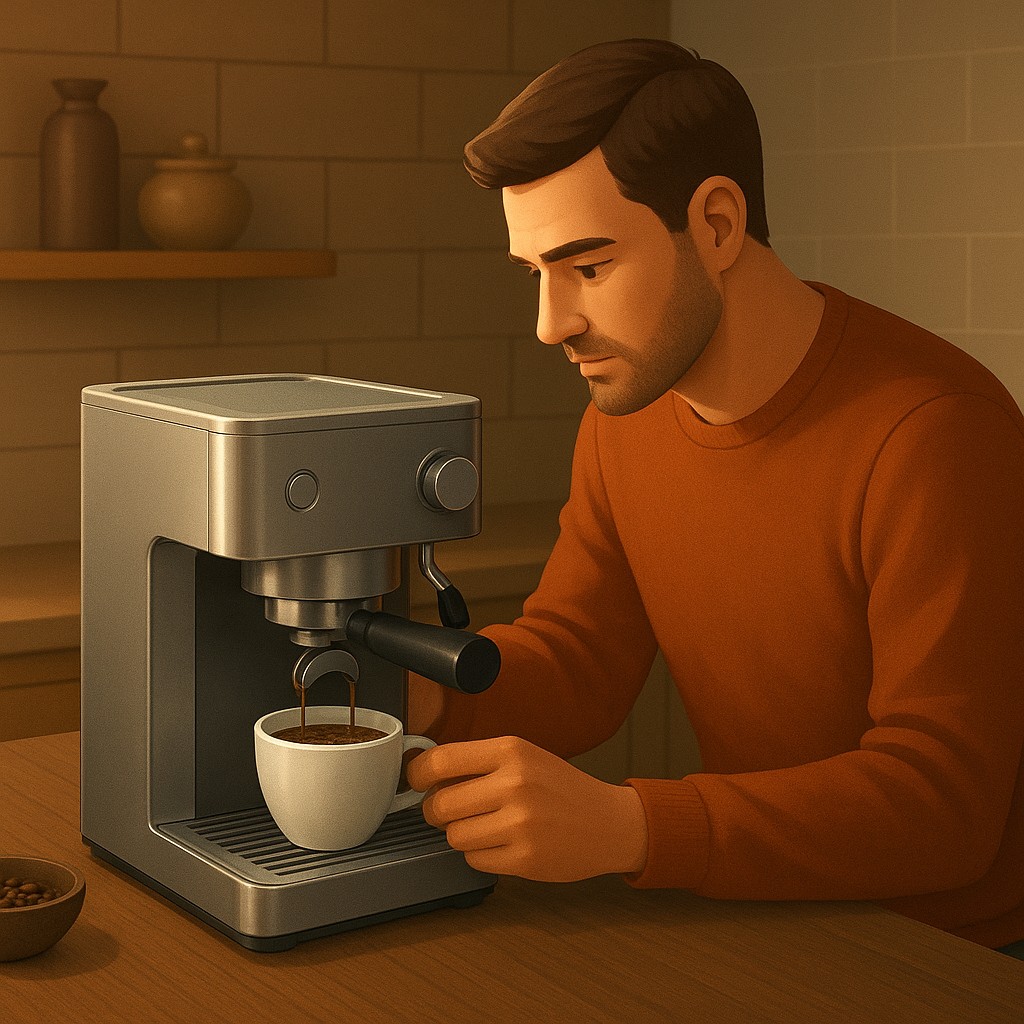
Imagine you finally decided to treat yourself to that high-end espresso machine you’ve been eyeing for months. For the first week, every morning feels like a decadent trip to a Roman cafe. The ritual of grinding the beans, the smell of the foam, and the sleek chrome finish on your counter provide a genuine burst of joy. However, flash forward six months, and the magic has likely evaporated. The espresso is still high quality, but you no longer "feel" the luxury. Instead, you simply feel a headache if you don’t have it. The machine has shifted from a source of peak pleasure to a basic requirement for your morning to function.
This psychological phenomenon is known as the hedonic treadmill, and it is the engine behind what we call luxury creep. We humans are remarkably good at getting used to things. While this trait was once a survival superpower, helping us stay level-headed during droughts or winters, it has become a financial and emotional trap in the modern world. We keep upgrading our surroundings, our technology, and our comforts, expecting each leap to bring a permanent increase in happiness. Instead, we find ourselves running faster and spending more just to stay in the same place emotionally.
The Mechanics of the Hedonic Treadmill
To understand why we get stuck in this cycle, we have to look at how we adapt. Our brains are wired to pay attention to changes, not constants. When you move from a loud apartment to a quiet one, the silence is beautifully striking for a few days. Eventually, that silence becomes the background noise of your life. Biologically, your brain stops releasing dopamine (the "reward" chemical) in response to the quiet because it is no longer "new" information. It has become a predictable part of your environment, and your nervous system resets its expectations to this new baseline.
This reset is why chasing status can be so exhausting. When we buy a luxury item to show off success or reward ourselves, we are looking for a "peak" experience. But the brain is designed to return to a balanced state. If we stayed in a permanent state of euphoria over a heated car seat, we probably wouldn’t notice a deer jumping into the road. Evolution prioritizes survival over constant satisfaction, so it flattens our emotional peaks until they feel like level ground. This process ensures we are always looking for the next thing, keeping us motivated, but also perpetually unsatisfied.
The danger arises when we mistake this lack of "peak" feeling for a failure of the product itself. We assume that if a $50,000 car no longer makes us giddy, the solution must be a $70,000 car. We are chasing a chemical ghost, trying to recapture the initial spike of novelty that our minds have naturally filed away. In doing so, we lock higher costs into our lives without actually increasing our long-term happiness, which is the very definition of a losing game.
When Luxuries Mature into Invisible Necessities
Luxury creep is particularly sneaky because it only moves in one direction. It is incredibly easy to move "up" the ladder of comfort, but moving back "down" causes actual psychological pain. Economists and psychologists often call this "loss aversion." Once you have experienced a higher standard of living, losing those perks isn't just an inconvenience; it feels like a personal failure or a genuine hardship. This is how the "invisible necessity" is born.
Consider how we control the temperature in our homes. A century ago, air conditioning was an unthinkable luxury reserved for theaters and department stores. Today, for many, a broken AC unit in the summer is an emergency that makes a home unlivable. We have shifted our baseline so far that we no longer feel "lucky" to have cool air; we simply feel "wronged" when it is gone. The following table shows how various items often transform as a person’s career or lifestyle scales up.
| Level of Experience |
The Initial Luxury |
The New Baseline (The Creep) |
The Consequence of Loss |
| Travel |
First class or direct flights |
Refusing to fly "coach" or take layovers |
Travel becomes a source of stress rather than adventure |
| Technology |
Ultra-high-speed internet |
Expecting 4K video to load instantly |
Frustration at a 10-second delay |
| Daily Habits |
Professional cleaning services |
A house that must be spotless every day |
Anxiety and inability to relax if there is clutter |
| Food & Drink |
$20 craft cocktails |
Only drinking top-shelf spirits |
Losing the ability to enjoy a simple social gathering |
As these luxuries settle into the background, they begin to eat up a larger portion of our mental and financial energy. We spend more time working to pay for "necessities" that we don’t even enjoy anymore. We are essentially paying a "happiness tax" just to avoid the discomfort of a downgrade. This is the heart of the luxury trap: you are spending 30% more of your income to feel exactly as neutral as you did five years ago.
The Social Weight of Status Symbols
While some luxury creep is about physical comfort, a big part of it is driven by our place in the social pecking order. We are social animals, and we are constantly scanning our surroundings to see how we compare to our "tribe." Today, that tribe isn't just our neighbors, but everyone we see on social media. This creates an "arms race" for status where we buy things not because we need them, but because they show the world where we stand.
The problem with buying for status is that status is relative. If everyone in your social circle drives a luxury SUV, having one yourself gives you zero boost; it simply prevents you from looking like you are struggling. To get a boost, you would have to buy something even more expensive. This leads to a cycle where everyone spends more money, yet no one's standing actually changes. It is like a crowd of people standing up at a concert to see better; eventually, everyone is on their tiptoes, no one sees better than before, and everyone's legs are tired.
This constant search for status symbols keeps us on high alert. We become sensitive to the quality of our watch, the brand of our shoes, or the neighborhood where we live. These things become part of our identity. When who we are is tied to what we buy, we become fragile. Any threat to our spending becomes a threat to our very identity. Seeking status doesn't just empty our wallets; it crowds out our ability to find joy in things like hobbies, relationships, and personal growth.
Breaking the Cycle Through Strategic Deprivation
If the problem is that we get used to comfort too quickly, the solution is to intentionally disrupt that habit. One of the best ways to reset your "happiness baseline" is through a practice called "hedonic resets," or voluntary discomfort. By intentionally stepping away from your luxuries for a short time, you force your brain to remember what the baseline actually feels like. This makes the eventual return to luxury feel like a reward again, rather than a boring requirement.
Think of it like a palate cleanser between courses of a meal. If you eat nothing but rich, heavy foods, you eventually lose the ability to taste the subtle ingredients. A simple piece of ginger or a sip of water resets your taste buds. In life, this might look like:
- Taking a "tech-free" weekend where you use a paper map and read a physical book.
- Taking the bus or train for a week instead of driving your luxury car.
- Camping in the woods to remember how much you appreciate a warm bed and a hot shower.
- Doing a "spending fast" where you only buy absolute essentials for a month.
These resets serve two purposes. First, they prove to your brain that you can survive and even thrive without high-end features. This reduces the fear of "losing" your status. Second, it brings back the novelty. When you return to your heated car seat after a weekend of sleeping in a cold tent, you will actually feel the warmth and appreciate the engineering. You have turned an invisible necessity back into a visible source of joy.
The Power of Savoring and Simple Rewards
Beyond occasional resets, we can fight luxury creep by changing how we handle the things we already own. Psychologists call this "savoring." Savoring is the act of consciously focusing on the pleasure an experience provides while it is happening. Instead of mindlessly drinking that expensive coffee while checking your emails, take a moment to notice the temperature, the flavor, and the feeling of the cup in your hands. This active attention slows down the process of getting used to things.
Another strategy is to shift spending from "status items" to "experiences." Research consistently shows that we get used to physical objects much faster than we get used to memories. A new sofa stays in your living room every day and quickly becomes part of the furniture, literally and figuratively. However, a trip to see the Northern Lights or a cooking class with a friend lives on in your mind. Experiences are harder to compare to what others have, which reduces envy, and they provide stories that last for years.
Ultimately, the goal is to cultivate a mindset of "enough." This doesn't mean living like a monk or denying yourself the finer things. It means being the master of your luxuries rather than their servant. It means choosing high-end features because they provide a real benefit or a spark of beauty, rather than using them to fill a void left by a rising baseline. When you learn to control how you adapt, you stop the treadmill and start walking on solid ground.
Mastering the Art of Lasting Satisfaction
Understanding luxury creep is like finding a hidden map of your own mind. Once you see the "trap" for what it is, you gain the power to walk around it. You can enjoy the espresso machine, the fast internet, and the comfortable car without letting them control your mood. Learning about this isn't about guilt or living a minimal life for the sake of it; it's about efficiency. It is about getting the maximum amount of human happiness out of the resources you have.
By practicing intentional resets and focusing on savoring what you already possess, you protect yourself from the expensive race for "more." You begin to see that the most valuable thing you own is not a product or a status symbol, but your own perspective. When you can find joy in a simple glass of water or a walk in the park, you become wealthy in a way that no amount of luxury creep can touch. Go out and recalibrate; your baseline is waiting for a refresh, and the world is much more vibrant when you stop taking its comforts for granted.