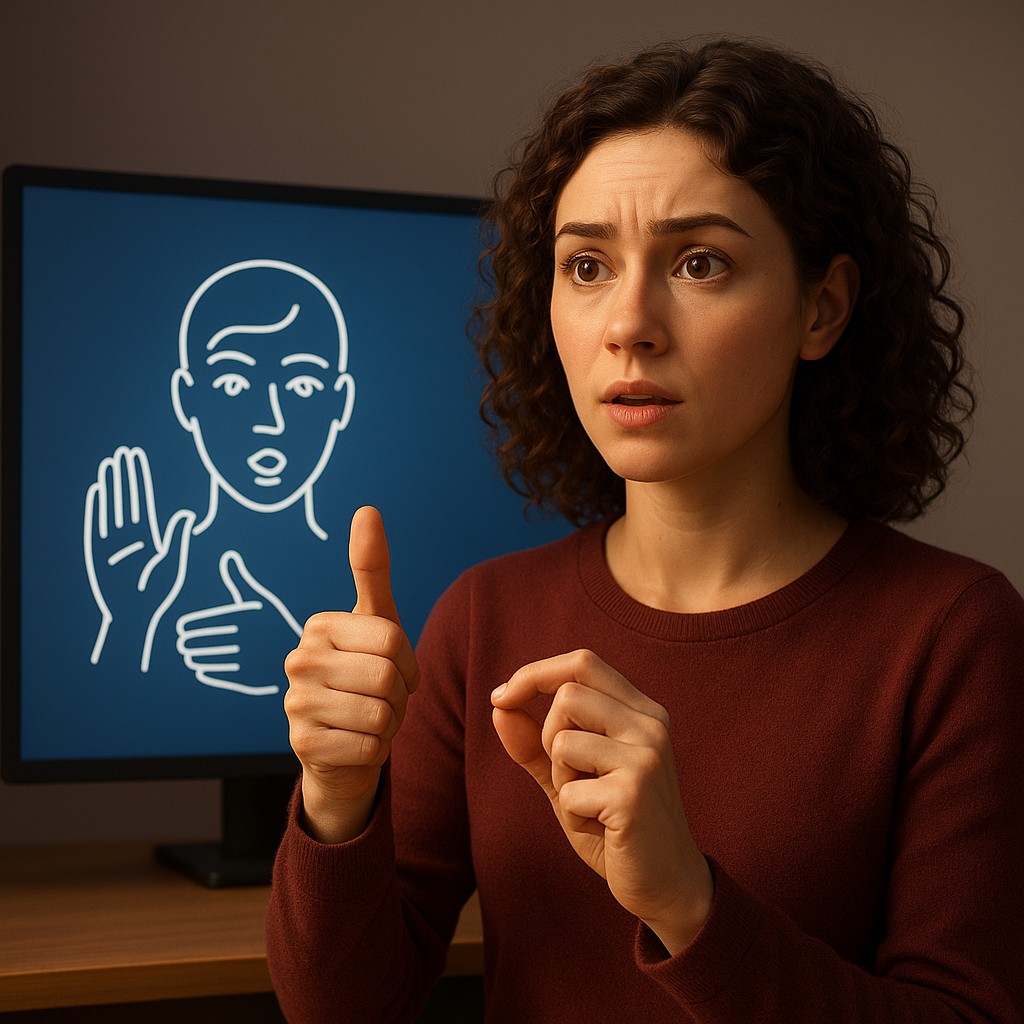
Imagine you are watching a movie with the sound muted. You can see the actors' lips moving, their hands gesturing, and their bodies shifting, but you are missing the swelling orchestra that tells you when to feel anxious. You miss the sharp intake of breath that signals a question, or the sarcastic tone that flips a "thank you" into an insult. In spoken English, we rely on pitch, volume, and rhythm - a combination known as prosody - to turn a string of words into a meaningful thought. Without these vocal shifts, we sound like early GPS units: helpful, but completely robotic.
In American Sign Language (ASL), the hands do the heavy lifting for vocabulary, but the face provides the melody, the punctuation, and the underlying structure. Many beginners mistakenly think facial expressions in ASL are "extra credit" or just a way to show emotion, much like a public speaker might use their face to look more charismatic. However, in ASL, your eyebrows, mouth, and head tilt are mandatory grammatical tools. If you sign "you like pizza" with a neutral face, you are making a statement. If you sign those exact same words while raising your eyebrows, you have asked a question. The face doesn't just react to the conversation; it builds it.
The Structure of a Silent Sentence
To understand how ASL works, we have to look at its mechanics. In English, we often change word order to change meaning. For example, "He is home" is a statement, while "Is he home?" is a question. We swap the positions of "is" and "he" to let the listener know we want information. ASL is much more efficient with word order, but it compensates by using Non-Manual Markers (NMMs). These are specific movements of the eyes, eyebrows, lips, and head that happen at the same time as the signs.
Think of NMMs as the "control panel" for the signs. While the hands form the shapes for nouns and verbs, the face sets the "mode" for those signs. This is a form of multitasking. While a speaker has to deliver information one word at a time in a straight line, an ASL user can show the subject, the verb, and the grammatical intent all at once. This three-dimensional nature makes the language fast and expressive, but it also means that "listening" with your eyes requires looking at the signer’s face, not just their hands.
The Eyebrow Toggle: Questions and Commands
The most famous examples of ASL facial grammar involve the eyebrows. There is a specific logic to how they move depending on the answer you want. In sign language linguistics, questions usually fall into two categories: Yes/No questions and "WH" questions (Who, What, Where, When, Why, Which, and How). Each has its own "visual font" that must be used for the sentence to be correct.
When asking a Yes/No question, a signer raises their eyebrows and leans their head slightly forward. This is the visual version of the rising pitch at the end of a spoken English sentence. It signals to the other person that it is their turn to confirm or deny. On the other hand, for a WH-question, the eyebrows are furrowed or squeezed together. If you used the "raised eyebrow" look while signing "Who is that?", you would essentially be "misspelling" the sentence with your face. It would be confusing to a native signer, like someone asking a question in English with a flat, dropping tone that sounds like a command.
| Question Type |
Eyebrow Position |
Head Movement |
Purpose |
| Yes/No Question |
Raised (Up) |
Slight forward tilt |
Seeking a simple yes or no. |
| WH-Question |
Furrowed (Down) |
Slight tilt or "tilt-back" |
Seeking specific info (Who, What, Why). |
| Rhetorical Question |
Raised (Up) |
Neutral or slight shake |
Connecting two parts of a long sentence. |
| Conditional (If/Then) |
Raised (Up) |
Slight tilt for the "if" part |
Setting a condition before the result. |
Beyond Emotion: The Mouth as a Modifier
A common mistake is thinking that ASL users make "funny faces" just because they are excited. In reality, the mouth creates specific shapes called "mouth morphemes" that act like adverbs and adjectives. For example, if you sign the word for "drive," the way you shape your mouth tells the observer how you are driving. If you purse your lips into an "mm" shape, it means the driving is relaxed and normal. If you pull your lips back to show your teeth and squint your eyes (the "cha" mouth shape), it means the driving is intense, fast, or involves a massive vehicle.
This level of detail is built into the language. In English, you would have to add the word "carefully" to describe a slow task. In ASL, you simply sign the task and use the "th" mouth shape (tongue slightly between the teeth) to show the person is doing it carelessly. This isn't acting; it is a precise tool. If an ASL student forgets to use their mouth, their descriptions become bland. It would be like a writer using the word "did" for every action instead of "sprinted," "strolled," or "plodded."
The Risk of the Robotic Signer
If you have ever used an old computer voice program, you know how tiring it is to listen to speech with no expression. The words are right, but the lack of rhythm makes it hard for the brain to process what’s important. A signer who uses their hands perfectly but keeps a "dead" face is the visual version of that computer voice. This is often the hardest part for new learners who feel shy about making expressions. They worry they will look "too dramatic," but in Deaf culture, a blank face is actually harder to read and feels strangely cold.
The hands and the face must "agree." Just as "they are" is correct and "they is" is not, certain signs require "facial agreement" to make sense. For example, the sign for "late" is a simple downward flick of the hand. However, if you are "way behind schedule," the sign gets larger, and the mouth must open slightly with the tongue over the lower teeth. Without that facial part, the intensity of the lateness is lost. This is why fluent signers look at the "signing space" (the face, neck, and chest) rather than just the hands; the face provides the context that makes the hand movements matter.
The Logic of "Topic-Comment" Structure
ASL often uses a "Topic-Comment" structure, which is common in many world languages but can feel backward to English speakers. Instead of saying "I am going to the store," an ASL user might sign "Store, I go." To make this work visually, the Topic (Store) is marked with raised eyebrows and a slight head tilt. This tells the listener, "Okay, we are talking about the store; here is the news about it." Once the topic is set, the eyebrows go back to normal for the Comment (I go).
This facial "bracketing" keeps the listener from getting lost. If you were describing a car accident, you might set the scene by signing "Car" with raised eyebrows to establish the subject, then use your face to describe the speed and the impact. This acts like a visual filing system. By using the face to highlight the main subject, the signer ensures the observer knows exactly which mental folder to open before the rest of the details arrive.
Redefining Expressiveness
When hearing people see sign language, they often describe it as "beautiful" or "emotional." While that is a nice thought, it overlooks the hard mental work behind those expressions. The face isn't "dancing"; it is doing the work of commas, periods, and bolded text. When you see a signer furrow their brow, they aren't necessarily angry; they might just be asking where the bathroom is. When they puff their cheeks, they aren't being silly; they are likely describing something very large.
Understanding the grammatical role of the face changes how we see language. It reminds us that communication is not just about the words we choose, but how we frame them. For an ASL user, the face is the bridge between a list of words and a real conversation. It turns hand signals into a living, nuanced form of human connection. The next time you see someone signing, watch the subtle movement of their eyebrows and the shape of their mouth. You aren't just seeing emotion; you are watching the invisible gears of grammar turning at high speed.
Mastering ASL facial grammar is a lesson in being seen. It challenges us to move past a "poker face" and realize that clear communication depends on our willingness to be expressive. By learning these markers, you don't just become a better signer; you become a better communicator, aware that meaning lives in the tilt of a head and the raise of an eyebrow. Once you see the face as a grammar book, the whole world of visual language opens up.