In a world obsessed with the next big thing, we are often led to believe that a new gadget, a productivity hack, or a trending social media thread holds the key to success. We treat information like milk, constantly checking the "sell-by" date and assuming that anything older than a few months has likely soured. This bias toward the recent, known as neophilia, convinces us that the cutting edge is always the sharpest. However, if we look closely at the things that actually shape our lives, from the geometry of Euclid to the cast-iron skillet in your kitchen, a much stranger and more surprising pattern emerges.
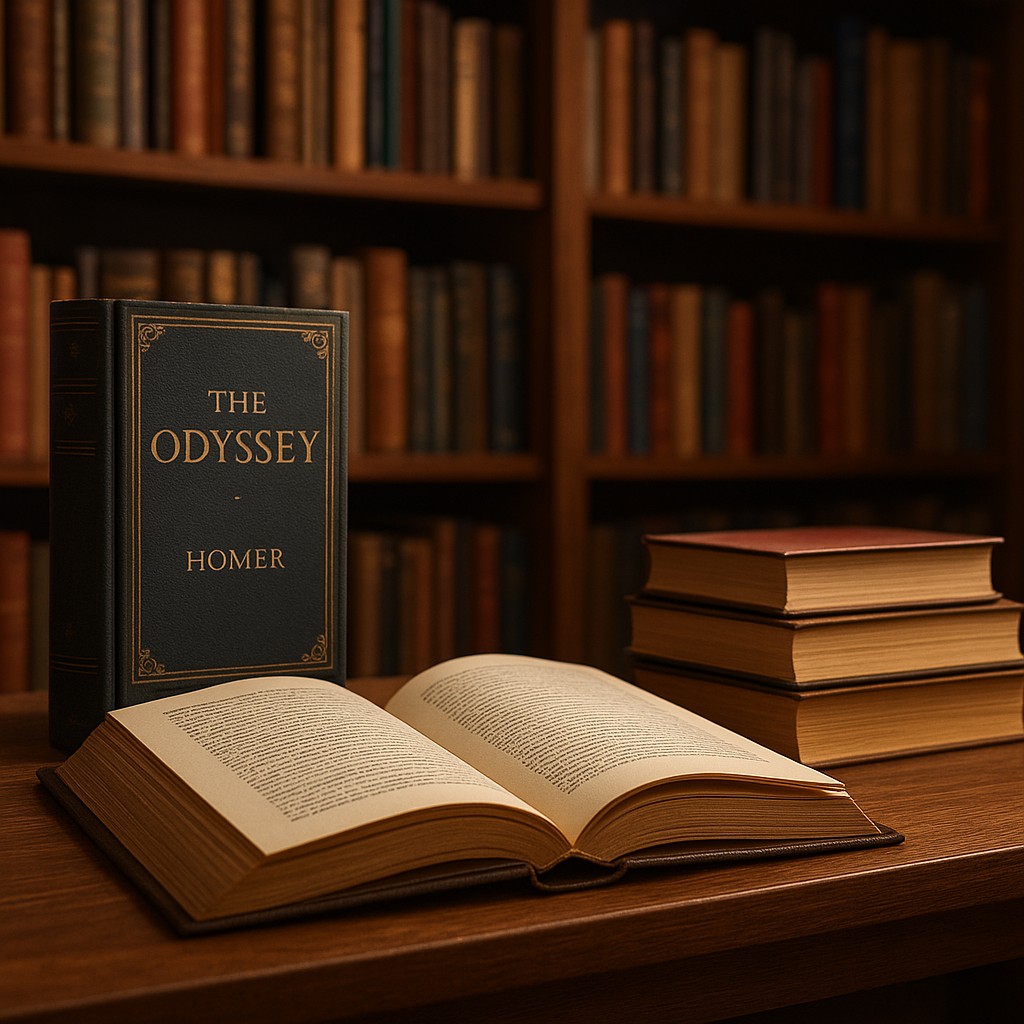
Imagine you are standing in a bookstore. On one shelf sits a buzzy new thriller released last Tuesday, and next to it sits a copy of Homer’s "The Odyssey." If you had to bet which book will still be read 50 years from now, our modern instincts might whisper that the new book has the momentum. But the mathematics of time suggest the exact opposite. Because "The Odyssey" has already survived nearly 3,000 years, it has proven its worth against every cultural shift, war, and technological revolution imaginable. The new thriller, however, has yet to face its first real winter. This phenomenon, where the past acts as a reliable predictor of the future for ideas and tools, is what we call the Lindy Effect.
The Secret Geometry of Survival
The Lindy Effect suggests that the future life expectancy of non-perishable things, like ideas, books, or technologies, is proportional to how long they have already lasted. Unlike biological creatures, who have a "shelf life" determined by aging cells, information and tools can actually "age in reverse." For a human, every day lived is a day closer to the end; our probability of dying increases as we get older. But for a non-perishable entity, every day of survival serves as evidence of its strength. If an idea has been around for 50 years, it has survived the scrutiny of an entire generation, and the Lindy Effect predicts it will likely last another 50.
This concept famously originated not in a laboratory, but in a New York deli called Lindy’s. Comedians would gather there to talk shop, observing that Broadway shows followed a specific rule of thumb. If a play had been running for 100 days, it was likely to run for another 100. If it had survived for 1,000 days, it was likely a permanent fixture that would last another 1,000. This observation was later refined by mathematicians and popularized by the author Nassim Nicholas Taleb, who turned it into a powerful mental model for navigating an uncertain world. It teaches us that time is the ultimate judge, a ruthless filter that removes the fragile and keeps the "antifragile," or things that get stronger under pressure.
The reason this works is rooted in "survival of the fittest" as applied to information. To survive for a long time, an idea must remain useful across many different situations. A trendy diet might work for a few months because of a specific cultural fad, but a basic principle like "eat whole foods" has survived for millennia because it is tied to human biology rather than fashion. When we look at something that has lasted, we aren't just looking at something old; we are looking at something that has been stress-tested by reality and won.
Why Your Toaster Dies While the Wheel Lives Forever
To truly master this concept, we must distinguish between the perishable and the non-perishable. Biological organisms, such as your pet dog or your Aunt Martha, are perishable. They follow a "Gaussian" or normal distribution of life, which looks like a bell curve. There is a clear upper limit to how long a human can live, and as we age, our remaining time decreases. If you meet an 80-year-old man, you can statistically guess he has about 10 or 20 years left. You would never assume that since he has lived 80 years, he will now live another 80. Biology is governed by decay and physical limits.
Non-perishables, however, operate in a different realm altogether. This includes anything that can be copied without losing its essence: stories, software, musical compositions, mathematical proofs, and even certain hardware like hammers or bricks. These things do not have a natural death date. They only die when they stop being useful or are replaced by something significantly better. Interestingly, most new technologies are actually quite fragile; they are frequently replaced by an even newer version within years. But technologies that have already survived for centuries, like the fork or the arch, are incredibly hard to replace.
| Feature |
Perishable (Biological) |
Non-Perishable (Information/Tools) |
| Aging Process |
Follows a path of decay and wear. |
Follows a path of increasing strength. |
| Predictability |
Older age means a shorter future life. |
Older age means a longer life expectancy. |
| Risk Factor |
Vulnerable to internal failure (organ failure). |
Only vulnerable to becoming obsolete. |
| Example |
A 90-year-old human. |
A 2,000-year-old philosophy. |
| Future Outlook |
Likely 5-10 more years of life. |
Likely 2,000 more years of relevance. |
As shown in the table above, the logic of the Lindy Effect flips our standard understanding of aging on its head. When you are looking for wisdom, you shouldn't look at the bestseller list; you should look at the books that have been in the library for fifty years. When you are looking for a reliable tool, you shouldn't necessarily look for the one with the most sensors; you should look for the one that has remained unchanged for a century. The "old" stuff isn't just old; it is "proven."
Filtering the Noise in a High-Speed World
In the modern era, we are bombarded with what Taleb calls "noise." Every day, thousands of new articles are published, hundreds of apps are launched, and countless "revolutionary" ideas are posted online. Most of these will be forgotten within 48 hours. If you spend your time consuming this fresh noise, you are essentially volunteering to be a guinea pig for ideas that haven't been tested by time. The Lindy Effect suggests a more efficient way to learn: focus on the "evergreens."
This doesn't mean we should never read a new book or try a new gadget. Rather, it means we should be aware of the "incubation period" of an idea. If you spend 80 percent of your time on Lindy-compatible ideas (those that have already survived for decades) and only 20 percent on the new and experimental, your intellectual foundation will be much more stable. Think of it like building a house. You want the foundation to be made of stone and timber, even if you decide to buy the latest high-tech smart bulbs for the living room.
Practical application of the Lindy Effect can save us from "circular learning," where we keep relearning the same fads under different names. Many modern self-help books are simply watered-down versions of Stoic or Buddhist philosophies written over two thousand years ago. By going straight to the source, you get the concentrated version that has already survived the scrutiny of history. The same applies to coding; languages like C or SQL have been around for decades and will likely remain, while the trendy "framework of the month" might disappear by next year.
Designing a Life on Solid Ground
Applying the Lindy Effect to your personal life requires a shift in how you value quality and time. It encourages us to look for "distilled excellence." For instance, when choosing a career skill to master, look for things that are fundamentally human or logical. Communication, logic, basic mathematics, and human psychology are all "Lindy" skills. They were valuable in Ancient Rome and they will be valuable in a colony on Mars. Conversely, learning the specific buttons of a software program that might be discontinued next year is a perishable skill.
You can even see this in the physical objects around us. A wooden table built with traditional joints from the 18th century is "Lindy." It has survived centuries of changing fashions and physical use. A plastic-veneer desk from a big-box store is the opposite; it is designed for a specific moment and is unlikely to become an heirloom. By choosing Lindy objects, we stop the cycle of constant replacement and waste. We invest in things that gain value through survival rather than losing value the moment they leave the box.
Finally, consider the Lindy Effect in terms of what you watch and read. If a movie is still being discussed 50 years after its release, it probably contains some deep truth about human nature. If a recipe has been passed down for five generations, it is probably more delicious and healthy than a "food hack" from a 30-second video. By aligning ourselves with the Lindy Effect, we move away from the frantic pace of the "now" and step into a much more stable timeline.
Embracing the Lindy Effect is ultimately an act of humility. It is an acknowledgment that we, living in our single slice of time, are not smarter than the collective filter of history. While it is tempting to believe that our generation has finally figured everything out, the graveyard of forgotten "innovations" suggests otherwise. By leaning on the wisdom, tools, and ideas that have already stood the test of time, you aren't being old-fashioned; you are being strategically brilliant. You are letting time do the hard work for you, filtering out the nonsense so you can focus on the few things that truly endure. Go forth and seek the old, the proven, and the perennial, because in the long run, the most modern thing you can do is trust what has never gone out of style.