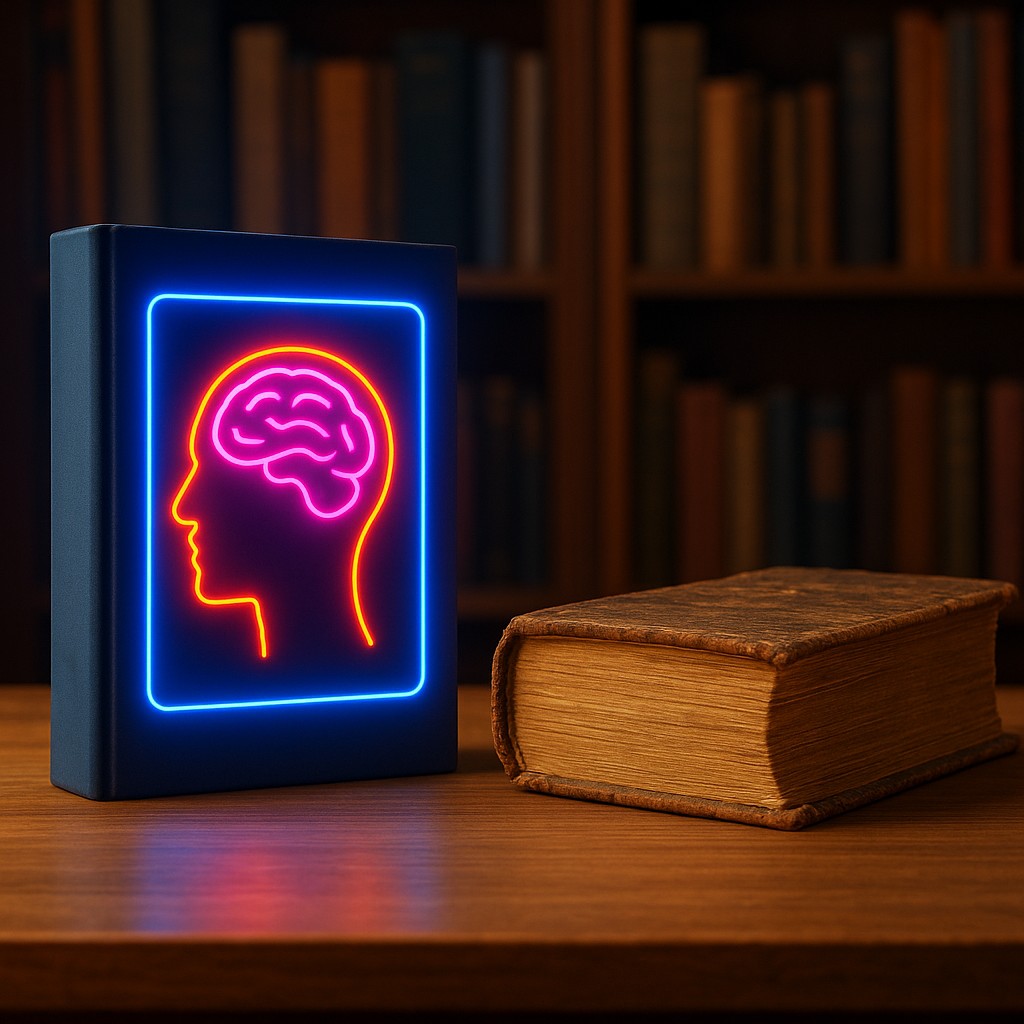
Imagine you are browsing a bookstore. On one table lies a flashy new thriller with a neon cover, currently sitting at the top of the bestseller list. Nearby, on a back shelf, sits a weathered copy of Homer’s Iliad, a story told and retold for nearly three thousand years. If you had to bet your life savings on which book people will still be reading five centuries from now, logic might suggest the newcomer has the "energy" of the present. However, the Lindy Effect suggests the exact opposite. Because the Iliad has already survived millennia of cultural shifts, political upheavals, and language changes, it has proven its resilience. The newcomer, meanwhile, hasn't yet faced its first winter.
This counterintuitive principle flips our standard understanding of aging upside down. In the biological world, every day you live brings you one day closer to the end. Human statistics follow a bell curve, where your life expectancy generally drops once you pass middle age. But for non-perishables like ideas, melodies, religions, and technologies, aging works in reverse. For these things, time is a friend rather than an enemy. Every year of survival is a hard-won victory against the forces of obsolescence. It suggests that the "thing" in question possesses a core of utility or truth that is immune to the passing whims of fashion.
The Mathematics of Reverse Aging
To understand why some things get "younger" as they get older, we have to distinguish between the perishable and the non-perishable. A carton of milk is perishable; its future is dictated by a physical expiration date. A person is also perishable; our cells have a biological limit called the Hayflick limit, which is the maximum number of times a cell can divide. For these items, the longer they have been around, the sooner they will expire. This is the world of "Mediocristan," a mathematical distribution where things cluster around an average. If you meet an 80-year-old man, you don't expect him to live another 80 years. In fact, you expect him to live much less time than a 20-year-old.
The Lindy Effect operates in "Extremistan," a realm governed by power laws rather than bell curves. In this world, the expected future life of an idea is proportional to its current age. Originally observed by Albert Goldman in 1964 while watching comedians at Lindy’s Deli in New York, the concept was later polished by thinkers like Benoit Mandelbrot and Nassim Taleb. The observation was simple: the comedians who had been performing for ten years were likely to be around for another ten, whereas the "fresh faces" who had been there for a week were likely to vanish by next month. Survival is a filter. The longer something has lasted, the more likely it is to be robust enough to handle the chaos of the future.
If a technology has been used for 50 years, such as the basic design of the bicycle or the internal combustion engine, the Lindy Effect predicts it will likely be around for another 50. If a new app was released last Tuesday, its life expectancy might only be a few weeks. This isn't just about "old things being good." It is about the "survival of the fittest" applied to information. Time is the ultimate stress test. It subjects an idea to every possible environment, and only those with deep structural integrity make it through.
Filtering the Signal from the Noise
We live in an era of "neomania," a psychological obsession with whatever is brand new. We assume that the latest smartphone is better than the last, and therefore, the latest philosophy must be better than one from the 1800s. However, the Lindy Effect warns us that "new" is often a synonym for "unfiltered." Most new things are just noise. They are temporary reactions to current trends that will look ridiculous or become useless once the trend shifts. Think of the thousands of "revolutionary" diet books published every decade compared to the simple, ancient advice to eat whole foods and stay active. The ancient advice remains relevant because it has survived thousands of years of human biology.
Consider the difference between a classic leather boot and a high-tech sneaker with built-in electronics. The leather boot design has remained largely unchanged for centuries. It works because it is simple, durable, and solves a fundamental problem. The high-tech sneaker solves a temporary problem with technology that will be obsolete in three years when the charging port changes or the software is no longer supported. The boot is "Lindy," while the smart-sneaker is perishable. By using this lens, we can see which parts of our lives are built on shifting sands and which are built on solid rock.
This principle also applies to software and engineering. In the tech industry, there is a joke that the most reliable systems are often the ones written in languages like C or Fortran decades ago. While flashy new frameworks appear every six months, the core infrastructure of the global financial system often runs on code that has been operating since the 1970s. This isn't just "technical debt" or laziness. It reflects the fact that old code has had 50 years of bugs ironed out. It has survived every crash, every hack, and every hardware transition. It is the Iliad of computer code.
The Lindy Hierarchy of Durability
To better visualize how the Lindy Effect scales, we can look at different categories of "non-perishables" and see how their age correlates with their likely future. Generally, the more fundamental the problem a thing solves, the more "Lindy" it becomes. A tool that helps humans breathe or eat is more durable than a tool that helps humans post photos of their lunch.
| Category |
Typical Lifespan |
Lindy Expectancy |
Why it Persists |
| Hard Tools (Hammer, Knife) |
Thousands of years |
Thousands more |
Solves basic physical needs with simple mechanics. |
| Classic Literature |
Centuries |
Centuries more |
Addresses universal human emotions and dilemmas. |
| Software Languages (C, SQL) |
Decades |
Decades more |
Foundation of modern infrastructure; costly to replace. |
| Modern Pop Songs |
Months / Years |
Weeks / Months |
Tied to fleeting cultural trends and specific production styles. |
| Social Media Apps |
5-15 years |
Unknown (High Volatility) |
Dependent on network effects; easily replaced by the "next big thing." |
As the table shows, the "perishability" of an item is often tied to how many dependencies it has. A hammer has no dependencies; it just needs a human hand. A social media app depends on the internet, specific operating systems, server farms, and the collective attention span of a fickle generation. Because the app has more "moving parts" that can fail, it is less Lindy than the hammer. When evaluating information or tools, asking "How many things must go right for this to stay relevant?" is a great way to gauge its longevity.
Avoiding the Trap of False Longevity
It is important to clear up a major misconception: the Lindy Effect does not mean that every old thing is "good" or that we should avoid change. Plenty of old ideas were objectively wrong or harmful but persisted simply because no better alternative was allowed to grow. The Lindy Effect is a statistical observation of probability, not a moral judgment. It tells us what is likely to survive, not necessarily what should survive. For example, some old-fashioned bureaucratic processes are incredibly "Lindy" because they are designed to be impossible to kill, even if they no longer serve a purpose.
Furthermore, the Lindy Effect only applies to things that do not have a natural "wear and tear" limit. You cannot apply the Lindy Effect to your grandmother. Even if she reaches 100, the probability of her reaching 200 does not increase; it drops to near zero because her biology is perishable. However, you can apply the Lindy Effect to her recipes. If a sourdough bread recipe has been passed down for four generations, it is statistically more likely to be used by your great-grandchildren than a "five-minute microwave cake" recipe you found on a sponsored ad yesterday.
Another trap is confusing "old" with "Lindy" when the environment has fundamentally shifted. A horse-drawn carriage was a Lindy technology for thousands of years, but the invention of the engine created a "phase shift," a total change in the state of play. When the environment changes so radically that the underlying problem is redefined, the Lindy Effect can be reset. Even then, the horse remains Lindy for transportation in rugged, rural areas where gas stations don't exist. The "Lindy" version of a solution usually finds a way to retreat to its core utility rather than disappearing entirely.
Applying the Filter to Your Own Life
How can we use this knowledge to make better decisions? In a world drowning in "new" information, the Lindy Effect suggests that the best way to gain wisdom is to read old books. If a book has been in print for 50 years, it has something to say that transcends the year it was written. If you want to learn about human nature, skip the latest "pop psychology" trend and read Seneca, Marcus Aurelius, or Montaigne. These writers have already survived the filter of time. Their ideas have been tested by millions of people across different cultures, and they still ring true.
This also applies to your skills and career. If you spend all your time learning a specific version of a software tool that might be obsolete in three years, you are investing in a perishable asset. But if you invest in "Lindy" skills, such as logic, clear writing, psychological understanding, or basic mathematics, you are building a foundation that will increase in value as you age. These skills have been useful for thousands of years and will likely stay useful for thousands more. They are the non-perishable tools of the mind.
Next time you feel pressured to keep up with every breaking news story, every new gadget, or every viral trend, take a deep breath and remember Lindy’s Deli. Ask yourself if this thing will still matter in ten years. If the answer is "probably not," then it is just noise. Focus your energy on the parts of the world that have already stood the test of time. By aligning yourself with the Lindy Effect, you move from the chaos of the temporary into the calm of the enduring. You don't just survive the passage of time; you let time do the hard work of filtering the world for you.