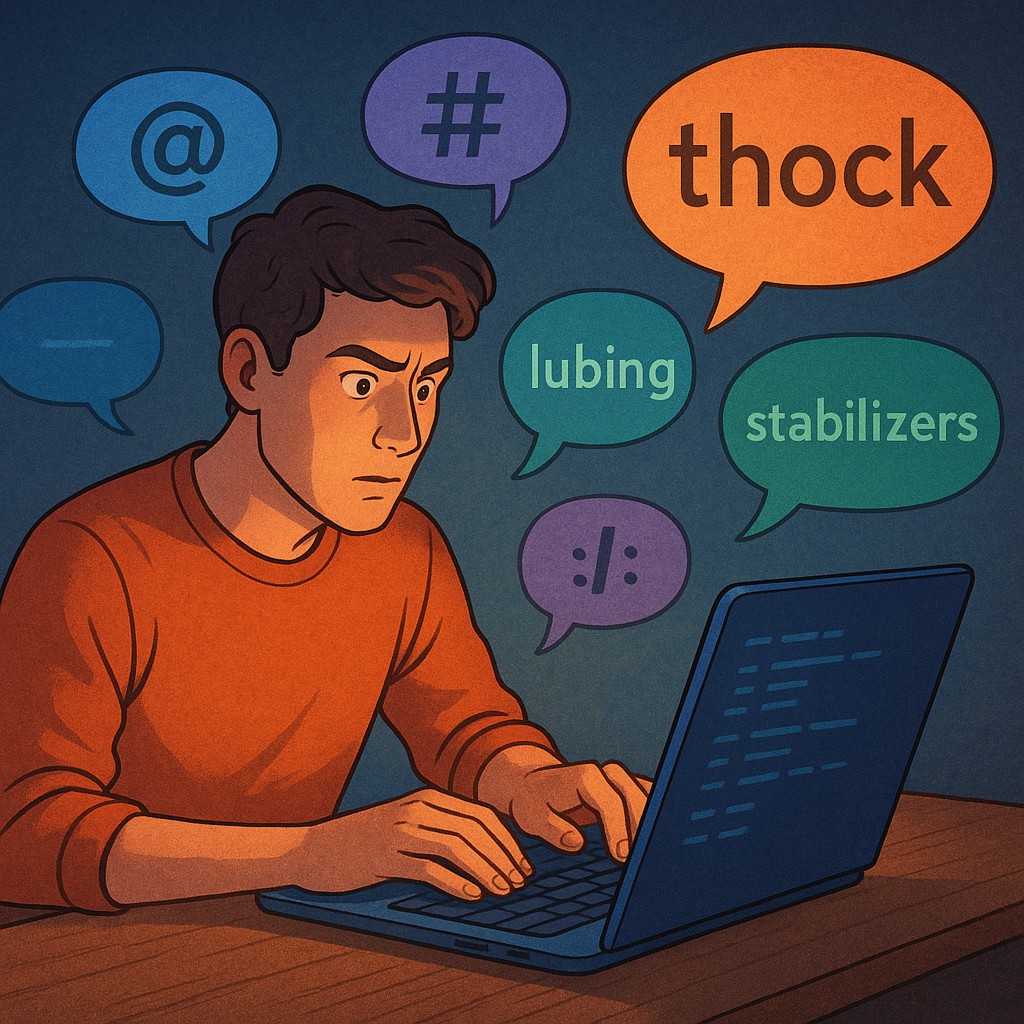
Have you ever stumbled into a niche corner of the internet, like a subreddit for mechanical keyboard hobbyists or a high-level Discord for crypto traders, and felt like you were reading a foreign language? Even though the words were technically English, the sentences felt like encrypted code. You likely saw people arguing about "thockiness" or "lubing stabilizers" and felt a sudden, sharp pang of being an outsider. This behavior isn't just a bunch of hobbyists being difficult on purpose. It is a biological and sociological drive to create a digital "secret handshake."
This behavior is known as the Lindau Effect. It is a fascinating concept suggesting that isolated digital communities develop their own internal languages to signal who belongs at high speeds. These linguistic quirks serve a vital evolutionary purpose in the digital age, acting as a low-cost, high-efficiency security system. By mastering a group’s hyper-specific slang, you prove to the veterans that you have put in the time, done the research, and truly immersed yourself in their world. It is the digital version of a bird of paradise performing a complex dance to show it belongs to the right flock.
The Secret Architecture of Digital Tribalism
At the heart of the Lindau Effect lies "proof of work." In computer science, proof of work refers to data that is difficult to produce but easy for others to verify. Digital communities have hijacked this logic for social reasons. Learning the complex, often nonsensical jargon of a niche community requires hours of quiet observation. You cannot simply walk into a group of high-level chess players or professional software architects and fake the "vibe" for long. Eventually, you will misplace a term or use a phrase in a way that feels "off."
When an outsider tries to mimic these speech patterns without doing the work, they are immediately flagged as an intruder or a "tourist." This creates a protective barrier around the group’s social bonds. Because these groups often exist in anonymous spaces where you cannot see a person’s face or check their credentials, language becomes the only reliable way to measure trust. If you can speak the "code," you are one of us. If you can't, you are a potential scammer or simply someone who hasn't earned a seat at the table yet.
This shift in perspective transforms jargon from something annoying into something deeply functional. We often complain about "corporate speak" or "gatekeeping" slang, but these linguistic fences keep the quality of conversation high. By ensuring that everyone in the room has reached a certain level of literacy in the topic, the group can skip the basics and dive straight into the nuanced, high-level discussions that move the community forward.
How Groups Encode Identity into Syntax
The development of these internal languages follows a predictable evolutionary pattern. It usually starts with a few "power users" who find a more efficient or humorous way to describe a common experience. If the term catches on, it spreads. Over time, these terms are layered with irony, history, and inside jokes until they become unrecognizable to anyone on the outside. This isn't just about efficiency; it's about emotional connection. Using a specific term creates a shared moment of recognition between two strangers, bridging the gap of digital distance.
Consider how different professional and social circles use language to sort people into categories. The following table shows how common concepts are coded into specific group languages to create a sense of belonging and verify expertise.
| Standard Concept |
The "Insider" Term |
The Community |
Why it Works as a Signal |
| A beginner or novice |
A "Blue Belt" or "White Belt" |
Jiu-Jitsu / Martial Arts |
References a physical ranking system that demands respect for the long grind of training. |
| Making a small mistake |
"Fat-fingering" a trade |
Finance / Crypto |
Signals an understanding of high-stakes, fast-paced digital interfaces. |
| A person who complains |
A "Salty" player |
Gaming |
Uses sensory language to describe a specific type of frustrated resentment. |
| Over-optimizing a task |
"Yak Shaving" |
Software Engineering |
References the specific, repetitive frustration familiar to developers. |
| To agree completely |
"This is the way" |
Star Wars / Fandoms |
Uses a pop-culture ritual phrase to signal shared media consumption. |
These terms do more than just label things; they carry the "scent" of the community. When you tell a programmer you spent all morning "yak shaving," they don't just understand that you were busy; they feel your pain. They know exactly the type of circular, annoying tasks you were dealing with. That shared feeling is the glue that holds digital communities together when they lack a physical clubhouse or a shared zip code.
The Linguistic Speed Trap for Outsiders
One of the most interesting aspects of the Lindau Effect is its speed. In the physical world, dialects take generations to develop. In the digital world, a new meme can turn into a foundational pillar of language in forty-eight hours. This rapid evolution makes it almost impossible for interlopers to keep up. If you leave a community for a few months and come back, you might find that the language has drifted so far that you are now an outsider yourself. This creates a high "cost of exit" - if you stop participating, you lose your fluency and, as a result, your status.
This "speed trap" is particularly useful for protecting communities from "culture vultures" or corporations looking to make money off a trend. By the time a marketing department has figured out how to use a specific slang term correctly, the community has often moved on to something even more obscure. This keeps the community cool and authentic by staying one step ahead of the mainstream. It is a form of digital camouflage that allows niche cultures to thrive in the shadows of the open internet.
However, there is a dark side to this protective barrier. While these secret languages build tight bonds and high levels of trust, they also create accidental "echo chambers." When a group becomes too good at filtering out outsiders, it also becomes very good at filtering out new ideas. The very language that protects the group can also trap it in a closed loop of thought. If you only speak to people who use the same jargon and share your assumptions, your worldview begins to shrink. You stop questioning the group's "truths" because doing so would require using language that the group finds foreign or wrong.
Navigating the Jargon Jungle Without Getting Lost
How do we use our knowledge of the Lindau Effect to our advantage? The first step is to become a linguistic observer. When entering a new professional or social circle, the smartest move is often to stay silent and listen. Observe the patterns. Which words are used with respect? Which ones are used with a sneer? Look for the "proof of work" terms that seem to carry the most weight. By mapping out the internal language before you attempt to speak it, you avoid the awkwardness of looking like a pretender.
It is also important to stay "bilingual." Truly successful professionals and thinkers are those who can speak the deep, dense jargon of their "tribe" while still being able to translate those ideas for the rest of the world. If you can explain quantum physics to a five-year-old or summarize a complex legal maneuver for a neighbor, you possess a superpower. You have the trust of the insiders, but you haven't lost your connection to the outside world. This ability to "code-switch," or jump between different styles of speech, prevents the echo chamber effect from taking hold.
The Lindau Effect reminds us that language is the ultimate social technology. It isn't just for communicating facts; it is for signaling loyalty, verifying history, and building walls of trust. When you encounter a confusing set of slang terms, don't be annoyed. Instead, see it as an invitation to a puzzle. Ask yourself: what is this community trying to protect? What "work" do I need to do to earn their trust? By understanding the "why" behind the "what," you can navigate any digital space with confidence and curiosity.
As you venture out into new spaces, keep your ears open for those secret handshakes. Every time you learn a new insider term, you are not just expanding your vocabulary; you are gaining a key to a new room in the global house of human connection. Use these keys wisely. Build bridges where others build walls, and never stop being the person who can translate the meaning behind the mess. The more languages - both literal and digital - you can speak, the more worlds you get to inhabit. Go forth and start listening; there are entire universes hidden in the slang you haven't learned yet.