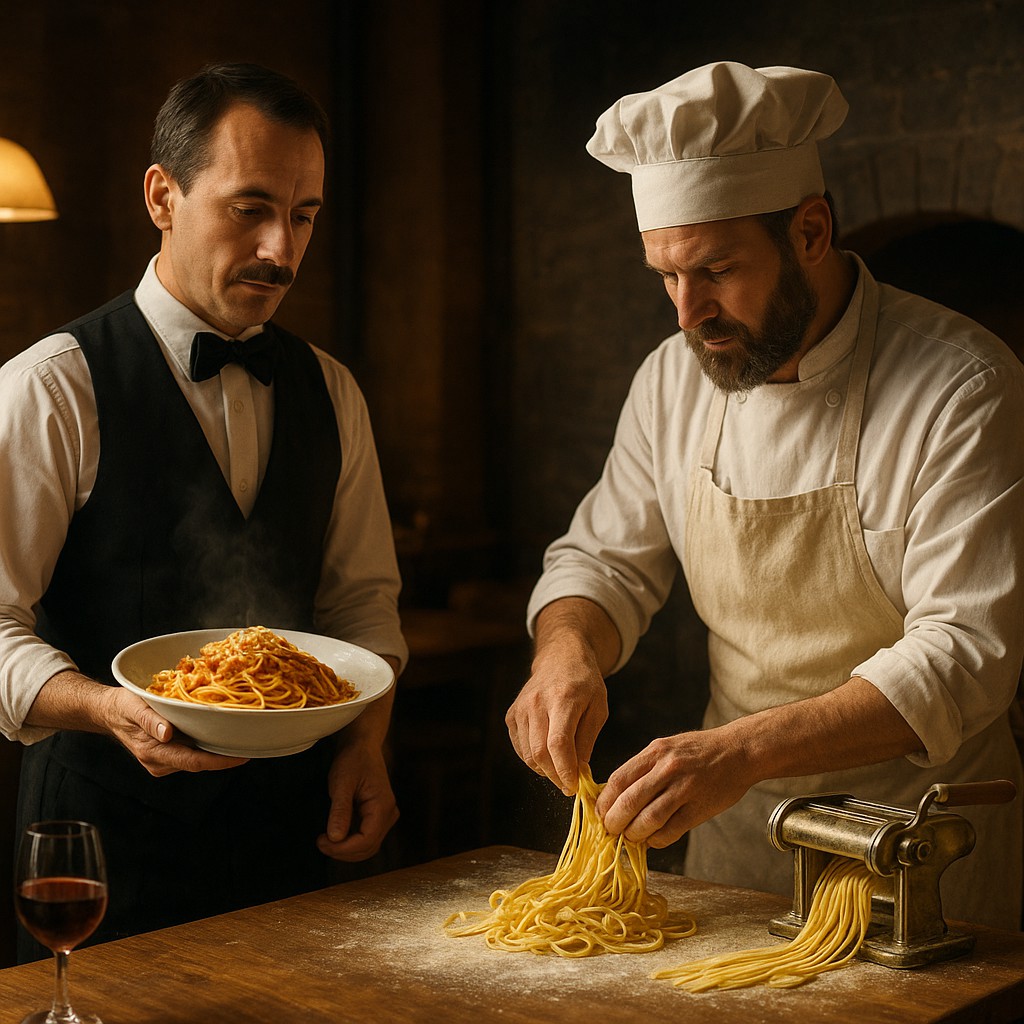
Imagine for a moment that you are sitting in a cozy, dimly lit restaurant. In one scenario, you order a bowl of pasta. Fifteen minutes later, a waiter emerges from a swinging metal door and places a steaming plate in front of you. It tastes great, the sauce is rich, and the noodles are perfectly firm. Now, imagine a second scenario in the exact same restaurant, but this time, the kitchen is completely open. You watch the chef crack eggs into the flour, knead the dough with visible effort, and carefully hand-crank the pasta through a vintage brass cutter. Even if the recipe and the final taste are identical to the first meal, you will almost certainly leave the second time feeling more satisfied, more impressed, and much more willing to pay a premium price.
This psychological quirk is a fascinating departure from cold, hard logic. Traditionally, we are taught that value comes from utility, meaning how useful a product is or how much joy it brings us. However, our brains are hard-wired to look for something else entirely: the "sweat equity" of the creator. We have a deep-seated, often irrational tendency to equate the amount of effort someone put into a task with the quality and worth of the result. This is the heart of the Labor Theory of Value paradox, a concept that bridges the gap between classical economics and modern behavioral psychology. It suggests that our wallets are often guided more by the "show" than by the "result," making the visibility of work a powerful tool for building trust and perceived worth.
How the Brain Connects Effort to Value
At its simplest level, the original Labor Theory of Value was an economic idea suggesting that the price of any good is determined by the total amount of labor needed to produce it. While modern economists usually prefer the subjective theory of value, which says things are worth whatever people are willing to pay for them, the human brain still clings to the old ways. We struggle to separate the "stuff" from the "work." When we see someone sweating, concentrating, or spending hours on a task, our brains use that visible effort as a mental shortcut for quality. If it took ten hours to make, we assume it must be ten times better than something that took one hour, even if the one-hour version is actually better in every measurable way.
This mental shortcut is often called the "Labor Illusion." Research has shown that customers actually prefer a service that takes longer and shows more effort over an instant result. Consider a travel search engine. If you click "search" and the results appear instantly, you might wonder if the site really checked every airline. But if the site shows a progress bar and little icons "searching" through different databases for thirty seconds, you feel much more confident that you are getting the best deal. The software could have given you the answer in a heartbeat, but it "waits" to show you how hard it is working because it knows you value that perceived effort.
This paradox creates a strange situation where efficiency can actually become a disadvantage. If a locksmith opens your door in thirty seconds using a master technique he spent twenty years perfecting, you might feel cheated when he asks for a hundred dollars. You feel like you paid for only thirty seconds of work. However, if the locksmith spends half an hour grunting, sweating, and trying different tools before finally opening the door, you pay the hundred dollars happily. In both cases, the result is the same: you are back inside your house. But because the second locksmith showed more labor, you perceive the value of his work as much higher.
When Showing the Process Beats Technical Perfection
One of the most powerful uses of this theory is found in "radical transparency." When a company invites you backstage, they aren't just being friendly; they are intentionally triggering your labor-value sensors. A handmade leather bag with a few slightly uneven stitches often costs more than a laser-cut, factory-made bag that is mathematically perfect. The imperfection itself serves as proof of human labor. It tells the story of a person sitting at a bench, using their hands and their time. In our modern, high-tech world, human time has become a luxury good.
This transparency acts as a bridge of trust. In an age where machines can mass-produce almost anything, seeing the "how" behind the "what" provides a sense of authenticity. When a coffee shop lists the name of the farmer who grew the beans and describes the difficult process of sun-drying them on mountain slopes, they are justifying their five-dollar latte. They are moving the product from a basic commodity into a category of "effort." You are no longer just buying caffeine; you are buying the three months of labor it took to grow, harvest, dry, and roast those specific beans.
| Scenario |
Perceived Effort |
Consumer Reaction |
Perceived Value |
| Factory-made chair |
Low (Automated) |
Focuses on utility and price |
Low to moderate |
| Handcrafted artisan chair |
High (Human labor) |
Emotional connection to the craft |
High / Premium |
| Instant digital report |
Low (Invisible) |
Skeptical of depth and accuracy |
Low |
| "Loading" digital report |
High (Simulated) |
Trust in the thoroughness of search |
Moderate to high |
| Hidden kitchen cooking |
Unknown |
Focuses purely on taste and nutrition |
Moderate |
| Open-concept kitchen |
Visible |
Appreciates skill and cleanliness |
High |
The Psychological Weight of Handmade Goods
Why do we find "handmade" items so compelling? Part of the answer lies in our history. For most of human existence, if something was difficult to make, it was rare. If it was rare, it was valuable. While technology has flipped that script, allowing us to make complex things easily, our biological hardware hasn't caught up. We still feel a "soul" in objects touched by human hands. This is why a hand-knitted sweater from a grandmother feels warmer than a store-bought one, even if the store-bought version uses a more advanced fabric.
This effect is so strong that it can even override our visual preferences. In various psychological studies, people were asked to rate two different items: one described as "machine-made" and the other as "handmade." Even when the machine-made item was objectively more symmetrical or durable, people consistently rated the handmade version as "more attractive" or "higher quality." We project positive traits onto things that represent high effort. We assume that if someone worked that hard, they must have cared about the details. This leads us to trust the product more than one from a nameless, faceless assembly line.
However, it is important to remember that this perception is entirely subjective. A product that requires a lot of labor is not naturally better. A chef could spend six hours making a sauce that is far too salty, or a carpenter could spend a week building a wobbly table. The Labor Theory of Value paradox is about the perception of worth, not necessarily the reality of how useful a product is. Businesses that understand this often spend as much time designing the "experience of effort" as they do the product itself, making sure the customer sees just enough of the struggle to appreciate the success.
Balancing Transparency with Modern Efficiency
For creators and entrepreneurs, the challenge is finding the "sweet spot" of showing labor. You don't want to be the locksmith who takes thirty minutes just to look busy, but you also don't want to be so efficient that your work looks effortless and therefore "worthless." The key is to reveal the parts of the process that require genuine skill and thought. This is why software companies now send "behind the scenes" emails about their engineering hurdles, and why high-end watchmakers release videos of tiny gears being set with tweezers. They are making the invisible labor visible.
By showing the friction, the mistakes, and the human decisions that go into a product, a brand creates a "narrative of effort." This story allows consumers to justify a higher price to themselves. It transforms a simple transaction into an act of appreciation. When we understand the story behind the work, the price tag is no longer a barrier; it is a reflection of the human hours poured into the object. This is a vital lesson for anyone in a creative or service-based field: do not hide your work. If you make it look too easy, people will assume it was, and they will value your contribution accordingly.
Applying the Lesson to Your Own World
The next time you are browsing a craft fair or looking at a high-end menu, take a moment to check your own internal "value-meter." Notice how your interest spikes when you see a potter’s wheel in action or a sign detailing the "36-hour slow-fermentation process" of a loaf of bread. Recognizing this paradox in yourself is the first step toward becoming a more conscious consumer. You can begin to ask whether you are paying for the quality of the item or simply for the theater of the effort. Both have their place, but knowing the difference allows you to make better choices about where your money goes.
More importantly, if you are a creator, a student, or a professional, do not be afraid to show your process. Whether you are writing a report, designing a website, or preparing a presentation, sharing the drafts, the research, and the "why" behind your choices can significantly increase how others value your output. In a world increasingly dominated by artificial intelligence and instant results, your unique human effort is your most valuable currency. When you let people see the work, you give them a reason to care, a reason to trust, and a reason to see the true worth in what you do. Embrace the labor, show the sweat, and watch as the world begins to appreciate the true depth of your contributions.